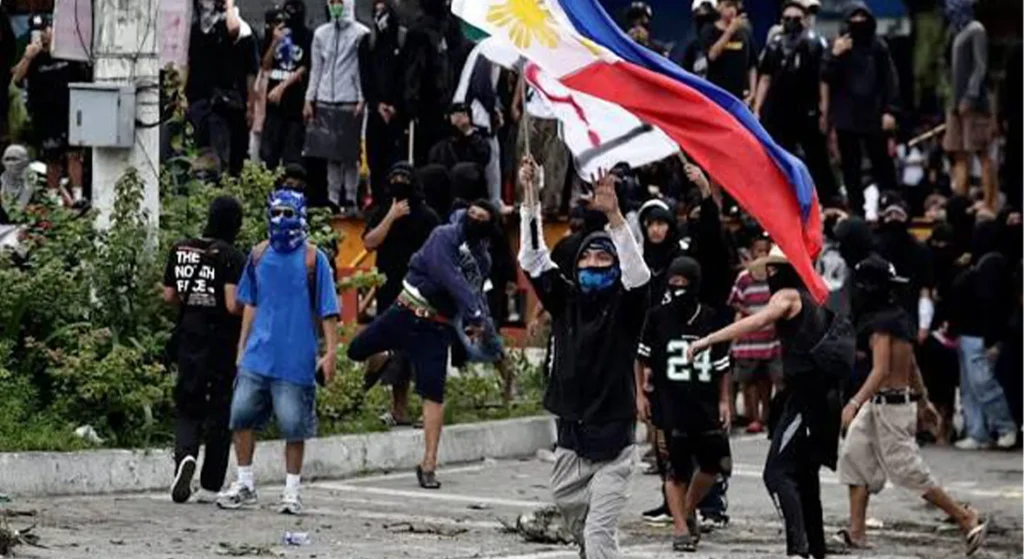
Philippine organisations are making final preparations for a large-scale demonstration on Sunday, as groups come together to voice concerns and demand stronger action against corruption.
Philippine Groups Prepare for Major Anti-Corruption Demonstration Set for Sunday.
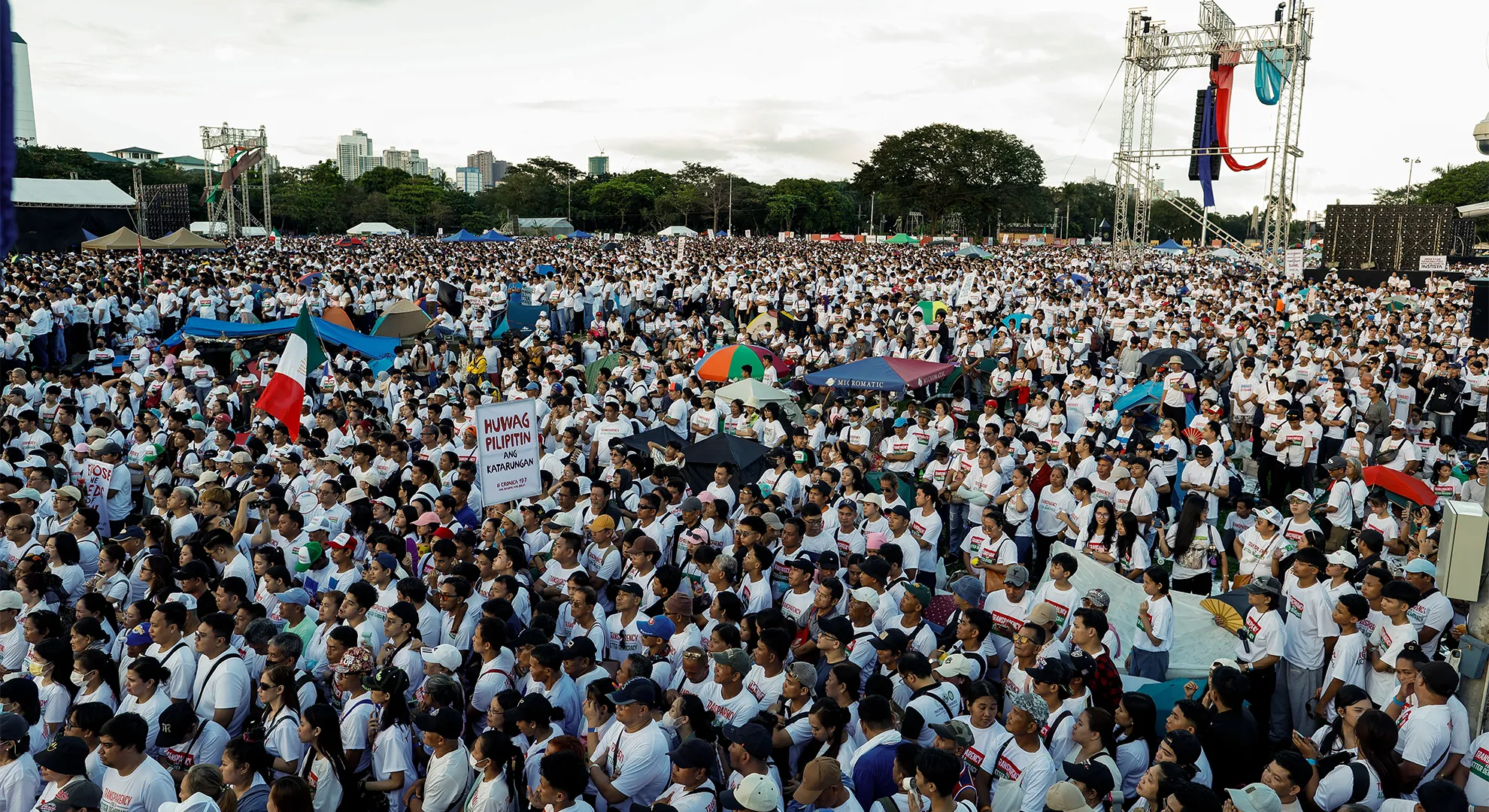
The demonstration is scheduled before President Marcos delivers his State of the Nation Address, amid allegations that he was involved in large-scale budget adjustments that allegedly benefited him and other senior officials.
Philippine Groups Mobilise for Major Rally Calling for Accountability and Government Reform
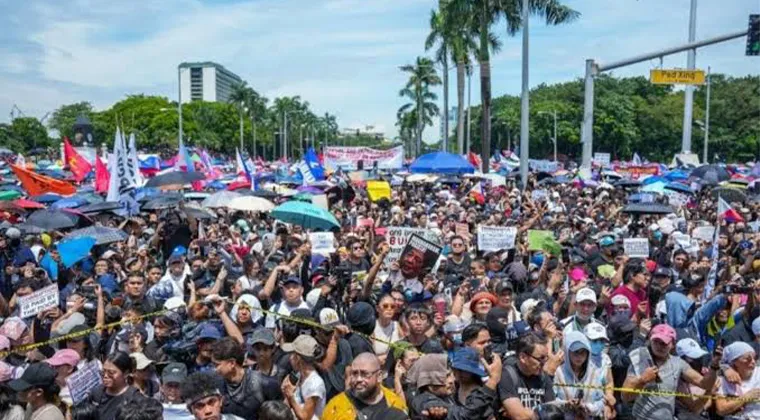
Religious organisations, civil society groups and various community representatives in the Philippines are preparing for a large public gathering on Sunday, June 28, aimed at raising concerns over corruption issues and demanding stronger accountability from government officials.
The planned demonstration, known as the White Ribbon Movement March, is expected to bring together groups calling for investigations and legal action against individuals connected to controversies involving flood control projects, alleged budget insertions and claims of improper financial arrangements.
Organisers say the event is intended to encourage public discussion on governance, transparency and the need for reforms that place citizens’ interests at the centre of government decision-making.
The Catholic Bishops’ Conference of the Philippines (CBCP) announced that the gathering will take place at the historic People Power Monument, a location widely associated with the country’s democratic movement and public calls for political change.
According to the CBCP, the march is meant to serve as a reminder that Filipinos have the right to expect effective leadership, responsible governance and a future shaped by fairness and public service.
The organisation said the movement reflects a desire among citizens for a political system that prioritises the welfare of the population rather than personal or political interests.
Colin Bagaforo, Kidapawan Bishop and lead convenor of the CBCP InterReligious Leaders’ Council for National Transformation, said the country’s progress depends on building a form of politics focused on serving people.
He emphasised that meaningful national development requires leaders and institutions committed to protecting human dignity, promoting justice and acting in the interest of the wider community.
According to Bagaforo, a stronger future for the Philippines can only be achieved when governance is guided by ethical responsibility and a commitment to public welfare.
The announcement of the rally comes during a period of heightened political activity in the country, with members of the Philippine House of Representatives and legal teams representing Vice President Sara Duterte taking part in preliminary proceedings connected to her impeachment case.
The impeachment process has become another major political issue in the Philippines, with preparations continuing ahead of the scheduled trial on July 6.
The timing of the demonstration also places it close to President Ferdinand Marcos Jr.’s upcoming State of the Nation Address (SONA), where he is expected to discuss government priorities, national developments and future plans.
The rally’s organisers have positioned the event as a public expression of concern over corruption-related issues and a call for stronger accountability mechanisms.
The demonstration comes amid allegations involving large-scale budget adjustments and claims that certain government funds may have been improperly allocated.
Critics have raised accusations that billion-peso budget insertions were allegedly linked to financial benefits for certain individuals, including claims involving President Marcos Jr. and other senior officials. These allegations have been disputed and remain matters of political debate and investigation.
Supporters of the rally argue that transparency and accountability are necessary to maintain public trust in government institutions.
They say that concerns surrounding government spending, public projects and alleged misuse of funds should be addressed through proper investigations and legal processes.
The planned gathering highlights the continued role of religious and civil society organisations in Philippine public life. Historically, faith-based groups and community organisations have played a significant role in encouraging public participation and raising awareness on national issues.
Organisers hope the event will encourage citizens to engage in discussions about leadership, governance and the importance of institutional reforms.
The use of the People Power Monument as the location for the march carries symbolic importance. The site is closely connected with the Philippines’ history of mass civic movements and peaceful demonstrations demanding political change.
By holding the event at the monument, organisers aim to connect current concerns about governance with broader themes of democracy, citizen participation and accountability.
The White Ribbon Movement March is expected to bring together participants from different sectors of society, including religious communities, advocacy groups and members of civil organisations.
While the rally focuses on corruption concerns, organisers have also highlighted wider issues surrounding ethical leadership and the need for government systems that better serve ordinary citizens.
The event reflects growing public interest in questions about how government resources are managed and how officials are held responsible for their actions.
As the country approaches President Marcos Jr.’s State of the Nation Address, political discussions surrounding transparency, public spending and governance are expected to remain prominent.
The rally will serve as a platform for participants to express their views and call for reforms they believe are necessary to strengthen public institutions.
However, the issues raised during the demonstration are part of a broader political conversation involving different perspectives from government officials, opposition groups and civil society organisations.
While critics continue to call for investigations into alleged corruption-related matters, authorities and those named in allegations have the opportunity to respond through official channels and legal processes.
The upcoming march represents another moment in the Philippines’ ongoing discussion about accountability, leadership and the relationship between citizens and government.
For organisers, the central message is the importance of creating a political environment where public service, justice and integrity remain key priorities.
As thousands are expected to gather, the event will highlight the continuing demand among some sectors of Philippine society for greater transparency and stronger safeguards against corruption.
People’s clamour
Philippine Anti-Corruption Groups Rally Support for Greater Accountability in Government
The announcement of the upcoming anti-corruption march by the Catholic Bishops’ Conference of the Philippines (CBCP) received support from several advocacy organisations that have long campaigned for greater transparency and accountability in government.
Among the groups backing the initiative are Bagong Alyansang Makabayan (Bayan) and Kilusang Bayan Kontra Kurakot, also known as the People’s Anti-Corruption Movement. Both organisations welcomed the planned gathering, describing it as a reflection of growing public concern over alleged corruption issues affecting government institutions.
Bayan said the June 28 demonstration represents a wider demand from citizens seeking an end to what it described as a culture where individuals involved in corruption can avoid accountability.
The group argued that addressing corruption requires more than investigating isolated cases. It called for scrutiny of senior officials and individuals in positions of influence who may have played roles in creating, supporting or benefiting from questionable government practices.
According to Bayan, efforts to combat corruption should involve accountability across different levels of government, including officials within the executive branch and members of both chambers of Congress.
The organisation also expressed support for the impeachment proceedings involving Vice President Sara Duterte but stressed that anti-corruption efforts should not end with a single political case.
Bayan said broader investigations should continue and should include those it considers to be key figures connected to alleged misuse of public funds and controversies surrounding the country’s pork barrel system. The group has also raised allegations involving President Ferdinand Marcos Jr., claims that have been disputed and remain part of political debate.
The wider discussion around corruption in the Philippines has been linked to concerns about public spending, government transparency and the management of national resources.
Concerns Over Corruption Levels
Corruption remains a major issue in discussions about governance and economic development in the Philippines. According to Transparency International’s latest Corruption Perceptions Index, the country received a score of 32 out of 100, where lower scores indicate higher levels of perceived corruption.
The Philippines ranked 120th among 182 countries included in the index. Within Southeast Asia, the country’s ranking placed it above only Cambodia and Myanmar, according to the organisation’s assessment.
The score has fuelled concerns among analysts and civil society groups that corruption continues to affect government efficiency, public trust and economic progress.
Some estimates suggest that a significant portion of the national budget is lost each year due to corruption-related practices. Analysts have suggested that billions of pesos may be diverted away from intended public programmes, reducing the effectiveness of government spending.
One estimate places annual losses at around 20 per cent of the national budget, equivalent to approximately P1.6 trillion (Dh96 billion). Over a decade, some analysts estimate that the cumulative economic impact of corruption could amount to trillions of pesos.
Economists have argued that reducing corruption could create stronger conditions for economic growth. They suggest that improved governance, stronger institutions and better management of public funds could help the Philippines achieve higher and more sustainable growth rates.
Some economic experts believe that without the negative effects of corruption, the country could potentially achieve annual growth levels of 8 to 10 per cent, compared with the lower range often recorded in recent years.
Debate Over the Pork Barrel System
A significant part of the corruption debate in the Philippines has focused on the country’s pork barrel system, where lawmakers have influence over certain government spending allocations.
Independent economic research group Ibon Foundation has previously criticised the system, describing it as a long-standing source of concerns over political influence and possible misuse of public funds.
The organisation has argued that certain budget allocations allow politicians to direct government resources toward projects and programmes in ways that may strengthen political networks.
In discussions surrounding the 2026 national budget, which is valued at approximately P6.793 trillion (Dh407 billion), critics have raised concerns about large allocations described as “soft pork”.
These funds reportedly include programmes related to social assistance, financial aid, emergency employment support and medical assistance. Critics argue that such programmes can potentially be used to strengthen political relationships by allowing elected officials to influence the distribution of government benefits.
Supporters of these programmes, however, have argued that such funding mechanisms can help communities receive assistance and allow lawmakers to respond to local needs.
The debate continues over whether these allocations represent necessary support programmes or whether they create opportunities for political patronage.
Another area of discussion involves what critics describe as “hard pork” allocations, referring to infrastructure-related spending.
According to critics, hundreds of billions of pesos in infrastructure funding have historically been influenced by political decisions, including projects involving roads, bridges and flood control initiatives.
Concerns have been raised that political involvement in selecting projects could lead to inefficiency, unequal distribution of resources or opportunities for misuse of public funds.
However, government officials and supporters of the current budget system have argued that local representatives have important knowledge of community needs and that their involvement can help ensure resources reach areas requiring development.
Calls for Stronger Reforms
The upcoming rally reflects broader demands from civil society groups for reforms aimed at improving government transparency and preventing misuse of public resources.
Organisers and supporters say they want stronger accountability measures, improved oversight and systems that ensure government funds are used effectively for public benefit.
The debate highlights a long-running challenge for the Philippines: balancing political representation and local decision-making with the need to prevent corruption and protect public resources.
As the country moves closer to the rally and President Marcos Jr.’s State of the Nation Address, discussions about governance, accountability and public spending are expected to remain central topics.
For anti-corruption groups, the demonstration represents a call for broader institutional change rather than focusing only on individual cases.
They argue that meaningful reform requires addressing the structures and practices that allow corruption to continue.
The issue remains complex, involving political, economic and social factors that continue to shape public debate in the Philippines.
The planned march is expected to bring together various sectors calling for greater accountability, reflecting ongoing public concern over corruption and the future direction of government reform.
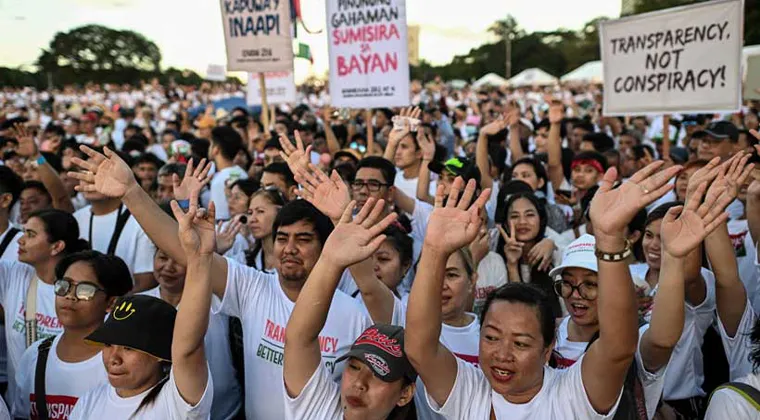
Budget Concerns and Rising Debt Fuel Debate Over Philippine Government Spending
The debate over government spending in the Philippines has intensified as critics continue to raise concerns about various budget allocations, including funds that they argue provide significant discretionary power to political leaders.
Among the areas facing scrutiny are so-called “shadow pork” allocations, referring to unprogrammed appropriations that exist outside the main annual budget structure. According to watchdog groups, these funds raise transparency concerns because they are not immediately tied to specific spending programmes and may only be released when certain financial conditions are met, such as the availability of additional government revenue.
Critics argue that because these allocations operate differently from regular budget items, they require stronger oversight and clearer reporting mechanisms. They say limited visibility into how and when these funds are released can create opportunities for political influence and reduce public understanding of how government resources are being used.
The government, however, has maintained that unprogrammed appropriations serve as financial safeguards that allow authorities to respond to unexpected needs, emergencies or additional funding requirements when resources become available.
Another area of discussion involves funds allocated through congressional budget insertions that critics describe as “local government pork.” These allocations are intended for programmes and projects connected to local communities, but some observers argue that such funding mechanisms can increase the influence of politicians over government assistance and development spending.
Critics claim that these types of allocations may be used to strengthen political relationships by allowing elected officials to direct resources toward specific areas or projects. They argue that government assistance should follow transparent criteria based on public need rather than political considerations.
Supporters of the system, however, argue that lawmakers play an important role in identifying local priorities and ensuring that communities receive funding for essential programmes.
The wider discussion over budget allocations comes as the Philippines faces increasing fiscal pressure and a growing national debt burden.
The government is expected to rely heavily on borrowing to help finance spending requirements and cover projected gaps between revenue and expenditure. For the current year, estimates indicate that the country faces a significant fiscal deficit, requiring additional financing to maintain government programmes and public services.
Officials have argued that borrowing is part of responsible fiscal management, particularly when funds are needed for infrastructure projects, social programmes and economic development initiatives.
However, critics warn that continued dependence on debt could create long-term financial challenges if government spending is not matched by stronger revenue generation and improved efficiency.
The Philippines’ national debt has continued to rise, reaching trillions of pesos. Analysts have highlighted concerns that increasing debt obligations could limit future government flexibility by requiring larger portions of public funds to be allocated toward repayment and interest costs.
Economic experts say that managing debt levels requires careful balance. While borrowing can support economic growth when used effectively, excessive debt accumulation can create pressure on future budgets and reduce the government’s ability to respond to emerging challenges.
The controversy surrounding budget allocations and debt levels has become part of a broader conversation about governance, transparency and accountability in the Philippines.
Civil society organisations and economic watchdogs have repeatedly called for stronger monitoring systems to ensure that public funds are directed toward programmes that provide the greatest benefit to citizens.
They argue that improving transparency in government spending is essential to restoring public confidence and ensuring that national resources are managed effectively.
Concerns over political influence in budget decisions are not new in the Philippines. The country has faced long-running debates over how lawmakers and government officials participate in allocating funds for development projects and social programmes.
Supporters of congressional involvement argue that elected representatives understand the needs of their communities and can help ensure resources reach areas requiring assistance.
Opponents, however, believe that greater separation between political decision-making and budget allocation is necessary to reduce the risk of misuse and ensure fair distribution.
The issue has gained renewed attention as the government prepares to manage rising financial demands while addressing public expectations for improved services and economic development.
Analysts say reducing corruption risks, improving public financial management and increasing accountability will be important steps in ensuring that government spending delivers meaningful results.
The debate also highlights the challenge facing many governments: balancing the need for investment and public support programmes with the responsibility of maintaining sustainable finances.
For the Philippines, questions surrounding discretionary funds, budget transparency and rising debt remain central to discussions about economic stability and governance reform.
As political groups, civil society organisations and government officials continue debating these issues, the focus remains on how public resources can be managed more effectively to support long-term national development.
The ongoing conversation reflects broader concerns about ensuring that government budgets serve public priorities while maintaining financial responsibility for future generations.