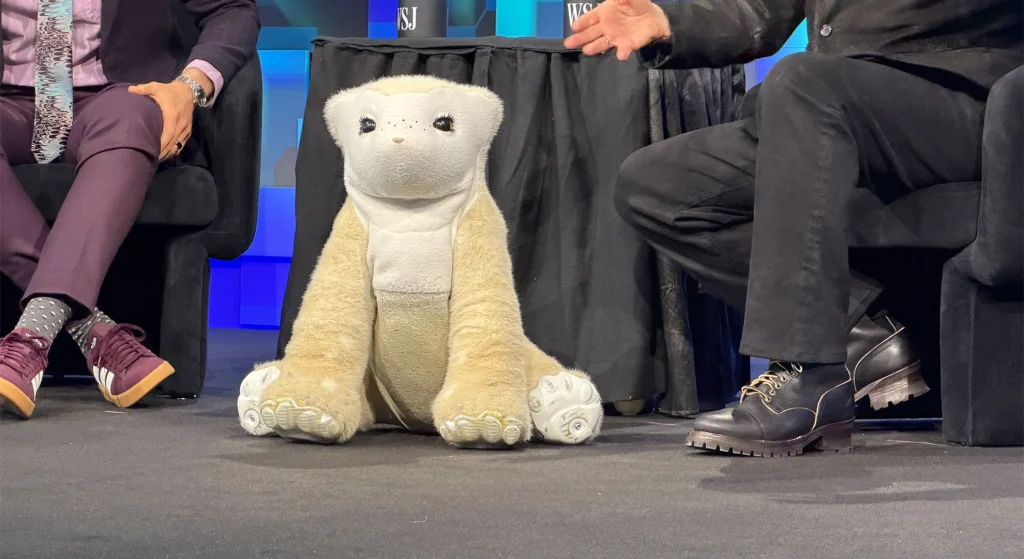
A newly developed soft flying robot could transform the way people interact with technology, offering a glimpse into a future where machines become more personal, adaptive and companion-like.
Meet the Soft Flying Robot That Could Change Everyday Relationships Between Humans and Technology.
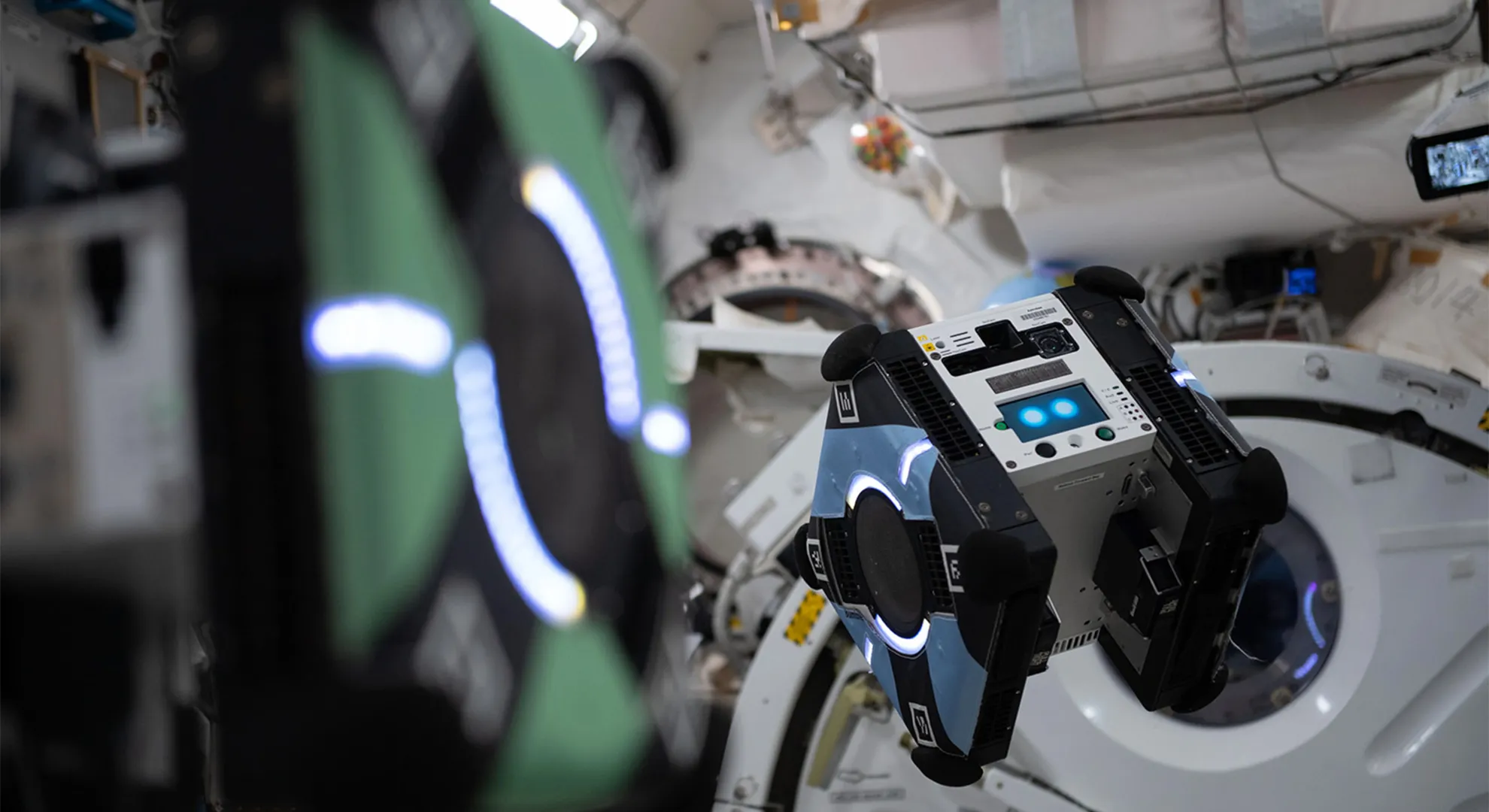
Scientists are exploring a new generation of robotic companions through a whale-inspired floating machine that travels quietly indoors and could change how humans interact with robots.
Cuddle-Fish: The Soft Floating Robot Inspired by Nature That Could Redefine Human-Robot Interaction
A uniquely designed robotic creation that moves gently through the air like a small floating sea creature has attracted widespread interest for its unusual appearance and potential future applications. Unlike traditional flying machines that rely on noisy rotating blades, this soft-bodied robot uses a more delicate approach to movement, creating a calmer and safer way for humans to interact with robotic technology.
Known as Cuddle-Fish, the experimental floating robot was developed by researcher Mingyang Xu of Keio University in Japan, together with collaborators from multiple research institutions. The project explores a different direction in robotics by focusing on machines that can move naturally through shared environments without creating the noise, speed or safety concerns commonly associated with conventional drones.
Rather than using propellers or mechanical rotors to remain airborne, Cuddle-Fish is designed around a lightweight body that can float in the air. Its movement is produced through soft, flexible fins that flap gently, allowing the robot to travel through indoor spaces in a slow and controlled manner.
The result is a machine that appears very different from familiar flying devices. Instead of resembling a typical drone or aircraft, Cuddle-Fish has a playful appearance that combines elements of a small whale, a fictional animated creature and a floating balloon-like object. Its gentle movement and soft design give it the appearance of a living companion rather than a piece of traditional machinery.
Researchers say the goal behind the project is not simply to create another flying robot but to explore how machines can interact more naturally and safely with people. Cuddle-Fish belongs to a growing area of robotics research focused on developing “soft floating robots” — systems designed to operate comfortably in human environments.
Traditional drones have become increasingly popular for photography, delivery services and industrial applications, but their use around people can present challenges. The rapid movement of exposed propeller blades can create safety risks, particularly when drones operate in small indoor areas or near children, elderly individuals or people unfamiliar with robotic systems.
Noise is another limitation. Many conventional drones produce a noticeable buzzing sound because of their high-speed motors and spinning blades. While this may be acceptable outdoors, it can become disruptive in homes, offices, hospitals or other indoor settings where quiet operation is important.
Cuddle-Fish approaches these challenges by using a completely different design philosophy. Its soft exterior reduces the risk of injury during accidental contact, while its slow and gentle movement allows it to operate closer to people. Instead of acting like a fast-moving machine, it is designed to move calmly within a shared space.
The concept represents a broader shift in robotics, where researchers are increasingly looking beyond speed and efficiency to focus on safety, adaptability and human comfort. Soft robotics aims to create machines that can physically interact with people and environments in a more flexible way.
Inspired by the movement of marine animals, Cuddle-Fish demonstrates how biological designs can influence future technology. The robot’s floating motion and flexible fins are based on principles found in nature, where creatures such as fish and whales move efficiently through their surroundings using smooth and controlled movements.
By applying similar ideas to robotics, scientists hope to develop machines that feel less mechanical and more natural. This could be especially valuable in situations where robots are expected to assist humans, provide companionship or operate in personal spaces.
Future applications for soft floating robots could extend across several areas. In homes, similar robots could potentially serve as interactive companions, providing reminders, entertainment or simple assistance while moving safely around living spaces. Their gentle appearance could also make them more approachable, particularly for people who may feel uncomfortable around traditional machines.
In healthcare environments, quiet and safe robots could have potential roles in supporting patients, assisting medical staff or creating more engaging surroundings. Hospitals and care facilities often require technology that can operate without disturbing patients, making silent robotic systems an attractive area of research.
Educational environments could also benefit from friendly-looking robots that encourage interaction and learning. A robot designed with a softer appearance may help children engage with technology more comfortably and develop interest in science and engineering.
However, researchers acknowledge that soft floating robots still face technical challenges before they become common in everyday life. Maintaining stable flight, controlling movement accurately, improving energy efficiency and adding useful interactive features remain important areas of development.
Because Cuddle-Fish relies on a lightweight floating structure and soft movement mechanisms, researchers must carefully balance factors such as size, weight and control systems. Creating a robot that can move reliably while remaining safe and quiet requires advances in materials science, robotics engineering and artificial intelligence.
Another important consideration is how humans respond emotionally to robotic companions. The design of Cuddle-Fish reflects a growing understanding that appearance and movement can influence how people perceive machines. A robot that moves smoothly and looks approachable may encourage stronger acceptance compared with machines that appear purely industrial.
Experts believe future robots will not only be judged by what tasks they can perform but also by how naturally they fit into human environments. Machines designed to cooperate with people may need to be quieter, softer and more socially aware.
Cuddle-Fish represents one example of this evolving approach. By replacing aggressive mechanical movement with gentle, nature-inspired motion, the robot offers a glimpse into a possible future where technology becomes more integrated into daily life without feeling intrusive.
While the floating robot is still a research project, its design highlights the possibilities of combining robotics with ideas from the natural world. Instead of creating machines that simply move faster or perform more powerful actions, researchers are exploring how robots can become safer, friendlier and better suited for human interaction.
The development of soft floating robots suggests that future robotic companions may not look like traditional machines at all. They could take inspiration from animals, move quietly through our surroundings and interact with people in ways that feel more comfortable and familiar.
Cuddle-Fish’s whale-like appearance and gentle movement offer a different vision of robotics — one where machines are not only tools but potentially companions that share our spaces in a calm and supportive way.
Cuddle-Fish Explores a Future Where Robots Become Gentle Indoor Companions
In demonstration footage released by the research team, Cuddle-Fish is shown moving quietly alongside people in indoor environments, highlighting how a soft floating robot could potentially become part of everyday human spaces. Rather than performing tasks with traditional mechanical movements, the robot communicates through subtle motions, using gentle changes in its body position and movement patterns to create a more natural form of interaction.
The demonstrations present several possible roles for the technology, showing how a floating robotic companion could one day support different aspects of daily life. In one scenario, the robot is imagined as a study partner that remains nearby while a person works or learns. In other examples, it is presented as a playful companion, a reminder assistant, a personalised alarm system or even a robotic partner capable of responding through movement.
The concept behind these demonstrations is not focused only on practical functions. Researchers are also exploring the emotional connection people may develop with machines that appear more approachable and responsive. By creating a robot with a softer appearance and calmer movements, the team hopes to investigate whether technology can become less intimidating and more naturally accepted in personal environments.
Unlike conventional smart devices that remain fixed in one location, a floating companion robot could move around a room and interact with people from different positions. This ability could create new possibilities for how technology occupies indoor spaces, especially in homes, offices and learning environments.
The research team behind Cuddle-Fish explained that the inspiration for the project came partly from fictional flying companions found in films, animation and popular culture. Characters such as Tinker Bell, Mew and the Soot Sprites from Studio Ghibli works helped influence the idea of creating a small, friendly presence that could move through the air while interacting with humans.
These fictional examples often portray flying companions as helpful, curious and emotionally engaging rather than as traditional machines. The researchers wanted to explore whether real-world robotics could capture some of these qualities while maintaining practical functions and safe interaction.
The project also raises an interesting question about how robots might use the space around us in the future. Most existing household technology occupies surfaces such as desks, shelves, tables or floors. Cuddle-Fish explores the possibility of using the open space above these areas — the air around people — as a new environment for robotic systems.
Researchers suggest that this unused vertical space could provide opportunities for machines that move around without taking up physical room. A floating robot could follow a person from one area to another, provide assistance when needed and remain nearby without creating clutter.
However, the challenge is ensuring that such technology feels helpful rather than intrusive. A robot operating in a personal environment must understand boundaries, move safely and interact in ways that respect human comfort. The design of Cuddle-Fish focuses on achieving this balance through slow movement, soft materials and a friendly appearance.
The development of this type of robot reflects a wider trend in robotics research that focuses on human-centred design. Instead of building machines only for industrial efficiency, scientists are increasingly investigating how robots can become comfortable partners in everyday settings.
Human-robot interaction is becoming an important area of study as technology moves closer to personal spaces. Researchers are examining not only what robots can do but also how people feel when sharing their surroundings with them.
A robot’s appearance, movement style and behaviour can influence whether people see it as useful, uncomfortable or even emotionally engaging. Cuddle-Fish’s design aims to create a sense of familiarity by using characteristics often associated with living creatures, such as smooth movement and gentle responses.
Although the demonstrations show exciting possibilities, Cuddle-Fish remains an experimental research project rather than a commercially available device. The robot is still being developed and tested as scientists continue studying how people interact with soft robotic systems.
At this stage, there is no confirmed information about a consumer launch, commercial availability or pricing details. The project is focused primarily on exploring the technical and social aspects of creating robots that can safely operate alongside humans.
Researchers must overcome several challenges before a technology like Cuddle-Fish could become part of everyday life. These include improving battery performance, increasing flight stability, developing reliable control systems and ensuring that the robot can respond appropriately to human behaviour.
Safety will also remain a major consideration. Any robot designed to operate around people must be able to avoid obstacles, move predictably and minimise risks during close interaction. The soft structure of Cuddle-Fish is intended to address some of these concerns, but further development will be needed before widespread use becomes possible.
Another important area of research involves understanding how people emotionally respond to robotic companions. While some individuals may enjoy interacting with a friendly floating robot, others may prefer technology that remains less visible. Researchers need to consider different preferences and cultural attitudes when designing future companion robots.
Despite these challenges, projects like Cuddle-Fish provide insight into a possible future where robots are not limited to factories, warehouses or specialised workplaces. Instead, they could become part of homes and everyday routines, offering assistance, entertainment and companionship.
The idea of a robotic companion that quietly moves through a room may once have seemed limited to science fiction. However, advances in soft robotics, artificial intelligence and materials engineering are bringing similar concepts closer to reality.
Cuddle-Fish represents an experimental step toward a different relationship between humans and machines — one based not only on efficiency but also on comfort, interaction and companionship. Its design suggests that future robots may be created not simply as tools but as technologies designed to coexist naturally with people.
For now, the floating whale-like robot remains a research prototype exploring the possibilities of human-friendly robotics. While it is not yet available for homes or workplaces, its development offers a glimpse into how future machines could transform the way people experience technology in their daily environments.
As researchers continue studying soft robotic companions, projects like Cuddle-Fish may help shape the next generation of interactive technology — where robots move quietly through our surroundings, respond naturally and become a more familiar part of everyday life.