A poultry farm in Sharjah has made history by becoming the first in the UAE to secure official free-range certification, raising birds on a specially developed feed formulated under the guidance of the emirate’s Ruler to support poultry farming practices.
Sharjah Poultry Farm Becomes First in UAE to Receive Free-Range Certification Using Ruler-Developed Feed.
Sharjah Poultry Farm Earns UAE’s First Free-Range Certification for Locally Produced Chicken
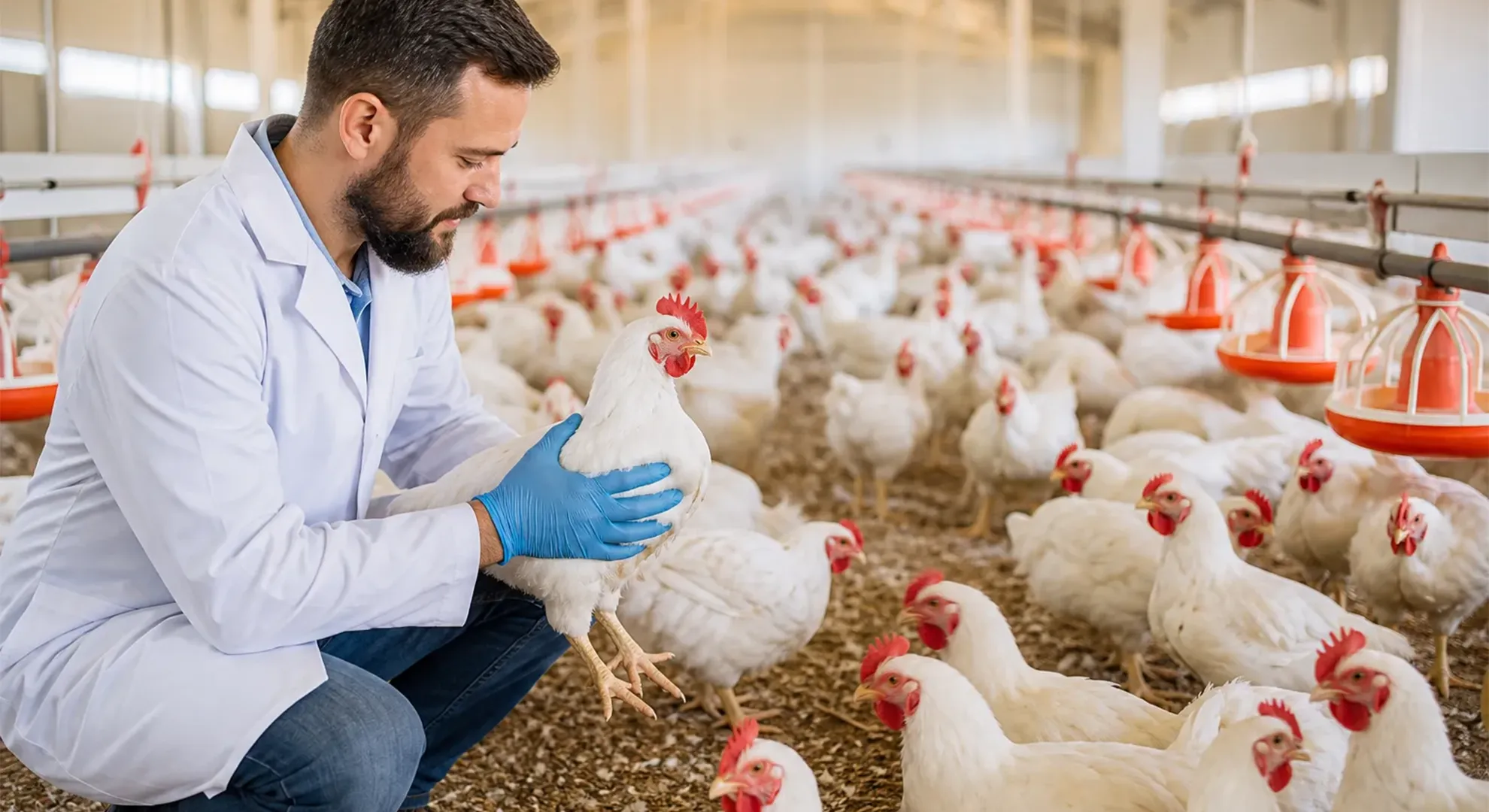
Sharjah’s Fili Poultry Farm has become the first poultry producer in the United Arab Emirates to receive the free-range label issued by the Ministry of Industry and Advanced Technology, marking a significant development for the country’s domestic food production sector.
The recognition distinguishes the farm for meeting the ministry’s approved requirements and standards for free-range poultry production. Fili operates under the Sharjah Agricultural and Livestock Production Establishment, known as Ektifa, which oversees agricultural and livestock activities in the emirate.
The certification is expected to help strengthen consumer confidence in locally produced poultry while supporting efforts to improve the competitiveness of UAE-made food products. It also reflects the growing importance of quality standards, production practices and conformity assessment in the country’s wider industrial and agricultural development strategy.
Officials said the initiative forms part of broader efforts to encourage local producers to follow recognised standards and demonstrate the quality of their products to consumers. The free-range label provides an additional means of identifying poultry produced under approved requirements, helping buyers make more informed choices about the food they purchase.
Fili’s recognition also highlights the role of cooperation between government institutions and agricultural establishments in developing domestic food production. Authorities hope that the achievement will encourage other farms to pursue similar certification and adopt practices that meet the relevant standards.
Ministry Recognises Fili’s Free-Range Production Standards
The Ministry of Industry and Advanced Technology confirmed that Fili Poultry Farm had received the UAE’s first free-range label for poultry production. According to the ministry, the recognition indicates that the farm has met the applicable requirements and standards associated with the certification.
The achievement places the Sharjah-based establishment among the country’s recognised domestic food producers and provides a formal distinction for its production system.
Dr Farah Al Zarooni, Assistant Undersecretary for the Standards Affairs Sector at the ministry, said the certification would contribute to greater confidence in national products and help strengthen their position in both domestic and international markets.
She explained that the development of food manufacturing capabilities remains an important national objective, with quality assurance and recognised standards playing a central role in supporting the sector.
According to Al Zarooni, the free-range label complements the UAE’s broader industrial ambitions by encouraging local businesses to demonstrate compliance with established requirements. It also supports the objectives of the country’s industrial strategy and the Make it in the Emirates initiative, which promotes domestic manufacturing and the growth of nationally produced goods.
The recognition is particularly relevant to the food sector, where consumers increasingly seek clear information about the origin, quality and production methods associated with the products they purchase.
By establishing a recognised framework for certification, authorities can help distinguish products that meet the relevant standards from those that have not received the same verification. This can provide a clearer basis for consumers to assess claims made about food production.
The ministry’s recognition of Fili also demonstrates how standards-based certification can support local producers in communicating the characteristics of their products to the market.
However, the label should be understood in accordance with its specific certification requirements. It confirms compliance with the applicable approved standards rather than serving as a blanket guarantee of every possible characteristic of a product.
Recognition Highlights Cooperation Between the Ministry and Ektifa
Al Zarooni said Fili’s certification was the result of cooperation between the Ministry of Industry and Advanced Technology and Ektifa, with both organisations working to promote better practices in food production.
She described the award as an example of how collaboration between government authorities and domestic producers can contribute to the development of a more competitive food industry.
The partnership reflects the importance of aligning agricultural production with recognised standards and ensuring that producers understand the requirements needed to obtain formal certification.
For farms seeking to strengthen their market position, such recognition can provide an opportunity to demonstrate that their operations follow the relevant production criteria. It can also help establish a clearer connection between the standards set by regulators and the practices followed by producers.
Al Zarooni encouraged other farmers and poultry businesses across the UAE to consider applying for the free-range label.
Wider participation could help expand the number of domestic producers operating under the certification framework and increase awareness of the standards associated with the label.
The approach also supports efforts to improve the consistency of food production practices across the country. When producers work towards common requirements, consumers can have a clearer understanding of what a particular certification represents.
For the agricultural sector, this can be especially useful as farms seek to distinguish their products in an increasingly competitive marketplace.
Fili’s achievement therefore extends beyond the recognition of a single establishment. It also provides an example for other UAE producers interested in obtaining formal recognition for their farming methods and demonstrating compliance with approved requirements.
Slow-Growing Chickens Raised Without Hormones
Dr Khalifa Musabah Al Tunaiji, Chairman of Sharjah’s Department of Agriculture and Livestock and Chief Executive of Ektifa, said Fili raises slow-growing chickens using a free-range system without the use of hormones.
He explained that the birds receive a specially formulated feed developed by Sheikh Dr Sultan bin Mohammed Al Qasimi, Supreme Council Member and Ruler of Sharjah.
The feed mixture contains organic wheat and corn, soybeans, turmeric and plant-based oils. It is also infused with several botanical ingredients, including garlic, wild thyme, oregano, eucalyptus and frankincense.
The formula represents a distinctive element of the farm’s production approach, combining conventional feed ingredients with a range of plant-derived additions.
According to Al Tunaiji, the farm’s approach to raising poultry is intended to reflect its commitment to animal care and production practices. The slow-growing chickens are raised under the farm’s free-range system, with the feed developed specifically for the operation.
The absence of hormone use is another characteristic highlighted by the establishment when describing its poultry production methods.
Consumers often consider several factors when selecting poultry, including its source, farming system, production practices and price. A certification label can help provide additional information about a producer’s compliance with the standards applicable to its products.
In Fili’s case, the free-range recognition provides formal confirmation that the farm meets the approved requirements associated with the label.
The certification should nevertheless be distinguished from other product claims. The use of particular feed ingredients, the growth characteristics of the birds and the absence of hormones are details provided by the farm’s leadership; they should not automatically be interpreted as separate certifications unless independently established.
Al Tunaiji said the recognition represented an important achievement for Fili and reflected the establishment’s commitment to its poultry production methods.
He added that the label would help strengthen confidence in the farm’s products and support their position in the market.
Feed Formula Combines Organic Grains and Botanical Ingredients
One of the distinguishing features of Fili’s poultry operation is the feed mixture developed by Sharjah’s Ruler.
The formula contains organic wheat and corn, alongside soybeans, turmeric and plant-based oils. The oils are infused with garlic, wild thyme, oregano, eucalyptus and frankincense, according to Al Tunaiji.
These ingredients form part of the feeding approach used for the farm’s slow-growing chickens.
Grains and soybeans are commonly used in poultry feed formulations because they can provide energy and protein. Turmeric and other botanical ingredients are also used in some agricultural and animal-feed preparations, although their effects depend on factors such as the quantity used, the overall feed composition and the conditions under which the animals are raised.
The specific formulation used at Fili was described by Al Tunaiji as a feed mixture developed by Sheikh Dr Sultan bin Mohammed Al Qasimi.
No detailed nutritional analysis or independent assessment of the formula’s effects was provided in the supplied information. Consequently, the significance of the ingredients should be described in terms of the farm’s stated production approach rather than as proof of specific health or nutritional benefits.
For poultry producers, feed is an important part of managing growth, animal welfare and production consistency. The formulation must be appropriate for the birds’ needs and used alongside suitable housing, care and management practices.
Fili’s recognition under the free-range label relates to the farm’s compliance with the relevant certification requirements. The feed formula is an additional feature of the operation highlighted by Ektifa’s leadership.
The combination of a distinctive feeding approach and formal certification may help the farm communicate its production model to consumers. It also gives the establishment an opportunity to explain how its farming practices align with its stated approach to poultry care and product quality.
For shoppers, the key consideration is that information about feed ingredients and farming methods should be assessed separately from the scope of a certification label. Each claim has its own meaning and should be supported by the relevant evidence.
Ektifa Emphasises Quality and Responsible Production
Al Tunaiji said the free-range award marked an important step for Fili and demonstrated the farm’s commitment to poultry care and production standards.
He said the certification would help reinforce confidence in the establishment’s products while strengthening their position in the marketplace.
Ektifa, which oversees the farm as part of Sharjah’s agricultural and livestock production activities, follows internationally approved quality standards across its products, according to Al Tunaiji. He also said the establishment observes requirements associated with organic food production.
These standards are relevant to efforts to maintain consistency and demonstrate that production processes follow defined requirements. In agricultural and food manufacturing, quality systems can help establish procedures for production, handling and assessment, depending on the standards involved.
Certification can also provide a framework for demonstrating compliance to regulators, business partners and consumers.
For producers, the process of meeting recognised standards may require careful attention to operational procedures and documentation. It can also encourage businesses to review their practices against specified criteria and maintain the processes needed to retain compliance.
In a competitive food market, these measures can help producers explain the basis for their quality claims and provide customers with clearer information.
Al Tunaiji’s comments indicate that Ektifa views the free-range recognition as part of a wider commitment to quality rather than an isolated achievement.
The farm’s certification also offers a practical example of how agricultural establishments can work with government authorities to demonstrate compliance with formal standards.
As demand for locally produced food develops, recognition of this kind can help domestic businesses communicate their production methods and establish a clearer identity for their products.
Why the Free-Range Label Matters to Consumers
Food labels play an important role in helping consumers understand the characteristics of the products they buy. Terms describing farming systems or production methods can influence purchasing decisions, but their meaning is most useful when they are supported by recognised criteria.
The UAE’s free-range label provides a formal means of identifying producers that meet the relevant approved requirements.
For consumers, certification can make it easier to distinguish a verified production claim from a description made solely for marketing purposes. It also offers a point of reference when comparing products from different suppliers.
In Fili’s case, the label recognises the farm’s compliance with the applicable standards. This can provide additional reassurance for shoppers interested in the way poultry is raised and produced.
However, a free-range label does not necessarily answer every question a consumer might have. Buyers who want information about feed composition, the use of particular ingredients, animal welfare procedures or other farming characteristics may still need to consult the producer’s product information.
Different labels can cover different aspects of food production, so consumers should avoid assuming that one certification automatically confirms every claim associated with a product.
The value of a label ultimately depends on the clarity of its requirements, the credibility of the verification process and the accuracy of the information provided to the public.
Al Zarooni said the recognition would support consumer confidence in UAE products. Her comments reflect the ministry’s view that quality infrastructure and certification can help domestic products establish credibility in the marketplace.
As more producers consider obtaining recognised labels, greater public awareness of what each certification covers will also be important.
Clear communication can help ensure that consumers understand the distinction between the farming system, the feed used, the origin of the product and any additional quality or production claims.
Certification Supports the Competitiveness of UAE-Made Products
The ministry has positioned Fili’s achievement within the broader effort to improve the competitiveness of locally manufactured and produced goods.
Al Zarooni said the UAE’s food manufacturing sector is a national priority and that the free-range label supports the goals of the country’s industrial strategy and the Make it in the Emirates initiative.
These efforts aim to strengthen the domestic production base and encourage businesses to develop products that can compete in local and international markets.
For food producers, competitiveness depends on several factors, including production quality, operational efficiency, market demand, distribution networks and consumer trust.
Formal certification can contribute by providing evidence that a product or production operation meets defined standards. It may also help businesses explain their practices to retailers, distributors and customers who require clear information about the goods they source.
In markets where buyers compare products from several origins, recognised quality systems can help domestic producers demonstrate that their operations follow established requirements.
Fili’s recognition gives the farm an additional point of distinction within the UAE poultry sector. It may also help raise awareness of locally produced poultry among consumers seeking information about farming practices.
However, certification alone does not guarantee commercial success or international market access. Producers must still meet any additional legal, regulatory and commercial requirements applicable to the markets they wish to enter.
The ministry’s emphasis on quality infrastructure suggests that certification is one component of a wider system designed to support domestic industry.
That system includes standards, conformity assessment, accreditation and market surveillance, all of which contribute in different ways to the credibility and consistency of products available to consumers.
By encouraging businesses to use these mechanisms, authorities seek to create a stronger basis for trust in national products.
Quality Infrastructure Plays a Wider Role in Industrial Development
Al Zarooni highlighted the UAE’s quality infrastructure as an important contributor to sustainable industrial development and the competitiveness of domestic products.
Quality infrastructure encompasses several connected functions. Standards establish defined requirements; conformity assessment examines whether products or processes meet those requirements; accreditation provides recognition of the competence of relevant assessment bodies; and market surveillance helps authorities monitor compliance in the marketplace.
Together, these elements can support more consistent production practices and provide a framework for verifying claims made about products.
For the food sector, this can be particularly important because consumers may not be able to assess a product’s production history simply by looking at its appearance.
Certification provides a way to communicate that a specified requirement has been assessed against an established framework.
It can also support greater accountability by making the scope of a claim clearer. Rather than relying only on a producer’s description, buyers can refer to a recognised label with defined criteria.
Al Zarooni said these systems help strengthen the standing of UAE-made products and contribute to the country’s industrial ambitions.
The approach is intended to support both domestic confidence and competitiveness beyond the UAE. Where certification is recognised by buyers and relevant authorities, it can help producers demonstrate compliance with specified requirements.
Nevertheless, each label has a particular scope, and the benefits it provides depend on the applicable standards and verification arrangements.
Fili’s free-range recognition illustrates how the country’s quality framework can be applied to agricultural production. It also demonstrates how a farm can obtain formal recognition for meeting requirements associated with its production system.
UAE Encourages More Farms to Seek Free-Range Recognition
Following Fili’s achievement, the ministry has encouraged other farmers in the UAE to apply for the free-range label.
Wider adoption could help increase awareness of the certification and provide more producers with an opportunity to demonstrate compliance with approved requirements.
For poultry businesses, obtaining formal recognition may offer a way to distinguish their operations, communicate their farming methods and respond to consumers who want clearer information about production practices.
The process also encourages producers to become familiar with the standards that apply to their operations. This can help businesses understand the requirements they must meet and the procedures needed to demonstrate compliance.
However, the suitability of the label will depend on each farm’s production system and its ability to satisfy the applicable criteria. Not every poultry operation will necessarily follow the same methods or qualify under identical conditions.
Encouraging applications can therefore be viewed as an invitation for eligible producers to assess their practices against the relevant framework.
If more farms obtain certification, consumers may have a wider selection of poultry products carrying the label. That could also improve public familiarity with the meaning and purpose of the certification.
The ministry’s approach reflects the idea that recognised standards can help support the development of a more transparent and competitive domestic food sector.
For farmers, the opportunity lies in demonstrating that their production practices meet defined requirements. For consumers, the potential benefit is clearer information about how certified products are produced.
Local Agriculture and Food Production in Sharjah
Fili’s recognition also draws attention to Sharjah’s wider agricultural and livestock activities through Ektifa.
The establishment operates across agricultural and livestock production, with the aim of developing local food production activities. Fili forms part of this broader operation, and its certification provides a specific example of a poultry farm receiving formal recognition under the UAE’s free-range label framework.
Local agricultural production can contribute to the availability of domestically produced food and create opportunities for farms to develop products suited to the market.
However, expanding local production requires more than increasing output. Producers must also manage quality, maintain suitable production systems and meet applicable regulatory requirements.
Certification can form part of that process by helping farms demonstrate that their operations meet defined criteria.
Fili’s award therefore has significance for the farm itself as well as for other domestic producers considering how to communicate their farming practices.
The recognition also reflects cooperation between the ministry and Ektifa, highlighting the role of institutional support in helping local agricultural businesses pursue approved standards.
As authorities continue to encourage certification, farms may have greater opportunities to demonstrate their production practices through recognised frameworks.
For consumers, these developments may provide additional information when choosing among poultry products. For producers, they can create a more structured basis for communicating the characteristics of their goods.
What Fili’s Achievement Means for the UAE Poultry Sector
The award marks a notable development for the UAE’s poultry industry because Fili is the first farm in the country to receive the Ministry of Industry and Advanced Technology’s free-range label.
The certification confirms that the farm meets the applicable requirements associated with the recognition. It also gives the establishment an official distinction that can be communicated to customers and market partners.
The farm’s stated approach includes raising slow-growing chickens without hormones and using a feed mixture containing organic wheat and corn, soybeans, turmeric and plant-based oils infused with several botanical ingredients.
These features form part of the production model described by Ektifa’s leadership. The certification itself relates to the approved requirements for the free-range label, and consumers should distinguish that formal recognition from other descriptions of the farm’s practices.
The ministry has presented the achievement as an example of how quality standards can strengthen confidence in locally produced goods and support the UAE’s industrial strategy.
The encouragement for other farmers to apply suggests that authorities want the recognition to serve as a model for eligible producers across the country.
Whether the label becomes more widely adopted will depend on producers’ interest, their ability to meet the requirements and the value they see in certification for their businesses.
For Fili, the immediate achievement is clear: the Sharjah farm has obtained the UAE’s first free-range label for poultry production under the ministry’s framework.
For the wider sector, the award highlights the growing role of recognised standards in communicating farming practices and supporting consumer confidence in domestic food products.
Conclusion: Fili Sets a New Benchmark for Certified Poultry Production
Fili Poultry Farm in Sharjah has become the first UAE poultry farm to receive the Ministry of Industry and Advanced Technology’s free-range label, marking an important step for certified local food production.
Operating under Ektifa, the farm raises slow-growing chickens without the use of hormones and uses a feed formula developed by Sheikh Dr Sultan bin Mohammed Al Qasimi. The mixture includes organic wheat and corn, soybeans, turmeric and plant-based oils infused with garlic, wild thyme, oregano, eucalyptus and frankincense.
Officials said the recognition confirms compliance with approved requirements and is expected to help strengthen consumer confidence in UAE-made products.
Dr Farah Al Zarooni highlighted the importance of standards and certification in supporting the country’s food manufacturing ambitions, while Dr Khalifa Musabah Al Tunaiji said the award reflected Fili’s commitment to poultry care and production practices.
The ministry has also encouraged other farmers to seek the label, with the broader objective of promoting recognised production standards and improving the competitiveness of domestic goods.
Fili’s achievement represents more than a certification milestone for one farm. It provides an example of how UAE agricultural producers can use approved standards to communicate their production practices and strengthen their position in the marketplace.
As the country’s food production sector develops, the continued use of clear standards and credible certification will remain important in helping consumers understand product claims and supporting confidence in locally produced food.