The United Arab Emirates has reiterated its commitment to safeguarding the country against potential threats from Iran, with an official confirming that authorities are prepared to implement all necessary measures to protect national security should further attacks occur in the future.
UAE Reaffirms Readiness to Protect National Security Against Possible Iranian Attacks.
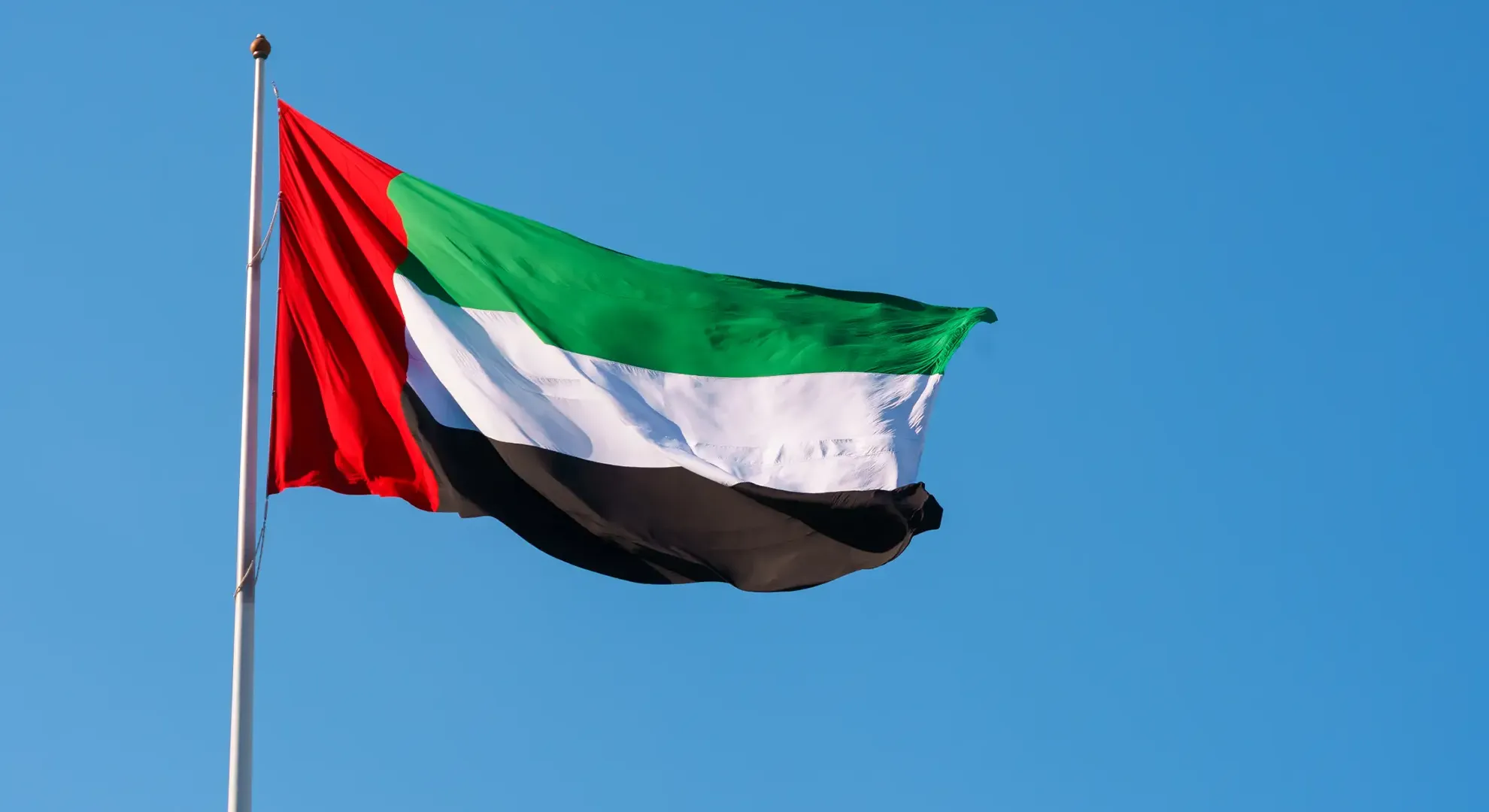
UAE Ready to Take All Necessary Steps Against Further Iranian Attacks, Says Senior Official
The United Arab Emirates will take whatever action is considered necessary to defend its sovereignty, safeguard national security and protect its people if Iran launches further attacks, a senior Emirati official said on Thursday, signalling that the country has not ruled out any response to potential threats.
Dr Ali Rashid Al Nuaimi, Chairman of the Defence, Interior and Foreign Affairs Committee of the Federal National Council (FNC), made the remarks while speaking at the UAE Correspondents’ Majlis in Dubai. During the discussion, he was asked whether the UAE would respond if Iran carried out another attack against the country.
When the question was put directly to him, Al Nuaimi gave a brief but emphatic answer: “Everything.”
His statement underlined the UAE’s position that protecting its territory and population remains a priority amid continuing regional uncertainty. It also came against the backdrop of heightened tensions following reported Iranian missile and drone attacks affecting the UAE and other Gulf countries.
The UAE has repeatedly condemned attacks on its territory, describing them as violations of its sovereignty and security. Emirati authorities have also maintained that the country reserves the right to take appropriate measures in accordance with international law to defend itself against further threats.
According to the supplied account, the country has faced repeated waves of missile and drone attacks since the conflict escalated in late February. The reported targets have included civilian locations and critical infrastructure, such as airports, ports and residential areas.
In a separate incident cited by the Ministry of Foreign Affairs on August 31, UAE air defence systems intercepted an Iranian drone over the country’s territorial waters. The ministry condemned the incident, describing it as a violation of the UAE’s sovereignty and reiterating that threats to the country’s security would not be tolerated.
Al Nuaimi’s remarks indicate that, while the UAE continues to support diplomatic efforts to resolve the crisis, its leadership is maintaining a clear position on the need to protect the country from any further attacks.
UAE Maintains Its Right to Defend National Security
The UAE has repeatedly emphasised the importance of preserving its territorial integrity and protecting residents, citizens and critical infrastructure from external threats.
Al Nuaimi’s comments reinforced that position, making clear that the country would consider the measures required to respond if another attack occurred. His use of the word “Everything” suggested that he was not limiting the possible response to a particular category of action.
However, he did not publicly outline a specific military, diplomatic or other course of action during the exchange described in the supplied report. His statement should therefore be understood as an indication of the UAE’s stated readiness to respond, rather than confirmation that a particular response has been decided.
The remarks also reflect the difficult balance facing Gulf states as they navigate regional security concerns while seeking to prevent further escalation.
For the UAE, protecting essential infrastructure is especially important because airports, ports, transport networks and other facilities play a central role in the country’s economy and international connectivity. Any threat to these assets can have consequences beyond immediate security concerns, affecting travel, trade, logistics and public confidence.
The country’s position has been that attacks against its territory cannot be treated as acceptable, while diplomatic engagement remains important to finding a lasting resolution.
Al Nuaimi’s comments came as questions continued over whether the confrontation with Iran could develop into a prolonged regional conflict or whether diplomatic efforts might eventually create conditions for de-escalation.
Could the Iran Conflict Continue for Years?
Al Nuaimi expressed the view that the confrontation involving Iran was unlikely to continue for as long as the Russia-Ukraine war. He predicted that the conflict could come to an end before the close of 2026.
His assessment offers a relatively shorter timeframe for the conflict than the extended fighting witnessed between Russia and Ukraine. However, it remains a forecast rather than a confirmed timeline, and the eventual course of events will depend on political decisions, military developments and diplomatic negotiations.
During the discussion in Dubai, Al Nuaimi was asked whether the region could face a prolonged cycle of confrontation, with periods of intense fighting followed by temporary calm.
In response, he argued that the circumstances surrounding the Iran-related conflict differed fundamentally from those of the Russia-Ukraine war.
The comparison is significant because prolonged conflicts can evolve through multiple phases, with negotiations, military operations and temporary reductions in hostilities occurring without producing a comprehensive settlement. Such patterns can make it difficult to determine when a conflict is likely to end.
Al Nuaimi nevertheless indicated that he did not expect the confrontation involving Iran to follow the same extended trajectory. His prediction that it could conclude before the end of 2026 reflected his assessment of the differences between the two conflicts.
He did not, however, rule out the possibility of another major escalation. He said the future would depend considerably on decisions taken by Iran’s leadership, its commitments and the direction it wanted to pursue for the country’s people.
His comments suggest that the possibility of a wider confrontation cannot be separated from the choices made by the parties involved. Changes in political positions, security calculations and diplomatic engagement could all influence whether tensions decrease or rise again.
The distinction between an immediate reduction in hostilities and a lasting resolution is also important. A decline in attacks would not necessarily mean that all underlying disagreements had been resolved, just as continued diplomatic contact would not guarantee an immediate end to military tensions.
Al Nuaimi’s forecast therefore reflects his view of the conflict’s possible duration, rather than certainty about when the situation will stabilise.
UAE Says It Favoured a Political Solution From the Beginning
Al Nuaimi reiterated that the UAE had supported a diplomatic approach to resolving the crisis from the outset. According to his remarks, the country had sought political engagement and greater involvement by regional states in efforts to address the dispute.
The UAE’s stated preference for diplomacy is relevant to its broader position on regional stability. Gulf countries have strong economic, commercial and security interests in preventing a wider confrontation that could disrupt transport routes, energy markets and cross-border trade.
Diplomatic solutions can provide a way to address disputes while reducing the risk of further military escalation. However, their success often depends on whether the parties are willing to engage, meet commitments and agree on arrangements that address their respective concerns.
Before the conflict began in late February, the UAE had taken diplomatic steps intended to prevent its territory from becoming involved in military operations against Iran.
In January, the country reaffirmed that its territory, airspace and waters would not be used for military action against Iran. It also stated that it would not provide logistical support for such operations.
These assurances formed part of the UAE’s stated effort to avoid being drawn directly into a confrontation while maintaining its national security interests.
Despite those diplomatic efforts, the conflict began on February 28, according to the supplied account. Since then, the UAE has maintained that it is not a party to the war and has continued to call for de-escalation and a diplomatic settlement.
The country’s position reflects two objectives: avoiding unnecessary involvement in a wider conflict and ensuring that any attacks against its own territory are addressed.
These objectives are not necessarily contradictory. A country can oppose further escalation while maintaining that it has the right to defend itself if attacked.
Al Nuaimi’s comments illustrate this distinction. His emphasis on the UAE’s readiness to take necessary measures was accompanied by a reaffirmation of the country’s preference for a political resolution.
The challenge for regional diplomacy is to find a path that addresses security concerns and reduces the likelihood of further attacks without widening the confrontation.
What Could Determine the Conflict’s Future?
Al Nuaimi said the course of the conflict would depend substantially on the decisions and commitments of Iran’s leadership.
His remarks indicate that he views the political direction chosen by Tehran as an important factor in determining whether tensions can be reduced or whether the region faces another major escalation.
The decisions of governments during periods of conflict can affect the prospects for negotiations, the implementation of commitments and the willingness of other countries to engage diplomatically.
Where trust is limited, even preliminary steps towards dialogue may require additional assurances. Conversely, credible actions that reduce security risks can create opportunities for renewed communication.
The future of the confrontation may also depend on the willingness of regional countries to contribute to de-escalation efforts. Al Nuaimi’s support for greater regional participation suggests that he sees neighbouring states as having an important role in addressing the crisis.
Regional involvement can provide additional channels for communication and help countries identify areas of common interest. However, a successful settlement would still depend on the positions taken by the principal parties and their willingness to translate diplomatic discussions into practical commitments.
Al Nuaimi’s prediction that the conflict could end before the close of 2026 should therefore be viewed in the context of these uncertainties. While he expressed the expectation that the confrontation would not continue for years, he also acknowledged the possibility of renewed large-scale fighting.
The contrast between those two outcomes highlights the uncertain nature of the situation. A shorter conflict would require developments that bring the parties closer to a settlement, while a failure to resolve the main disagreements could allow tensions to persist or escalate.
For the UAE, the immediate concern remains the protection of its population, territory and infrastructure, alongside efforts to support a political outcome that reduces regional instability.
Can the UAE and Iran Restore Confidence in Their Relationship?
Beyond the immediate security concerns, Al Nuaimi addressed whether the UAE and Iran could eventually rebuild trust after the confrontation.
He indicated that restoring confidence would require more than reopening diplomatic channels or resuming discussions. In his view, meaningful improvement would depend on genuine changes in behaviour supported by concrete initiatives.
His comments suggest that the existence of dialogue alone would not necessarily resolve the concerns that have developed during the conflict.
Diplomatic relations can provide a framework for communication, but rebuilding confidence after a serious security dispute often requires evidence that the issues contributing to the confrontation are being addressed.
For countries affected by attacks or security threats, assurances may need to be accompanied by actions that demonstrate a willingness to reduce tensions and avoid similar incidents in the future.
Al Nuaimi also referred to changes within Iran’s political system since the conflict began, describing the transformation as an ongoing process. He argued that Iran’s leadership needed to recognise the broader consequences of its decisions.
His assessment placed responsibility for changing the country’s approach on its leadership, suggesting that any improvement in relations would depend on choices made in Tehran.
However, he did not present a formal list of conditions that Iran would have to meet before relations with the UAE could improve. His comments focused instead on the need for genuine change and practical steps that could support a more stable relationship.
The distinction matters because rebuilding trust is generally a process rather than a single diplomatic event. Meetings and public statements can open the door to renewed engagement, but their long-term significance depends on whether they are followed by sustained action.
For the UAE and Iran, future relations would be shaped by security developments, diplomatic commitments and the extent to which both sides are able to address their concerns.
Al Nuaimi Distinguishes Between Iran’s Leadership and Its People
During the discussion, Al Nuaimi also drew a distinction between Iran’s political leadership and its population.
He said the Iranian people deserved better living conditions and a more promising future, expressing hope that the government would change its approach, prioritise public welfare and take steps to end the suffering associated with the conflict.
His remarks suggested that criticism of the Iranian government’s decisions should not automatically be interpreted as criticism of the country’s population.
This distinction is relevant in discussions about international conflict, where the actions of governments can have consequences for ordinary people who may have little influence over political or military decisions.
Military confrontations can create wider social and economic pressures, affecting families, employment, public services and people’s sense of security. Their consequences may also extend beyond the countries directly involved in the fighting.
Al Nuaimi argued that the impact of the confrontation was not limited to Iran, the United States and Israel. He said its effects were being felt internationally, reinforcing the importance of changing the approach that had contributed to the crisis.
The broader point in his remarks was that the decisions of political leaders can have consequences well beyond their own borders. A change in policy, he suggested, could be important not only for regional relations but also for the welfare of Iran’s population.
He expressed hope that Iran’s government would place greater emphasis on improving the lives of its people and reducing their suffering.
At the same time, he maintained that the responsibility for changing course rested with the Iranian leadership.
His comments did not provide a detailed proposal for political reform or specify how any change in approach should be implemented. Instead, they reflected his view that improved relations would require a meaningful shift in policy and conduct.
Why Rebuilding Trust Requires More Than Renewed Dialogue
The question of whether the UAE and Iran can restore trust goes beyond whether diplomatic communication can resume.
When relations are affected by serious security incidents, governments may need to consider how future risks can be reduced, how commitments can be verified and how disagreements can be managed without resorting to further confrontation.
Al Nuaimi’s emphasis on concrete initiatives reflects this challenge. A return to dialogue could be an important first step, but lasting progress would require both sides to demonstrate that their actions support a more stable relationship.
Potential areas of diplomatic engagement could include communication between officials, measures to prevent misunderstandings, discussions about regional security and efforts to reduce the likelihood of future incidents. These are general mechanisms used in international diplomacy; Al Nuaimi did not announce a specific programme of this kind in the supplied remarks.
Any future initiative would also have to take account of the concerns of the countries involved and the wider regional environment.
For the UAE, national sovereignty and the safety of its people remain central considerations. Iran, meanwhile, would have to determine its own political and diplomatic priorities.
Whether those positions can be reconciled will depend on the willingness of the parties to engage in discussions and make commitments that can be sustained over time.
The prospect of rebuilding confidence should therefore be considered separately from the immediate question of ending the current conflict. A reduction in hostilities could create an opportunity for diplomacy, but restoring a stable relationship could take longer.
Al Nuaimi’s remarks indicate that he does not view renewed communication alone as sufficient. He has called for a more substantive change in approach, although he has not publicly outlined a detailed framework for achieving it.
UAE Balances Diplomatic Efforts With Security Preparedness
The UAE’s position, as reflected in Al Nuaimi’s remarks, combines support for a political solution with a clear commitment to national defence.
The country has said it does not want to become a party to the conflict and has pointed to earlier diplomatic efforts intended to prevent escalation. At the same time, officials have stressed that the UAE will take the measures necessary to protect its sovereignty and population if further attacks occur.
This approach reflects the security challenges facing countries that seek to avoid wider military involvement while responding to direct threats against their territory.
Diplomatic engagement can help reduce tensions and create channels for resolving disputes, but it does not remove the need for governments to prepare for possible security incidents.
The UAE’s repeated calls for de-escalation, alongside its stated readiness to respond to further attacks, indicate that it is pursuing both objectives.
Al Nuaimi’s comments also highlight the importance of the decisions made by Iran’s leadership. His expectation that the conflict may end before the close of 2026 rests alongside his warning that another major confrontation cannot be ruled out.
The situation therefore remains dependent on how the parties respond to future developments and whether diplomatic efforts can produce a durable reduction in tensions.
For the UAE, the priority is to prevent further threats to its population and infrastructure while supporting efforts to achieve regional stability.
Conclusion: UAE Keeps All Options Open as Regional Tensions Continue
The UAE has reiterated that it will take all necessary measures to defend its sovereignty, national security and people if Iran launches further attacks, according to comments made by senior Emirati official Dr Ali Rashid Al Nuaimi in Dubai.
His response that “Everything” remained possible underlined the country’s stated readiness to consider the measures required to protect itself. However, he did not announce a specific retaliatory plan or provide details of any future action.
Al Nuaimi also expressed the view that the confrontation involving Iran would not necessarily last as long as the Russia-Ukraine war. He predicted that it could end before the close of 2026, while acknowledging that another full-scale conflict remained possible.
He reiterated that the UAE had supported a political solution from the beginning and had taken diplomatic steps intended to prevent its territory, airspace and waters from being used for military action against Iran.
On the question of future relations between Abu Dhabi and Tehran, Al Nuaimi said restoring trust would require substantive change and practical initiatives rather than dialogue alone. He also called attention to the impact of the conflict on ordinary Iranians, arguing that the country’s leadership needed to reconsider its approach and prioritise the welfare of its people.
His comments present a picture of a UAE seeking to avoid further escalation while maintaining its stated right to defend itself against attacks.
Whether the conflict ends within the timeframe he predicted, and whether relations between the two countries can eventually improve, will depend on developments that remain uncertain. For now, the UAE’s public position is that diplomatic efforts should continue, but national security and the protection of its population remain non-negotiable priorities.