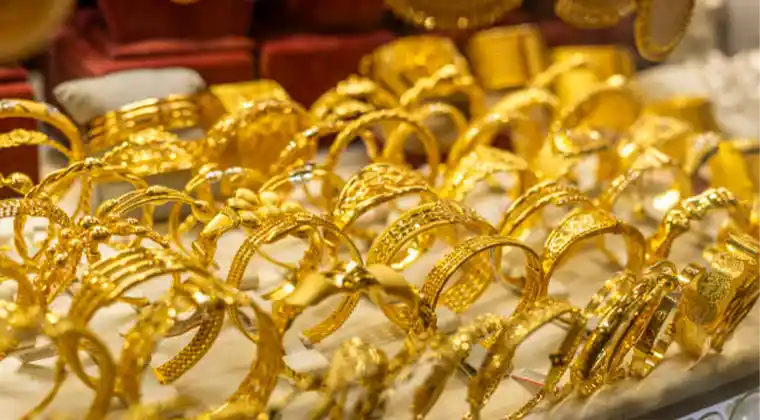
Gold prices in Dubai have climbed to Dh503 per gram, reflecting a significant upward movement in international markets. The increase follows a broader global rally in gold, highlighting changing market conditions and renewed momentum in the precious metals sector.
Dubai Sees Gold Prices Rise to Dh503 per Gram Following a Global Market Upswing.
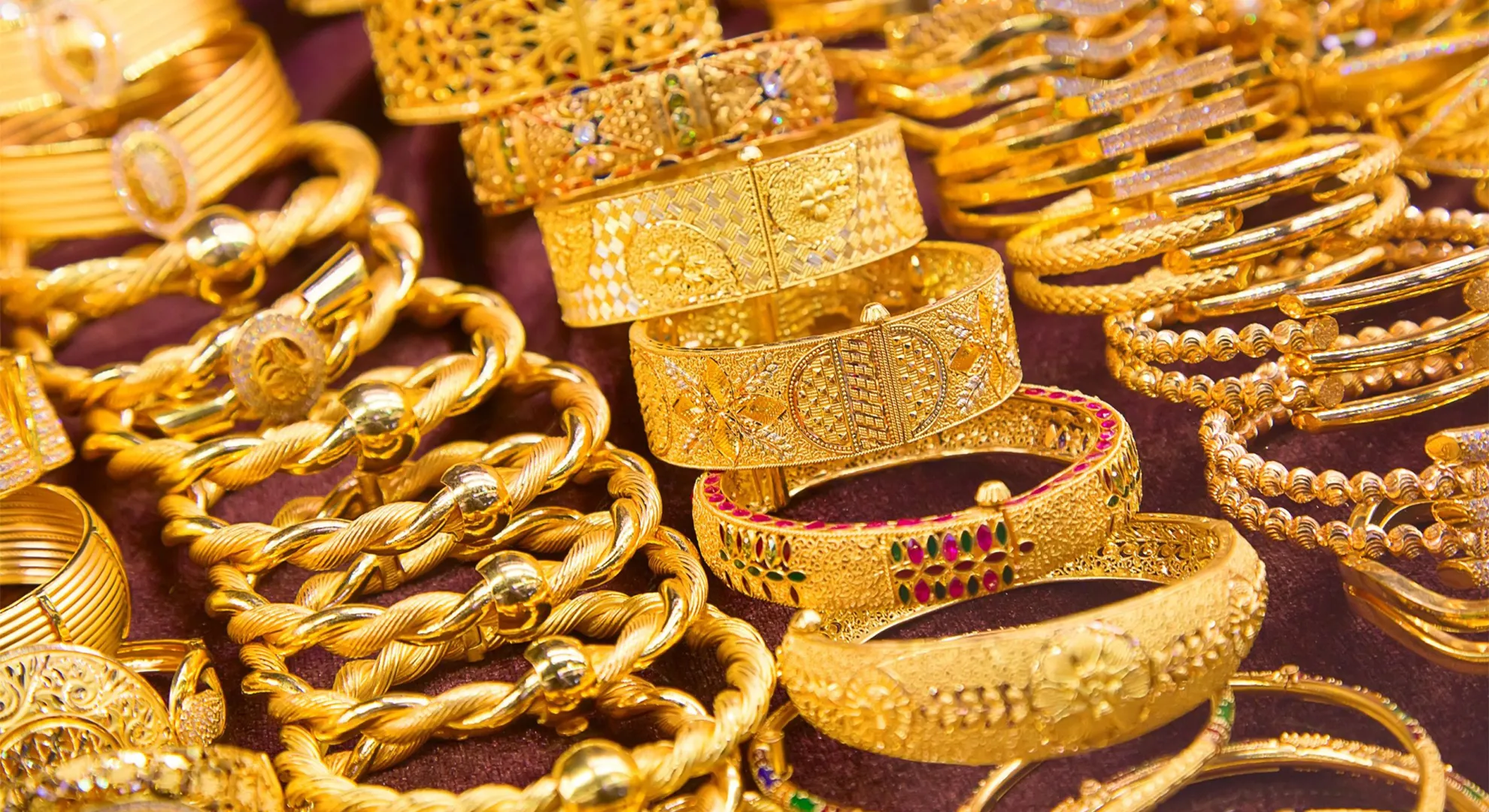
Dubai Gold Prices Rebound to Dh503 per Gram as Global Bullion Markets Recover
Gold prices in Dubai moved higher during Friday morning trading, recovering some of the ground lost in the previous session as the international precious metals market showed signs of renewed strength. The latest increase pushed the price of 24-karat gold to Dh503 per gram, marking a rise of more than Dh2 compared with Thursday’s closing level. However, despite the early recovery, market analysts remain cautious about the possibility of a sustained rally, with concerns surrounding US inflation and the future direction of Federal Reserve monetary policy continuing to influence investor sentiment.
The improvement in gold prices comes after the precious metal experienced selling pressure earlier in the week. Developments in the United States, particularly the release of inflation figures that came in higher than anticipated, have increased uncertainty over the outlook for interest rates. Investors are assessing whether the Federal Reserve may need to maintain its restrictive monetary approach for longer or consider additional increases in borrowing costs to bring inflation under control.
These concerns have created a challenging environment for gold and silver, which can face pressure when expectations of higher interest rates strengthen. Nevertheless, the recovery recorded on Friday suggests that prices can respond quickly to changing market conditions as traders reassess their positions and react to fresh developments in the global economy.
Dubai Gold Rates Rise Across Major Purity Categories
Gold prices across Dubai’s main purity categories recorded gains during early trading on Friday. The 24-karat variety, which contains the highest proportion of pure gold among the commonly traded retail categories, was quoted at Dh503 per gram at the start of the session. This represented an increase from Dh500.75 per gram at Thursday’s market close.
The 22-karat category was priced at Dh466.90 per gram, while 21-karat gold was trading at Dh446.75 per gram. Meanwhile, the rate for 18-karat gold reached Dh363 per gram.
The latest movement provides a snapshot of how international bullion market developments are reflected in Dubai’s retail gold prices. Local rates are closely linked to global gold quotations, although the final amount paid by consumers can also depend on jewellery-making charges, retailer pricing policies, product design and other applicable costs.
For shoppers planning to purchase gold jewellery, even a relatively small change in the per-gram rate can affect the overall cost of a purchase. The difference becomes more noticeable when buying heavier items, such as necklaces, bracelets or traditional jewellery sets, where the total gold weight is considerably higher.
However, the rise in the market rate does not necessarily mean that all jewellery retailers will offer identical final prices. Consumers should distinguish between the quoted gold rate and the complete retail bill, which may include workmanship charges and other costs.
The increase in Dubai’s gold prices also reflects the broader relationship between local bullion rates and international trading activity. Since gold is traded globally, developments involving inflation, interest rates, currency movements and investor demand can influence prices in markets around the world.
International Gold Prices Recover During Friday Trading
The improvement in Dubai’s domestic gold rates coincided with a recovery in the international market. Spot gold was trading at approximately $4,173 per ounce at 9.30 am UAE time on Friday, according to the market figures provided.
The global benchmark is an important indicator for traders, investors and jewellery businesses because it reflects the price at which gold is being traded internationally. Movements in spot gold can influence wholesale transactions and eventually feed into retail pricing in markets such as the United Arab Emirates.
Friday’s advance followed a period of weakness triggered by concerns over the US inflation outlook. The earlier decline demonstrated how sensitive precious metals can be to changes in expectations about monetary policy, particularly when economic data differs from what financial markets had anticipated.
When inflation remains stubbornly high, central banks may face pressure to maintain elevated interest rates or increase them further. Such expectations can influence investment decisions across asset classes, including gold, government bonds and currencies.
Gold is widely regarded as a store of value and is often purchased as a means of diversifying investment portfolios. However, unlike interest-bearing financial assets, bullion does not generate regular income. As a result, the opportunity cost of holding gold can increase when investors expect interest rates to rise.
This relationship does not mean gold prices always fall when interest rates increase. Other factors, including geopolitical uncertainty, central-bank purchases, currency movements and demand for safe-haven assets, can also play important roles. Nevertheless, expectations surrounding US monetary policy remain a significant influence on short-term price movements.
The latest recovery therefore needs to be viewed against the wider market environment rather than as clear evidence that the recent downward pressure has ended. Friday’s movement indicates an improvement in prices during early trading, but the direction of the market over the coming sessions will depend on how investors interpret further economic information and policy signals.
US Inflation Data Creates Fresh Uncertainty for Precious Metals
A key factor behind the recent volatility has been the latest US inflation reading, which was higher than market participants had expected. The figures strengthened concerns that inflationary pressures may not be easing quickly enough to allow the Federal Reserve to adopt a more accommodative monetary policy.
Carsten Menke, Head of Next Generation Research at Julius Baer, explained that the inflation report had reinforced market fears of further interest-rate increases by the US central bank. According to his assessment, the development placed pressure on both gold and silver.
The concern is that persistent inflation could encourage policymakers to keep monetary conditions tight for an extended period. If the Federal Reserve considers additional rate increases necessary, investors may revise their expectations for future borrowing costs, bond yields and the performance of non-yielding assets.
Gold can become less attractive to some investors when returns available from interest-bearing investments improve relative to the metal. At the same time, changes in expectations can prompt traders to adjust their portfolios quickly, producing sharp movements in bullion prices even when the longer-term economic outlook has not changed substantially.
The reaction to the inflation figures illustrated this sensitivity. Menke said gold declined by as much as 2% following the release, while silver recorded a fall approximately twice as large.
The difference in the scale of the declines highlights the fact that gold and silver, although both classified as precious metals, can respond differently to changes in financial conditions. Silver is used not only as an investment asset but also in a range of industrial applications. Its price can therefore be affected by factors beyond interest-rate expectations, including industrial demand and broader economic activity.
Gold, meanwhile, is influenced by its role as an investment asset, a reserve holding and a store of value. Investor demand can shift in response to changes in inflation expectations, currency strength, geopolitical developments and confidence in the wider financial system.
The sharp reaction to the US data shows how important economic announcements have become for short-term trading decisions. Even when investors continue to view gold favourably over a longer period, unexpected inflation figures can trigger temporary selling as markets reassess the likely direction of interest rates.
Julius Baer Expects Limited Short-Term Gains
Despite the recovery in prices on Friday, Julius Baer remains cautious about the near-term outlook for gold and silver. Menke indicated that the recent movements should largely be understood as short-term reactions to changing market sentiment rather than evidence of a major shift in the underlying fundamentals.
According to his assessment, the broader conditions supporting the precious metals market remain largely intact. However, he believes that substantial additional gains could be difficult to achieve in the immediate future while the Federal Reserve remains focused on controlling inflation.
The distinction between short-term market movements and long-term investment considerations is important when assessing the outlook for gold. Prices can rise or fall sharply over a few trading sessions as investors respond to economic announcements, changes in interest-rate expectations and adjustments in market positioning.
Longer-term trends, by contrast, may be shaped by more persistent factors, including government debt, fiscal pressures, central-bank policies and investor demand for assets perceived as stores of value.
Menke’s comments suggest that the present environment may limit the scope for an immediate and sustained rally, even though longer-term factors could continue to provide support. In practical terms, this means the market could experience periods of recovery followed by renewed pressure as traders react to fresh economic developments.
For investors, the outlook remains dependent on the balance between two competing forces. On one side, inflation concerns and the possibility of further Federal Reserve tightening may weigh on bullion. On the other, concerns about the long-term financial position of the United States could strengthen demand for gold as a portfolio diversification asset.
The interaction between these forces will help determine whether the recent decline proves temporary or develops into a more prolonged period of weakness.
Menke’s assessment does not rule out further gains in gold prices. Rather, it suggests that investors should be cautious about expecting rapid increases while the US central bank continues to prioritise inflation control.
Why Interest-Rate Expectations Matter for Gold
The relationship between gold and interest rates is one of the most closely watched factors in the precious metals market. Although gold has traditionally been used as a store of value, it does not pay interest or provide a dividend to holders.
When investors expect central banks to raise interest rates, yields on some interest-bearing assets may become more attractive. This can reduce the relative appeal of holding gold, particularly among investors who are comparing potential returns across different asset classes.
Conversely, when interest rates are expected to decline, the opportunity cost of holding gold may fall. That can provide support for bullion, although the actual price response also depends on inflation expectations, currency movements and other market conditions.
The Federal Reserve’s policy decisions are especially influential because the US dollar plays a central role in international financial markets and gold is commonly quoted in dollars. Changes in the dollar’s value can affect the cost of gold for buyers using other currencies, potentially influencing demand.
A stronger dollar can make dollar-priced gold more expensive for international buyers, while a weaker dollar can make it more affordable for holders of other currencies. These relationships are not automatic, but they are important elements of the market’s overall pricing dynamics.
Inflation adds another layer of complexity. Gold is often viewed as a potential hedge against a decline in purchasing power over time. However, the short-term reaction to inflation data can be negative if investors believe that rising prices will force the Federal Reserve to maintain or increase interest rates.
That appears to be the central concern highlighted by the latest US figures. Instead of focusing exclusively on inflation as a reason to purchase gold, traders have also considered how policymakers may respond to it.
As a result, gold prices can move lower immediately after a stronger inflation report, even when longer-term concerns about purchasing power remain relevant.
For the Dubai market, these international developments are important because changes in global bullion prices can quickly influence local per-gram rates. Consumers and investors therefore often monitor US economic announcements alongside the daily gold prices quoted by retailers in the UAE.
Long-Term US Debt Concerns Could Support Gold
While the near-term outlook remains uncertain, Menke identified rising concerns about US government indebtedness as a factor that could support gold over a longer period.
Growing public debt can raise questions about the future cost of servicing government borrowing, the sustainability of fiscal policy and the potential implications for financial markets. As debt levels and associated interest expenses attract greater attention, some investors may look to diversify their portfolios through assets that are not directly dependent on the financial performance of a particular government or company.
Gold has historically played a role in portfolio diversification because it is a physical asset with a global market and no direct issuer liability. Investors may consider it when they want exposure to an asset that behaves differently from conventional financial holdings.
However, gold is not risk-free, and its price can fluctuate considerably. It does not guarantee protection against losses over every investment period, and its performance depends on a variety of market conditions.
Menke’s comments point to a possible difference between the short-term and long-term outlooks. In the near term, inflation-driven expectations of higher interest rates may restrict the metal’s upside. Over a longer horizon, concerns about US indebtedness and the increasing burden of interest payments could provide a supportive backdrop.
This perspective reflects the idea that the factors influencing gold prices do not always operate in the same direction or over the same time frame.
Short-term trading can be dominated by economic releases and changes in monetary policy expectations, while longer-term investment demand may be affected by broader questions about government finances, currency stability and portfolio diversification.
For market participants, the challenge is determining which of these forces is likely to have the greatest influence at any given moment.
Gold and Silver Experience Different Degrees of Volatility
The latest US inflation report affected both gold and silver, although the price movements were not identical. According to Menke, gold fell by as much as 2% after the data was released, while silver’s decline was approximately twice as steep.
The more pronounced movement in silver highlights the differences between the two metals. Gold is widely held by central banks, institutional investors, jewellery buyers and individuals seeking to preserve wealth or diversify their investments.
Silver also attracts investment demand, but its industrial applications mean that its price is influenced by a wider range of economic considerations. Expectations about manufacturing activity and industrial consumption can affect the outlook for silver alongside changes in interest rates and currency markets.
These differences can result in silver experiencing larger price swings during periods of market stress or shifting investor sentiment. Nevertheless, both metals can be affected by changes in the perceived attractiveness of non-yielding assets.
Menke also commented on the relationship between gold and silver through the gold-to-silver ratio, a measure calculated by comparing the price of one ounce of gold with the price of one ounce of silver.
The ratio is used by some market participants to assess the relative performance and valuation of the two metals. When the ratio rises, gold is becoming more expensive relative to silver; when it falls, silver is gaining relative to gold.
According to Menke, the ratio had returned to levels that Julius Baer considered reasonable. This prompted the bank to close its existing long position in the ratio.
A long position in the gold-to-silver ratio generally expresses an expectation that gold will outperform silver, causing the ratio to rise. Closing such a position indicates that the investment strategy has reached a point where the bank no longer sees the same justification for maintaining it.
The decision should be understood in the context of Julius Baer’s specific market strategy rather than as a universal recommendation for investors. Different market participants may have different objectives, time horizons and assessments of the relationship between the two metals.
Market Sentiment Continues to Drive Short-Term Movements
The recent price swings underline the role of investor sentiment in determining the direction of precious metals over short periods. Economic announcements can rapidly change expectations, prompting traders to buy or sell positions before the underlying economic outlook has materially changed.
When inflation figures exceed forecasts, investors may anticipate a more restrictive policy response from the Federal Reserve. That can lead to immediate selling in gold and silver as market participants adjust to the possibility of higher interest rates.
However, prices may subsequently recover if traders reassess the implications of the data or if other factors provide support. This helps explain why bullion can rebound during one session after experiencing significant losses during an earlier period.
Menke emphasised that these shorter-term changes are often sentiment-driven and do not necessarily alter the fundamental outlook for the metals.
His assessment suggests that investors should distinguish between temporary price reactions and changes that could have a more lasting impact on supply, demand or the broader investment case for gold.
Nevertheless, sentiment can remain influential for longer than expected. If inflation stays elevated and the Federal Reserve continues to signal a firm approach to monetary policy, market participants may remain reluctant to pursue substantial gains in bullion.
On the other hand, if concerns about economic stability, government borrowing or financial-market risks become more prominent, demand for gold could receive additional support.
The direction of prices will depend on how these competing influences develop and how investors interpret the information available to them.
Downside Risks May Be Limited if Rate Increases Are Less Aggressive
Although Julius Baer sees limited room for significant near-term gains, Menke also suggested that the potential for a deeper decline could be constrained under certain conditions.
He noted that downside risks may remain limited if the Federal Reserve raises interest rates less frequently than financial markets currently anticipate.
This qualification is important because financial markets respond not only to actual policy decisions but also to the difference between those decisions and what investors have already priced in.
If traders expect an aggressive series of rate increases and the Federal Reserve ultimately adopts a more measured approach, the resulting adjustment in expectations could support gold. Even if interest rates continue to rise, a slower pace of tightening than anticipated may reduce some of the pressure on bullion.
Conversely, if incoming economic data leads investors to expect more rate increases than previously forecast, gold could face additional downward pressure.
The market’s response therefore depends on the direction of policy expectations as well as the actual level of interest rates.
Menke’s comments indicate that the outlook is not simply a choice between a strong rally and a steep decline. Instead, the market may remain within a period of uneven trading, with gains limited by inflation concerns but losses potentially moderated if expectations for further monetary tightening prove too aggressive.
Such an environment can be challenging for investors attempting to identify a clear trend. Prices may react sharply to individual economic announcements before stabilising as traders reassess the likely path of monetary policy.
For jewellery buyers, this uncertainty can make the timing of purchases difficult. A short-term decline does not guarantee that prices will continue falling, just as a morning recovery does not establish that a sustained rally has begun.
Consumers who intend to buy gold should therefore consider their immediate needs, budget and the total retail cost rather than relying entirely on expectations about future market movements.
What Dubai Consumers Should Know About the Latest Increase
The rise in Dubai’s gold rates is relevant to consumers who are planning jewellery purchases, particularly those buying products priced according to the weight and purity of the metal.
At Dh503 per gram, the quoted 24-karat rate was Dh2.25 higher than the Thursday closing price of Dh500.75. The difference illustrates how daily changes in the international bullion market can affect the amount consumers pay for gold.
The impact on a purchase depends on the weight involved. For example, a higher per-gram rate can make a noticeable difference to the gold component of a heavier jewellery item. Making charges and other retail costs may increase the final amount further.
Buyers should also remember that 24-karat, 22-karat, 21-karat and 18-karat gold differ in purity. The rates for these categories are not interchangeable, and the appropriate choice depends on the intended use, design and personal preferences of the buyer.
Jewellery is frequently made using lower-purity gold alloys to achieve particular characteristics, including strength and suitability for everyday wear. As a result, the per-gram prices of the different categories vary.
It is also useful to compare prices across retailers and ask for a clear breakdown of the final bill. The quoted metal rate, making charges, applicable taxes and any other costs should be considered when assessing the overall value of a purchase.
Because gold prices can change throughout periods of market volatility, buyers should check the latest rates with their chosen retailer before completing a transaction.
The Friday morning increase offers a useful indication of the direction of prices at the time reported, but it should not be treated as a guarantee of where rates will stand later in the day or during the following sessions.
Outlook: A Cautious Recovery Amid Inflation Concerns
Gold’s move back to Dh503 per gram in Dubai reflects a recovery during early Friday trading after recent losses. International spot gold was quoted at approximately $4,173 per ounce at 9.30 am UAE time, while the main local purity categories also recorded higher rates.
Despite the rebound, the wider market outlook remains uncertain. The latest US inflation figures have strengthened concerns that the Federal Reserve may need to maintain a restrictive stance or consider additional interest-rate increases.
Julius Baer believes that this environment could limit the potential for significant short-term gains in gold and silver. Menke’s assessment is that the immediate movements are largely driven by investor sentiment, while the fundamental factors supporting the metals remain broadly unchanged.
At the same time, longer-term concerns about US government debt and the cost of servicing it could provide support for gold. The potential for a less aggressive pace of Federal Reserve tightening than markets currently expect may also help limit downside risks.
The latest recovery should therefore be viewed as a development within a market still responding to uncertainty over inflation and monetary policy, rather than definitive evidence of a lasting upward trend.
For investors, the next phase will depend on incoming economic data, changes in expectations for US interest rates and the balance between near-term financial pressures and longer-term demand for gold as a store of value.
For consumers in Dubai, the immediate takeaway is that gold prices have moved higher compared with Thursday’s close. Anyone planning a jewellery purchase should monitor current retail rates and account for making charges and other costs before deciding when to buy.
Ultimately, gold’s near-term direction will depend heavily on the Federal Reserve’s response to inflation, while concerns about US debt and the broader financial outlook could continue to shape investor demand over the longer term.