Fresh questions have emerged surrounding Flydubai flight FZ1073, including reports involving oxygen masks and the presence of a plumber. The unusual details have prompted renewed attention to what happened aboard the aircraft and how the situation was handled.
Flydubai FZ1073 Mystery Explained: Questions Raised Over Oxygen Masks and a Plumber on Board.
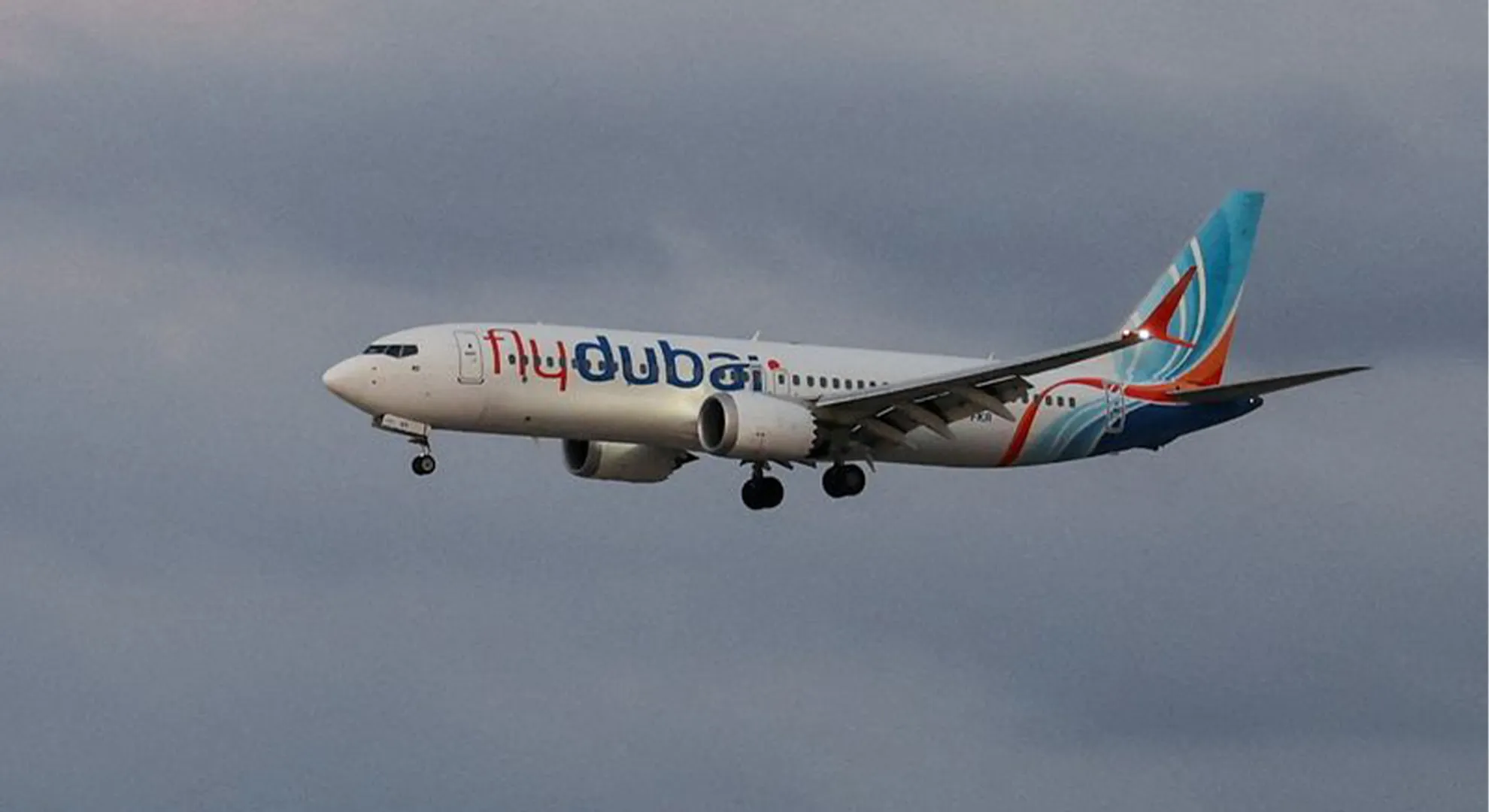
Flydubai FZ1073: Five Key Questions About the Emergency Landing Explained
The emergency involving flydubai flight FZ1073 has generated widespread discussion since the aircraft made an emergency landing in Saudi Arabia on September 30.
In the days following the incident, a number of claims and theories circulated online. Some were based on passenger videos, flight-tracking information and eyewitness accounts, while others appeared to draw conclusions before investigators had completed their work.
The UAE authorities have since released preliminary information about the incident. According to the findings announced so far, the co-pilot attempted to carry out a terrorist act.
However, the investigation has not yet been completed. Both aviation and criminal inquiries remain ongoing, meaning some details will only become clear once investigators have examined all available evidence, including flight data, cockpit information and witness testimony.
At the same time, several questions that have attracted attention can already be addressed using the information currently available.
Among the most frequently discussed issues are why the passenger oxygen masks did not deploy during the aircraft’s rapid descent, whether a plumber actually landed the aircraft, how the jet remained controllable despite visible rudder damage, whether the aircraft could withstand a loss of roughly 16,000 feet and how the captain was caught unaware by the attack.
Here are five of the main questions surrounding FZ1073 and what official information, witness accounts and aviation analysis currently indicate.
1. Why did the oxygen masks remain in place?
One of the most visible details from videos recorded inside the aircraft was that the passenger oxygen masks appeared to remain inside their compartments.
The observation prompted speculation because flight-tracking information indicated that the aircraft had lost approximately 16,000 feet during the emergency.
For some observers, the rapid change in altitude appeared to suggest that oxygen masks should automatically have been released.
However, aviation analyst Saj Ahmad, chief analyst at StrategicAero Research, explained that the deployment of passenger oxygen masks is not determined simply by how quickly an aircraft descends.
The important factor is cabin pressure.
According to Ahmad, the aircraft’s oxygen-mask system responds to changes in cabin pressure rather than simply responding to the aircraft’s altitude or rate of descent.
This distinction is important because an aircraft can descend rapidly without necessarily experiencing a loss of cabin pressure.
A jet’s pressurisation system is designed to maintain an appropriate cabin environment even while the aircraft changes altitude.
Therefore, a rapid descent does not automatically mean that passengers need supplemental oxygen.
Ahmad said there was no evidence available in this incident indicating that the aircraft experienced a cabin-pressure failure or decompression that would have caused the masks to deploy.
He therefore said the masks not appearing during the descent should not, by itself, be interpreted as evidence of a malfunction.
The aircraft involved was a Boeing 737 MAX 8, which is designed to operate through significant changes in altitude while maintaining cabin pressurisation.
That means the dramatic nature of the descent seen in flight-tracking data should not automatically be equated with a decompression event.
The distinction between aircraft altitude and cabin altitude is particularly important when interpreting incidents from outside the aircraft.
Passengers and observers can see that a jet has lost thousands of feet, but that information alone does not reveal the pressure conditions inside the cabin.
Additional technical information from the aircraft’s systems would be needed to establish whether cabin pressure was affected.
For now, the available information does not indicate that oxygen masks were required simply because of the aircraft’s rapid descent.
2. Did a plumber actually land the plane?
Another claim that spread widely following the incident was that a plumber with no aviation experience had ultimately landed the aircraft.
The story attracted considerable attention because it suggested that a passenger without formal pilot training had been forced to take over and bring a damaged commercial aircraft safely to the ground.
But the available accounts do not support that version of events.
Yaniv Hayun, the plumber who became involved during the emergency, told Reuters that he briefly took control of the aircraft.
However, he did not say that he personally completed the landing.
Instead, his account indicated that another pilot subsequently brought the aircraft down.
That distinction is significant.
Taking hold of the aircraft’s controls during an emergency is very different from independently flying the aircraft through the final approach and landing.
Flydubai’s own statements also do not say that Hayun landed the aircraft.
The airline initially said that members of the on-duty crew travelling on the flight secured the aircraft, diverted it and landed safely in Tabuk.
Two days later, flydubai chief executive Ghaith Al Ghaith publicly thanked the pilots who secured the aircraft and brought it safely to the ground.
Those statements are consistent with the account that Hayun may have assisted by handling the controls at one stage, but that a qualified pilot was responsible for the eventual landing.
The story therefore appears to have become simplified as it spread online.
The phrase that a plumber “landed the plane” gives a very different impression from the more limited account that he briefly took control before another pilot completed the landing.
His involvement was undoubtedly unusual, particularly given the circumstances surrounding the emergency.
But there is currently no support in either his own account or flydubai’s statements for the claim that he independently landed the Boeing 737 MAX 8.
3. How could the aircraft remain controllable with rudder damage?
Images taken after the aircraft landed showed substantial visible damage to the rudder.
That immediately raised another question: if part of such an important flight-control surface had been damaged or detached, how was the aircraft still capable of flying and landing?
The answer lies in the fact that an aircraft does not rely on a single control surface for all aspects of flight.
The rudder is primarily responsible for controlling yaw, which is the aircraft’s movement around its vertical axis.
But pilots also have access to other primary flight controls.
These include the elevators, which control pitch, and the ailerons, which control roll.
Engine controls also remain important because thrust can be adjusted to manage speed and aircraft performance.
Ahmad explained that although the loss of a significant portion of the rudder would represent a serious problem, the pilots still had other functioning control systems available.
He noted that the elevators could be used to control pitch and assist with the descent, while the ailerons provided control over the aircraft’s rolling movement.
The engines could also be managed to regulate thrust.
This does not mean rudder damage was insignificant.
A damaged control surface can substantially increase the difficulty and risk associated with flying an aircraft, particularly during an emergency.
But it does mean that the loss of part of the rudder does not automatically make an aircraft uncontrollable.
Modern commercial aircraft are designed with multiple systems and control surfaces that allow pilots to manage the aircraft under abnormal conditions.
The precise extent to which those systems remained available during FZ1073 will ultimately be determined by investigators examining the aircraft and its recorded data.
The post-landing photographs demonstrate the visible damage, but photographs alone cannot show how the aircraft’s various flight-control systems were functioning during the emergency.
That is why investigators will need to combine physical evidence with flight-data recordings and crew accounts.
4. How could the aircraft survive a 16,000-foot descent?
Another point of confusion has centred on the reported loss of approximately 16,000 feet.
For people watching the incident from the ground or reviewing flight-tracking data, such a rapid reduction in altitude can appear extraordinary.
Some online discussions therefore questioned whether an aircraft could lose that much altitude without breaking apart.
But the total number of feet lost does not, on its own, determine the forces imposed on an aircraft.
Ahmad explained that what matters is how the altitude was lost.
Several factors can influence the stresses experienced by an aircraft during a rapid descent.
These include the rate of descent, airspeed, aircraft attitude, pitch angle and the G-forces generated during the manoeuvre.
The amount of control authority available to the pilots is also crucial.
A large loss of altitude does not necessarily mean that an aircraft was in an uncontrolled free fall.
An aircraft can descend steeply and still remain structurally intact if the manoeuvre occurs within the aircraft’s structural capabilities and the pilots retain sufficient control to recover.
Commercial aircraft are engineered to withstand significant aerodynamic forces.
Their structures are designed with substantial strength, and the wings and other components are capable of flexing under aerodynamic loads.
Therefore, the fact that FZ1073 lost thousands of feet does not automatically establish that the aircraft should have broken apart.
The flight-tracking information also needs to be interpreted carefully.
Tracking data can show changes in altitude, speed and position, but it does not necessarily provide the complete picture of what happened inside the aircraft.
For example, it may not reveal every control input, the precise forces experienced by the aircraft or the full sequence of events in the cockpit.
The aircraft’s flight data recorders will therefore be particularly important.
Those systems can provide investigators with a much more detailed account of the aircraft’s performance during the emergency.
They can help establish the descent profile, airspeed, aircraft attitude and other parameters needed to understand how the aircraft responded.
Until that information is fully analysed, the number of feet lost should not be treated as proof that the aircraft was necessarily close to structural failure.
5. How was the captain taken by surprise?
Another major question concerns the circumstances inside the cockpit and how Captain Smit Machchhar was initially caught unaware.
The captain’s own account provides important context.
According to Machchhar, the attack began suddenly and came from behind.
He described experiencing a heavy blow to the back of his head.
At first, he did not immediately understand what was happening.
His initial reaction was to believe that something serious might have happened to the aircraft itself.
It was only after further blows that he realised another person inside the cockpit was attacking him.
The UAE Attorney-General later said investigators had concluded that the co-pilot attacked Machchhar in the flight deck using a crash axe while attempting to take control of the aircraft’s flight controls.
The circumstances described by the captain help explain why he was initially unable to respond immediately.
A surprise attack from behind would have given him little opportunity to prepare or protect himself.
Machchhar said that his vision began to deteriorate as he attempted to fight back.
At the same time, the aircraft’s nose moved downward.
The situation inside the cockpit was therefore developing simultaneously with the aircraft’s change in flight path.
Machchhar said he managed to reach the cockpit door and open it.
However, the attacker closed it again.
The captain then found himself on the floor while hearing passengers or other people outside the cockpit screaming.
He eventually managed to reach the door controls once more and open the door.
That allowed other people to enter the cockpit and intervene.
His account provides a human explanation for what could otherwise appear to be a puzzling sequence of events.
The captain was not necessarily ignoring an obvious threat.
Rather, according to his account, the attack began suddenly and from a position where he could not immediately see what was happening.
What the available evidence tells us
The FZ1073 incident has produced a mixture of confirmed information, eyewitness testimony and speculation.
Separating those categories is important because the circumstances of the emergency are still being investigated.
The preliminary findings released by UAE authorities provide important information about the alleged actions of the co-pilot.
However, investigators are still examining the wider incident.
That means some details may change or become clearer as more evidence is assessed.
Several of the most widely discussed claims can already be placed in context.
The absence of deployed oxygen masks does not necessarily indicate a problem because the system responds to cabin pressure rather than simply aircraft altitude.
The plumber who assisted during the emergency may have handled the controls, but available accounts indicate that another pilot ultimately landed the aircraft.
The damaged rudder was significant, but the aircraft retained other flight-control systems that could be used to maintain control.
The loss of approximately 16,000 feet does not, by itself, establish that the aircraft should have broken apart because the forces involved depend on how the descent occurred.
And the captain’s account indicates that the cockpit attack began suddenly from behind, helping explain why he was initially caught off guard.
Why flight data will matter
The final understanding of the incident will depend heavily on technical evidence.
Witness accounts are important because they provide information about what people saw and experienced.
Videos can also show conditions inside the cabin.
Flight-tracking data can help establish the aircraft’s movements.
But investigators need more detailed information to reconstruct the exact sequence of events.
The aircraft’s flight data recorders can provide information about altitude, airspeed, aircraft attitude, engine performance and other technical parameters.
Cockpit voice recordings can also help investigators understand what was happening between the crew members and identify the timing of key events.
Physical examination of the aircraft can provide additional evidence about the rudder and other components.
When these sources are combined, investigators can build a more complete picture than any single video or online flight-tracking map can provide.
Why social media theories can be misleading
The FZ1073 incident demonstrates how quickly unusual aviation events can generate speculation online.
A short passenger video may capture a dramatic moment but provide little context about what happened immediately before or after it.
Flight-tracking data can show a sharp change in altitude without explaining why it happened.
Photographs of damaged aircraft components can demonstrate the extent of visible damage but cannot necessarily reveal how other systems were functioning.
Witnesses may accurately describe what they saw while still lacking information about events elsewhere on the aircraft.
When these fragments are combined without context, they can produce conclusions that appear convincing but are not necessarily supported by evidence.
That is why official findings and technical analysis remain important.
The role of the crew during the emergency
The available information also highlights the importance of the aircraft crew and other people who assisted during the incident.
Despite the unusual circumstances, the aircraft ultimately reached the ground safely in Tabuk.
Flydubai credited the pilots with securing the aircraft, diverting it and completing the landing.
The involvement of passengers and other individuals during the emergency has also attracted attention, particularly because of the account involving Hayun.
But the distinction between assistance and piloting remains important.
Handling a control for a short period during an emergency does not necessarily mean that a person assumed full responsibility for flying the aircraft.
The available evidence indicates that the qualified flight crew remained central to the process of bringing the aircraft to the ground.
What remains unanswered?
Although several claims can now be placed in context, significant questions remain for investigators.
The precise sequence of events inside the cockpit, the full nature of the aircraft’s control-system damage and the exact flight profile during the descent will require detailed analysis.
Investigators will also need to establish how each part of the aircraft performed during the emergency and how the crew both inquiries continue, additional information may emerge that clarifies currently uncertain aspects responded at different stages.
The preliminary findings are therefore not necessarily the final word.
Aviation investigations are designed to reconstruct events using technical evidence rather than relying on speculation.
Criminal investigations also have their own evidentiary requirements.
As both inquiries continue, additional information may emerge that clarifies currently uncertain aspects of the incident.
A dramatic incident that requires careful analysis
FZ1073 was an extraordinary aviation emergency involving an alleged cockpit attack, a rapid descent, damage to the aircraft and an emergency landing in Saudi Arabia.
Those circumstances naturally generated intense public interest.
But the most dramatic claims surrounding the flight cannot all be accepted at face value.
The available evidence provides explanations for several of the questions that have circulated since September 30.
Oxygen masks are linked to cabin pressure rather than simply altitude.
The available accounts do not show that a plumber independently landed the aircraft.
The damaged rudder did not eliminate every means of controlling the jet.
A 16,000-foot loss of altitude does not by itself prove that an aircraft should have suffered structural failure.
And the captain’s testimony provides an explanation for how a sudden attack from behind could initially catch him unaware.
The investigation will ultimately determine the complete sequence of events.
Until then, the clearest approach is to distinguish between what has been officially established, what witnesses have reported and what remains speculation.
That distinction is particularly important in an aviation incident where technical details can easily be misunderstood when isolated from the wider circumstances.
The final findings from investigators should provide a more complete picture of what happened aboard FZ1073, why the aircraft behaved as it did and how the crew managed to bring it safely to the ground.