Three years after the October 7 attacks, the latest Gaza ceasefire has renewed discussions about whether sustained calm could eventually support broader stability across the Middle East. The truce has created an opportunity for diplomacy, though lasting peace remains uncertain.
Gaza Ceasefire Offers New Hope for Regional Peace Three Years After October 7.
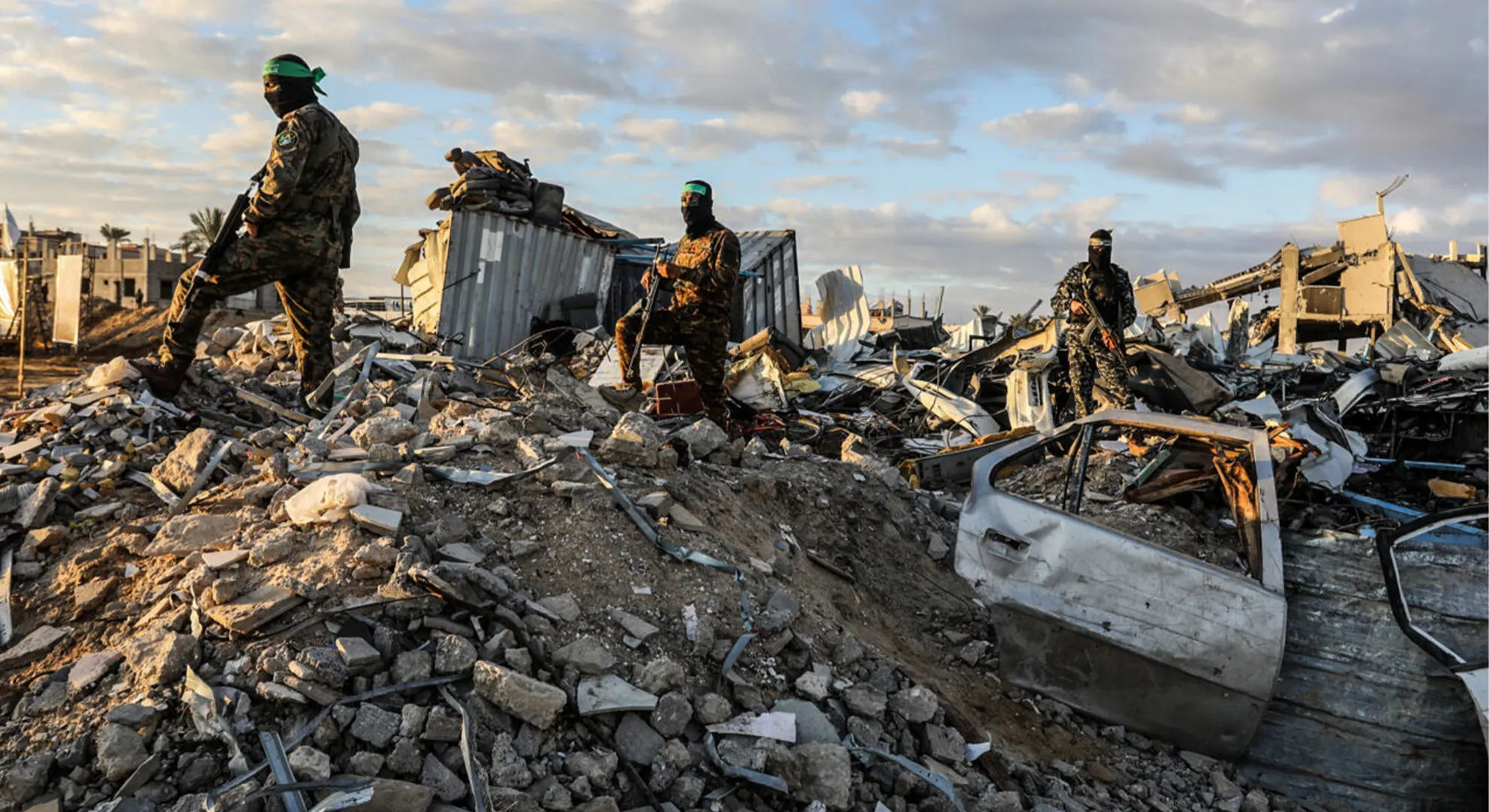
Three Years After October 7, Gaza Truce Brings Pause in Fighting but Peace Remains Elusive
Three years after the Hamas-led attack on Israel on October 7, 2023, the Middle East remains shaped by the consequences of a conflict that began in southern Israel and rapidly developed into a wider regional crisis.
The fighting that followed transformed Gaza, displaced much of its population and caused extensive destruction. It also contributed to confrontations and heightened tensions involving several other actors across the region, including Lebanon, Iran and Yemen.
A ceasefire that came into effect on October 10, 2025, brought an end to the large-scale fighting that had defined much of the conflict in Gaza. The remaining Israeli hostages and their remains have since been returned, according to the UN.
But the ceasefire has not brought complete calm.
Israeli military operations and strikes have continued to be reported, Palestinian casualties remain a concern and major questions about Gaza’s security, governance, reconstruction and political future are still unresolved.
The situation raises a difficult question three years after the events of October 7: can the current pause in large-scale fighting become the foundation for a broader and more lasting peace?
How the conflict began
The crisis began on October 7, 2023, when Hamas-led fighters launched an attack on communities in southern Israel.
Around 1,200 people were killed in the assault, while 251 people were taken hostage and transported into Gaza.
Israel responded with an extensive military campaign in Gaza.
The subsequent war resulted in tens of thousands of Palestinian deaths, according to Palestinian authorities, while much of Gaza’s population was displaced from their homes.
Large parts of the territory were destroyed, including residential areas and essential infrastructure.
The conflict soon became more than a war centred solely on Gaza.
As fighting continued, tensions increased across the region, involving Israel and armed groups or governments connected to Lebanon, Iran and Yemen.
The result was a prolonged period of instability in which developments on one front could influence events elsewhere.
A ceasefire changed the scale of the conflict
The ceasefire that began in October 2025 represented a significant change after years of large-scale hostilities.
The agreement stopped the level of fighting that had previously devastated Gaza and also facilitated the return of the remaining Israeli hostages and their remains.
For civilians on both sides, the reduction in major combat represented an important change from the previous phase of the conflict.
However, the end of large-scale fighting did not amount to a comprehensive peace agreement.
A ceasefire can create space for diplomacy and humanitarian work, but it does not automatically resolve the political, security and territorial disputes that caused or prolonged a conflict.
That distinction remains particularly important in Gaza.
Violence has continued despite the truce
The reduction in fighting has not meant that violence has disappeared.
According to a UN report issued in September 2026, Israeli airstrikes, shelling, drone attacks and ground operations have continued in Gaza.
The report also said that Hamas and other armed groups had not disarmed.
This has left the ceasefire in a fragile position.
While the intensity of fighting is far below the levels seen during the main war, continuing military activity means that civilians remain exposed to danger.
The UN reported that approximately two-thirds of Gaza remained inaccessible or subject to severe access restrictions.
Those restrictions have complicated efforts to deliver humanitarian assistance and assess conditions across the territory.
Palestinian casualties continue
The continuation of violence has also meant that casualties have not stopped.
Figures from Gaza’s Ministry of Health cited by the UN indicated that 1,431 Palestinians were reported killed between the announcement of the ceasefire and September 30, 2026.
The figure illustrates the gap between a reduction in large-scale hostilities and the achievement of genuine peace.
A ceasefire may prevent a return to full-scale war, but if military operations, strikes and armed confrontations continue, the risk to civilians remains.
For Palestinians living in Gaza, the conflict therefore continues to have immediate consequences despite the formal reduction in hostilities.
The wider Middle East remains unsettled
The war’s effects have extended well beyond Gaza.
Over the past three years, the region has experienced periods of confrontation and heightened tension involving Israel, Lebanon, Iran and Yemen.
These developments have made regional security increasingly interconnected.
A confrontation in one location can trigger reactions elsewhere, while developments involving one state or armed group can affect calculations by other parties.
The challenge for diplomats is therefore not simply to preserve calm in Gaza but to prevent separate flashpoints from developing into a broader regional confrontation.
This interconnected nature of the crisis has become one of the defining features of the period since October 7.
UN urges respect for ceasefires
In June, UN Secretary-General António Guterres called on the parties involved to honour ceasefires in Gaza, Lebanon and Iran.
He also warned against actions that could damage diplomatic efforts.
Guterres has argued that military force cannot provide a lasting solution to the region’s interconnected conflicts and has called instead for negotiations and dialogue.
The message reflects the broader challenge facing the region.
Military action can change conditions on the ground, but long-term stability requires political arrangements capable of addressing disputes and reducing incentives for renewed confrontation.
Risk of escalation remains
The possibility of renewed escalation has not disappeared.
Several unresolved issues continue to create pressure around the ceasefire.
These include the presence of armed groups, disagreements over security arrangements, questions about Gaza’s future administration and disputes over how ceasefire commitments should be implemented.
Continued military activity can also create the potential for retaliation.
An isolated incident may trigger a response, which can then produce another reaction.
Such cycles can quickly undermine a fragile ceasefire.
The situation in the West Bank represents another source of concern.
West Bank adds another layer of tension
The conflict’s political and security consequences are not limited to Gaza.
The UN has reported significant levels of settler violence, displacement and settlement expansion in the West Bank.
In September, the organisation warned that these developments were undermining prospects for peace.
The situation creates another challenge for efforts to stabilise the region.
Even if Gaza remains relatively calm, continued deterioration elsewhere in the Palestinian territories could increase political tensions and make broader negotiations more difficult.
For that reason, regional stability cannot be considered solely through the lens of the Gaza ceasefire.
Gaza’s humanitarian crisis remains severe
The reduction in fighting has not erased the humanitarian consequences of the war.
Gaza continues to face extensive damage, shortages and major reconstruction needs.
The UN has said that continued strikes, restrictions on essential supplies and funding shortfalls are slowing recovery.
In late September, about 94 per cent of Gaza’s population was assessed as requiring urgent shelter and basic household assistance.
The same assessment found that 65 per cent of households were living in tents or other makeshift shelters.
These figures demonstrate the scale of the challenge facing humanitarian organisations and local communities.
Stopping large-scale combat is only the first stage of recovery.
People also need secure housing, functioning medical services, reliable water supplies, infrastructure and access to basic necessities.
Unsafe buildings pose continuing risks
The physical destruction left by the conflict is another major obstacle.
Thousands of damaged structures remain unsafe.
Preliminary estimates cited by the UN indicate that more than 4,000 buildings require either full or partial demolition.
More than 2,300 of those structures were still inhabited, with nearly 44,000 people living in or around them.
The continued presence of damaged buildings illustrates why reconstruction cannot be treated as a short-term task.
Clearing dangerous structures, rebuilding homes and restoring essential services will require substantial resources and long-term planning.
It will also require a stable political and security environment in which reconstruction projects can proceed without being repeatedly disrupted.
Recovery depends on more than rebuilding
Reconstruction alone cannot resolve the problems facing Gaza.
The UN has stressed that sustainable stability also requires political progress.
That includes strengthening Palestinian institutions and establishing a credible political pathway towards resolving the wider Israeli-Palestinian conflict.
This makes Gaza’s recovery closely linked to the region’s broader political future.
If reconstruction takes place without addressing the political and security conditions that contributed to the conflict, there is a risk that instability will continue.
Similarly, diplomatic agreements that do not improve conditions for civilians may struggle to create lasting confidence.
What would a durable peace require?
Keeping the existing ceasefire intact is one of the immediate priorities.
That means preventing attacks, retaliatory strikes and other actions that could cause the current arrangement to collapse.
Every incident carries the potential to increase tensions if it is followed by retaliation.
The longer the ceasefire survives, the greater the opportunity for diplomacy and humanitarian work.
But maintaining the truce is only one part of the challenge.
Improving humanitarian access is also essential.
Aid agencies need reliable access to affected communities to provide food, medical care, shelter and other basic services.
Restrictions that prevent assistance from reaching people in need can prolong the humanitarian crisis and contribute to further instability.
Reconstruction will take years
The physical rebuilding of Gaza is likely to be a long-term undertaking.
Homes, hospitals, schools, roads, water networks and other essential infrastructure have suffered extensive damage.
Restoring these systems will require funding, materials, technical expertise and sustained access.
Reconstruction also depends on security.
Workers and aid organisations need conditions in which they can operate safely, while projects need continuity rather than repeated disruption caused by renewed fighting.
For civilians, visible improvements in living conditions could play an important role in restoring a sense of stability.
Without progress, the humanitarian consequences of the conflict could continue to fuel frustration and insecurity long after the main fighting has ended.
Regional diplomacy is equally important
The future of Gaza cannot be separated entirely from developments elsewhere in the Middle East.
The UN has urged parties to respect ceasefires involving Gaza, Lebanon and Iran and to use diplomatic channels to resolve disputes.
The goal is to prevent separate conflicts from becoming connected through retaliation or escalation.
The experience of the past three years has shown how quickly a conflict centred in one area can affect neighbouring countries and international markets.
The consequences have included military confrontations, political instability and concerns about regional and global security.
Maintaining communication between the parties is therefore essential.
The question of a political settlement
Perhaps the most difficult issue is the absence of a definitive political resolution to the Israeli-Palestinian conflict.
A ceasefire can reduce violence.
It can facilitate the release or return of hostages.
It can allow humanitarian organisations to increase their work.
But it does not by itself resolve questions surrounding governance, security, territory, Palestinian statehood or the long-term relationship between Israelis and Palestinians.
Those questions remain at the centre of any discussion about permanent peace.
The UN has therefore linked Gaza’s recovery and regional stability to progress towards a credible political process.
Three years of profound change
The Middle East of October 2026 is very different from the region immediately after October 7, 2023.
The initial attack led to a major Israeli military response and a war that reshaped Gaza.
The conflict subsequently affected relations and security calculations across the region.
There were periods of confrontation involving Lebanon, Iran and Yemen, while tensions spread beyond the original battlefield.
Three years later, the situation has changed again.
The large-scale fighting in Gaza has stopped under the current ceasefire.
The remaining Israeli hostages and their remains have been returned.
Yet violence continues, humanitarian needs remain enormous and the political questions surrounding Gaza have not been settled.
The ceasefire’s biggest test
The central test now is whether the current pause can survive the pressures surrounding it.
A durable ceasefire would provide space for humanitarian recovery and diplomatic engagement.
A collapse of the arrangement, by contrast, could return Gaza and the wider region to a cycle of escalation.
Several factors will influence the outcome.
These include whether military activity decreases further, whether armed groups remain committed to the ceasefire framework, whether humanitarian access improves and whether political discussions make meaningful progress.
Developments in the West Bank and elsewhere in the region will also matter.
The more stable the surrounding environment becomes, the greater the opportunity for Gaza’s recovery.
Preventing another cycle of conflict
Three years after October 7, the challenge is no longer simply to bring an immediate end to a particular round of fighting.
The larger challenge is to prevent the same pattern from returning.
That requires addressing the conditions that allow violence to escalate.
A sustainable approach would need to combine security arrangements with humanitarian assistance, reconstruction and political negotiations.
It would also require regional actors to manage disputes through diplomacy rather than allowing individual incidents to develop into broader military confrontations.
Without those elements, a ceasefire could remain temporary.
What happens next?
The coming period will be critical for determining whether the Gaza ceasefire develops into something more durable.
Maintaining the truce would create an opportunity to improve humanitarian conditions and begin long-term reconstruction.
But that opportunity depends on continued restraint from the parties involved and progress on unresolved political and security questions.
For Palestinians, the immediate priorities remain shelter, safety, medical care, infrastructure and access to basic necessities.
For the wider region, the priority is preventing the conflict from reigniting on another front.
For diplomats, the larger objective is finding a political framework capable of addressing the Israeli-Palestinian conflict and reducing the likelihood of another major confrontation.
From ceasefire to lasting stability
Three years after the October 7 attack, the Middle East has reached a point that would have been difficult to imagine during the height of the Gaza war.
Large-scale fighting has stopped.
The remaining hostages and their remains have been returned.
Diplomatic efforts have produced periods of de-escalation.
Yet the conflict’s consequences remain visible across Gaza and beyond.
Palestinian casualties continue to be reported, large parts of Gaza remain devastated and millions of people face ongoing humanitarian and reconstruction challenges.
At the same time, tensions involving Israel, Lebanon, Iran and other regional actors remain a concern.
The current ceasefire therefore represents an opportunity, but not a guarantee of peace.
Whether that opportunity can produce lasting stability will depend on what happens next: whether violence continues to decline, whether humanitarian access improves, whether Gaza can begin meaningful reconstruction and whether the region can move towards a credible political process.
Three years after October 7, the immediate task is to prevent another escalation. The longer-term challenge is considerably harder — creating political and humanitarian conditions in which another cycle of war becomes less likely.
The ceasefire has created a pause in the conflict. Turning that pause into lasting peace will require sustained diplomacy, civilian protection, reconstruction and progress on the unresolved political issues that have shaped the region for decades.