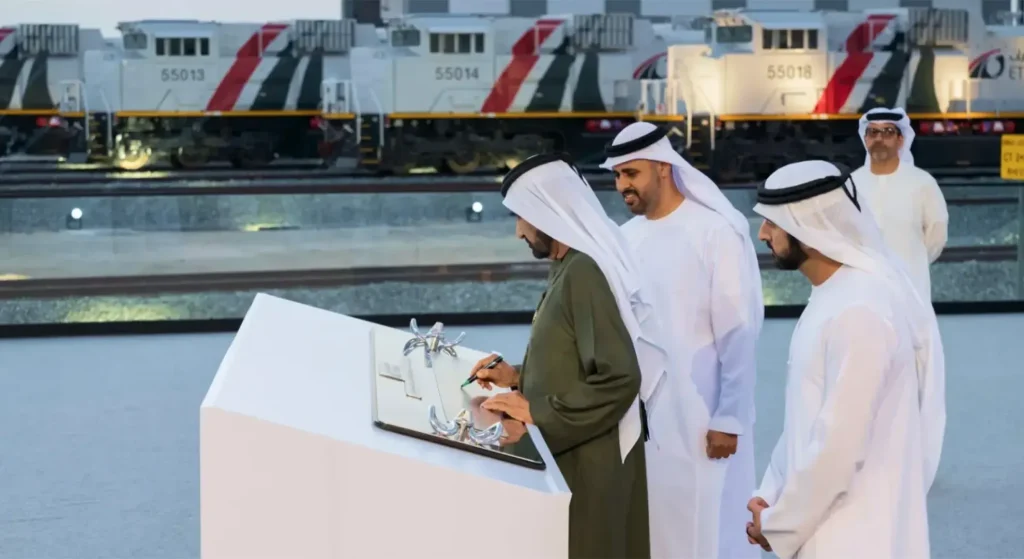
The UAE President took a journey aboard Etihad Rail from Abu Dhabi, while Sheikh Hamdan officially opened the newly inaugurated Dubai station, marking another significant step in the country’s expanding railway network and strengthening connections between its major cities.
UAE President Travels on Etihad Rail as Sheikh Hamdan Opens Dubai’s New Railway Station.
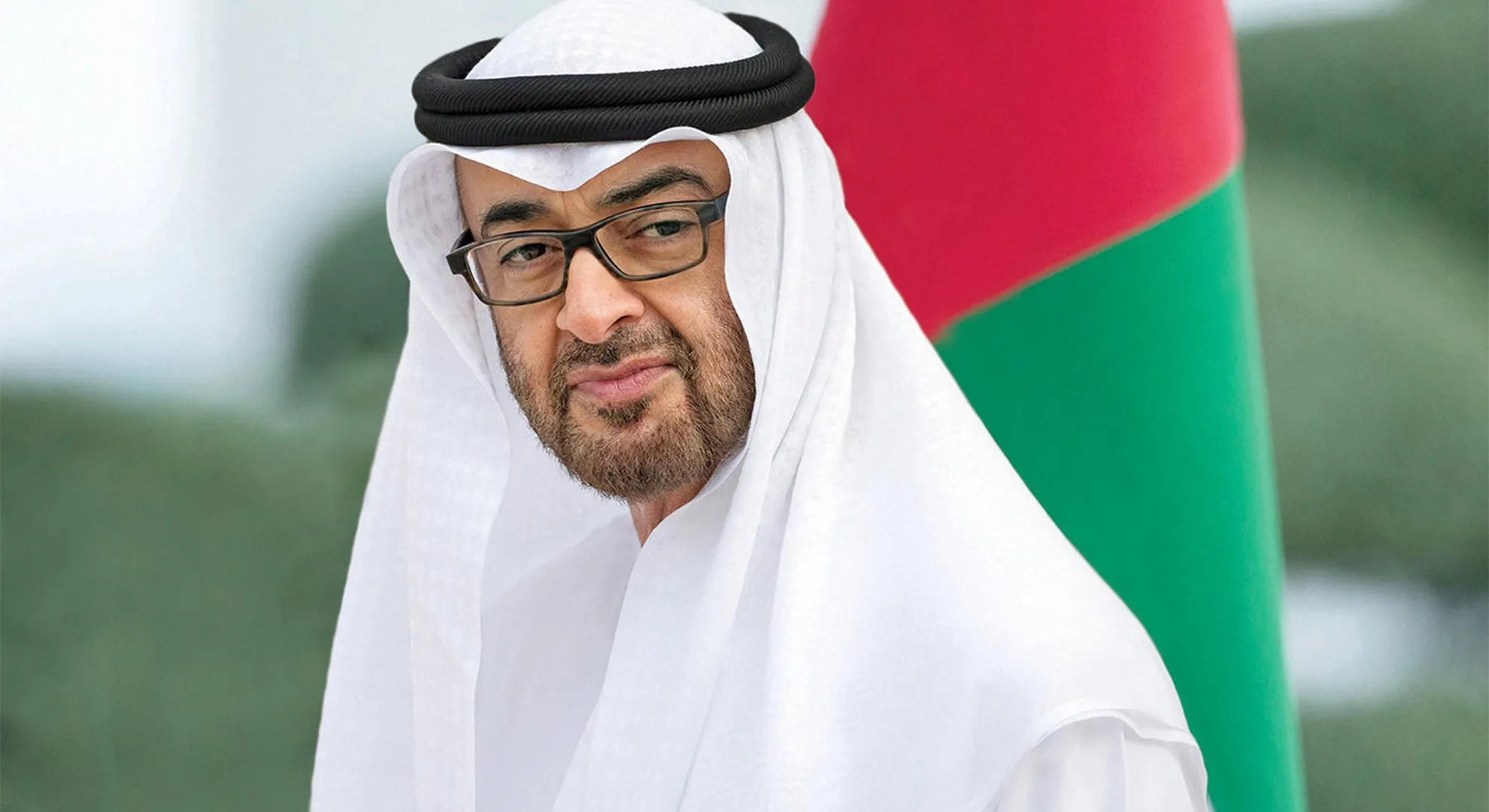
Sheikh Theyab, Chairman of Etihad Rail’s Board of Directors, officially opened the station and received a detailed briefing on the comprehensive services and facilities designed to provide passengers with a seamless, comfortable and convenient travel experience from arrival to departure.
Etihad Rail Dubai Station Opens as Passenger Services Prepare to Begin
Etihad Rail has officially inaugurated its new passenger station in Dubai, marking an important milestone in the development of the UAE’s national railway network. The opening comes shortly before passenger operations are scheduled to begin, with services connecting Abu Dhabi, Dubai and Fujairah set to commence on September 30, 2026.
The inauguration brought together senior UAE leaders and officials, highlighting the strategic importance of the railway project and its role in expanding public transport options across the country.
Dubai Crown Prince Sheikh Hamdan bin Mohammed bin Rashid Al Maktoum and Sheikh Theyab bin Mohamed bin Zayed Al Nahyan, Chairman of the Board of Directors of Etihad Rail, formally opened the Dubai station. UAE President Sheikh Mohamed bin Zayed Al Nahyan was also present for the occasion, underscoring the national significance attached to the launch of passenger rail services.
Before the service officially enters operation, Sheikh Mohamed bin Zayed travelled aboard an Etihad Rail passenger train from Abu Dhabi to Dubai. The journey provided an opportunity for the UAE President to receive a detailed presentation on the railway’s operating systems, its broader national objectives and the services being developed for passengers.
During the trip, officials briefed Sheikh Mohamed on how the passenger railway will operate and the standards being established for travellers. The journey also highlighted the preparations undertaken to ensure that the new rail service can provide an efficient and comfortable means of transportation between key destinations in the UAE.
After reaching Dubai, the UAE President met members of the national workforce involved in the Etihad Rail project. He interacted with employees working on the railway and posed for commemorative photographs with members of the team.
The Dubai station itself was also presented as an important component of the passenger network. During a tour of the facility, Sheikh Hamdan and Sheikh Theyab reviewed the station’s various facilities and operational arrangements. They were given an overview of the passenger journey, covering the different stages involved in using the railway.
The briefing included the process passengers will follow from the moment they arrive at the station. This included ticket booking, completion of travel procedures, access to the platform, boarding the train and continuing the journey towards the chosen destination.
The focus on the complete passenger experience reflects the wider objective of creating an integrated railway service rather than simply providing a means of transportation between cities. The station has been designed to support passengers throughout their journey, from entering the facility and purchasing or presenting a ticket through to boarding and travelling to their destination.
Sheikh Hamdan also shared an image of his Etihad Rail ticket, providing a glimpse of the travel arrangements associated with the new service. The ticket was dated September 28 and indicated a scheduled departure from Dubai station at 2:11pm, with the train expected to reach Abu Dhabi at 3:13pm. The journey time shown on the ticket was one hour and two minutes.
The ticket was issued under the Comfort Saver category, which is currently priced at Dh39. The example offered an indication of the journey times and ticket options that passengers can expect as the UAE prepares for the start of regular passenger operations.
The opening of the Dubai station represents another stage in the development of the UAE’s national railway system. Etihad Rail has been working to establish a network capable of linking communities and major economic centres across the Emirates, with passenger services expected to add a new option for domestic travel.
Speaking about the opening, Sheikh Hamdan highlighted the significance of connecting Dubai to the wider Etihad Rail network. He described the station as a new national gateway that will strengthen Dubai’s links with Abu Dhabi and other cities across the UAE.
According to Sheikh Hamdan, the integration of Dubai into the national railway system will further strengthen the emirate’s role within the country’s transport network. He said the connection would reinforce Dubai’s position within the movement of people and economic activity across the UAE.
He also linked the railway connection to Dubai’s broader economic role, noting its importance to business, tourism and investment. The expanded rail network is expected to provide another means of connecting the emirate with other parts of the country while supporting its position as an international centre for commercial and tourism activity.
The arrival of passenger rail services also represents a development in the UAE’s efforts to broaden its transportation infrastructure. By linking major destinations through the national rail network, Etihad Rail is creating an additional option for people travelling between the Emirates.
Sheikh Theyab also addressed the response to passenger railway services, pointing to the strong demand recorded since services between Abu Dhabi and Fujairah were introduced. He said the level of interest demonstrated the public’s confidence in rail travel as a new form of transportation.
The demand for the service between Abu Dhabi and Fujairah provides an early indication of public interest in passenger rail connectivity. The expansion to include Dubai is expected to further extend the network and connect another of the UAE’s major urban and economic centres.
The Dubai station is therefore expected to play a central role in the next stage of Etihad Rail’s passenger operations. With services planned between Abu Dhabi, Dubai and Fujairah, passengers will have another option for travelling between some of the country’s key locations.
The inauguration ceremony also highlighted the role of the people behind the project. Sheikh Mohamed’s meeting with national employees working on Etihad Rail brought attention to the teams responsible for developing and preparing the railway for passenger operations.
The passenger service is being introduced as part of a wider national railway project intended to improve connectivity across the UAE. The network is designed to link major population centres, industrial areas and other important locations, while passenger services add a direct benefit for residents and visitors travelling within the country.
The Dubai station’s inauguration comes at a significant point in the development of this network. With the start of passenger operations approaching, attention is now shifting from construction and preparation towards the day-to-day experience of travellers using the railway.
For passengers, the new system will involve several stages, including reaching the station, completing ticketing requirements, proceeding through the relevant travel procedures and boarding the train. The station tour conducted by Sheikh Hamdan and Sheikh Theyab demonstrated how these elements have been brought together within a single passenger experience.
The example of Sheikh Hamdan’s ticket also provided a practical illustration of the planned service. A journey between Dubai and Abu Dhabi taking just over an hour offers passengers an alternative to travelling between the two cities by road. The availability of different ticket categories is also expected to give travellers options based on their preferred level of service and fare.
The launch of the Dubai station is part of a broader transformation in the UAE’s transportation landscape. The country has invested heavily in developing modern infrastructure, and the national railway adds another component to that system by creating a dedicated rail connection between major destinations.
The connection between Dubai and Abu Dhabi is particularly significant because the two emirates are among the UAE’s most important centres for business, government, tourism and economic activity. Establishing a passenger rail link between them provides an additional transport option while strengthening their physical connection within the national network.
Fujairah’s inclusion in the passenger network also extends the reach of the service towards the UAE’s eastern coast. Together, the planned connections demonstrate the intended national character of Etihad Rail’s passenger operations.
The Dubai inauguration also serves as a public demonstration of the facilities and procedures that travellers will encounter once regular services begin. Officials were able to review the station’s operational arrangements and assess the different stages of the passenger journey.
As the September 30 launch date approaches, Etihad Rail is preparing to move into a new phase in which the railway will become part of everyday travel for passengers. The transition from project development to regular public service represents a major step in the evolution of the national rail network.
The inauguration was attended by senior officials and leaders, reflecting the importance placed on the railway as a national infrastructure project. The presence of the UAE President, Dubai Crown Prince and Chairman of Etihad Rail’s Board of Directors also highlighted the coordination between the country’s leadership and the organisation overseeing the rail network.
For Dubai, the new station provides a direct connection to the national railway system and strengthens its links with other Emirates. For passengers, it introduces another way to travel between key destinations, while for the wider country, the expansion represents progress towards a more integrated national transport network.
The development also has significance beyond the station itself. Rail connectivity can bring cities and communities closer by providing a structured alternative to road travel. The integration of Dubai into Etihad Rail’s passenger network therefore expands the potential reach and usefulness of the railway system.
Sheikh Hamdan’s comments emphasised Dubai’s position within the national economy and its role as a centre for international business, tourism and investment. The new rail connection adds another layer to the infrastructure supporting that role by linking the emirate more directly with Abu Dhabi and other parts of the UAE.
Meanwhile, Sheikh Theyab’s remarks on passenger demand underline the importance of public response to the new service. As more routes become available, passenger usage will provide an indication of how the railway is incorporated into domestic travel patterns.
The inauguration of the Dubai station thus marks more than the opening of a new transport facility. It signals the approaching start of a new stage for Etihad Rail, with passenger trains preparing to serve the public and connect major UAE destinations.
With Abu Dhabi, Dubai and Fujairah scheduled to be linked through passenger services from September 30, 2026, the national railway is set to become an increasingly visible part of the UAE’s transportation system. The Dubai station will serve as one of the network’s key passenger gateways, supporting travel between the emirate and other destinations connected to Etihad Rail.
The journey taken by Sheikh Mohamed bin Zayed ahead of the official launch, the inauguration ceremony led by Sheikh Hamdan and Sheikh Theyab, and the detailed review of the station’s facilities collectively highlighted the preparations made for the beginning of passenger operations.
As the launch date draws closer, the focus will move towards passengers experiencing the service for themselves. The new railway is expected to offer a modern travel option, with the Dubai station providing an important link between the emirate and the wider national network.
The opening therefore represents a significant point in the UAE’s continuing expansion of its transport infrastructure. Etihad Rail’s passenger network is moving from preparation into operation, with Dubai now formally connected to the next phase of the country’s national railway journey.
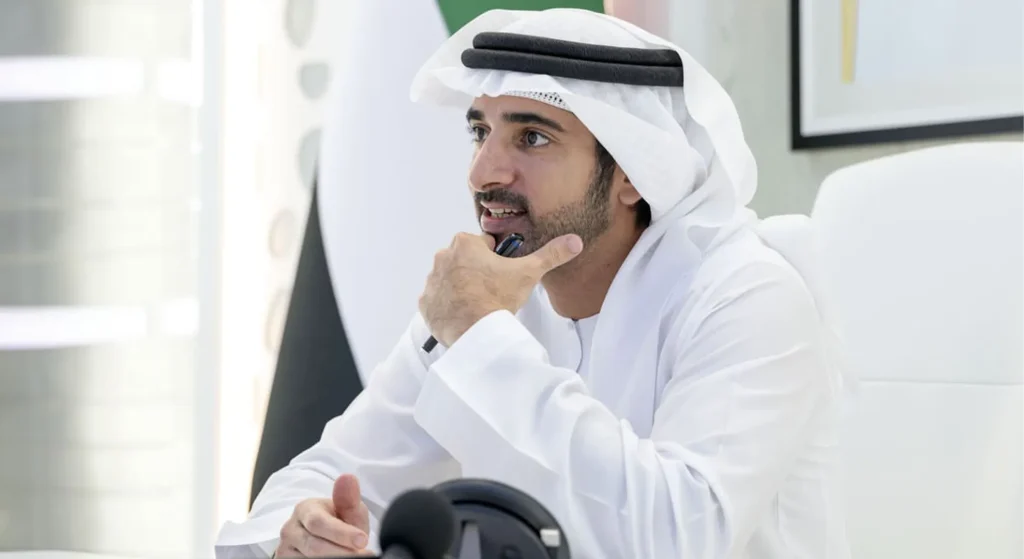
Ticket fares and booking options
Passenger services on Etihad Rail are scheduled to begin on September 30, 2026, providing rail connections between Abu Dhabi, Dubai and Fujairah. With the launch date approaching, travellers can already make arrangements for their journeys through several booking channels.
Tickets are available through the official Etihad Rail mobile application and website, while passengers can also purchase tickets using dedicated ticketing machines installed at the railway stations. The multiple booking options are intended to make the service accessible to travellers who prefer to arrange their journeys digitally as well as those who wish to purchase tickets at the station.
Fares start at Dh39 for passengers travelling in Comfort Class. Premium Class tickets begin at Dh109, giving travellers the choice between the two available service categories. The fare structure provides different options depending on the type of travel experience passengers wish to select.
The introduction of these fares also gives travellers an indication of the cost of using the UAE’s new passenger railway. As the service begins connecting major destinations, passengers will be able to compare rail travel with other forms of domestic transportation when planning journeys between Abu Dhabi, Dubai and Fujairah.
The availability of tickets ahead of the September 30 launch allows passengers to plan their trips in advance. Travellers can select their preferred journey and class through the available booking channels before arriving at the station.
Etihad Rail’s passenger service is expected to provide a new option for people travelling between the three connected Emirates. The network will link Abu Dhabi, Dubai and Fujairah, creating a direct rail connection between major locations in different parts of the country.
Dubai station linked with the Metro
One of the key features of the Dubai Etihad Rail station is its connection to the city’s existing public transportation network. The station is linked with Jumeirah Golf Estates Metro Station through a dedicated pedestrian bridge.
The bridge provides passengers with a direct connection between the Etihad Rail facility and the Dubai Metro system. This means travellers arriving by train can transfer to the Metro without having to make a separate road journey between the two stations.
The connection is designed to make the railway part of a broader public transportation system rather than operating as an isolated service. Passengers can use the Metro to continue their journey after arriving at the Etihad Rail station or travel to the railway station using Dubai’s existing urban rail network.
The physical connection between the two facilities is particularly relevant for passengers whose final destination is elsewhere in Dubai. Instead of arranging separate transportation from the railway station, travellers can use the Metro network to continue towards other parts of the emirate.
The integration also provides an additional level of convenience for people travelling from different areas of Dubai to catch an Etihad Rail service. By linking the national railway with the city’s Metro network, the station can be reached through an established public transport system.
This arrangement forms part of the wider effort to integrate Etihad Rail with existing modes of transportation in the UAE. The objective is to make journeys involving more than one form of public transport easier for passengers to manage.
Unified payment and QR system
Etihad Rail’s integration with Dubai’s Nol passenger system adds another element to the connection between national and urban transportation services.
Through the integrated system, passengers can arrange journeys involving Etihad Rail and Dubai’s public transportation network using a unified QR code. The code can be used across several forms of transport, including trains, the Dubai Metro, trams and buses.
This means passengers making a journey that involves multiple modes of transportation can use the same digital travel credential rather than managing separate codes for each part of their trip.
For example, a passenger travelling from another part of Dubai could use the city’s public transport network to reach the Etihad Rail station, board a train to another Emirate and use the relevant integrated system for the connected stages of the journey.
The use of a common QR code is intended to simplify the passenger experience by bringing different stages of a journey together within an integrated system. It also supports the broader connection between Etihad Rail and Dubai’s existing public transportation infrastructure.
The integration of train, Metro, tram and bus services gives passengers greater flexibility when planning their routes. Rather than viewing the different transport networks as separate systems, travellers can combine them as part of a single journey.
This approach is particularly useful in a city such as Dubai, where passengers may need to use more than one form of transport to reach their final destination. The direct station connection and unified QR system provide additional options for making those transfers.
Passenger service operated through joint venture
The passenger trains will be operated by Etihad Rail Passenger Services, a joint venture established between Etihad Rail and Keolis.
Etihad Rail is responsible for the development and operation of the UAE’s national railway network, while Keolis is an international company specialising in passenger transportation services. The partnership brings together the national railway operator and an established global public transport provider for the operation of passenger services.
The joint venture will be responsible for delivering the passenger experience as the service moves into regular operation. This includes the operation of trains and the associated passenger-facing services required to support journeys across the network.
The involvement of a dedicated passenger services company reflects the scale of the transition from railway infrastructure development to regular passenger operations. Once services begin, the focus will extend beyond the railway itself to include areas such as customer service, station operations and the overall travel experience.
The new passenger network will connect Abu Dhabi, Dubai and Fujairah from September 30, giving residents and visitors another way to travel between these destinations.
What passengers can expect
The launch of passenger operations will introduce a new rail option for domestic travel within the UAE. Travellers will be able to book journeys through digital platforms or use ticketing facilities at stations, depending on their preference.
With Comfort Class fares starting at Dh39 and Premium Class fares beginning at Dh109, passengers will have two primary fare categories to choose from. The different classes are intended to provide travellers with options when selecting their preferred level of service.
The Dubai station’s direct connection with Jumeirah Golf Estates Metro Station adds to the appeal of the network for passengers who rely on public transportation. The pedestrian bridge allows travellers to move between the Metro and Etihad Rail station without requiring a separate vehicle transfer.
The integration with the Nol passenger system further extends this connectivity. A unified QR code can be used for journeys involving Etihad Rail as well as Dubai Metro, tram and bus services.
Together, these arrangements are designed to create a more connected travel experience. A passenger’s journey does not necessarily end when the train reaches Dubai or begin only when they arrive at the railway station. Instead, Etihad Rail can form part of a wider route involving multiple public transport services.
The connectivity between the national railway and Dubai’s local transportation network is particularly significant because it allows passengers to combine intercity and urban travel. Someone travelling from Abu Dhabi to another location within Dubai, for example, can use Etihad Rail for the intercity portion and then continue by Metro, tram or bus.
Similarly, passengers travelling towards Abu Dhabi or Fujairah can use Dubai’s public transport network to reach the railway station before boarding their Etihad Rail service.
The overall system is therefore designed around the concept of connected journeys rather than individual transport services operating independently.
A new option for travel between Emirates
The start of passenger services between Abu Dhabi, Dubai and Fujairah marks the introduction of a new intercity rail option in the UAE. For passengers, the network provides another way to move between major destinations without relying solely on road transportation.
The availability of advance ticket booking means travellers can plan journeys before the official start of services. Tickets can be obtained through the Etihad Rail app and website, as well as ticket machines located at stations.
The pricing structure also gives passengers an opportunity to select the class that suits their travel requirements. Comfort Class starts at Dh39, while Premium Class begins at Dh109.
As the network becomes operational, the Dubai station will serve as an important point within the system. Its connection to Jumeirah Golf Estates Metro Station allows passengers to move between the national rail network and Dubai’s urban transport system through a dedicated pedestrian link.
The Nol integration adds another layer to that connectivity by allowing passengers to use a unified QR code for different transportation modes. Train, Metro, tram and bus services can therefore be incorporated into a connected travel experience.
The partnership between Etihad Rail and Keolis is also central to the operation of the passenger service. Through Etihad Rail Passenger Services, the two companies will jointly oversee the operation of the passenger railway.
The introduction of the service represents a new stage in the development of the UAE’s national railway infrastructure. While Etihad Rail has been developed as a nationwide rail network, the beginning of passenger services brings the system directly into the daily travel options available to residents and visitors.
The initial passenger network connecting Abu Dhabi, Dubai and Fujairah will establish the foundation for domestic rail travel. As passengers begin using the service, the railway will become another part of the country’s wider transportation network.
The integration with Dubai Metro and other public transport services is also intended to make the railway easier to access. Instead of requiring passengers to arrange separate transfers, the connected infrastructure gives them the opportunity to combine different services as part of one journey.
For passengers, this means that planning a trip can involve choosing not only a train but also the most suitable combination of local transportation to reach the station or continue from the destination.
The Dubai station’s pedestrian link with Jumeirah Golf Estates Metro Station is particularly relevant in this context. It provides a physical connection between the two networks, reducing the need for passengers to arrange separate road transportation between the railway and Metro stations.
The unified QR system provides a corresponding digital connection. By supporting train, Metro, tram and bus journeys through a common QR code, the system is intended to simplify the process of moving between different transportation services.
With the passenger launch scheduled for September 30, 2026, Etihad Rail is moving into a new phase of operations. Tickets are already available through the company’s digital platforms and station ticket machines, giving travellers the opportunity to prepare for the start of services.
The combination of competitive entry-level fares, multiple ticketing channels, direct connections with Dubai Metro and integration with the Nol system creates a framework for passengers to incorporate rail travel into their existing transportation routines.
The involvement of Keolis through the Etihad Rail Passenger Services joint venture will support the operation of the passenger network, bringing together Etihad Rail’s national railway infrastructure with Keolis’ experience in passenger transportation.
The launch between Abu Dhabi, Dubai and Fujairah will therefore introduce more than a standalone train service. It will connect intercity rail with existing public transportation facilities, allowing passengers to combine different modes when travelling across the UAE.
As the service begins, passengers will have access to a new way of travelling between three major destinations, supported by digital booking, station-based ticketing, integrated transport connections and multiple fare categories.
The Dubai station’s role within this system is especially important because of its direct connection to the Metro. The pedestrian bridge and unified QR arrangements are intended to make transfers between Etihad Rail and Dubai’s public transport network more straightforward.
Ultimately, the new passenger service places Etihad Rail within the broader transportation system of the UAE. With services linking Abu Dhabi, Dubai and Fujairah from September 30, travellers will be able to use the railway as part of both intercity and connected public transport journeys across the country.