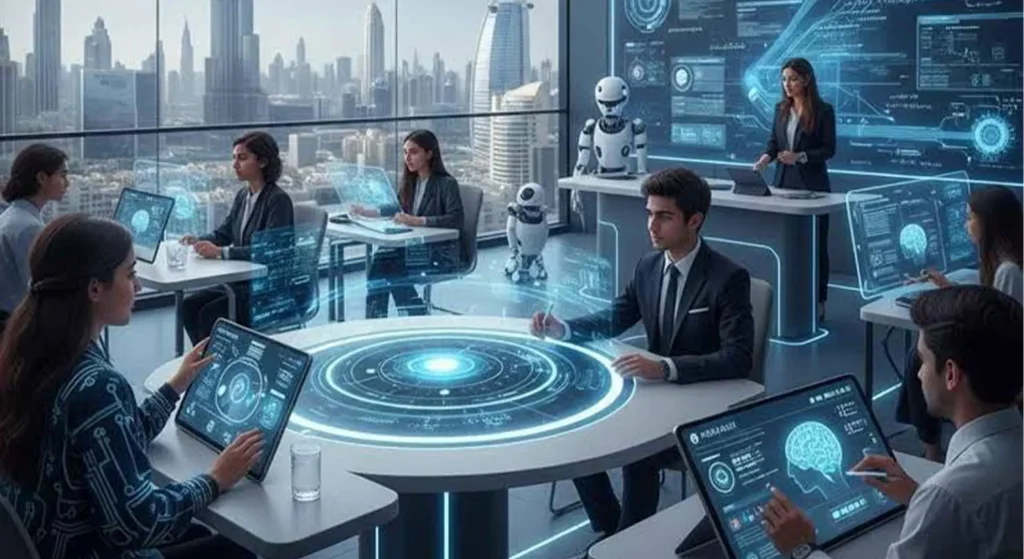
A new Dubai educational initiative is helping students gain early experience in artificial intelligence and digital innovation, equipping young learners with creative technology skills needed for the future digital landscape.
Dubai Students Get a Head Start in Artificial Intelligence and Digital Creativity Through New Programme.

Students are given the opportunity to explore areas such as filmmaking, user experience design, artificial intelligence, and product development at an early stage, allowing them to discover their interests before selecting a university path.
A new creative education initiative launched under Middlesex University Dubai is offering students a fresh way to explore emerging technologies, digital creativity, and future-focused skills before they enter university. Designed for learners aged 14 and above, the programme provides practical experiences in areas such as artificial intelligence, digital media, design, and innovation, helping young people transform their interests into useful skills for future careers.
As industries across the UAE continue to evolve due to rapid advancements in artificial intelligence, technology, and digital platforms, the way students prepare for the workplace is also changing. Traditional education routes are increasingly being complemented by programmes that allow learners to experiment, create, and develop real-world abilities at an earlier stage.
The new creative learning studio at Middlesex University Dubai aims to support this shift by creating a space where students can explore different fields before making major academic decisions. Instead of waiting until university to discover their interests, participants can gain early exposure to creative and technological disciplines that are shaping modern careers.
Through hands-on summer programmes, students are introduced to a range of creative and digital fields, including filmmaking, user experience design, artificial intelligence, and product development. The courses are designed to encourage experimentation, allowing learners to understand how ideas can be transformed into practical projects.
The initiative focuses on learning through experience rather than only theoretical study. Students have opportunities to work on creative challenges, develop concepts, use digital tools, and understand how technology can be applied to solve problems. This approach helps learners build confidence while gaining insight into possible career paths.
With the demand for digital skills increasing across industries, experts believe early exposure to areas such as AI, design thinking, and content creation can give students a stronger understanding of the opportunities available in the future economy.
The programme also reflects a growing trend in education where students are encouraged to explore multiple interests before choosing a specific academic direction. Rather than viewing education as a single decision point, the initiative promotes continuous learning and skill development throughout different stages of life.
Afroz Nawaf, Head of MDX Studios and Founder of point a., explained that the purpose of the initiative is to create a more flexible and adaptable learning experience. He said the goal is to move away from the idea that students must immediately select one fixed pathway and instead encourage them to view education as an ongoing journey of discovery.
According to Nawaf, point a. has been developed as a future-oriented learning studio, academy, and creative community supported by Middlesex University Dubai. The platform is designed to provide learners with new ways to gain knowledge, develop practical abilities, and explore career possibilities in a world where industries are changing rapidly.
He explained that the current job market is evolving at a pace that traditional education systems may not always be able to match. New technologies, changing business models, and emerging industries are creating demand for skills that were not previously considered essential.
By offering a space where students can experiment with different disciplines, the programme aims to help learners understand their strengths and interests before committing to long-term academic choices.
Nawaf highlighted that the initiative is not limited to one specific group of learners. The community is designed to support school students, university learners, and working professionals who are looking to develop new skills or explore their next opportunities.
For younger students, the programme provides an early introduction to creative technology fields. For university students and professionals, it offers opportunities to expand existing knowledge and adapt to changing workplace requirements.
The learning model focuses on flexibility and accessibility, allowing participants to engage with subjects that match their interests. Whether a student is interested in storytelling through filmmaking, creating digital experiences through UX design, exploring artificial intelligence, or building new products, the programme provides a platform for exploration.
The emphasis on practical learning also reflects the growing importance of creativity alongside technical knowledge. While AI and digital tools are becoming more common, the ability to think creatively, solve problems, and develop new ideas remains highly valuable across industries.
The UAE has increasingly positioned itself as a hub for innovation, technology, and entrepreneurship, creating demand for individuals who can combine digital knowledge with creative thinking. Initiatives like this aim to prepare students for that changing environment by introducing them to future-focused skills early in their education journey.
Participants are encouraged to move beyond simply consuming technology and instead learn how to create with it. Through project-based activities, they gain experience developing ideas, collaborating with others, and understanding how digital solutions are created.
The programme also aims to make career exploration more accessible by allowing students to test different areas before making major decisions. A student interested in technology, for example, may discover a passion for digital design or creative production after experiencing different fields.
This approach can help reduce uncertainty around future career choices by giving learners a clearer understanding of available opportunities. Instead of choosing a university course without practical exposure, students can make more informed decisions based on their own experiences.
The rise of artificial intelligence and digital transformation has changed the skills employers look for, making adaptability one of the most important qualities in the modern workplace. Programmes that encourage lifelong learning and experimentation are becoming increasingly relevant as careers continue to evolve.
Through point a. and MDX Studios, Middlesex University Dubai is creating an environment where learners can explore, create, and develop skills that align with the demands of the future economy.
The initiative represents a broader shift in education, where learning is no longer limited to classrooms or traditional timelines. Instead, students are being encouraged to develop skills continuously, explore different interests, and prepare themselves for opportunities that may not yet exist.
By combining creativity, technology, and practical experience, the programme aims to give students a stronger foundation for the future. Whether they eventually pursue careers in artificial intelligence, design, media, entrepreneurship, or other emerging fields, the skills gained through these experiences can help them approach the changing world of work with greater confidence and curiosity.
A summer camp designed for experimentation
As schools across the UAE begin their summer holidays, a new learning initiative is encouraging students to look beyond traditional vacation activities and use their free time as an opportunity to explore new interests, discover hidden talents, and develop skills that could shape their future careers.
The programme’s creators believe the summer break provides an ideal environment for students to learn in a more relaxed and creative setting. Without the usual pressure of exams, assignments, and academic deadlines, learners can focus on experimenting with different fields and understanding what truly interests them.
Afroz Nawaf explained that the holiday period gives students valuable space to explore subjects they may not normally experience during the school year. He said summer allows young people to try new activities without worrying about grades or making immediate decisions about their long-term education and career choices.
According to Nawaf, many students have an idea of what they enjoy, but real understanding often comes only through practical involvement. A student who believes they are interested in filmmaking, for example, may only fully understand the field after experiencing the process of recording footage, editing content, directing creative projects, and presenting ideas.
He added that personal interests can develop into unexpected career possibilities when students are given the chance to experiment. Someone who enjoys creating social media content may discover strengths in areas such as storytelling, visual design, communication strategy, digital marketing, or even product development.
Nawaf emphasized that practical experience plays a key role in helping students identify their abilities. Simply reading about a subject or learning about it in theory may not reveal whether it is the right fit. By actively participating in projects, students can better understand their skills, interests, and potential future pathways.
The Dubai-based initiative has introduced a five-day summer programme designed around four modern and career-focused areas. These include design thinking, filmmaking, user experience and user interface design, product development, and artificial intelligence.
Each track is designed to introduce students to real-world creative and technological processes. Rather than focusing only on classroom-based instruction, the programme encourages participants to learn by doing, creating projects and exploring how ideas move from concepts to completed outcomes.
Through the design thinking track, students learn how to approach challenges creatively, develop solutions, and understand the process of turning problems into innovative ideas. The filmmaking sessions introduce participants to storytelling, visual communication, production techniques, and the creative decisions involved in making digital content.
The UX/UI and product-building pathway gives students insight into how digital platforms, applications, and products are designed. Participants explore how user needs influence design choices and how creative thinking combines with technology to build effective digital experiences.
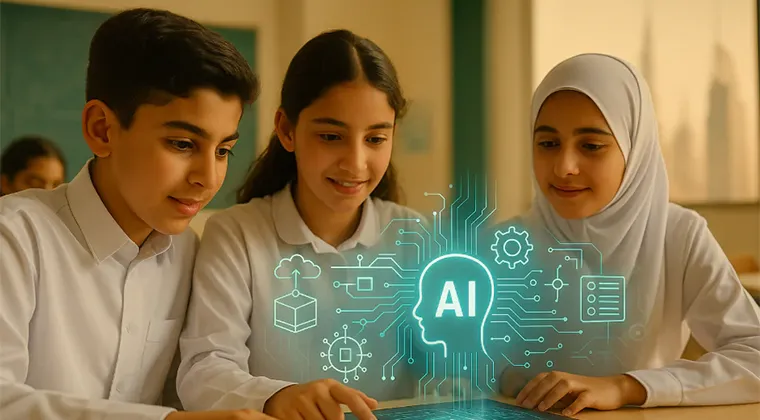
The artificial intelligence track introduces students to the growing role of AI in modern industries. Learners explore how AI tools can support creativity, improve problem-solving, and help transform ideas into practical projects.
Over the five-day experience, students are encouraged to think like creators and innovators. They learn how to develop concepts, create digital content, understand the foundations of technology-based products, and explore the ways artificial intelligence can support the development of new ideas.
The programme aims to provide young learners with an early understanding of the skills becoming increasingly important in the modern workplace. As technology continues to transform industries, creativity, adaptability, and digital knowledge are becoming valuable abilities across many career fields.
By introducing students to these areas at an early age, the initiative hopes to help them become more confident in exploring different possibilities. The goal is not necessarily to decide on a specific career immediately, but to help students understand what they enjoy and where their strengths may lie.
The summer programme is available at a cost of Dh1,499. Students who successfully complete eligible courses receive certificates issued through Middlesex University Dubai, providing formal recognition of their participation and learning experience.
Organizers believe that programmes like this can help create a stronger connection between school education and future career preparation. By combining creativity, technology, and hands-on learning, students can gain exposure to fields that are expected to play a major role in the future economy.
The initiative reflects a growing shift toward experiential education, where students are encouraged to explore, experiment, and build practical skills alongside traditional academic learning. Through this approach, young learners can use their summer break not only to relax but also to discover new interests and prepare for future opportunities.
AI, creativity and the changing skills landscape in the UAE
As artificial intelligence continues to become a bigger part of daily work across Dubai’s creative, technology, and business sectors, the demand for people who can combine technical knowledge with creativity and problem-solving abilities is growing rapidly.
The rise of AI is changing the way professionals approach their work. It is no longer viewed as a tool limited to programmers, software developers, or technology specialists. Instead, artificial intelligence is becoming increasingly integrated into many industries, influencing how designers create, how filmmakers develop ideas, how companies communicate with audiences, and how individuals transform concepts into real-world projects.
Afroz Nawaf explained that technology has made creative opportunities more accessible than ever before. Today, individuals can produce digital content, develop ideas, and share their work with global audiences without needing the same level of resources that were required in the past.
He noted that the creative industry has experienced a major transformation because digital tools have reduced many traditional barriers. Aspiring creators no longer necessarily need access to large studios, major organizations, or expensive equipment to begin developing their ideas. With the right knowledge and skills, individuals can use available technologies to create meaningful work and build their own opportunities.
However, Nawaf pointed out that increased accessibility has also created a more competitive environment. While more people now have the ability to create and publish content, standing out requires more than simply having access to tools.
He explained that producing content is only one part of the creative process. The ability to communicate effectively, develop original ideas, understand audiences, solve problems, and create work that connects with people remains essential.
According to him, the availability of technology has made creation easier, but it has also increased the importance of developing deeper skills. When everyone has the ability to produce content, the difference often comes from creativity, strategy, storytelling ability, and the ability to use technology with purpose.
This is where education and structured learning become increasingly important. While AI tools can support creativity and improve productivity, human skills such as judgment, imagination, emotional understanding, and decision-making remain critical.
Nawaf believes that future careers will depend heavily on the combination of artificial intelligence and human creativity. Rather than replacing creative thinking, AI is expected to become a tool that helps people develop stronger ideas, work more efficiently, and explore new possibilities.
The ability to understand how to use AI effectively is becoming an important skill across many industries. Professionals who can combine technology with creative thinking are likely to have an advantage in the evolving workplace.
Preparing students for future careers
The programme also focuses on helping students recognize the value of their personal interests and transform them into structured skills that can support future career opportunities.
Nawaf believes many young people often underestimate the abilities they develop through hobbies and personal projects. Activities that may appear to be simple interests can often involve valuable skills that are relevant to professional environments.
For example, a student who spends time editing videos may already be developing abilities related to storytelling, visual communication, technical editing, and audience engagement. Someone who enjoys gaming may develop problem-solving skills, teamwork, digital awareness, or strategic thinking. A person who enjoys photography, writing, or creating online communities may already be building skills connected to creative industries.
He explained that the important step is recognizing the potential behind these activities and understanding how they can be developed further.
A hobby becomes a professional skill when it is combined with discipline, consistency, responsibility, and the ability to apply it in real-world situations.
Nawaf gave the example of photography. Taking pictures for personal enjoyment is different from working as a professional photographer. A career-focused photographer must understand how to communicate with clients, plan a project, organize a shoot, manage deadlines, edit work consistently, and explain the creative decisions behind their final product.
The difference, he said, comes from structure and professional practice. Passion provides the foundation, but skills grow when individuals learn how to apply that passion in a more organized and purposeful way.
The programme aims to help students understand this connection by giving them opportunities to experiment with different areas and develop practical experience.
A personalised approach to learning
A key part of the learning model is the focus on personalised education through learner personas. The initiative uses a learner persona system designed to better understand how each participant approaches learning, creativity, and problem-solving.
Before beginning the programme, students complete a short assessment that helps identify their preferred learning styles and behaviours. The purpose is not to categorize students permanently or limit their abilities, but rather to create a starting point for understanding how they learn best.
Nawaf explained that every learner has different strengths, interests, and ways of processing information. Some students may learn best through practical activities, while others may prefer experimenting, discussing ideas, or working through creative challenges.
By understanding these differences, educators can create more effective learning experiences that are better suited to individual needs.
The learner persona approach allows the programme to move away from a one-size-fits-all education model. Instead, students are encouraged to explore their own learning patterns and become more aware of how they can improve their skills.
This method also helps learners become more confident because they gain a better understanding of their own abilities and preferred ways of working.
Moving beyond traditional ideas of career choices
Nawaf also emphasized that young people should not feel pressured to define their entire future at an early age. In a world where industries and job roles are changing quickly, the ability to adapt and continue learning is becoming more valuable than choosing one fixed path.
He explained that the goal is not for students to decide on a single identity at 16 or 18 years old and remain committed to it forever. Instead, the focus should be on developing curiosity, flexibility, and the ability to evolve as new opportunities emerge.
Modern careers are increasingly shaped by change. New technologies, industries, and job roles continue to appear, while existing professions are being transformed by innovation. The ability to learn new skills and adapt to different environments is becoming one of the most important qualities for future success.
The programme encourages students to see education as an ongoing journey rather than a single decision. Exploring different fields early can help young people make more informed choices while remaining open to new possibilities.
By combining AI knowledge, creative thinking, practical experience, and personalised learning, the initiative aims to prepare students for a future where flexibility and innovation will be essential.
The changing skills economy in the UAE highlights the importance of developing individuals who are not only familiar with technology but also capable of thinking creatively, solving complex problems, and turning ideas into meaningful outcomes.
As artificial intelligence continues to reshape the workplace, the strongest advantage may come from those who understand how to use technology while maintaining the uniquely human abilities of imagination, communication, and strategic thinking.