The UAE has issued a warning that involvement in wildlife smuggling can lead to severe legal consequences, including imprisonment for up to 15 years and financial penalties of as much as Dh2 million.
UAE cautions that wildlife smuggling may result in jail terms of up to 15 years and penalties reaching Dh2 million.

The Minister of Climate Change and Environment has reiterated that the United Arab Emirates maintains a strict zero-tolerance approach toward wildlife trafficking, emphasizing that anyone found participating in the illegal trade of endangered species will face serious legal consequences, including imprisonment of up to 15 years and financial penalties that can reach as high as Dh2 million.
Speaking on the country’s environmental protection stance, Dr. Amna bint Abdullah Al Dahak highlighted that the UAE’s legal and policy framework is firmly aligned with its international obligations under the Convention on International Trade in Endangered Species of Wild Fauna and Flora (CITES). She stressed that the nation treats wildlife crime as a major environmental and ethical violation, not merely a regulatory offense, and therefore enforces some of the region’s strictest punishments to deter such activities.
According to her remarks, the UAE does not tolerate any form of illegal wildlife trade within its borders or through its jurisdictional networks. She made it clear that individuals, organizations, or networks involved in trafficking protected species or contributing to the exploitation of endangered animals will be subject to the full force of the law. In her words, those who engage in such practices have no place in the country, reflecting a firm national stance against environmental crimes that threaten biodiversity.
The minister also underscored that the UAE’s approach is not limited to punishment alone, but is part of a broader environmental strategy focused on conservation, sustainability, and international cooperation. She pointed out that wildlife protection efforts in the country are deeply rooted in the vision and legacy of the UAE’s founding leadership, particularly the late Sheikh Zayed bin Sultan Al Nahyan, who placed strong emphasis on preserving natural heritage and protecting wildlife as part of national development.
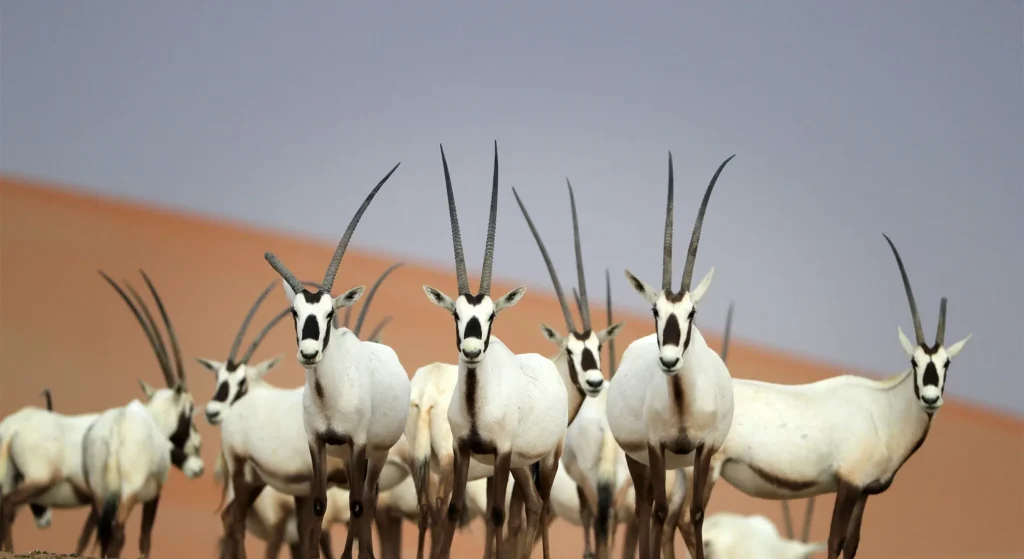
In this context, Dr. Al Dahak referenced several conservation achievements that reflect the UAE’s long-standing commitment to protecting vulnerable species and restoring ecological balance. Among the most notable examples is the successful breeding and reintroduction programme for the Arabian oryx, a species that once faced near extinction in the wild. Through coordinated conservation efforts, captive breeding initiatives, and habitat protection measures, the UAE has played a significant role in restoring populations of this iconic desert animal, which is now considered one of the country’s major environmental success stories.
She further noted the country’s contribution to marine conservation, particularly the protection of dugongs in Emirati waters. The UAE is home to one of the largest known populations of dugongs globally, ranking second in the world. These gentle marine mammals, often referred to as sea cows, are highly sensitive to environmental changes and human activity. Their continued presence in UAE waters is viewed as evidence of effective marine management policies, including the establishment of protected marine zones, monitoring programmes, and restrictions on activities that could damage their habitats.
Beyond terrestrial and marine mammals, the minister also highlighted the UAE’s leadership role in the conservation of birds of prey, especially falcons. Falconry holds cultural and historical importance in the region, and the UAE has worked extensively at both national and international levels to ensure that the trade and breeding of these birds are properly regulated and monitored. Through participation in global conservation initiatives and enforcement of strict domestic regulations, the country has sought to prevent illegal capture and trade while preserving traditional heritage practices in a sustainable way.
Dr. Al Dahak explained that these conservation efforts are part of a larger vision that integrates environmental responsibility with national identity. She emphasized that protecting wildlife is not only about preserving ecosystems but also about maintaining cultural continuity and ensuring that future generations inherit a rich and balanced natural environment. The UAE’s environmental policies, she added, are designed to reflect this dual objective of ecological preservation and cultural stewardship.
She also pointed out that wildlife trafficking is a transnational crime that often connects to wider issues such as organized crime, illegal trade networks, and environmental degradation. Because of this, the UAE works closely with international partners and enforcement agencies to combat trafficking routes and disrupt illegal supply chains. Cooperation under frameworks like CITES enables the country to align its enforcement strategies with global standards and strengthen cross-border efforts to protect endangered species.
The minister emphasized that awareness and education also play an important role in the UAE’s strategy. Public outreach campaigns, educational programs, and community engagement initiatives are used to inform citizens and residents about the importance of biodiversity and the consequences of wildlife crime. By fostering a culture of environmental responsibility, the country aims to reduce demand for illegal wildlife products and encourage reporting of suspicious activities.
In addition to enforcement and awareness, the UAE has invested in scientific research and conservation infrastructure. Wildlife reserves, breeding centers, and marine protected areas have been developed to support endangered species and restore natural habitats. These facilities not only serve conservation purposes but also function as research hubs where scientists and environmental experts study species behavior, population dynamics, and ecological changes.
Dr. Al Dahak reiterated that these combined efforts reflect a comprehensive national strategy that balances development with environmental protection. As the country continues to grow economically and socially, it also seeks to ensure that progress does not come at the expense of biodiversity. Instead, sustainability is positioned as a core principle guiding policy decisions across sectors.
She concluded by reaffirming that the UAE will continue to strengthen its legal framework and enforcement mechanisms to ensure that wildlife trafficking is deterred effectively. The message from the government remains firm: illegal exploitation of endangered species will not be tolerated under any circumstances, and violators will face strict legal action in accordance with national law.
Through this combination of strong legislation, international cooperation, scientific conservation efforts, and cultural commitment, the UAE aims to position itself as a global leader in wildlife protection and environmental sustainability.
100 million mangroves by 2030
The Mangrove Alliance for Climate (MAC), an international initiative established by the United Arab Emirates in collaboration with Indonesia, has expanded significantly since its inception and now includes 47 participating countries. This growing global platform is focused on encouraging climate action through nature-based solutions, with a particular emphasis on the protection, restoration, and large-scale expansion of mangrove ecosystems across the world. By bringing together governments and environmental stakeholders, the alliance seeks to highlight the critical role mangroves play in carbon storage, coastal protection, and biodiversity conservation.
Within this broader environmental commitment, the UAE has set an ambitious national target to plant 100 million mangrove trees by the year 2030. This initiative forms a key component of the country’s wider marine and coastal conservation strategy, which aims not only to increase green cover along shorelines but also to strengthen the resilience of marine ecosystems against climate change impacts such as rising sea levels, coastal erosion, and habitat degradation. Mangroves are widely recognized for their ability to act as natural carbon sinks, and the UAE’s large-scale plantation drive is intended to enhance both ecological stability and climate mitigation efforts.
In addition to mangrove expansion, the UAE has also outlined a comprehensive set of marine restoration projects designed to protect and rehabilitate coral reef systems and safeguard fish populations in its territorial waters. These efforts reflect a long-term vision to preserve marine biodiversity and ensure the sustainability of ocean resources that are vital to ecological balance as well as food security. Coral reefs, which serve as essential habitats for a wide range of marine species, have been identified as a priority area for conservation due to their vulnerability to environmental stressors such as temperature fluctuations and pollution.
As part of these ongoing initiatives, Dr. Amna bint Abdullah Al Dahak, Minister of Climate Change and Environment, emphasized that the UAE is actively engaged in large-scale, forward-looking environmental programs aimed at restoring coral reef ecosystems. She explained that these projects are designed to improve marine biodiversity while also strengthening fish stocks, which play a crucial role in maintaining the health of ocean ecosystems and supporting local fisheries. By investing in reef rehabilitation and marine habitat protection, the country aims to ensure the long-term sustainability of its coastal and marine resources.
Dr. Al Dahak further highlighted that the UAE’s environmental strategy is not limited to isolated projects but is instead built on a coordinated national framework that integrates scientific research, policy development, and on-the-ground conservation work. According to her, the success of these initiatives is measured not only within the country but also through their broader regional and international impact. The UAE’s approach, she noted, is structured to deliver tangible and measurable environmental outcomes that extend beyond national borders, contributing to global efforts to address climate change and biodiversity loss.
She also pointed out that the country’s environmental achievements are the result of sustained and deliberate national efforts over time, rather than short-term or symbolic actions. These efforts include investments in ecological restoration, the establishment of protected marine zones, and the implementation of advanced environmental monitoring systems. Together, these measures have enabled the UAE to build a strong foundation for environmental stewardship that aligns with global sustainability goals.
Furthermore, Dr. Al Dahak emphasized that the UAE views environmental protection as a shared international responsibility and actively participates in collaborative platforms such as the Mangrove Alliance for Climate to promote collective action. Through partnerships with other nations, the country seeks to exchange knowledge, share best practices, and support large-scale ecological restoration efforts that can be replicated in different regions around the world.
She added that the UAE’s commitment to environmental sustainability is deeply embedded in its national development strategy, reflecting a long-term vision that balances economic growth with ecological preservation. By integrating environmental priorities into its policy framework, the country aims to ensure that development projects are aligned with sustainability principles and do not compromise the health of natural ecosystems.
In conclusion, the UAE’s work in mangrove restoration, coral reef rehabilitation, and marine biodiversity protection represents a comprehensive and evolving environmental agenda. Through initiatives such as the Mangrove Alliance for Climate and its national plantation targets, the country continues to position itself as an active contributor to global climate solutions while also reinforcing its commitment to preserving marine ecosystems for future generations.
The Minister stated that the United Arab Emirates has achieved considerable advancement through its national environmental programmes in fulfilling its obligations under the Convention on Biological Diversity. She explained that the country’s progress has been substantial and measurable, with results that not only reflect domestic achievements but also contribute positively to environmental efforts beyond the UAE’s own borders. According to her, these accomplishments demonstrate that the nation’s conservation policies are designed with both local impact and global responsibility in mind, allowing the UAE to play a meaningful role in addressing biodiversity challenges at the international level.
She further elaborated on the country’s leadership in developing and implementing pioneering systems to manage and regulate the trade of falcons and other birds of prey, which hold deep cultural and historical significance in the region. These regulatory frameworks have been introduced to ensure that the tradition of falconry is preserved in a responsible and sustainable manner, while also preventing illegal trafficking and exploitation of these species. By establishing strict monitoring mechanisms, licensing systems, and enforcement measures, the UAE aims to protect these birds from overexploitation and ensure that their populations remain stable in both wild and controlled environments.
In her remarks, she highlighted that these initiatives form part of a broader national strategy that integrates biodiversity conservation into the country’s environmental diplomacy. This approach reflects the UAE’s intention to position environmental protection as an important component of its international engagement, using its experiences and policies as a model for cooperation and knowledge-sharing with other nations. Through participation in global environmental agreements and partnerships, the country seeks to contribute to collective efforts aimed at preserving biodiversity and combating illegal wildlife trade on a global scale.
The minister also emphasized that the UAE’s environmental vision is not static but continuously evolving, supported by ongoing improvements in legal, regulatory, and technological systems. She noted that the country is actively working to strengthen its legislative frameworks to ensure they remain effective in addressing emerging environmental challenges, including those related to biodiversity loss and wildlife crime. These legal enhancements are complemented by advanced regulatory mechanisms designed to improve compliance, monitoring, and enforcement across different sectors.
In addition to legislative development, she pointed out that technological innovation plays a crucial role in supporting the UAE’s environmental objectives. The integration of modern technologies such as digital tracking systems, data analytics, and monitoring tools has significantly improved the country’s ability to oversee wildlife trade, manage conservation projects, and respond quickly to potential environmental threats. These technological advancements are seen as essential tools in ensuring that environmental protection efforts are both efficient and effective.
She further stated that the UAE is committed to expanding and deepening its international partnerships in the field of biodiversity conservation. By working closely with global organizations, environmental agencies, and partner countries, the UAE aims to strengthen collective action and promote coordinated responses to environmental issues that transcend national boundaries. These partnerships also provide opportunities for sharing expertise, enhancing scientific research, and developing joint initiatives that support global sustainability goals.
The minister underlined that all of these efforts are guided by a clear and enduring principle: the belief that safeguarding natural ecosystems and protecting wildlife today is fundamental to ensuring a sustainable and prosperous future. She explained that the UAE views environmental protection not only as an ecological responsibility but also as an essential foundation for long-term economic stability and intergenerational well-being.
She added that by preserving biodiversity and maintaining ecological balance, countries can create more resilient economies that are better equipped to withstand environmental and climate-related challenges. In this context, the UAE’s environmental policies are designed to support both conservation objectives and sustainable development goals, ensuring that progress in one area does not come at the expense of the other.
Ultimately, she reaffirmed that the UAE will continue to advance its environmental agenda through a combination of strong governance, innovative technology, and international collaboration. The country remains committed to reinforcing its position as a responsible global actor in biodiversity conservation, while ensuring that its national development path remains aligned with the principles of sustainability and environmental stewardship.