Understanding how to respond to sudden modifications in the US green card application system and preparing applicants to handle new immigration procedures, policy updates, and processing changes more effectively.
A guide to managing unexpected updates in the US green card process.
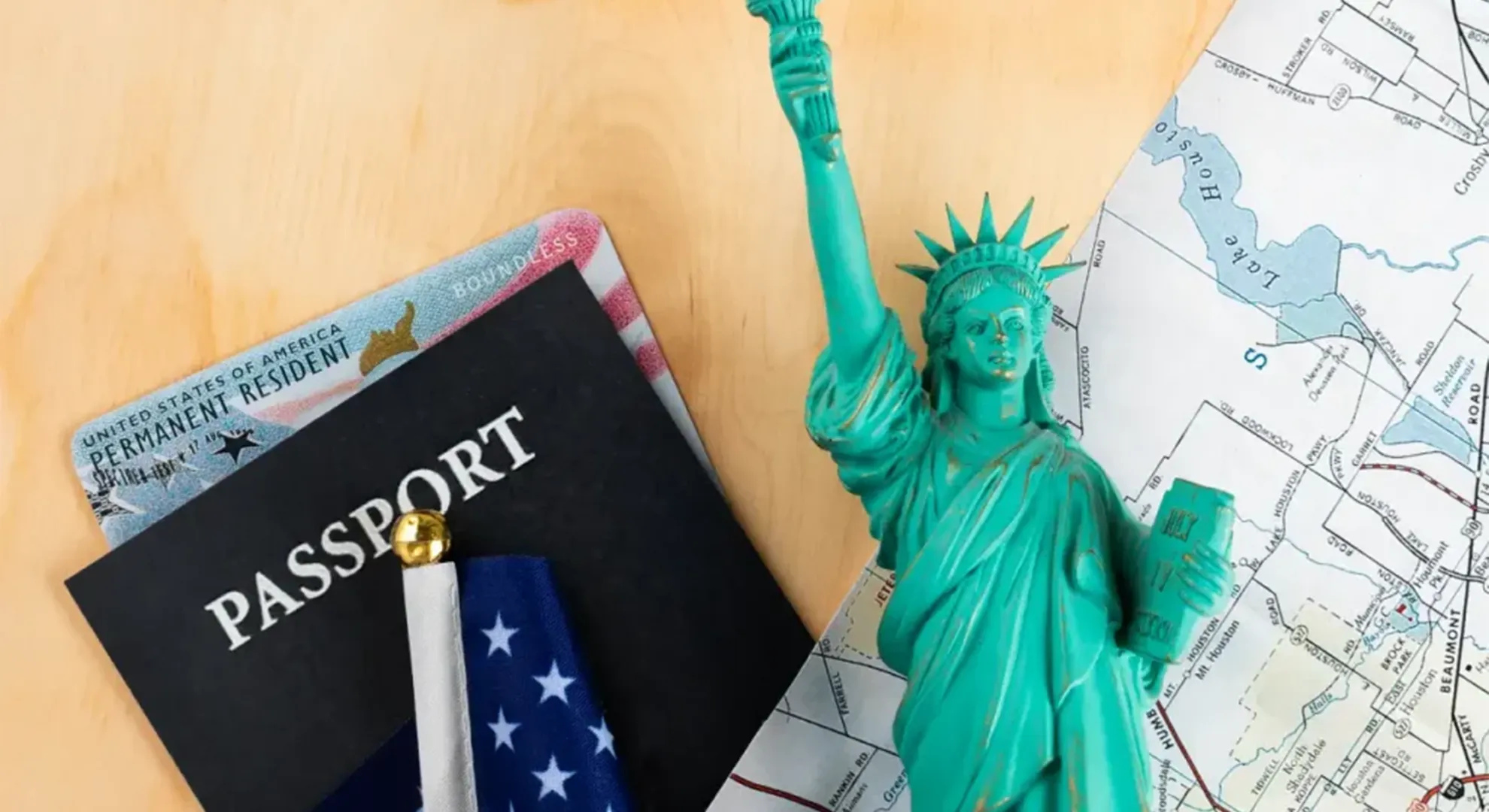
A recently introduced federal immigration policy in the United States is creating concern among thousands of foreign nationals pursuing permanent residency. Under the updated guidance issued by the US Citizenship and Immigration Services (USCIS), certain immigrants seeking green cards may now be required to leave the United States and complete their visa processing through a US embassy or consulate in their country of origin, unless they qualify for limited exceptions based on extraordinary circumstances.
The announcement has sparked widespread uncertainty among immigrant communities, many of whom fear that years spent building stable lives in America could suddenly be disrupted. Immigration lawyers and legal experts say the policy shift, though not highly publicised, could have major implications for applicants who had expected to complete their status adjustment process while remaining inside the US.
According to Shai Zamanian, a Dubai-based US immigration attorney and legal director at The American Legal Center, the update has generated significant anxiety among immigrants already navigating an increasingly complicated immigration system. He described the USCIS directive as a development that may appear administrative on the surface but carries serious emotional and practical consequences for affected families.
Zamanian explained that many immigrants have spent years establishing careers, homes, businesses, and social ties in the United States. Some have children enrolled in American schools, ongoing employment commitments, mortgages, and personal relationships deeply rooted in everyday life there. For such individuals, the possibility of being asked to leave the country temporarily in order to continue their green card process can feel overwhelming and destabilising.
He noted that applicants are particularly worried about the uncertainty surrounding consular processing abroad. In many cases, individuals could be required to travel back to their home countries, attend interviews at US embassies or consulates, and wait for approval before being permitted to re-enter the United States. This process may create fears of delays, travel complications, visa refusals, or prolonged separations from family members and jobs.
The attorney described the emotional impact of the policy by asking readers to imagine spending years building a stable life in America, only to face the possibility of leaving everything behind temporarily while immigration authorities reassess whether they can return. For many immigrants, the process feels less like a routine administrative requirement and more like being forced to place their future on hold despite already having established roots in the country.
As discussions about the policy spread online and within immigrant communities, many applicants have begun questioning whether they should prepare for sudden travel requirements or potential interruptions to their residency plans. The uncertainty has intensified concerns among individuals already dealing with long processing backlogs, changing visa rules, and complicated legal procedures tied to the green card system.
However, immigration experts caution against panic and emphasise that the policy does not necessarily apply to everyone pursuing permanent residency. Zamanian advised immigrants to remain informed, carefully review their individual immigration status, and seek professional legal guidance rather than reacting out of fear or misinformation circulating on social media.
He stressed that while the new USCIS memo introduces additional procedural hurdles for some applicants, it does not mean that all immigrants will automatically be forced to leave the country. Certain categories of applicants may still qualify for adjustments of status from within the US, while others could be eligible for exemptions or forms of discretionary relief depending on their circumstances.
Legal specialists also point out that immigration policy memos are often highly technical and may be interpreted differently depending on visa categories, employment situations, family sponsorships, or previous immigration history. As a result, applicants are being encouraged to avoid making rushed decisions until they fully understand how the changes relate to their own cases.
The development comes at a time when the US immigration system is already under increased scrutiny for long wait times, complex procedures, and inconsistent policy implementation. Green card applicants frequently face years of uncertainty while navigating paperwork, interviews, background checks, and visa availability restrictions. For many families, the process can affect employment opportunities, travel freedom, education planning, and long-term financial stability.
The latest guidance has therefore intensified broader concerns about how immigration rules continue to evolve with little warning, often leaving applicants uncertain about what steps they may suddenly be required to take next. Immigrant advocacy groups and attorneys say clearer communication from authorities will be important to prevent confusion and unnecessary fear among applicants.
Zamanian ultimately advised immigrants not to assume the worst but to stay alert to developments in immigration policy. He recommended maintaining updated legal documentation, monitoring official USCIS announcements closely, and consulting qualified immigration lawyers before making travel or residency decisions.
While the new policy has undeniably increased anxiety among many green card applicants, experts say understanding the actual scope of the memo is essential. They emphasise that not every applicant will be affected in the same way, and many individuals may still have pathways available to continue their immigration process without major disruption.
First, what is the rationale behind the abrupt procedural change?
The US Citizenship and Immigration Services (USCIS) says the updated policy is based on existing immigration laws and previous judicial rulings that distinguish between temporary visa holders and immigrants seeking permanent residency. Under the guidance, certain foreign nationals who originally entered the United States on short-term visas but later decide they want to obtain a green card may now be required to leave the country and complete their immigrant visa applications through US embassies or consulates in their home nations.
US immigration officials explained that temporary visas are intended for limited and clearly defined purposes such as tourism, study, business assignments, or short-term employment. According to USCIS spokesperson Zach Kahler, individuals entering the country under these visa categories are expected to remain only for the duration permitted by their visa conditions and then depart once their authorised stay expires.
Kahler stated that programmes for students, tourists, and temporary workers were never designed to automatically serve as pathways to permanent residency. He said the immigration system was originally structured with the expectation that non-immigrant visitors would return to their countries after completing the purpose of their visit rather than transition directly into green card applicants while remaining inside the US.
According to USCIS, the revised policy is intended to restore what officials describe as the original legal framework of the immigration system. The agency argues that foreign nationals who initially entered the United States on temporary visas but later wish to become permanent residents should generally complete that process through overseas consular channels instead of adjusting status domestically.
Kahler explained that, except in situations involving extraordinary humanitarian or legal considerations, applicants seeking permanent residency are expected to return to their home countries to apply for immigrant visas through the US Department of State. He added that the administration views this process as a way to ensure immigration laws are followed consistently and according to congressional intent.
Officials also said the policy is aimed at reducing misuse of temporary visa categories and discouraging situations in which individuals remain in the country unlawfully after their visa status expires or after residency applications are denied. USCIS maintains that processing immigrant visas through consulates abroad helps immigration authorities maintain clearer oversight of applicants and reinforces compliance with visa conditions.
The agency further argued that requiring applicants to complete the process from abroad may reduce the number of individuals who disappear into undocumented status after facing immigration setbacks inside the United States. According to USCIS, consular processing abroad creates a more controlled and transparent system for evaluating immigrant applications while limiting opportunities for visa overstays or unlawful residency.
Officials emphasised that the policy is not creating a new immigration law but rather enforcing existing legal principles that have long been part of the US immigration framework. USCIS contends that courts have repeatedly upheld distinctions between temporary non-immigrant intent and permanent immigrant intent, and the agency says the latest guidance aligns with those precedents.
The agency also highlighted administrative reasons behind the policy shift. USCIS stated that handling more green card-related cases through overseas consular offices could help reduce pressure on domestic immigration resources. By transferring eligible cases to the US Department of State for processing abroad, the agency says it can focus more attention on other immigration priorities handled within the United States.
According to USCIS, this redistribution of workload could allow the agency to dedicate additional staff and resources to applications involving humanitarian protection, naturalisation, and support for vulnerable individuals. Officials specifically referenced cases involving victims of violent crime, survivors of human trafficking, citizenship applications, and other high-priority immigration matters that require domestic adjudication.
The agency maintains that streamlining responsibilities between USCIS and the State Department will create a more efficient overall immigration system. Under this approach, overseas consular offices would take a larger role in processing immigrant visa applications for individuals who initially entered the country temporarily, while USCIS would concentrate on categories falling directly under its domestic jurisdiction.
However, the announcement has generated concern among immigrant communities and immigration attorneys who warn that the practical effects could be significant for many applicants already living and working in the United States. Critics argue that requiring individuals to leave the country during the green card process may create uncertainty, travel risks, employment complications, and family disruptions.
Immigration lawyers note that consular processing can involve long waiting periods, administrative delays, and the possibility of visa refusals that may leave applicants stranded outside the US for extended periods. Families fear being separated, while workers worry about losing jobs, housing, or legal protections tied to their current immigration status.
Despite these concerns, USCIS continues to defend the policy as an effort to reinforce legal immigration procedures and preserve the distinction between temporary stays and permanent immigration pathways. Officials argue that maintaining this separation is necessary to uphold the integrity of the immigration system and ensure that applicants follow procedures established under federal law.
The debate surrounding the guidance reflects broader tensions within the US immigration system, where policymakers continue to balance border enforcement, visa compliance, labour needs, and humanitarian considerations. For many immigrants currently navigating the green card process, the evolving rules have added another layer of uncertainty to an already lengthy and complex journey toward permanent residency.
Legal experts are advising affected individuals to closely monitor official USCIS announcements, review their immigration history carefully, and seek professional legal advice before making decisions related to travel or residency applications. Attorneys also stress that exceptions may apply in certain cases involving humanitarian grounds, family hardship, or other extraordinary circumstances, meaning not every applicant will necessarily be subject to the same requirements.
USCIS will grant ‘adjustment of status’ only in extraordinary circumstances, what does it mean?
Zamanian noted that for many years, the process of “adjustment of status” has played a central role in how the United States has managed immigration for people already living in the country on temporary visas. He explained that this system allowed individuals who initially entered the US for education, work, or family reasons to later apply for permanent residency without having to leave the country or interrupt their daily lives.
He described how this pathway has shaped the experience of countless immigrants. For example, a student who arrives from Riyadh to complete a master’s degree may later secure employment with a consulting firm in New York and continue building a life there. Similarly, a software engineer from Dubai might be hired and sponsored by a technology company in Silicon Valley, gradually transitioning from a temporary worker to a potential permanent resident. In another case, a young professional from Cairo could marry a US citizen and pursue a green card while continuing to live in the country where they have already established personal and professional connections.
Under this long-standing approach, applicants were generally able to complete the entire immigration process from within the United States. This meant they did not have to travel back to their home countries, restart paperwork abroad, or attend visa interviews at US embassies in distant locations after having already built a life in America. For many, this continuity was seen as one of the most practical and stable aspects of the immigration system, allowing them to maintain employment, education, housing, and family life without major disruption.
Zamanian contrasted this with the alternative system known as consular processing, which requires applicants to leave the United States and complete their green card procedures through a US embassy or consulate in their country of origin or residence. He pointed out that this method is often viewed as more complicated and less predictable, particularly for individuals who have already been living in the US for an extended period.
According to him, consular processing can introduce a range of practical difficulties. Applicants may face longer waiting times, additional administrative steps, and uncertainty regarding interview scheduling and visa approval outcomes. The process may also require individuals to travel back to countries they may not have lived in for years, which can create logistical and emotional challenges.
He added that these disruptions can extend beyond administrative inconvenience. For many professionals, maintaining business responsibilities in another country becomes difficult when they are required to remain abroad for an uncertain period. Remote coordination with employers, clients, or ongoing projects is not always feasible, particularly in roles that demand physical presence or close collaboration.
Family life can also be significantly affected. Some individuals may have dependents in the United States, including spouses or children enrolled in school, making sudden relocation or extended absence particularly challenging. Others may have financial commitments such as mortgages, leases, or long-term investments that cannot easily be managed from overseas.
Zamanian emphasised that for immigrants who have already built established routines, careers, and community ties in the United States, being asked to leave the country during the immigration process represents a major disruption rather than a simple procedural step. What might appear as an administrative requirement can, in practice, involve complex personal and financial consequences.
He further explained that the policy direction being discussed by the Trump administration reflects a different interpretation of how immigration processing should function. From this perspective, greater reliance on overseas consular interviews is seen as a way to strengthen scrutiny and improve the evaluation of applicants.
Supporters of this approach argue that US embassies abroad may be better positioned to assess applicants in their home environments, where officials can more easily verify background information and identify inconsistencies. The idea is that conducting interviews outside the United States allows for a more detailed examination of applications before individuals are granted permanent entry.
Proponents of the policy also suggest that consular processing may help reduce the risk of fraudulent applications or cases that do not meet eligibility requirements. By requiring applicants to go through overseas screening, authorities believe they can apply stricter oversight and ensure that only qualified candidates are approved for permanent residency.
Some policymakers further argue that keeping the entire adjustment process within the United States may make it too accessible, potentially allowing individuals to transition from temporary to permanent status without sufficient external review. From this viewpoint, relocating the process to embassies is intended to introduce an additional layer of verification and accountability.
However, critics of this approach warn that such a shift could introduce unnecessary hardship for applicants who are already integrated into American society. They argue that forcing individuals to leave the country interrupts lives that are often deeply rooted in employment, education, and community relationships.
The debate ultimately reflects a broader tension in US immigration policy between accessibility and enforcement, convenience and oversight, and domestic processing versus international review. While one side emphasises efficiency and continuity for applicants already residing in the country, the other prioritises stricter evaluation and external verification through consular channels.
For immigrants navigating this system, these policy differences are not abstract. They directly influence where they live during the application process, how they manage their careers, and whether they can remain close to their families while waiting for a final decision on permanent residency.
What does the memo actually say (and does not say)
Zamanian pointed out that much of the current concern surrounding the new USCIS memorandum may be driven more by perception than by the actual legal changes it introduces. In his view, the guidance has been widely discussed in alarming terms, but its practical impact is more nuanced than many people assume at first glance.
He clarified that the memo does not remove the option of adjustment of status for individuals already residing in the United States. In other words, foreign nationals who are eligible under existing immigration laws can still apply for permanent residency without automatically being required to leave the country. The underlying eligibility rules have not been rewritten or withdrawn.
What the document does, however, is reinforce the idea that approval of green card applications is not purely automatic once basic eligibility criteria are met. Zamanian explained that immigration officers are reminded that they retain discretion when evaluating cases, even when applicants satisfy the technical requirements set out in law. This means that eligibility alone does not guarantee a favourable outcome.
He suggested that this shift in emphasis signals a broader focus on more holistic case assessment. Instead of looking only at whether an applicant meets specific procedural benchmarks, officers are now expected to evaluate a wider range of factors before making a decision. This includes not just legal eligibility, but also the applicant’s overall background and conduct during their stay in the United States.
Under this approach, immigration authorities may take into account an individual’s past compliance with visa rules, including whether they overstayed a previous visa or violated the terms of their original admission. They may also consider an applicant’s immigration history more broadly, such as prior entries, exits, and any previous interactions with immigration enforcement.
Beyond procedural compliance, officers are also expected to review personal factors such as moral character and adherence to US laws and regulations. Family connections within the country, length of residence, employment history, and community involvement may also be considered as part of a broader evaluation of the applicant’s overall profile.
Zamanian explained that this expanded assessment framework effectively means that officers are being encouraged to look at the “full picture” of an applicant’s circumstances rather than relying solely on a checklist of eligibility requirements. Each case may therefore be judged in a more contextual and discretionary manner.
He used a metaphor to describe this change in emphasis, suggesting that details which may previously have been treated as minor or secondary considerations could now carry significantly greater weight in decision-making. In his words, factors that once might have been seen as background information or “footnotes” in an immigration file could now become central elements influencing the outcome of an application.
At the same time, he highlighted an important clarification contained in the memo that may reassure certain applicants. According to Zamanian, the guidance confirms that holding a dual intent visa—such as certain work or student visa categories that legally permit individuals to pursue permanent residency while staying temporarily in the United States—should not, by itself, be interpreted negatively.
In practical terms, this means that individuals who entered the US on visas that allow both temporary stay and the possibility of immigrant intent are not automatically disadvantaged simply because they later decide to apply for a green card. Their lawful use of such visa categories remains recognised within the immigration system.
Zamanian emphasised that this clarification is significant because it helps distinguish between lawful immigration pathways and improper conduct. It reinforces the idea that using a visa category in the way it was legally designed—such as transitioning from temporary status to permanent residency under approved conditions—should not be treated as a negative factor in itself.
Overall, he suggested that while the memo introduces a stronger emphasis on discretionary judgment and broader evaluation criteria, it does not fundamentally alter the legal structure of who can apply for permanent residency. Instead, it refines how applications may be assessed in practice, placing greater importance on the overall context of each individual case.
What must be done?
Zamanian reiterated a cautious but steady message for immigrants and international professionals following the developments: there is no reason for immediate alarm, but there is a clear need to remain informed and attentive. He stressed that while headlines and social media discussions may amplify uncertainty, the most practical approach for affected individuals is to stay calm, monitor official updates closely, and avoid reacting impulsively to early interpretations of the policy.
He noted that this advice is particularly relevant for thousands of people based in the Gulf region, including professionals working in multinational companies, students enrolled in American universities, and investors with financial interests tied to the United States. Many of these individuals are currently observing the situation from abroad or from within US institutions such as corporate offices, campuses, and research environments, trying to understand what the policy shift could mean for their long-term plans.
According to Zamanian, immigration attorneys are largely aligned in their guidance at this stage. Their consistent recommendation is not to panic or assume worst-case outcomes, but instead to remain alert, follow verified legal updates, and seek professional advice when necessary. He emphasised that immigration policy developments often evolve over time, and early interpretations do not always reflect how rules are ultimately applied in practice.
He further explained that the issue carries particular significance in regions such as the United Arab Emirates and the broader Gulf Cooperation Council, where education and investment pathways to the United States have long been viewed as important avenues for future opportunities. For many families in these countries, sending children to study at American universities in cities like Boston or Houston, or investing in US-based businesses through programmes such as the EB-5 investor visa route, is often seen as part of a broader long-term strategy for global mobility and career advancement.
Zamanian pointed out that within this context, there has often been an implicit expectation that the process of transitioning from temporary status to permanent residency would remain relatively structured and accessible, provided applicants followed legal procedures and met eligibility requirements. The current uncertainty has therefore raised questions among some families about whether those assumptions still hold true in the same way.
However, he urged caution against drawing broad or definitive conclusions from an initial policy announcement. In his conversation with Khaleej Times, he emphasised that immigration policy statements, particularly those issued through memoranda or internal guidance, frequently undergo revisions, clarifications, or legal challenges before they are fully implemented or consistently applied.
He noted that it is common for such policy changes to be interpreted in multiple ways in the early stages, and that official guidance may evolve significantly once legal experts, courts, and immigration practitioners begin examining their practical implications. As a result, he suggested that it would be premature to assume that the policy will be enforced in its strictest possible form without modification.
Zamanian also highlighted the potential scale of impact if the policy were to be implemented in a broad and rigid manner. He estimated that tens of thousands of individuals currently residing in the United States on various temporary visas could potentially be affected, depending on how the rules are interpreted and applied by immigration authorities.
If such a scenario were to materialise, he said, it would almost certainly attract legal scrutiny and challenge within the US federal court system. Immigration policies that significantly alter established procedures or affect large groups of applicants typically face judicial review, particularly when questions arise about fairness, administrative authority, or consistency with existing immigration law.
He suggested that legal professionals are already preparing for possible litigation, noting that immigration attorneys tend to respond quickly to policy shifts that could materially affect their clients. In his words, legal teams are effectively “gearing up” to assess the memo and determine whether it aligns with statutory authority and previous legal precedent.
Zamanian added that legal challenges to immigration policies are not unusual in the United States. In recent years, it has become relatively common for significant policy changes in the immigration space to be contested in federal courts shortly after their announcement. These challenges often focus on whether the government has overstepped its authority or failed to follow proper administrative procedures.
He observed that the current memo appears likely to follow a similar trajectory, given the level of attention it has already generated among legal experts, advocacy groups, and affected communities. According to him, the combination of policy ambiguity and potential practical consequences makes it a strong candidate for judicial review.
Despite this, he reiterated that individuals should avoid assuming immediate disruption to their immigration plans. Instead, he encouraged applicants and visa holders to remain informed, consult qualified legal professionals, and track how the policy is interpreted over time by both immigration officers and the courts.
In summary, Zamanian’s message balanced caution with reassurance: while the announcement has understandably raised concerns among many foreign nationals connected to the United States, its final impact will depend on how it is implemented, interpreted, and potentially challenged in the legal system in the months ahead.
‘Plan carefully and stay compliant’
For many families in the GCC region, long-term planning around education, employment, and investment in the United States is often viewed as part of a broader generational strategy. Decisions such as sending children to study in American universities, securing skilled employment opportunities abroad, or investing in US-based residency pathways are typically made with the expectation of stability and predictability over time. Against that backdrop, the possibility that a policy memorandum alone could influence or alter carefully structured immigration plans has understandably created discomfort and concern.
Zamanian acknowledged this sentiment, noting that immigration rules are rarely static and often evolve through follow-up guidance and category-specific clarifications. He explained that the US Citizenship and Immigration Services has indicated that additional instructions tailored to different visa groups are likely to be released in the future. This means that the way the policy applies may not be uniform across all applicants and could differ depending on the type of visa or immigration pathway involved.
He suggested that students, skilled workers, investors, and family-sponsored applicants may each be subject to distinct interpretations of the rules once further guidance is issued. In other words, the immigration experience may become more segmented, with different requirements and expectations depending on the applicant’s category and purpose of stay in the United States.
Because of this anticipated variation, Zamanian emphasised that it is too early to assume a single, fixed outcome for all applicants affected by the announcement. He pointed out that immigration policy in the United States is often implemented in stages, with initial memos followed by clarifications, revisions, and operational guidance that gradually shape how the rules function in practice.
In light of this evolving situation, he advised families and individuals to adopt a careful and disciplined approach to their immigration planning. Rather than reacting to early interpretations or worst-case assumptions, he recommended focusing on compliance with existing visa conditions, maintaining accurate documentation, and ensuring that all legal requirements are consistently met throughout the immigration process.
He also stressed the importance of having access to reliable legal support. According to him, immigration cases can become complex quickly, especially when policies are changing or being reinterpreted. For this reason, he suggested that applicants should have experienced immigration counsel available to help them navigate procedural questions, assess eligibility, and respond appropriately to any new developments.
Zamanian compared this approach to a fundamental principle often used in long-term family planning: careful preparation combined with expert guidance. In his view, the most effective strategy in uncertain regulatory environments is to remain informed, organised, and legally compliant while avoiding unnecessary panic or abrupt changes in plans based on incomplete information.
He reiterated that despite the concerns raised by the recent policy discussion, the possibility of obtaining a green card has not disappeared. Instead, the process may become more demanding, requiring greater attention to detail, stronger documentation, and closer adherence to procedural requirements.
According to him, what may change is not the ultimate eligibility itself, but the level of scrutiny and effort required to successfully navigate the system. Applicants may need to demonstrate clearer compliance with immigration rules and provide more comprehensive evidence of their eligibility and intent.
Zamanian concluded by suggesting that while the path forward may feel more complex, it is still navigable for those who approach it with patience and preparation. He emphasised that immigration systems naturally evolve over time, and individuals who remain attentive to updates and work closely with qualified professionals are better positioned to adapt to these changes.
Ultimately, he framed the situation not as a barrier, but as a reminder that immigration planning requires ongoing attention rather than a one-time decision. For families thinking in terms of long-term stability and generational opportunity, he said, the key lies in staying informed, remaining compliant, and being prepared to adjust strategies as policies develop further.