UAE President Pays Tribute to Childhood Mentor by Sharing a Rare Old Photograph and a Warm Personal Message, Reflecting on the Lasting Influence of a Teacher Who Played an Important Role During His Early Years.
UAE President Remembers Childhood Teacher With Nostalgic Photo and Touching Message.
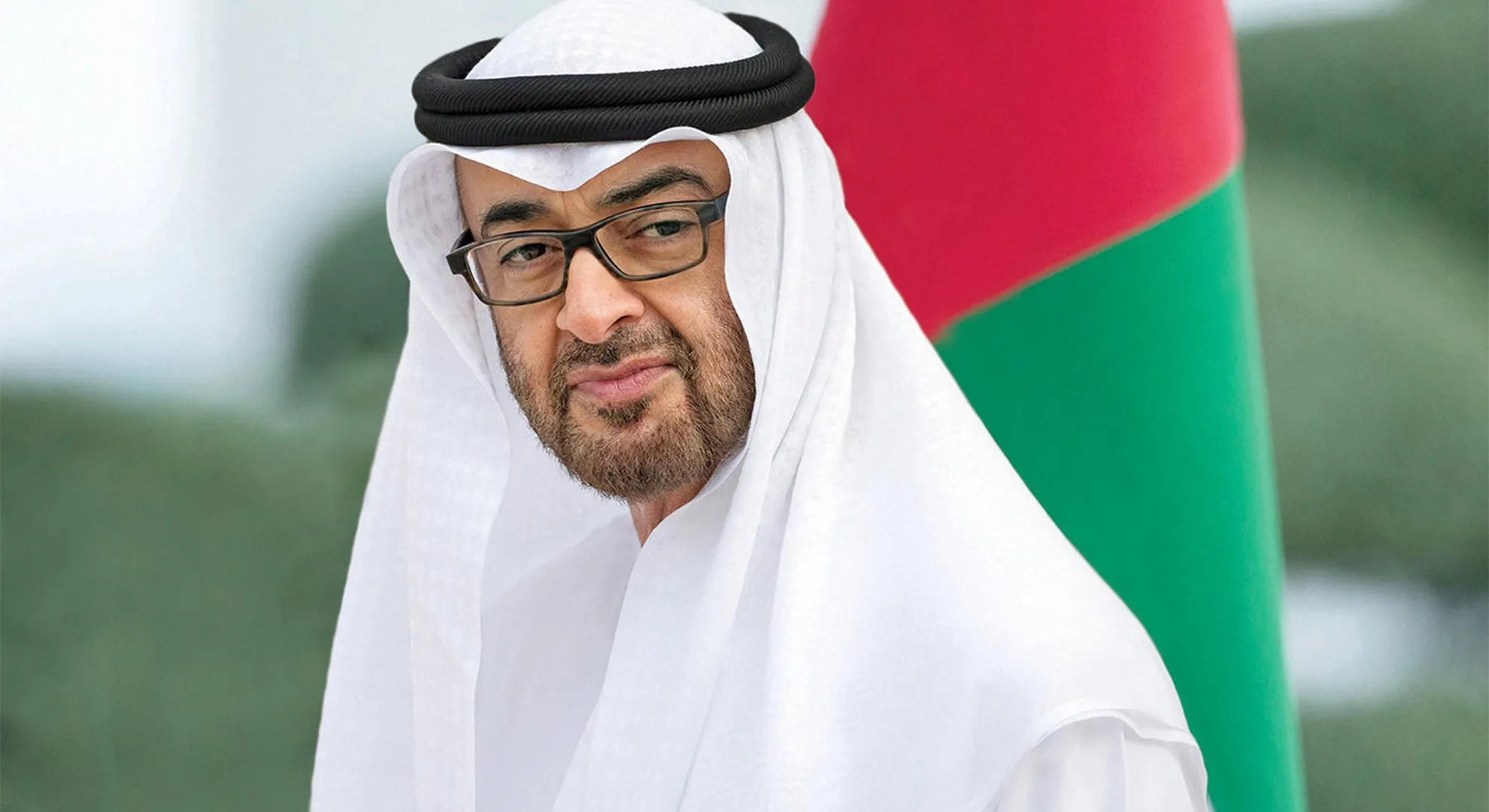
UAE Leaders Honour Teachers and Reflect on Their Lasting Influence
Teachers received a heartfelt tribute from the UAE’s top leadership on World Teachers’ Day 2026, with President Sheikh Mohamed bin Zayed Al Nahyan using the occasion to recall one of his own educators and highlight the lasting contribution teachers make to society.
The UAE President marked the occasion by sharing a rare photograph from his childhood that carried a personal connection to his former teacher, Ahmed Ibrahim Mandi.
The photograph dates back to 1971 and was signed by Sheikh Mohamed. It was reportedly kept as a personal memento before being presented to his teacher, accompanied by a brief handwritten message expressing his appreciation and asking his teacher to remember him.
The simple gesture offered a personal glimpse into the UAE President’s early years and illustrated the enduring relationship that can exist between educators and their students long after the classroom years have ended.
The photograph also served as a reminder of the important role teachers can play in shaping young people during their formative years.
Sheikh Mohamed Highlights the Role of Educators
In his message marking World Teachers’ Day, Sheikh Mohamed praised teachers for the important responsibility they carry in educating and preparing future generations.
He described teaching as a respected and meaningful profession, while expressing his hope that educators would continue to help young people develop confidence, a strong sense of identity and the skills needed to navigate an increasingly changing world.
The UAE President also conveyed his appreciation to teachers working throughout the country and recognised their contribution to the nation’s broader educational ambitions.
He linked the work of educators to the UAE’s Education Vision and its long-term goal of creating a stronger future for the country’s people.
For Sheikh Mohamed, World Teachers’ Day was also an opportunity for individuals to look back on their own educational journeys and remember the teachers who influenced them.
He encouraged people to use the occasion to acknowledge educators whose guidance, encouragement and dedication left a lasting impression.
The message placed particular emphasis on the fact that a teacher’s influence can extend well beyond academic lessons.
Teachers can shape the confidence, character and aspirations of their students, often leaving an impact that remains with them for decades.
A Personal Memory From 1971
The photograph shared by Sheikh Mohamed added a personal dimension to his message.
Dated 1971, the image was associated with his teacher Ahmed Ibrahim Mandi and had been personally signed by the UAE President.
The accompanying note was brief but meaningful, expressing gratitude while asking the teacher to keep the memory of his student.
Although the message contained only a few words, it demonstrated the personal connection that Sheikh Mohamed maintained with his teacher.
The decision to share the old photograph publicly on World Teachers’ Day also highlighted how memories from school can remain important throughout a person’s life.
For many people, teachers are among the adults who have a significant influence during childhood.
They can encourage students to pursue ambitions, help them overcome difficulties and provide guidance at important stages of their development.
By recalling his own teacher, Sheikh Mohamed drew attention to this lasting relationship.
The photograph also offered the public a glimpse into a period from the UAE President’s youth, decades before he became the country’s head of state.
Teachers and the Future of the UAE
The President’s message placed education within the wider context of the UAE’s ambitions for the future.
The country has invested heavily in developing its education system and preparing younger generations for a rapidly changing global economy.
Teachers are central to that effort because they are responsible for turning educational policies and programmes into meaningful experiences for students.
The skills young people will need in the future are constantly changing.
Technology, artificial intelligence, new industries and evolving workplaces are transforming the way people learn and work.
Educators therefore have an important role in helping students become adaptable and confident enough to respond to these changes.
The President’s message highlighted the importance of developing generations who are secure in their abilities, connected to their national identity and prepared to meet future challenges.
This approach reflects a broader understanding of education in which academic knowledge is only one part of a student’s development.
Schools and teachers also contribute to values, character, creativity, critical thinking and social responsibility.
Sheikh Mohammed bin Rashid Also Salutes Educators
Dubai Ruler and UAE Vice-President and Prime Minister Sheikh Mohammed bin Rashid Al Maktoum also marked the occasion with a message dedicated to teachers.
His tribute was drawn from his book The Letters, with the Arabic edition of the work now available.
In his message, Sheikh Mohammed described teachers as people who help create future generations and shape the way individuals think.
He reflected on the influence teachers have not only on students’ academic knowledge but also on their ability to make decisions and navigate life.
His words presented educators as figures whose influence can remain long after students leave school.
The message recognised teachers as contributors to society who help prepare people for professions ranging from engineering and medicine to leadership and other fields.
Educators as Builders of Society
Sheikh Mohammed’s message presented teaching as a profession with consequences that extend far beyond the classroom.
Every doctor, engineer, entrepreneur, public official and leader begins as a student.
Teachers therefore contribute indirectly to virtually every part of society by helping young people acquire knowledge and develop the skills needed to pursue their chosen careers.
Their influence also extends into the development of values.
Education is not limited to memorising information or passing examinations. Teachers can help students understand responsibility, discipline, cooperation and respect.
These qualities can influence how individuals contribute to their families, workplaces and communities later in life.
The message from Sheikh Mohammed highlighted this broader role, recognising educators as people who pass knowledge to future generations while helping shape the societies those generations will build.
The Lasting Impact of a Teacher
The two messages from the UAE leadership shared a common theme: the influence of a good teacher can last for a lifetime.
Sheikh Mohamed’s decision to remember his childhood teacher through a photograph from 1971 provided a personal example of that idea.
Decades after the photograph was created, the memory remained meaningful enough to be shared publicly.
The gesture illustrates how education can create relationships and memories that remain important long after formal schooling ends.
For students, a teacher may sometimes be remembered for a single lesson, a word of encouragement or an act of kindness.
Such moments can influence a student’s confidence and aspirations in ways that may not be immediately visible.
Teachers may not always know the full extent of the impact they have on their students.
A child who receives encouragement from an educator may carry that confidence into adulthood.
Similarly, a teacher who inspires an interest in a particular subject may influence a student’s eventual career.
World Teachers’ Day and the UAE
World Teachers’ Day provides an opportunity to recognise educators internationally and reflect on their contribution to education and society.
In the UAE, the occasion has also become a platform for acknowledging the work of teachers serving students across the country.
The messages from Sheikh Mohamed and Sheikh Mohammed placed educators at the centre of discussions about the nation’s future.
The UAE’s education sector includes teachers from a wide range of backgrounds who work with students across different curricula and age groups.
Their responsibilities extend beyond delivering lessons.
Teachers also support students’ personal development, communicate with parents, collaborate with colleagues and adapt their teaching methods to changing educational requirements.
The profession therefore requires both subject knowledge and the ability to understand and respond to the needs of individual students.
Preparing Confident Future Generations
One of the key themes in Sheikh Mohamed’s World Teachers’ Day message was the importance of helping young people become confident in their abilities.
Confidence can influence how students approach challenges, respond to failure and pursue opportunities.
Education systems increasingly recognise that students need more than strong academic results.
They also need resilience, adaptability and the ability to work with others.
Teachers can play a critical role in developing these qualities.
A supportive educator can create an environment where students feel comfortable asking questions, exploring new ideas and learning from mistakes.
Such experiences can help young people become more independent and prepared for future responsibilities.
Preserving Identity While Embracing Change
The President also highlighted the importance of ensuring that future generations remain connected to their identity while keeping pace with changes in the wider world.
This balance is particularly significant for a country such as the UAE, which has experienced rapid economic, technological and social development.
Young people are growing up in an increasingly global environment.
They have access to information and ideas from around the world and are preparing for careers that may involve international markets and technologies.
At the same time, education has a role in helping students understand their country’s history, culture and values.
Teachers are therefore positioned at the intersection of tradition and innovation.
They can help students develop the skills needed for the future while maintaining a strong understanding of their heritage.
The Changing Role of Teachers
The role of educators is evolving as technology changes how information is accessed.
Students can now find enormous amounts of information online, making the teacher’s role less about simply providing facts and increasingly about helping students understand, evaluate and apply information.
Artificial intelligence is also creating new opportunities and challenges for education.
Teachers will need to help students use new technologies responsibly while continuing to develop human abilities such as creativity, communication, empathy and critical thinking.
The emphasis on future-ready generations in Sheikh Mohamed’s message reflects this changing educational environment.
Teachers are being asked not only to teach existing knowledge but also to prepare students for circumstances that may be difficult to predict.
Recognition Beyond One Day
While World Teachers’ Day provides a specific occasion to celebrate educators, the messages from UAE leaders suggest that appreciation for teachers should extend throughout the year.
Teaching can be demanding, and educators often have responsibilities that are not immediately visible to students or the wider public.
Lesson preparation, assessments, parent communication, professional development and administrative work can all form part of a teacher’s daily responsibilities.
Recognising these efforts can help reinforce the value placed on the profession.
It can also encourage talented individuals to pursue teaching careers and motivate experienced educators to continue developing their skills.
For students and former students, expressing appreciation can be as simple as remembering a teacher who made a difference.
A Message of Gratitude
Sheikh Mohamed’s personal tribute to Ahmed Ibrahim Mandi added an especially human element to the day’s celebrations.
Rather than focusing only on national education policies or future objectives, the photograph brought attention to an individual teacher who had been part of the President’s childhood.
The old image demonstrated that even people who eventually achieve positions of great responsibility remain influenced by the educators who helped shape them during their early years.
The accompanying note, written decades ago, made the gesture particularly personal.
Its simplicity reflected the lasting value of gratitude.
The decision to share it publicly on World Teachers’ Day transformed a private memory into a wider message of appreciation for educators throughout the UAE.
Sheikh Mohammed’s Tribute to the “Makers of Generations”
Sheikh Mohammed’s message similarly focused on the wider impact of teaching.
He portrayed educators as people involved in shaping future generations and developing the minds of young people.
His message recognised teachers as contributors to the creation of professionals and leaders who eventually serve society in different capacities.
The tribute also emphasised the role educators play in transmitting knowledge and values.
Teachers can influence how students approach decisions, relationships, work and responsibility.
In this sense, their contribution continues long after formal education has ended.
A lesson taught in childhood may become part of the way an individual approaches challenges years later.
Education as a Foundation for the Future
The messages from both UAE leaders underline the importance of education in the country’s long-term development.
The UAE has set ambitious goals for economic diversification, technological advancement and human development.
Achieving those objectives requires young people with the knowledge and skills to participate in a changing economy.
Teachers are essential to that process.
They are among the first people responsible for helping students recognise their potential and develop the confidence to pursue ambitious goals.
Their influence can therefore be measured not only through examination results but also through the achievements of former students and the contributions those individuals eventually make to society.
Remembering the People Behind Education
The World Teachers’ Day messages also encourage a broader reflection on the people behind every educational achievement.
When a student becomes a doctor, engineer, entrepreneur or leader, the journey often includes numerous teachers who contributed along the way.
Some may have provided specialist knowledge, while others may have offered encouragement during difficult periods.
Many teachers may never see the full results of their work.
Students graduate, move to different cities and countries and build careers, while educators continue teaching new generations.
Yet the lessons and values passed on by those teachers can remain with former students throughout their lives.
A Tribute That Connects Past and Future
The photograph shared by Sheikh Mohamed effectively connected the UAE’s past with its future.
The 1971 image represented an earlier stage of his life, while his 2026 message reflected his position as the country’s President and his concern for the education of future generations.
The connection between those two moments demonstrates the long-term nature of education.
A teacher’s influence can begin with a classroom interaction and continue decades later.
It also reinforces the idea that educational development is ultimately about people.
New technologies, modern curricula and advanced facilities can support learning, but teachers remain central to helping students understand and use those resources effectively.
Looking Ahead
As the UAE continues to develop its education system, teachers are likely to remain central to national efforts to prepare young people for the future.
The country’s schools must respond to technological change, evolving career opportunities and the growing importance of skills such as creativity and critical thinking.
At the same time, education will continue to play an important role in preserving cultural identity and strengthening social values.
The messages delivered by Sheikh Mohamed and Sheikh Mohammed on World Teachers’ Day reflect these priorities.
Both leaders used the occasion to recognise teachers not simply as classroom instructors but as people who help shape individuals, communities and the future of the country.
For Sheikh Mohamed, the tribute was also deeply personal.
By sharing a photograph connected to his childhood teacher Ahmed Ibrahim Mandi, he demonstrated that the influence of educators can remain meaningful across generations.
The gesture serves as a reminder that teachers often become part of the stories people carry throughout their lives.
For Sheikh Mohammed, the focus was similarly broad, portraying educators as people whose work contributes to the development of professionals, decision-makers and future leaders.
Together, the messages offered a strong expression of gratitude to teachers across the UAE.
They also highlighted an enduring principle: education is not only about what students learn in school, but also about the people who inspire them to become capable, confident and responsible members of society.
As the UAE looks towards the future, the contribution of teachers will remain an important part of that journey.
World Teachers’ Day 2026 therefore provided more than an opportunity for formal recognition. It became a moment for the country’s leadership and wider public to reflect on the lasting influence of educators and to remember the teachers whose guidance continues to shape lives long after students leave the classroom.