Sheikh Hamdan urges Dubai to embrace fresh ideas in education as the emirate examines new school concepts and learning models designed to improve student outcomes, encourage innovation, and prepare young people for the changing demands of the future economy.
Sheikh Hamdan Calls for Education Reform as Dubai Considers Innovative Schooling Approaches.
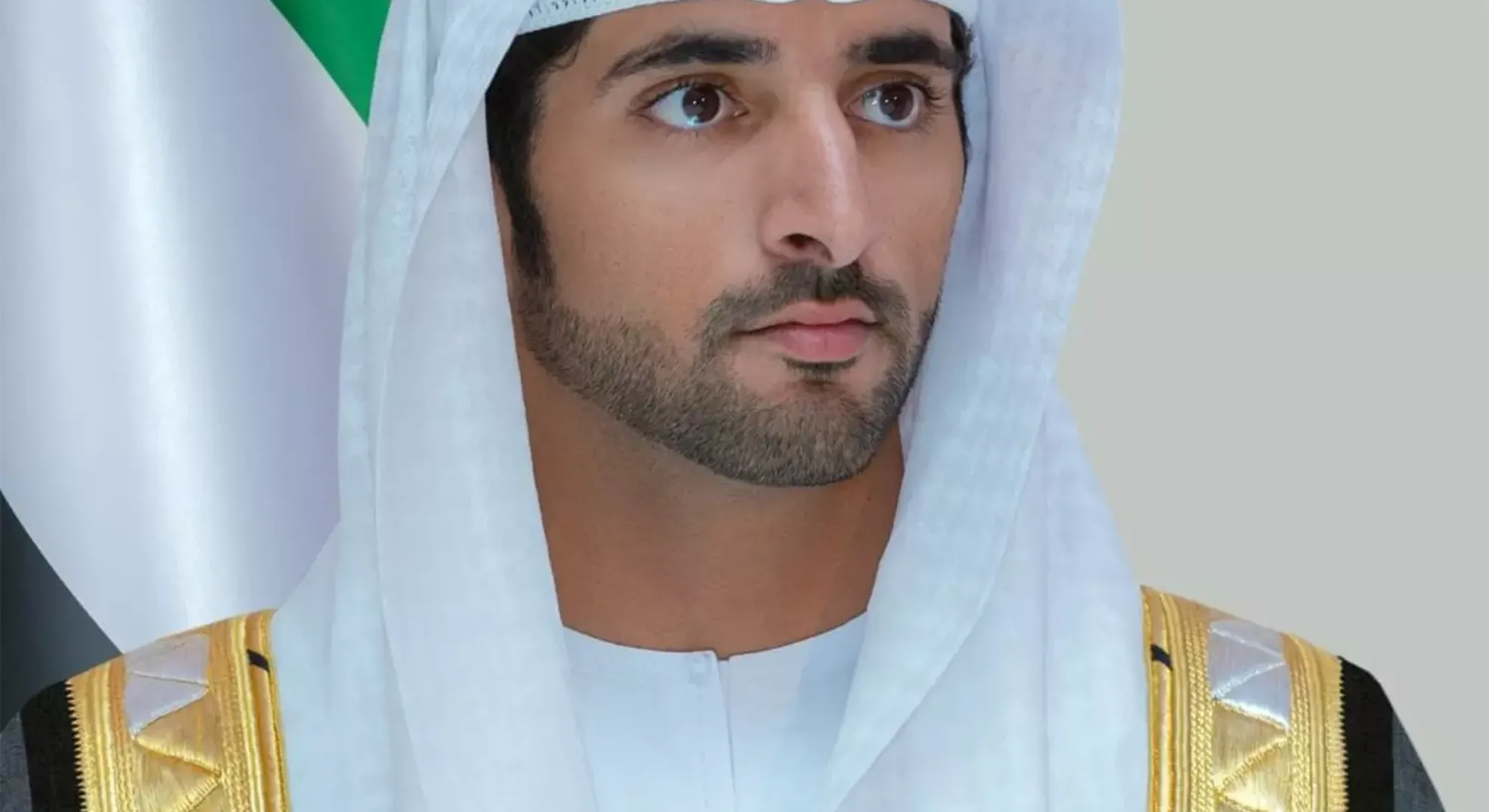
Dubai Rethinks Schooling as Education Authorities Push for Innovation and Better Access
Dubai is preparing for another phase of change in its education sector as authorities examine new approaches to schooling, teacher retention, educator wellbeing and the long-term distribution of schools across the emirate.
The Knowledge and Human Development Authority (KHDA) is exploring how education can evolve to meet the needs of future generations, with innovation emerging as one of the central themes of the emirate’s education strategy.
Aisha Miran, director general of the KHDA, said Dubai’s leadership has made it clear that children should not simply experience the same educational environment that earlier generations went through.
According to Miran, Dubai Crown Prince Sheikh Hamdan bin Mohammed bin Rashid Al Maktoum has repeatedly highlighted the importance of finding new ways to educate children rather than relying exclusively on traditional school structures.
The approach reflects Dubai’s broader ambition to position itself as a place where new ideas can be tested and developed. In education, this could mean creating opportunities for schools to operate using alternative structures, different teaching methods and technology-enabled learning systems.
The KHDA is already examining several possibilities, including new school concepts that could provide families with alternatives to conventional education.
At the same time, officials stress that experimentation will not come at the expense of core educational responsibilities. Any new school model will still be expected to protect students, maintain appropriate academic standards and support children’s wider personal and emotional development.
New Approaches to Schooling Under Consideration
Dubai’s education authorities are increasingly interested in models that move beyond the traditional concept of a school.
The emirate has already introduced an innovative licensing framework designed to make it possible for alternative education providers to operate within the regulatory system.
The intention is to create space for new ideas while ensuring that schools remain accountable for student safety, learning outcomes and wellbeing.
Miran described Dubai as an environment where new concepts can be tested before they are adopted more widely.
One example under consideration is the Alpha model, which uses personalised learning and artificial intelligence to help students progress through core academic subjects according to their individual levels of mastery.
Rather than relying entirely on a conventional timetable and classroom structure, the model concentrates core academic learning into a defined portion of the school day and uses technology to tailor learning to individual students.
The KHDA is also aware of other education concepts being tested within Dubai.
Some of these initiatives are currently operating as pilots, meaning they have not yet reached the stage where their full details have been publicly released.
Authorities appear to be taking a measured approach, allowing experimental models to demonstrate their effectiveness before deciding how they might fit into Dubai’s broader education system.
This approach could eventually give parents more choices regarding how their children learn.
However, officials have made clear that innovation is not intended to remove established safeguards.
Any alternative model will still need to demonstrate that it can provide an appropriate educational experience while protecting children’s physical and emotional wellbeing.
Balancing Innovation With Educational Standards
The push towards new schooling formats comes with an important condition: innovation must produce meaningful benefits for students.
Technology alone, for example, would not necessarily qualify a school as innovative if it does not improve learning or support children’s development.
The KHDA therefore intends to maintain standards relating to child protection, academic achievement and personal development regardless of the model being used.
This could become particularly important as Dubai welcomes education providers experimenting with different teaching structures.
Parents will still expect schools to deliver strong academic results, while students will need environments that support social skills, confidence, creativity and independent thinking.
The challenge for regulators will be finding the right balance between allowing schools enough freedom to experiment and maintaining a consistent standard across the education sector.
Dubai’s willingness to test new concepts could eventually create a more diverse education market in which families have a wider choice of school formats.
Demand for More School Places Continues
The discussion about alternative education models comes as Dubai continues to experience demand for additional school capacity.
Seven new schools opened in the emirate during the current academic year, adding further places for students.
At the same time, 11 applications for new schools are being considered for the following two years.
The increase in school capacity reflects Dubai’s expanding population and the continuing demand for education from both local families and international residents.
As more people move to the emirate for employment, business and investment opportunities, the education sector must expand alongside residential and economic growth.
The challenge is not simply to build more schools.
Authorities also need to make sure that new institutions are located where families actually need them and that the curriculum and fee levels offered match the characteristics of surrounding communities.
This is where Dubai’s planned education master plan is expected to play an important role.
Planning Schools Around Communities
The KHDA is working on a wider strategy to examine how schools are distributed throughout Dubai.
The objective is to ensure that education provision keeps pace with population growth and changing patterns of development.
Some communities may require additional schools, while others could already have more places than local demand requires.
Understanding these differences will allow authorities and developers to make better decisions about where new schools should be established.
The planning process involves cooperation between several organisations, including property developers, zoning authorities, Dubai Municipality and the Roads and Transport Authority.
This cross-government approach is intended to connect education planning with broader urban development.
As new residential communities are created, school capacity can be considered alongside housing, transport, retail, healthcare and other essential services.
This could reduce the need for families to travel across large parts of Dubai simply to find a school that offers the curriculum or price range they want.
For many parents, school location is a major consideration when choosing where to live.
A family may prefer a particular curriculum, but a school offering that programme could be located far from their home.
Long daily journeys can create additional pressure on children and parents while also contributing to traffic congestion.
By considering school requirements earlier in the development of new communities, authorities hope to make education more accessible at a neighbourhood level.
Reducing Long School Journeys
One of the goals of Dubai’s education planning strategy is to reduce unnecessary commuting for students.
The idea is relatively straightforward: if a particular community has strong demand for a specific curriculum and fee category, authorities would ideally like to see a suitable school established closer to that community.
For example, families looking for a British curriculum school at a particular price point should not necessarily have to spend close to an hour travelling each way if there is sufficient demand for that type of institution within their own neighbourhood.
This approach could provide benefits beyond convenience.
Shorter school journeys could give students more time for sleep, homework, family activities and extracurricular interests.
It could also reduce pressure on Dubai’s road network during peak school hours.
Better coordination between education and transport planning could therefore contribute to both the quality of life of families and the efficiency of the wider city.
Teacher Retention Becomes a Priority
While new school models are receiving attention, the KHDA is also focusing on one of the most important elements of any education system: teachers.
Recruiting qualified educators is only part of the challenge.
Authorities also want schools to become better at retaining experienced teachers, as frequent staff turnover can affect students and place additional pressure on school administrations.
The KHDA is developing an educator wellbeing strategy intended to address the teacher experience from the point of recruitment through to long-term retention.
The strategy is expected to consider several factors that can influence whether teachers remain in the profession and continue working in Dubai.
Professional development is one area being considered.
Teachers need opportunities to expand their skills, keep pace with changes in education and progress professionally.
Providing structured continuing professional development could therefore help educators remain motivated while improving the quality of teaching.
Recognition is another important element.
Teachers who feel that their work is valued may be more likely to remain engaged with their schools and the profession.
The KHDA is also considering how greater exposure and professional recognition can contribute to the overall attractiveness of teaching careers.
Supporting Teacher Wellbeing
Work-life balance is another issue being examined by education authorities.
Teaching can involve significant workloads beyond classroom instruction, including lesson planning, assessments, administrative duties and communication with parents.
If educators experience excessive pressure for long periods, it can affect job satisfaction and contribute to staff turnover.
The KHDA’s wellbeing strategy therefore seeks to examine the broader experience of teachers rather than focusing solely on recruitment numbers.
The aim is to create an environment where educators can develop professionally while maintaining a sustainable balance between their work and personal lives.
Improving teacher wellbeing could also have a direct effect on students.
Teachers who remain motivated and supported are better positioned to provide consistent instruction and build stronger relationships with their students.
Reducing unnecessary turnover can also provide students with greater continuity.
Concern Over Mid-Year Teacher Departures
Another issue being considered is the timing of teacher resignations.
The KHDA is studying a possible policy that could discourage educators from leaving their positions during the academic term.
The concern is that replacing a teacher in the middle of a school year can disrupt learning.
Students may have to adjust to a new teaching style, while schools may have difficulty finding a replacement with exactly the same subject knowledge and experience.
From the authority’s perspective, maintaining continuity for students is a priority.
The proposed approach would not simply be about preventing teachers from changing jobs. Instead, the objective is to understand how staff departures can be managed in a way that minimises disruption to students.
The KHDA is currently collecting information and analysing the issue before determining the final approach.
This indicates that teacher retention is being considered as part of a broader student-centred strategy.
Education Planning Must Keep Pace With Population Growth
Dubai’s rapid development means that education demand can change quickly.
New residential projects can bring thousands of families into areas that previously had relatively few residents.
If school planning does not keep pace, families may face limited choices or long commutes.
This makes long-term education planning increasingly important.
The proposed master plan is expected to examine population patterns, existing school capacity, future housing developments and the types of education families are seeking.
Authorities can then use that information to identify where new schools may be required.
The strategy could also help prevent unnecessary oversupply.
Building schools in areas without sufficient demand can create challenges for operators, while communities experiencing strong population growth may struggle if new capacity arrives too slowly.
Matching supply with demand is therefore central to the planning process.
Greater Coordination With Developers
Property developers will have an important role in this process because schools are closely connected to residential development.
When developers plan new communities, access to education can be an important factor in attracting residents.
Families often consider the availability of schools when deciding where to purchase or rent a home.
Providing suitable education facilities within or near a new community can therefore make residential projects more attractive.
The KHDA’s cooperation with developers and urban planning bodies is intended to ensure that these requirements are considered earlier in the development cycle.
Rather than waiting for population growth to create pressure on existing schools, planners can potentially anticipate demand and incorporate education facilities into new communities.
This could create a more integrated approach to city planning.
Dubai Seeks More Choice for Families
The introduction of new school models could eventually increase the range of choices available to parents.
Traditional schools will continue to form a major part of Dubai’s education system, but alternative approaches could provide options for families whose needs are not fully met by conventional structures.
Some parents may prefer technology-driven learning, while others could be interested in personalised education, different timetables or specialised approaches.
Giving families greater choice could also encourage schools to compete on educational quality and innovation.
However, greater diversity in school models will require clear regulations.
Parents need to understand what each model offers and how it compares with more conventional schools.
The KHDA’s role will therefore involve creating a regulatory environment that supports experimentation while maintaining transparency and quality.
Preparing Students for a Changing Future
The push for educational innovation reflects wider changes taking place in the economy and society.
Students entering the workforce in the future will face technologies and job roles that may not yet exist in their current form.
Artificial intelligence, automation, digital technologies and rapidly changing industries are already influencing the skills employers value.
Education systems therefore face pressure to prepare students for an environment that is different from the one experienced by previous generations.
This is one reason Dubai’s leadership is encouraging schools to reconsider traditional approaches.
The objective is not simply to replace classrooms with technology.
Instead, the broader question is how schools can develop students who are adaptable, creative, confident and capable of learning throughout their lives.
Academic knowledge remains important, but future education may also need to place greater emphasis on problem-solving, collaboration, communication and independent thinking.
Innovation as Part of Dubai’s Wider Strategy
Dubai has developed a reputation for adopting new technologies and experimenting with different approaches across multiple sectors.
Education is increasingly becoming part of that wider innovation agenda.
The emirate’s willingness to test alternative school models could allow it to learn from different approaches before deciding which ideas are suitable for broader adoption.
Pilot programmes can provide an opportunity to evaluate how students respond, how teachers adapt and whether new approaches deliver measurable improvements.
Successful models could eventually expand, while concepts that do not produce the desired results can be modified or discontinued.
This experimental approach reduces the need to make large-scale changes without evidence.
It also gives education authorities the opportunity to learn from real-world implementation.
A Broader Vision for Dubai’s Schools
The changes being considered by the KHDA extend beyond technology and new teaching methods.
They involve a broader rethink of what a successful education system should look like.
That includes providing families with appropriate school choices, ensuring teachers are supported, protecting student wellbeing and ensuring that schools are located where communities need them.
These objectives are interconnected.
A new school model will not succeed if there are not enough qualified teachers.
A strong teaching workforce may still struggle if schools are poorly located.
Likewise, increasing school capacity will not fully address family needs if the available curricula and fee levels do not reflect local demand.
Dubai’s education strategy therefore appears to be moving towards a more integrated approach.
The Road Ahead
The next stage will involve turning these ideas into practical policies and projects.
Some alternative school models are already being tested, while additional concepts remain under development.
At the same time, the KHDA is collecting information about teacher retention and considering possible measures to reduce disruption caused by mid-year resignations.
The education master plan will add another layer by examining where schools should be located and how future supply can be matched with population growth.
Taken together, these initiatives point towards a gradual transformation of Dubai’s education landscape.
The emirate is not simply looking to increase the number of schools. It is also considering what those schools should look like, how they should operate, where they should be located and how they can better serve students and teachers.
For families, the potential result could be greater choice and more convenient access to education.
For teachers, the focus on wellbeing, professional development and recognition could contribute to a more sustainable working environment.
For students, the most important objective will be ensuring that education prepares them for a future that is likely to look very different from the past.
Dubai’s approach suggests that innovation in education will not be treated as a one-time reform but as an ongoing process.
As new models are tested and evaluated, successful ideas could gradually become part of the emirate’s mainstream education system.
The underlying goal is to create schools that respond to the needs of today’s communities while preparing children for tomorrow’s opportunities.
With population growth continuing and the demand for school places increasing, the coming years could therefore prove important for Dubai’s education sector.
The combination of new school concepts, stronger teacher support, better urban planning and a greater emphasis on student needs could reshape how education is delivered across the emirate.
Ultimately, Dubai’s education strategy is moving towards a system that gives innovation room to develop while retaining strong safeguards around academic quality, child protection and wellbeing.
The emphasis on experimentation reflects a recognition that the schools serving future generations may need to operate differently from those that served previous ones.
For Dubai, the challenge will be ensuring that these changes translate into practical improvements for students, teachers and families across the emirate.