UAE motorists are watching closely as October approaches, with questions emerging over whether petrol prices could see another upward adjustment. Any change in fuel rates would affect household budgets, commuting expenses and operating costs for businesses across the country.
UAE Fuel Prices: Could Petrol Costs Increase Again in October?…
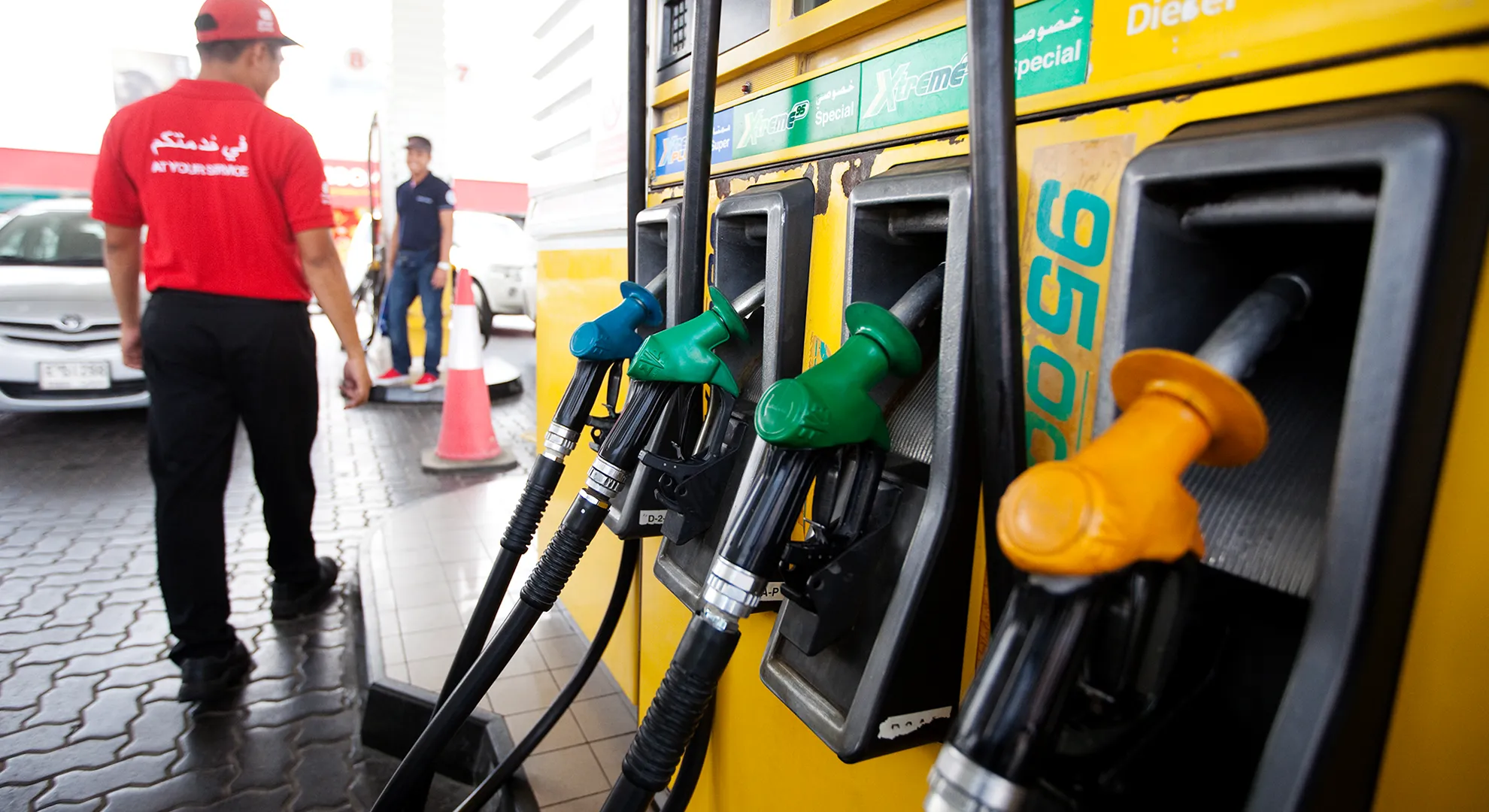
Brent crude prices climbed to slightly above $100 per barrel on average in September, compared with $87.70 in August. The sharper increase has raised concerns about higher fuel costs, particularly as ongoing diplomatic developments continue to influence expectations surrounding global oil markets.
UAE Fuel Prices Under Watch as Oil Remains Above $100
UAE motorists could see another adjustment in petrol prices in October after international crude benchmarks remained elevated for much of September.
Brent crude recorded an average closing price of slightly above $101 per barrel during September 2026, compared with an average of $87.70 per barrel in August. The significant month-on-month increase in international oil prices is expected to be reflected in the UAE’s retail fuel pricing mechanism when the country’s rates are reviewed for October.
The UAE reviews and announces its fuel prices at the end of every month, with the following month’s rates determined in line with movements in international oil markets.
The country’s fuel pricing system was deregulated in 2015, allowing domestic petrol and diesel prices to move more closely with global market conditions. Since then, motorists have seen monthly changes in pump prices depending on developments in crude oil markets and other relevant factors.
With Brent crude trading above the $100 mark on most days during September, attention is now turning to the October announcement and whether the sustained strength in international oil prices will translate into higher prices at UAE petrol stations.
Global Oil Market Remains Volatile
The international oil market experienced significant volatility throughout September.
Brent crude frequently traded and closed above $100 a barrel as geopolitical developments continued to affect expectations surrounding global energy supplies.
Tensions between the United States and Iran, disruption around the Strait of Hormuz and attacks linked to the Houthi conflict on energy infrastructure in Saudi Arabia contributed to concerns about the security of regional oil supplies.
The Strait of Hormuz remains particularly important to global energy markets because of the large volume of oil and other energy products that move through the waterway.
Any prolonged disruption to shipping through the route can create concerns over supply availability and increase volatility in crude prices.
These risks were reflected in the oil market during September, although prices also began responding to signs that some of the immediate supply pressures could ease.
Brent and WTI Continue to Trade at Elevated Levels
On Thursday morning, Brent crude was trading at approximately $103.20 a barrel, while West Texas Intermediate, or WTI, stood at around $92.19.
The difference between the two benchmarks reflects the different market conditions affecting international crude grades and their respective pricing structures.
Although oil prices have pulled back from recent highs, Brent remains substantially higher than it was earlier in the year.
For UAE consumers, the key question is how the average international prices during September will influence the monthly domestic fuel calculation.
The UAE’s pricing mechanism means that global oil movements are an important factor when determining local retail rates.
September Fuel Prices Already Increased
UAE petrol prices were raised in September by approximately Dh0.20 per litre compared with the previous month’s rates.
The revised prices placed Super 98 at Dh3.80 per litre, Special 95 at Dh3.69 and E-Plus 91 at Dh3.61.
The increase followed a rise in international crude prices and reflected the country’s policy of linking domestic fuel rates more closely with global market movements.
The September adjustment meant that motorists were already paying more at the pump than they had in August.
If international prices remain elevated through the end of the month, another adjustment could be announced for October.
How the UAE Fuel Pricing System Works
The UAE moved away from fixed domestic fuel prices in 2015 as part of a broader policy to align local fuel rates with international market conditions.
Under the current system, prices are reviewed on a monthly basis.
The rates announced at the end of each month apply during the following month.
This means the average movement in international oil prices during September is particularly relevant to the fuel rates that will be announced for October.
The system allows domestic petrol and diesel prices to respond more directly to changes in the global energy market.
When international crude prices rise significantly, consumers can see higher pump prices.
Conversely, a decline in global oil prices can create room for lower domestic fuel rates.
Geopolitical Developments Remain Central to Oil Prices
Much of the recent movement in crude prices has been linked to geopolitical uncertainty.
The US-Iran conflict has increased concerns over regional energy supplies and shipping routes.
At the same time, developments around the Strait of Hormuz have kept traders focused on the possibility of disruption to international oil flows.
Attacks targeting energy infrastructure have added another layer of uncertainty.
When critical facilities or transportation routes are threatened, markets tend to price in the possibility of supply shortages.
Even when actual production losses remain limited, the risk itself can contribute to higher prices.
Diplomatic Efforts Begin to Influence the Market
More recently, however, attention in financial markets has increasingly shifted towards diplomatic efforts aimed at reducing tensions between the US and Iran.
Vijay Valecha, Chief Investment Officer at Century Financial, said expectations surrounding diplomatic developments have begun influencing oil prices.
According to Valecha, the latest decline in crude prices has placed Brent on course for its longest sequence of losses since June.
He also pointed to improvements in oil flows through the Strait of Hormuz as a factor that has reduced some of the immediate concerns over supply disruptions.
The combination of improving transit conditions and diplomatic activity has created some downward pressure on crude prices after the sharp rise seen earlier.
However, the broader supply picture remains uncertain.
Supply Risks Have Not Disappeared
Despite the recent decline, Valecha said Brent crude remains nearly 70 per cent higher so far this year.
He noted that the supply outlook continues to be vulnerable because risks to energy infrastructure in the Middle East remain.
There are also continued attacks affecting Russian energy facilities, creating additional uncertainty for global oil markets.
These developments mean that the recent pullback in prices does not necessarily eliminate the risks that pushed crude significantly higher during the earlier part of the month.
The market continues to balance concerns over potential disruptions against signs that some supply routes are becoming more stable.
Saudi Arabia Works to Restore Energy Infrastructure
Saudi Arabia remains another important part of the supply picture.
Valecha said the country is continuing efforts to restore its East-West oil pipeline after recent attacks.
The pipeline provides an alternative route for transporting crude and can reduce reliance on maritime shipments through the Strait of Hormuz.
However, uncertainty surrounding alternative routes remains a factor for oil traders.
The ability to move crude through different transportation channels is particularly important when a major waterway faces security concerns.
Any limitations on alternative routes could increase the significance of Hormuz for global energy markets.
Why the Strait of Hormuz Matters
The Strait of Hormuz is one of the world’s most strategically important energy corridors.
A substantial amount of crude oil and other petroleum products passes through the waterway, connecting producers in the Gulf with international markets.
Consequently, any disruption to shipping activity can have consequences far beyond the region.
For oil traders, the security of the waterway is therefore closely monitored.
Improved shipping activity can reduce concerns about supply availability, while renewed disruptions can quickly increase price volatility.
The recent improvement in transit conditions has helped ease some immediate supply fears, according to Valecha.
However, uncertainty remains because geopolitical tensions have not completely disappeared.
Oil Market Faces Competing Forces
The current crude market is being influenced by two opposing sets of factors.
On one side are supply concerns arising from geopolitical tensions, infrastructure attacks and uncertainty surrounding major shipping routes.
These factors can support higher oil prices.
On the other side are diplomatic initiatives, improved flows through the Strait of Hormuz and expectations of more stable supply.
These developments can put downward pressure on crude.
The resulting balance has produced significant volatility.
For UAE motorists, however, the impact of these international developments ultimately becomes clearer when the country’s monthly fuel prices are announced.
What This Could Mean for October
The September average of just over $101 per barrel represents a substantial increase from the $87.70 average recorded in August.
That difference is significant because the UAE’s fuel pricing system takes international market movements into consideration.
However, the final retail price is determined through the country’s monthly pricing process, meaning that consumers will need to wait for the official October announcement to know exactly how petrol prices will change.
Market conditions in the final days of September could also influence expectations.
A sustained decline in crude prices before the monthly review could reduce some of the upward pressure.
On the other hand, renewed geopolitical disruptions or a deterioration in shipping conditions could keep crude prices elevated.
Motorists Await the Monthly Announcement
For drivers across the UAE, the monthly fuel price announcement has become an important part of household and business planning.
Changes of even a few fils per litre can affect commuting expenses for individuals who drive regularly.
For companies operating fleets, logistics businesses and other organisations with significant fuel consumption, monthly price movements can also influence operating costs.
The potential October adjustment is therefore being closely watched by consumers and businesses alike.
International Markets Remain Sensitive to News
Oil prices can react rapidly to developments affecting supply and transportation.
Announcements related to diplomatic negotiations, attacks on infrastructure, shipping disruptions or changes in production expectations can all influence crude prices.
This sensitivity has been particularly evident during the recent period of geopolitical uncertainty.
Although diplomatic efforts have contributed to some easing in prices, the market remains alert to the possibility of renewed disruption.
As Valecha noted, the supply environment remains fragile despite signs of improvement.
Brent Around $100 Remains an Important Level
Valecha said Brent trading around the $100 level remains an important area for the market.
According to his assessment, traders are watching whether the current decline can develop into a longer-lasting downward trend.
For now, the market is weighing improved transportation conditions and diplomatic developments against continued risks to energy infrastructure.
If those risks diminish, crude prices could face further downward pressure.
However, renewed disruption could quickly change market expectations.
The uncertainty makes it difficult to determine the direction of prices solely from short-term movements.
What Happens Next?
The immediate focus will be on the UAE’s official fuel price announcement for October.
The country’s monthly pricing system means that international oil market developments during September are a key factor in the upcoming review.
With Brent averaging slightly above $101 a barrel during the month, compared with $87.70 in August, the international backdrop is considerably different from the previous pricing cycle.
At the same time, crude prices have recently begun to retreat as diplomatic developments and improving oil flows ease some concerns.
This creates a mixed picture heading into the October announcement.
A Closely Watched Fuel Review
The upcoming review comes at a time when global energy markets remain highly sensitive to geopolitical developments.
The UAE’s decision to link domestic fuel prices more closely with international markets means that changes in global crude prices can eventually be reflected at local petrol stations.
September’s increase already pushed Super 98, Special 95 and E-Plus 91 to Dh3.80, Dh3.69 and Dh3.61 per litre respectively.
Whether October brings another increase, a smaller adjustment or a different movement will depend on the official pricing decision and the market conditions considered in the monthly review.
For now, motorists are watching developments in crude markets, particularly the direction of Brent, the security of the Strait of Hormuz and the progress of diplomatic efforts.
While the recent pullback in oil prices has eased some immediate concerns, the wider supply environment remains uncertain.
The coming days will therefore be important for determining how international crude movements translate into the UAE’s next set of retail fuel prices.