Dubai Municipality has introduced new regulations establishing minimum space requirements for sleeping areas in workers’ accommodation, with the measures aimed at ensuring that employees are provided with more suitable, comfortable and adequately sized living facilities.
Dubai Municipality Introduces Minimum Sleeping-Area Requirements for Workers’ Accommodation.
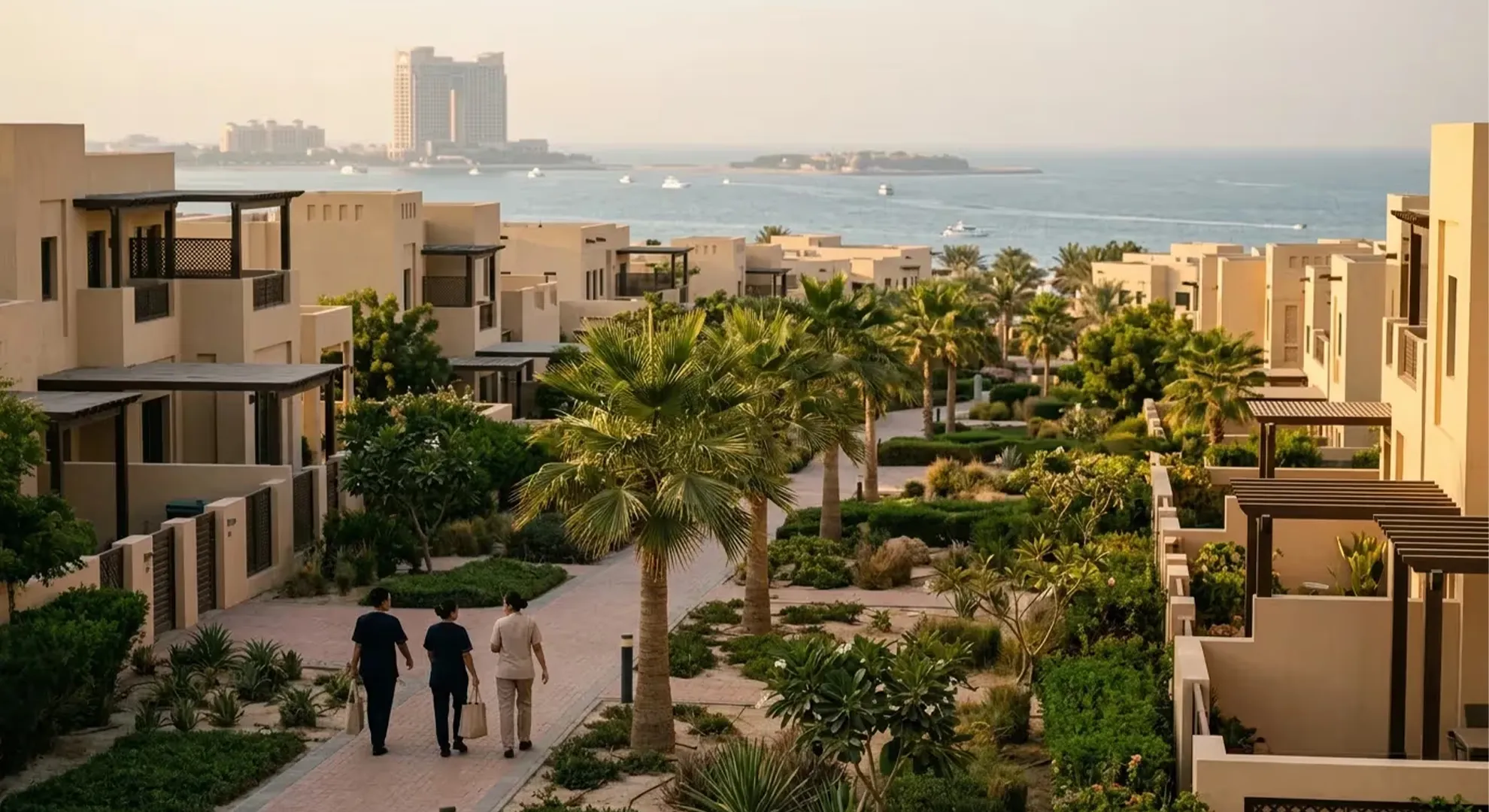
Dubai Municipality has inspected 1,417 buildings and identified 19 facilities as examples of well-managed workers’ accommodation, as part of a broader initiative focused on raising housing standards and providing workers with safer, healthier and more comfortable living environments.
Dubai Updates Standards for Workers’ Accommodation
Dubai Municipality has introduced updated planning and design requirements for workers’ accommodation, setting out specific minimum space standards intended to improve the quality, safety and overall suitability of residential facilities provided for employees.
Under the revised requirements, every worker must be provided with a minimum sleeping area of 3.7 square metres per person. The new standard establishes a clear benchmark for the amount of personal sleeping space that should be available within workers’ residential facilities.
In addition to sleeping areas, the updated planning framework specifies the amount of overall floor space that should be allocated to supporting services in workers’ communities. The gross floor area designated for these services is set at between 8.9 and 10.3 square metres per person.
The standards also address the availability of recreational and outdoor areas. Depending on the accommodation facility and its requirements, between 0.75 and 1.5 square metres of recreational or outdoor space per resident is to be provided.
The revised requirements form part of a broader programme being implemented by Dubai Municipality to improve living conditions in workers’ communities across the emirate. The municipality announced the latest measures on September 18 while outlining a series of completed projects and ongoing initiatives designed to upgrade workers’ accommodation and surrounding infrastructure.
The programme is being carried out in cooperation with government partners under Dubai’s Workers’ Accommodation Policy. It covers several areas, including infrastructure development, improvements to existing buildings, public services, community facilities and spaces intended for leisure and recreation.
Rather than focusing only on individual residential buildings, the programme takes a wider approach to workers’ communities. It considers accommodation, public infrastructure, access to services, outdoor areas, transportation-related facilities and recreational opportunities as interconnected elements of workers’ quality of life.
Survey of 1,417 buildings
As part of the initiative, Dubai Municipality introduced a unified smart classification system for workers’ accommodation. The system is designed to provide authorities with a consistent way of assessing accommodation facilities and identifying areas where improvements may be required.
Using the new system, the municipality conducted surveys of 1,417 buildings. The assessments examined the physical condition of the buildings as well as their compliance with relevant public health and safety requirements.
The inspections provide authorities with information that can be used to determine the condition of workers’ residential facilities and establish priorities for future improvement work. The classification system also creates a common framework for evaluating accommodation facilities across different workers’ communities.
The initiative forms part of the municipality’s broader effort to strengthen oversight of workers’ housing and ensure that accommodation areas meet established planning, health and safety expectations.
The municipality has also launched the Model Workers’ Accommodation initiative, under which facilities demonstrating higher standards were formally recognised.
A total of 19 accommodation facilities were identified as model facilities through the programme. These were divided into three classification levels according to the municipality’s assessment system.
Three facilities received Platinum classification, while nine were awarded Gold status. A further seven facilities received Silver classification.
The recognition programme provides a framework for identifying accommodation facilities that demonstrate compliance with the relevant standards and can serve as examples for the wider workers’ accommodation sector.
Central database to support planning
Another major component of the programme is the establishment of a shared government database covering workers’ accommodation.
The database brings together information, statistics and performance indicators related to workers’ communities. Authorities can use the information to better understand existing conditions, identify areas requiring attention and plan future infrastructure and service improvements.
By bringing relevant data together in one system, government entities can use more consistent information when determining where projects and resources are required.
The database is also intended to support long-term planning. Information collected through surveys and assessments can help authorities identify changing requirements within workers’ communities and determine where additional facilities or infrastructure may be necessary.
The municipality said the system would contribute to more informed decision-making and help guide future investment in workers’ residential areas.
Assessment of community infrastructure
Dubai Municipality’s work has extended beyond the buildings where workers live. Field surveys have also been conducted across several workers’ communities to examine the condition and availability of surrounding infrastructure.
These assessments looked at pedestrian routes, bridges, pavements and other facilities used by residents on a daily basis.
The surveys were intended to identify gaps in existing infrastructure and determine where improvements would have the greatest need or priority. The municipality said that identified requirements are being addressed according to their level of priority.
Pedestrian infrastructure is particularly important in workers’ communities because residents need safe and accessible routes between accommodation buildings, shops, services, recreational areas and other destinations.
The municipality’s assessment of pathways and related facilities forms part of a wider approach to improving the physical environment around workers’ accommodation.
The authority is also developing parking solutions for workers’ communities. The objective is to address parking requirements while taking into account the wider infrastructure needs of these residential areas.
Expansion of services and facilities
The improvement programme also includes efforts to expand the range of facilities available within workers’ communities.
Dubai Municipality said its wider plans include the provision of retail outlets, community facilities and sports amenities. These services are intended to make essential activities and recreational opportunities more accessible to workers living in the surrounding accommodation areas.
Retail facilities can provide residents with convenient access to everyday goods and services without requiring them to travel long distances outside their communities.
Community facilities, meanwhile, provide additional spaces for residents to gather and participate in social activities. Sports facilities and other recreational amenities can offer opportunities for exercise and leisure.
The inclusion of these facilities reflects the municipality’s broader approach to workers’ accommodation. The programme is not limited to ensuring that buildings provide adequate sleeping space but also considers the wider environment in which workers live.
New benchmarks for sleeping areas
One of the key changes under the updated standards is the introduction of a specific minimum sleeping-area requirement.
Workers’ accommodation must now provide at least 3.7 square metres of sleeping space for each person. The requirement establishes a measurable minimum for personal residential space within accommodation facilities.
The provision of adequate sleeping space is one element of the municipality’s broader planning and design framework. Alongside individual sleeping areas, the standards address common facilities, supporting services, recreation and outdoor areas.
The requirements for gross floor area supporting services range from 8.9 to 10.3 square metres per person. This allocation is intended to accommodate the services and facilities needed within workers’ residential communities.
Recreational and outdoor spaces must also be incorporated into accommodation planning, with a requirement ranging from 0.75 to 1.5 square metres per person.
Together, these requirements establish benchmarks covering personal living areas, supporting facilities and communal outdoor or recreational spaces.
Wider improvement programme
The updated standards were announced as Dubai Municipality reported progress on a broader package of initiatives aimed at enhancing workers’ living environments.
The projects are being implemented under the Workers’ Accommodation Policy and involve cooperation between the municipality and other government entities.
The programme addresses multiple aspects of workers’ communities rather than focusing on a single area. Infrastructure, building conditions, public services, recreation and community facilities are all included within the broader effort.
The municipality’s approach involves both assessing existing facilities and planning future improvements. The survey of 1,417 buildings provides information about current conditions, while the government database can help authorities use that information when deciding where improvements are needed.
The recognition of 19 model facilities provides another element of the programme by identifying accommodation sites that meet higher standards under the classification system.
Smart classification system
The unified smart classification system is intended to create a standardised method for assessing workers’ accommodation.
Instead of relying on separate approaches to evaluating facilities, the system enables authorities to assess buildings according to common criteria. The surveys consider structural conditions and compliance with public health and safety requirements.
The information collected can help authorities monitor accommodation conditions and identify facilities that may require improvements.
The classification system also supports the Model Workers’ Accommodation initiative, which uses different levels of recognition to distinguish facilities according to their performance against the relevant standards.
The three Platinum-rated facilities, nine Gold-rated facilities and seven Silver-rated facilities collectively represent the 19 accommodation sites recognised under the initiative.
Improving access to infrastructure
Infrastructure surrounding workers’ accommodation is another important part of the municipality’s programme.
Field assessments have been used to examine whether communities have adequate pedestrian pathways and other facilities that allow residents to move safely and conveniently between different parts of their neighbourhoods.
The municipality identified requirements involving walkways, bridges, pavements and related infrastructure. These needs are being considered according to priority as authorities work on improvements.
Parking is also being addressed as part of the infrastructure programme. Developing suitable parking arrangements can help organise movement within workers’ communities and support the overall planning of these areas.
The municipality’s infrastructure work therefore extends beyond residential buildings and includes the public spaces and facilities used by workers every day.
Community and recreational opportunities
The programme also recognises the importance of services and recreational opportunities within workers’ communities.
Dubai Municipality said plans include retail outlets, community facilities and sports amenities. These additions can provide residents with greater access to everyday services and activities within or close to their accommodation areas.
The recreational component is also reflected in the updated planning standards, which require designated outdoor and recreational space based on the number of residents.
The allocation of 0.75 to 1.5 square metres per person is intended to ensure that workers’ accommodation developments include space for recreation and outdoor activities.
Sports amenities can provide opportunities for physical activity, while community facilities can support social interaction and other activities among residents.
Data-driven approach
The creation of the shared government database represents an additional step toward a more coordinated approach to managing workers’ communities.
The system combines statistics and performance indicators that can help authorities assess existing conditions and plan future projects.
Such information can also help identify communities where infrastructure, services or accommodation improvements may be required. By using data collected through surveys and inspections, authorities can establish priorities based on documented conditions.
The database is therefore intended to support both immediate decisions and longer-term planning and investment.
Focus on living conditions
The combination of new space standards, building assessments, infrastructure surveys and community facilities reflects Dubai Municipality’s wider focus on workers’ living conditions.
The updated requirements provide specific benchmarks for sleeping areas, supporting services and recreational spaces. Meanwhile, the inspection and classification programme gives authorities a way to assess existing buildings against relevant requirements.
The recognition of model facilities provides an additional mechanism for highlighting accommodation sites that meet higher standards.
At the community level, infrastructure surveys are being used to identify requirements for pedestrian routes, bridges, pavements and parking. Retail, community and sports facilities are also included in the broader development programme.
Continuing development
Dubai Municipality’s latest announcement indicates that the improvement of workers’ accommodation is being approached as an ongoing programme rather than a single construction or inspection project.
The municipality is combining regulatory standards with building assessments, infrastructure planning, data collection and the development of community services.
The survey of 1,417 buildings provides a substantial database of existing accommodation conditions. The identification of 19 model facilities creates examples of accommodation that has achieved different levels of recognition under the municipality’s classification system.
At the same time, the shared government database is expected to help authorities coordinate planning and determine where future investments and improvements are required.
The infrastructure assessments provide another source of information, particularly regarding pedestrian movement, pavements, bridges and parking.
By addressing both accommodation buildings and their surrounding communities, the programme covers a broad range of factors affecting workers’ residential environments.
A broader approach to workers’ housing
The revised standards demonstrate that workers’ accommodation planning involves more than determining the number of people who can occupy a building.
The new requirements specify the amount of sleeping space that must be available to each resident and establish allocations for supporting services and recreational areas.
The municipality’s wider initiatives also consider how workers interact with the communities around their accommodation. Access to shops, public spaces, sports facilities, pedestrian routes and other services forms part of the overall planning approach.
The programme also places emphasis on assessment and monitoring. Buildings are being surveyed, classified and evaluated, while government agencies are being provided with shared information to support future decisions.
Through these measures, Dubai Municipality is seeking to create a more structured system for managing workers’ accommodation and planning improvements across workers’ communities.
The latest standards require a minimum sleeping area of 3.7 square metres per person, while supporting services are allocated between 8.9 and 10.3 square metres per person in gross floor area. Recreational and outdoor space is set at 0.75 to 1.5 square metres per resident.
Alongside these requirements, the municipality has assessed 1,417 buildings, recognised 19 model accommodation facilities, developed a shared government database and conducted field surveys to identify infrastructure requirements.
The initiatives cover accommodation quality, public health and safety, pedestrian infrastructure, parking, retail services, community facilities and recreational opportunities.
Taken together, the measures form part of Dubai’s continuing effort to establish consistent standards for workers’ residential areas while improving the infrastructure and services available within those communities.
Strengthening Safety, Infrastructure and Essential Services
Dubai Municipality is placing greater emphasis on improving the safety, infrastructure and public services available in workers’ residential communities as part of the implementation of its Workers’ Accommodation Policy.
Dr Naseem Mohammed Rafie, acting CEO of the Environment, Health and Safety Agency at Dubai Municipality, said one of the central elements of the policy’s implementation programme is the continued development and refinement of the laws and regulations governing workers’ accommodation.
The municipality is reviewing existing legislation and regulatory requirements to ensure that they remain consistent with recognised best practices. The review is also intended to strengthen compliance with applicable standards and create a more efficient framework for implementing development and improvement projects.
According to the municipality, updating the regulatory system is important for ensuring that workers’ communities develop in an organised manner and that accommodation facilities meet appropriate engineering, technical, health and safety requirements.
Dr Rafie explained that the municipality’s approach goes beyond the improvement of individual residential buildings. It also includes the development of infrastructure and public facilities throughout workers’ areas, with projects planned to address the practical needs of the communities in which workers live.
The objective is to ensure that buildings and surrounding infrastructure are developed or upgraded according to established engineering and technical requirements while maintaining high standards of health and safety.
The municipality is also working to expand essential services within workers’ communities. These projects are being planned with consideration for the individual requirements of different areas rather than applying exactly the same approach to every community.
Dr Rafie said the municipality is seeking to provide services that correspond to the specific circumstances and needs of each workers’ community. This approach is intended to improve the availability of essential facilities while creating greater coordination between different service sectors.
The expansion of services is expected to contribute to better integration within workers’ areas. By coordinating infrastructure, public facilities and essential services, the municipality aims to ensure that different projects complement one another and provide greater overall value to residents.
The policy therefore covers a broad range of activities, including regulatory improvements, infrastructure development, building upgrades and the expansion of community services.
Updating the regulatory framework
A key component of the implementation programme is the review of legislation and regulations governing workers’ accommodation.
Dubai Municipality is examining the existing framework to identify areas where requirements can be improved or brought more closely into line with established best practices.
Regulatory updates can help clarify the responsibilities of different stakeholders, strengthen adherence to required standards and support the efficient implementation of development projects.
For workers’ accommodation, such requirements are particularly relevant because residential facilities must address a range of considerations, including building safety, engineering standards, public health and access to essential services.
The municipality’s regulatory work is therefore intended to provide a stronger foundation for the continued development of workers’ communities.
The review also supports efforts to improve compliance. Clear and updated requirements can provide accommodation operators, developers and relevant authorities with a more consistent framework for understanding and implementing the applicable standards.
Improving buildings and public infrastructure
Alongside regulatory changes, Dubai Municipality is continuing to focus on physical improvements in workers’ residential areas.
The programme includes upgrading existing buildings and developing infrastructure and public facilities. These improvements are intended to ensure that workers’ communities have facilities that meet appropriate technical and safety requirements.
Building upgrades are being considered alongside broader infrastructure needs. This means that the municipality is looking not only at individual accommodation facilities but also at the wider environment surrounding them.
Infrastructure can include facilities and systems that support movement, access and day-to-day activities within workers’ communities. Public spaces and community facilities are also part of the broader development approach.
Dr Rafie said the municipality’s objective is to bring infrastructure and public facilities in workers’ areas up to high engineering, technical, health and safety standards.
This approach reflects an emphasis on creating residential environments where accommodation buildings and supporting infrastructure operate together as part of a coordinated community.
Services designed around community needs
Another priority identified by Dubai Municipality is the expansion of essential services.
The municipality recognises that workers’ communities can differ in size, location and requirements. Consequently, service projects are being developed with the needs of individual communities taken into account.
Rather than focusing solely on accommodation capacity, the programme considers the services and facilities residents require as part of their everyday lives.
This includes projects intended to improve access to essential facilities and strengthen connections between different service sectors.
The municipality said that greater coordination between services can increase the effectiveness of individual projects. When infrastructure and public facilities are planned together, communities can benefit from a more integrated network of services.
The approach is also intended to make better use of available resources and maximise the impact of investment in workers’ residential areas.
Emphasis on health and safety
Health and safety remain important elements of the municipality’s accommodation policy.
The development and upgrading of workers’ housing is being linked to engineering and technical standards as well as public health and safety requirements.
This means that improvements are not limited to appearance or general maintenance. They are also intended to address the underlying standards that determine whether residential buildings and their supporting infrastructure are suitable for workers.
The municipality’s regulatory review, building upgrades and infrastructure projects are all connected to this wider objective.
By combining these measures, authorities can address accommodation conditions from several different perspectives, including compliance, physical infrastructure, public services and community facilities.
Supporting long-term urban planning
Dubai Municipality said the workers’ accommodation initiatives are aligned with the emirate’s broader urban development objectives.
The programme supports the Dubai 2040 Urban Master Plan, which provides a long-term framework for the development of Dubai’s urban environment.
The workers’ accommodation programme is also connected to the Dubai Quality of Life Strategy 2033, linking improvements in workers’ communities with wider efforts to enhance living environments across the emirate.
The connection with these strategic plans places workers’ accommodation within Dubai’s broader approach to urban planning and quality of life.
Rather than treating workers’ housing as a separate issue, the municipality is incorporating accommodation, infrastructure, public facilities and essential services into wider urban development planning.
Integrated approach to workers’ communities
The measures outlined by Dubai Municipality demonstrate an approach that combines regulation, infrastructure and services.
The review of laws and regulations provides the policy and regulatory foundation. Building upgrades and infrastructure projects address physical conditions, while the expansion of essential services responds to the everyday requirements of individual communities.
Coordination between these areas is intended to create a more integrated system.
According to the municipality, improving cooperation across service sectors can increase the benefits generated by individual projects. Infrastructure improvements can therefore be planned alongside public facilities and essential services rather than being developed independently.
This integrated approach can also help authorities identify priorities more effectively and coordinate investment across different areas.
Focus on future development
The municipality’s work is not limited to existing accommodation facilities. The updated regulatory framework is also intended to support future development projects.
By reviewing requirements and aligning them with best practices, authorities aim to create conditions that support organised development while improving compliance.
The municipality has also indicated that faster implementation of development projects is among the objectives of the regulatory review.
This could help facilitate the delivery of infrastructure and public facilities required in workers’ communities while maintaining the applicable engineering, technical, health and safety standards.
Enhancing everyday living environments
The expansion of services and improvement of public facilities are intended to address more than basic accommodation requirements.
Workers’ communities require a range of supporting services and infrastructure to function effectively. Providing these facilities within or around residential areas can make everyday activities more convenient for residents.
The municipality’s emphasis on community-specific planning recognises that different workers’ areas may have different requirements.
Essential services can therefore be developed according to local needs, while coordination between sectors can help ensure that facilities are connected and complementary.
The overall objective is to create more complete residential environments in which workers have access to suitable accommodation, infrastructure and necessary services.
Long-term quality-of-life objectives
The connection between the workers’ accommodation programme and the Dubai Quality of Life Strategy 2033 reflects the municipality’s broader focus on living conditions.
Improving accommodation standards and providing appropriate services are components of creating better residential environments.
The programme also fits within the long-term objectives of the Dubai 2040 Urban Master Plan, which seeks to guide the emirate’s urban growth and development.
By incorporating workers’ communities into these wider strategies, Dubai Municipality is treating the development of workers’ residential areas as part of the emirate’s overall urban planning process.
Continued implementation
Dubai Municipality’s implementation plan combines regulatory reform with practical improvements on the ground.
The review of laws and regulations is intended to establish a stronger framework for compliance and development. At the same time, infrastructure projects, building upgrades and essential services are being expanded across workers’ communities.
Dr Rafie said the municipality’s focus remains on ensuring that infrastructure and public facilities meet high engineering, technical, health and safety standards.
The municipality is also working to ensure that service projects reflect the specific needs of individual communities and that different service sectors work together more effectively.
Through this combination of measures, Dubai is seeking to establish a coordinated framework for the continued development of workers’ accommodation.
The programme brings together several priorities: stronger regulations, better compliance, safer buildings, improved infrastructure, expanded public facilities and more responsive essential services.
Dubai Municipality has positioned these efforts within the emirate’s longer-term urban and quality-of-life strategies. The initiatives are intended to contribute to the objectives of the Dubai 2040 Urban Master Plan and the Dubai Quality of Life Strategy 2033.
Overall, the policy’s implementation represents a broad approach to workers’ communities, with attention given not only to accommodation buildings but also to the infrastructure, services and public facilities surrounding them.
By reviewing regulations, upgrading facilities and expanding essential services, the municipality aims to support the continued development of workers’ areas while maintaining established standards for engineering, health, safety and public infrastructure.