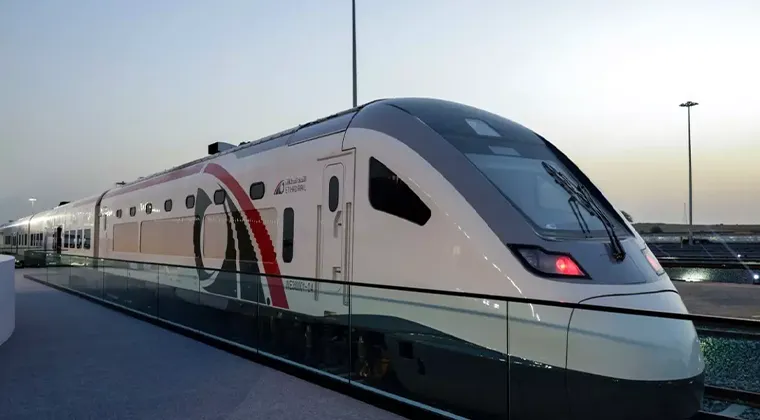
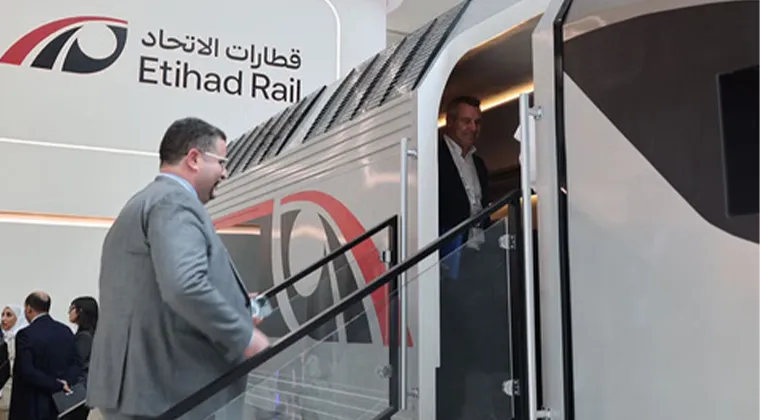
The UAE’s expanding rail infrastructure could make journeys between emirates more convenient as Etihad Rail and Dubai Metro move toward greater connectivity. Once the networks are linked, commuters and travellers may benefit from smoother, faster and more integrated public transport options.
Etihad Rail and Dubai Metro Set to Transform Travel Between UAE Emirates After Network Integration.
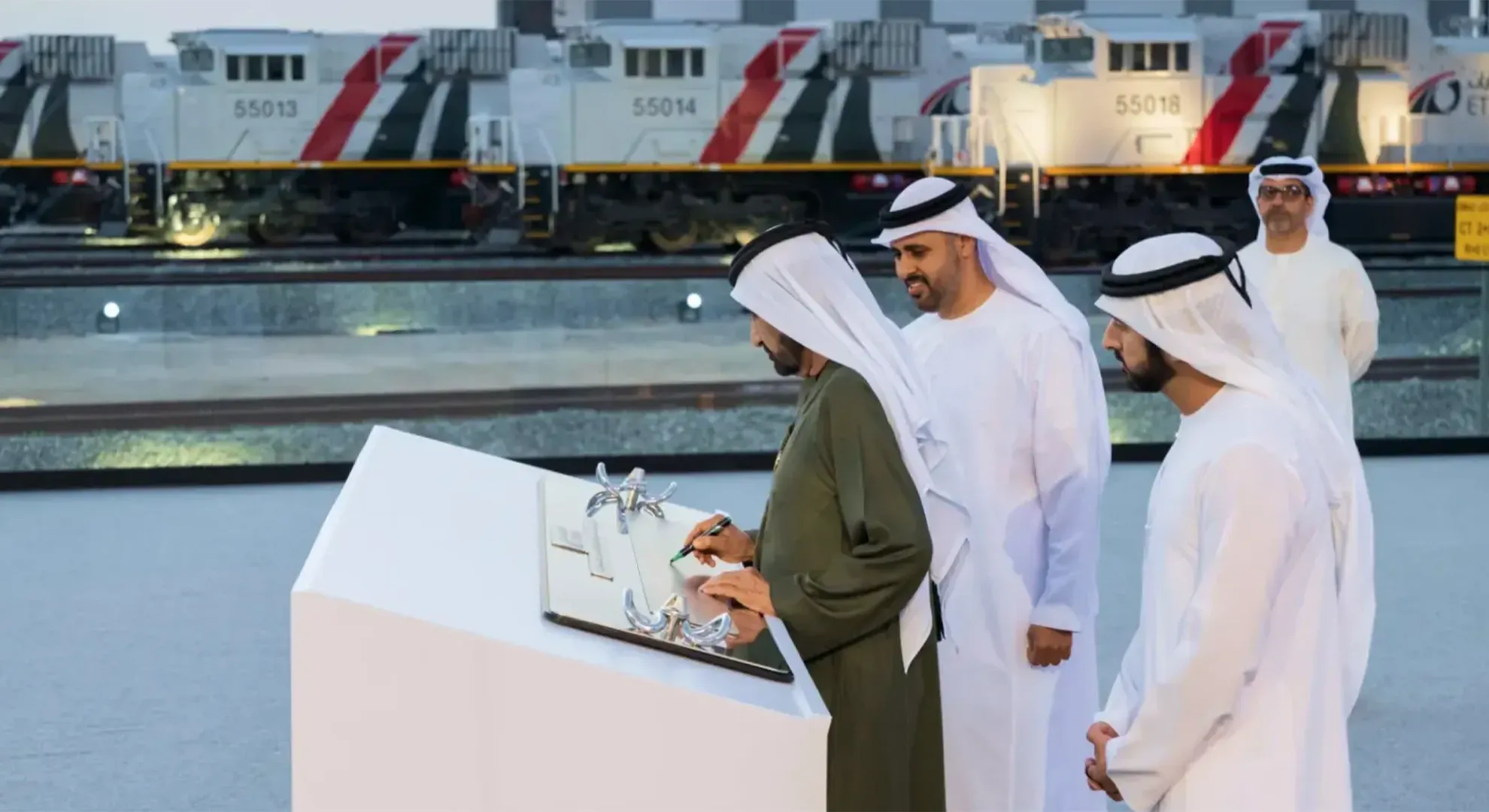
The proposed rail connection could allow daily commuters, university students, and airline travelers to journey between Dubai and Abu Dhabi by train, with convenient transfers to the Metro system enabling them to reach destinations throughout the emirate more efficiently.
Dubai-Abu Dhabi Rail Integration Could Transform Daily Travel Across the UAE
For people who regularly travel between Abu Dhabi and Dubai, the future of commuting could look very different from the daily road journeys many residents make today. Instead of spending long periods behind the wheel, passengers could eventually combine intercity rail services with Dubai’s expanding Metro network to reach workplaces, universities, airports and residential areas across the emirate.
The idea is based on connecting several major railway projects rather than treating each service as a separate system. Once the planned networks are completed and linked together, a passenger could travel from Abu Dhabi to Dubai by train, transfer to the Metro and continue towards their final destination without having to drive between the two emirates.
The concept is outlined in Dubai’s Rail Network Plan 2032, which was presented by the Dubai Media Office in April. The plan illustrates how different rail services could eventually operate as part of a wider transport network. It brings together Etihad Rail, the planned high-speed connection between Abu Dhabi and Dubai, and Dubai Metro’s existing and future lines.
Dubai’s Red and Green Metro lines are already operating, while the Blue Line is under development and the Gold Line is planned as part of the longer-term network. The proposed connections could give passengers more options for completing the final part of their journey after arriving in Dubai.
A Connected Rail System
The planned network would allow intercity and urban rail services to work together. A passenger travelling from Abu Dhabi would not necessarily need to use a car after reaching Dubai. Instead, they could transfer from an intercity train to the Metro and continue to another part of the emirate.
For example, someone living in Abu Dhabi but working in Business Bay could potentially begin their journey on Etihad Rail, arrive at a Dubai station and then use the Metro for the final part of the trip. The same principle could work in the opposite direction for Dubai residents employed in Abu Dhabi.
This type of integrated journey could also be useful for students, healthcare workers, airport passengers and people whose jobs require them to travel at different times of the day.
A student based in Abu Dhabi, for instance, could travel by rail to Dubai before changing to the Metro for a university or educational institution. Similarly, an employee living in Dubai could use the high-speed service to travel towards Abu Dhabi and then continue by another public transport service if their workplace is not close to the railway station.
The overall objective is to make different forms of public transport work together, rather than requiring passengers to complete every part of their journey using a private vehicle.
Dubai Rail Network Plan 2032
The Dubai Rail Network Plan 2032 provides an indication of how the different railway projects could eventually be connected. The plan includes Etihad Rail, the proposed high-speed railway linking Abu Dhabi and Dubai, and several Dubai Metro routes.
Dubai’s existing Red and Green lines form part of the current Metro system. The network is expected to expand further with the Blue Line, while the longer-term plan also includes the Gold Line.
The proposed arrangement means that an intercity journey could become only one part of a much larger public transport trip. Once a passenger arrives in Dubai, they could transfer to one of the Metro routes and continue towards another destination.
Mattar Al Tayer, director general and chairman of the Board of Executive Directors of Dubai’s Roads and Transport Authority, has said that the different railway projects are being planned with coordination between the relevant authorities.
Speaking during a press conference related to the RailX Dubai Conference and Exhibition, Al Tayer said the authorities were working together on the projects and that their plans were designed to complement one another.
The approach is important because a railway system is most useful to passengers when different services can be combined easily. A fast intercity train can reduce the time between cities, but passengers still need convenient options for reaching their final destinations after leaving the train.
Where Etihad Rail Could Connect With Dubai Metro
The planned Etihad Rail passenger network is expected to include two stations in Dubai. One of the proposed locations is in Al Yalayis, close to Jumeirah Golf Estates. Another future passenger station is identified at Meydan.
These locations could become important interchange points between intercity rail and Dubai’s urban transport network.
At Jumeirah Golf Estates, passengers could potentially transfer to the Dubai Metro Red Line. This would give them access to several important areas of the city, depending on their direction of travel.
From the Red Line, passengers could travel towards locations including Dubai Marina, Internet City, Business Bay, Downtown Dubai and Dubai International Airport.
For commuters arriving from Abu Dhabi, such a connection could remove the need to continue their journey by taxi or private car after arriving in Dubai.
Someone working in Business Bay, for example, could travel by rail from Abu Dhabi and then transfer to the Metro. Instead of driving through Dubai traffic after completing the intercity portion of the trip, the passenger could use the urban rail network to reach the workplace.
The arrangement could also work for people travelling in the opposite direction. A Dubai resident could take the Metro to an interchange station, board an intercity train and continue towards Abu Dhabi.
The Role of the Future Gold Line
The planned Meydan station is shown as being connected with Dubai’s future Gold Line. This would create another potential interchange between the intercity rail system and the city’s Metro network.
According to the rail plan, the proposed Gold Line would connect with the Red Line at locations including Business Bay and Jumeirah Golf Estates. It is also expected to connect with the Green Line at Al Ghubaiba.
If these connections are developed as planned, passengers arriving in Dubai could have several ways to continue their journeys.
The importance of the Gold Line would therefore extend beyond providing another Metro route. Its connections with existing and planned services could help create a wider network in which passengers can move between different parts of Dubai without relying on a private car for every stage.
For residents travelling between the two emirates, the benefit would come from the combination of services. The intercity railway would handle the longer journey, while Dubai Metro could provide the local connection.
A Potential 30-Minute Dubai-Abu Dhabi Journey
Alongside Etihad Rail, a separate high-speed railway is planned to connect Abu Dhabi and Dubai.
The proposed service is expected to operate at speeds of up to 350 kilometres per hour. The journey between the two cities is expected to take around 30 minutes.
The planned route includes six announced stations. These are Reem Island, Saadiyat Island, Yas Island, Zayed International Airport, the Al Maktoum International Airport area and Al Jaddaf.
Such a service could provide another option for people who currently travel between Dubai and Abu Dhabi by road.
The potential travel time is particularly significant for regular commuters. A journey that currently involves driving between the two emirates could eventually be completed by high-speed train, with passengers able to use their travel time differently instead of concentrating on the road.
However, the approximately 30-minute figure refers to the high-speed rail journey itself. A passenger’s complete door-to-door journey would take longer.
Travellers would still need to reach the station, allow time for boarding and security procedures where applicable, wait for a service and potentially transfer to another form of transport at the destination.
The actual time required would therefore depend on where the passenger starts and finishes their journey.
What It Could Mean for Commuters
One of the groups that could benefit from improved rail connections is the large number of people who live in one emirate and work in another.
Some professionals may prefer to live in Abu Dhabi while working in Dubai, while others may choose to live in Dubai and commute to Abu Dhabi. At present, such journeys often involve private cars, taxis or other road-based transport.
A high-speed rail connection could provide an alternative for these workers.
For an employee whose office is close to one of the planned stations, the journey could potentially be relatively straightforward. Others could combine the intercity train with the Metro or another local transport service.
For example, a commuter from Abu Dhabi could board a train, travel towards Dubai and then change to the Metro before continuing to Business Bay. At the end of the working day, the same passenger could make the journey in reverse.
The key difference would be that the traveller would not have to personally drive the entire distance between the two emirates.
Students Could Also Use the Network
Students represent another group that could potentially benefit from the planned rail connections.
Universities and educational institutions are spread across both Abu Dhabi and Dubai. A reliable intercity railway could make it easier for students to travel between the emirates, particularly for those who live at home rather than near their university.
Instead of making a long road journey every day, students could potentially use the train for the intercity portion and then transfer to the Metro or another public transport service.
The same network could also be useful for students attending events, examinations, training programmes or other educational activities outside their home emirate.
The practicality of these journeys would depend on final station locations, schedules, ticket prices and the availability of connections.
Healthcare and Shift Workers
Rail travel could also be relevant to people who work outside traditional office hours.
Doctors, nurses, emergency staff, hospitality workers, airport employees and other shift-based professionals often travel early in the morning, late at night or during periods when road traffic can be particularly inconvenient.
A reliable intercity railway could offer another travel option for these workers.
However, the usefulness of the service would depend heavily on its operating timetable. A railway that does not run frequently enough during early or late hours may not meet the needs of workers whose shifts fall outside conventional commuting times.
Service frequency and operating hours are therefore expected to be important factors once more information becomes available.
Airport Connections
The proposed railway network could also have implications for passengers travelling to and from the UAE’s airports.
The high-speed railway is planned to include Zayed International Airport in Abu Dhabi and the Al Maktoum International Airport area in Dubai.
This could provide passengers with a rail-based option when travelling between the two airports or between an airport and another part of the UAE.
A Dubai resident travelling to Zayed International Airport, for example, could potentially use the high-speed train instead of driving all the way to Abu Dhabi.
Likewise, passengers arriving at one airport could eventually have a rail connection towards the other emirate.
The Al Jaddaf station could also play an important role for passengers travelling from Dubai towards Abu Dhabi, depending on the final network arrangements and connections.
The Final Journey Will Still Matter
Although a high-speed railway could reduce the time spent travelling between Dubai and Abu Dhabi, the total journey cannot be measured simply by the train’s headline travel time.
A passenger’s trip starts at their home or workplace and ends at their final destination. This means the time required to reach a station, wait for the train, board, travel and transfer must all be considered.
For some passengers, the railway station may be close to their starting point. For others, reaching the station could require a car, taxi, bus or Metro journey.
The same applies at the other end of the trip.
A person travelling directly between two locations close to railway stations could experience a relatively simple journey. Someone travelling to a location farther away could need several stages before reaching their final destination.
This is why connections between intercity rail and urban public transport could be just as important as the high-speed service itself.
Dubai Metro Expansion
Dubai’s Metro network is expected to become increasingly important as the city’s rail system expands.
The Red and Green lines already connect major parts of Dubai, while the Blue Line is planned to add another major route. The Blue Line is scheduled to open in 2029.
The Gold Line is planned for completion in 2032 and is shown in the rail network plan as a future connection between several important parts of Dubai.
Together, these projects could create more opportunities for passengers arriving from outside the city to continue their journeys using public transport.
The effectiveness of the wider system will depend on how easily passengers can move between services. Stations that allow quick and convenient transfers could reduce the need for additional road journeys.
What Remains Unknown
Several important details about the planned high-speed railway and its integration with other services have not yet been announced.
These include ticket prices, operating schedules, service frequency and the final design of interchange stations.
The exact arrangements for transferring between different railway services will be particularly important for passengers. Factors such as walking distances between platforms, ticketing systems, waiting times and accessibility could all affect how convenient the overall journey becomes.
An official opening date for the high-speed Dubai-Abu Dhabi railway has also not been confirmed.
Until these details are announced, it is difficult to determine exactly how the completed system will operate for daily passengers.
A Different Way to Travel Between the Emirates
The long-term significance of these projects could extend beyond simply reducing travel time between Dubai and Abu Dhabi.
If the various railway systems are successfully connected, passengers could think of their journey as one continuous public transport trip rather than a series of unrelated services.
A person could leave home in Abu Dhabi, board an intercity train, arrive in Dubai, transfer to the Metro and reach an office, university or another destination without needing to drive across the emirates.
At the end of the day, the same network could provide a route home.
For airport passengers, the system could provide additional rail connections between major aviation hubs. For students, it could create another way to reach educational institutions. For workers, it could offer an alternative to daily driving between the emirates.
The planned 30-minute high-speed connection would form the intercity part of that journey, while Etihad Rail and Dubai Metro could provide additional options for passengers travelling to different locations.
A More Integrated Rail Future
The development of these projects points towards a future in which Dubai and Abu Dhabi are connected not only by roads but also through an increasingly integrated railway system.
Etihad Rail, the planned high-speed railway and Dubai Metro expansion are being developed as separate projects, but their potential connections could make them part of a much larger transport network.
The Dubai Rail Network Plan 2032 offers a picture of how those services could eventually work together. Its proposed connections include Etihad Rail stations, existing Metro routes and future lines such as the Gold and Blue lines.
For passengers, the biggest change could come from being able to transfer easily between these services.
Instead of viewing the journey from Abu Dhabi to Dubai as a a faster way to travel from Dubai to Abu Dhabi. It could create a broader rail system in which an intercity train becomes the first part of a journey that continues through Dubai by Metro, allowing passengers single trip that ends when the train arrives, passengers could continue directly into Dubai’s urban transport system.
That could make it possible to travel from one emirate to another and then proceed towards a workplace, university, airport or residential area using connected rail services.
The full impact will depend on factors that have yet to be confirmed, including fares, timetables, station layouts, frequency and the final opening dates of the different projects.
If the planned connections are delivered, however, travelling between the two emirates could become less dependent on private cars and more closely linked to the UAE’s expanding public transport network.
The result would not simply be a faster way to travel from Dubai to Abu Dhabi. It could create a broader rail system in which an intercity train becomes the first part of a journey that continues through Dubai by Metro, allowing passengers to move across the emirate without returning to the road for every stage of their trip.