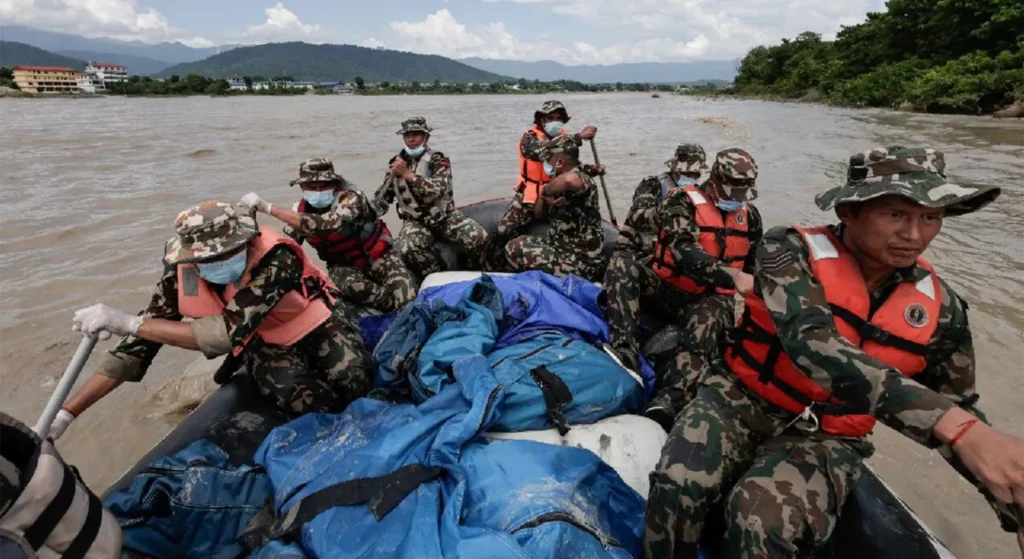
Watch: The UAE has stepped up its emergency response in Nepal, deploying greater search and rescue support as severe flooding continues to cause widespread destruction and the number of reported deaths and missing people rises.
Watch: UAE boosts search and rescue operations in Nepal amid rising flood fatalities.
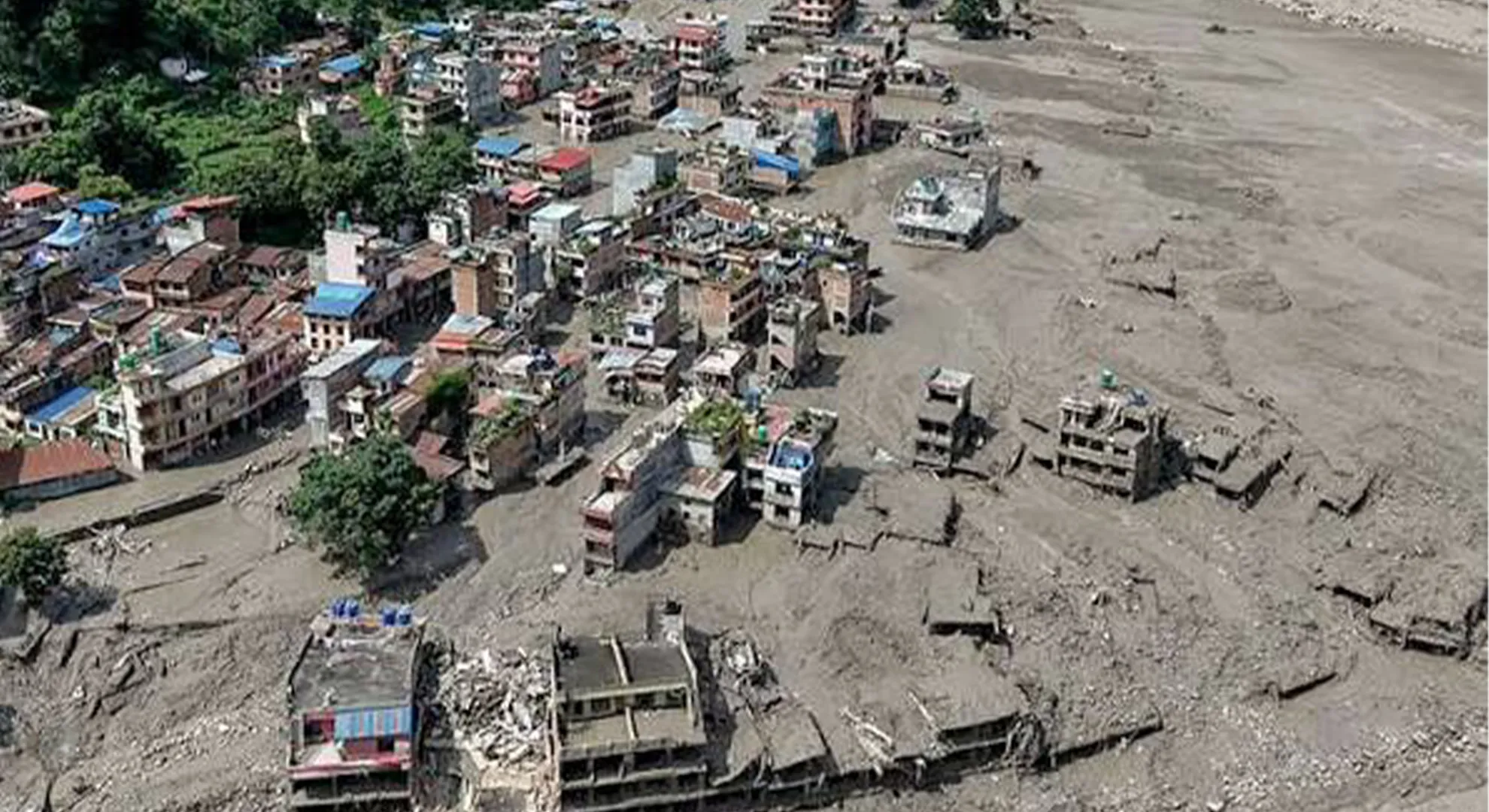
The UAE has delivered four aircraft shipments to Nepal to date, transporting approximately 186 tonnes of essential humanitarian supplies and relief materials to support communities affected by the devastating floods and ongoing emergency situation.
UAE Expands Search and Relief Mission in Flood-Hit Nepal
The UAE is stepping up its humanitarian response in Nepal as rescue personnel and relief teams continue working to assist communities affected by the country’s severe flooding.
The ongoing operation combines emergency search and rescue missions with the delivery of essential humanitarian supplies. UAE teams are working in coordination with the appropriate Nepalese authorities to identify urgent needs, reach affected communities and provide support in areas where the flooding has caused widespread disruption.
The response forms part of the UAE’s broader humanitarian efforts to help Nepal deal with the consequences of the disaster. Alongside providing immediate assistance to people affected by the floods, UAE personnel are supporting efforts to locate missing individuals and assess areas that have been damaged or become difficult to access.
A specialised UAE Search and Rescue Team has been deployed to Rasuwa District, where personnel are conducting field operations in challenging conditions. The team is using a combination of specialist equipment and modern surveying technologies to improve its ability to search affected locations.
Among the tools being used are drones capable of collecting aerial imagery and conducting detailed surveys of areas that may be difficult or unsafe for rescue personnel to reach directly.
The aerial technology enables teams to obtain a clearer picture of the situation on the ground. Drone imagery can help identify damaged locations, examine access routes and provide information about areas where people may require assistance.
The team is also using three-dimensional mapping technology as part of its assessment work. By producing detailed representations of affected areas, the technology can help rescue personnel understand the terrain and plan their operations more effectively.
The use of these technologies is particularly valuable during large-scale emergencies, when traditional search methods may be slowed by damaged roads, difficult terrain or other obstacles created by flooding.
By combining aerial surveillance, surveying tools and specialist rescue equipment, the UAE team is seeking to make its field operations more targeted and efficient.
The technology is also supporting efforts to locate people who remain unaccounted for following the disaster. Identifying potentially accessible routes and examining affected areas from the air can help teams determine where further searches may be required.
Four aircraft deliver emergency supplies
The UAE’s response has also included a significant airlift of humanitarian assistance.
So far, four relief aircraft have been sent to Nepal, carrying a combined 186 tonnes of humanitarian and emergency supplies.
The shipments include a range of materials intended to address immediate needs among communities affected by the floods. Among the items transported are tents, food, shelter materials, essential supplies, electricity generators and logistical equipment.
The range of assistance reflects the practical challenges facing people whose homes and communities have been affected by severe flooding.
Shelter materials can help provide temporary accommodation for displaced families, while food and other essential items can support people who have experienced interruptions to normal supplies.
Power generators and logistical equipment are also important during emergency operations, particularly in locations where electricity infrastructure or other essential services may have been disrupted.
The UAE has supplemented the supplies transported by air by purchasing additional essential items within Nepal.
Sourcing materials from the local market can help speed up the distribution process by reducing the need to transport every item from outside the country. It also allows relief teams to respond more quickly to immediate requirements identified on the ground.
The combination of international shipments and local procurement is intended to ensure that assistance can reach affected communities as efficiently as possible.
Specialist team deployed from Dubai Police
As part of the emergency response, the UAE has also sent a specialised search and rescue unit from Dubai Police to Nepal.
The team has been equipped with advanced equipment, devices and technologies designed to assist with emergency rescue work.
Its role includes supporting Nepalese authorities as they search for people who may still be missing following the floods.
The team is also assessing locations affected by the disaster. Site assessments can provide important information about the condition of damaged areas and help determine where rescue resources should be concentrated.
Search and rescue operations following major floods can be particularly complex. Water damage can alter landscapes, block roads and make some areas difficult to reach. Buildings and infrastructure may also be damaged, creating additional risks for emergency personnel.
Specialist rescue teams therefore need to assess conditions carefully before entering affected sites.
The UAE personnel are working alongside the relevant Nepalese authorities as part of the coordinated response. Such cooperation allows the teams to combine local knowledge with specialist international search and rescue capabilities.
Technology strengthens rescue operations
The deployment of advanced technology is an important part of the UAE’s contribution to the operation.
In conventional search missions, teams may need to cover large areas on foot or from ground vehicles. When terrain is damaged or access routes are blocked, this can take considerable time.
Drones can provide an alternative perspective by allowing rescue personnel to survey large areas from above.
Aerial imagery can help teams identify locations that require closer inspection while three-dimensional mapping can provide a more detailed understanding of the terrain.
These capabilities can be particularly useful in mountainous or difficult-to-access areas such as Rasuwa District.
The technology does not replace rescue personnel but supports their decision-making by giving them additional information about the environment in which they are working.
The result can be more focused deployment of teams and equipment, potentially reducing the time required to identify priority locations.
The approach also allows rescue personnel to gather information without immediately exposing teams to potentially dangerous conditions.
Relief and rescue efforts continue together
The UAE operation combines two essential elements of disaster response: finding and assisting people in danger and ensuring that survivors receive immediate humanitarian support.
Search and rescue work is focused on locating missing people and assessing affected sites, while relief operations are providing basic supplies to communities dealing with the consequences of the flooding.
Both elements are taking place alongside coordination with Nepalese authorities.
This coordination is essential in a large-scale emergency because local authorities are best placed to identify affected communities, understand conditions in specific areas and determine where assistance is most urgently required.
International teams can then use their specialist capabilities and resources to complement those local efforts.
The UAE’s response therefore involves more than simply transporting relief supplies. It includes personnel, technical equipment, aerial surveying capabilities and logistical support.
Challenging conditions on the ground
The rescue teams are operating in difficult field conditions created by the flooding and its impact on infrastructure.
Flooding can make roads impassable, damage buildings and disrupt communication and transport networks. In some areas, reaching affected communities can become a major challenge in itself.
These circumstances require rescue teams to adapt their methods and use whatever resources are available to locate people and assess conditions.
According to Hammoud Al Afari, Director of UAE Relief Operations, UAE teams are continuing their work in close coordination with the relevant Nepalese authorities.
He said the teams are making use of the resources and technical capabilities available to them in support of search and rescue missions and humanitarian relief operations.
The focus, he said, remains on maintaining assistance despite the difficult conditions faced by personnel working in affected areas.
Support for affected communities
For people affected by the floods, emergency assistance can be critical during the immediate aftermath of a disaster.
Families may lose access to food, shelter, electricity and other basic necessities when homes and infrastructure are damaged.
The humanitarian supplies being delivered by the UAE are intended to help address some of these immediate requirements.
Tents and shelter materials can provide temporary protection for people unable to remain in their homes, while food and essential supplies can help families cope while normal services are restored.
Generators can also provide temporary power for emergency facilities and other essential operations.
The procurement of additional supplies within Nepal adds another layer to the relief programme, enabling assistance to be sourced closer to the affected communities.
Focus on locating missing people
One of the most urgent aspects of the operation remains the search for people who have not yet been located.
The UAE Search and Rescue Team is using its specialist capabilities to assist Nepalese authorities with this task.
Drone-based aerial surveys can allow teams to examine areas that may be difficult to reach on foot. Search personnel can use the resulting imagery to identify locations that require additional investigation.
Three-dimensional mapping can further assist teams by creating a more detailed understanding of the physical environment.
Together, these technologies can help improve planning and enable rescue personnel to focus their efforts where they are most likely to be needed.
The objective is to make searches faster and more systematic while maintaining the safety of the teams carrying them out.
International assistance during disasters
The UAE’s deployment to Nepal is part of its wider approach to humanitarian assistance during major emergencies.
Such operations typically require cooperation between governments, emergency agencies, specialist rescue teams and humanitarian organisations.
In Nepal, UAE personnel are working alongside local authorities to ensure that the resources being provided are aligned with the needs identified on the ground.
The presence of a specialised search and rescue team adds technical expertise to the relief operation, while the airlift of supplies provides material assistance to communities affected by the disaster.
The combination of these efforts is intended to support both immediate rescue priorities and the humanitarian needs that emerge following widespread flooding.
Continuing the emergency response
The UAE’s humanitarian mission in Nepal remains focused on supporting affected communities as rescue and relief activities continue.
Four aircraft have already transported 186 tonnes of assistance, while additional supplies have been obtained locally to accelerate distribution.
At the same time, specialist personnel from Dubai Police are supporting search operations and using advanced equipment to assess affected areas and help locate missing people.
In Rasuwa District, the UAE Search and Rescue Team is using drones, aerial imaging, surveying systems and three-dimensional mapping to strengthen its field work.
These capabilities are being used alongside the experience and local knowledge of Nepalese authorities, creating a coordinated response to the emergency.
For the UAE teams involved, the priority is to make the available resources count in difficult circumstances — whether that means identifying a location that needs to be searched, reaching an affected area, finding a missing person or delivering essential supplies to families in need.
As the humanitarian operation continues, cooperation between the UAE and Nepalese authorities remains central to the effort. The UAE has committed personnel, aircraft, equipment and relief supplies to support the response, while teams on the ground continue adapting their operations to conditions created by the severe flooding.
The combined search, rescue and relief mission demonstrates the importance of rapid international assistance when communities are confronted with a major natural disaster. Through specialist rescue capabilities, advanced technology and the delivery of essential humanitarian supplies, the UAE is continuing to support Nepal’s emergency response and efforts to assist those affected.
UAE Relief Shipment Reaches Nepal as Flood Disaster Toll Continues to Rise
UAE sends additional relief supplies to Nepal
The UAE has stepped up its humanitarian assistance to Nepal with another major delivery of emergency supplies aimed at supporting communities affected by the devastating floods and related destruction.
The latest assistance was arranged by Dubai Humanitarian following directives from Dubai Ruler Sheikh Mohammed bin Rashid Al Maktoum, underscoring the UAE’s continued commitment to providing emergency support during the crisis.
The relief consignment, weighing approximately 74 metric tonnes, was transported to Nepal by air and arrived in the capital, Kathmandu, on Tuesday, September 8.
The shipment was carried by an Emirates SkyCargo Boeing 777-F aircraft, which departed from Dubai World Central, also known as DWC, before making its way to Nepal.
The delivery forms part of the wider humanitarian response to the disaster, with emergency supplies being moved into Nepal to help people whose homes and livelihoods have been affected by the flooding and destruction.
The latest shipment adds to the assistance already provided by the UAE and demonstrates the continued effort to ensure that essential materials reach communities dealing with the aftermath of the disaster.
The arrival of the aircraft in Kathmandu provides an additional source of urgently needed supplies at a time when rescue and recovery operations remain underway in several affected parts of the country.
Humanitarian assistance arrives amid a growing crisis
The additional shipment comes as Nepal continues to deal with the consequences of a catastrophic natural disaster that has caused extensive damage across affected areas.
Emergency responders have been working to reach communities cut off by destroyed roads, damaged bridges and other infrastructure losses.
The arrival of relief materials is particularly important as rescue operations continue and survivors require access to basic necessities.
Humanitarian deliveries can provide temporary assistance while authorities work to restore transport links and essential services.
The UAE’s latest contribution is therefore part of a broader international effort to support Nepal during an exceptionally difficult period.
By transporting a large quantity of supplies directly to Kathmandu, relief agencies and authorities can begin the process of distributing assistance to areas where it is most urgently required.
The use of an Emirates SkyCargo Boeing 777-F also highlights the logistical scale of the response. The aircraft’s cargo capacity allows substantial quantities of relief material to be transported in a single operation, helping humanitarian agencies move assistance more efficiently.
The shipment’s arrival on September 8 comes as rescue teams remain engaged in searching for missing people and assessing areas that have suffered significant damage.
Death toll continues to climb
The humanitarian operation is taking place against the backdrop of a rapidly escalating death toll.
Nepal’s disaster management authorities reported that at least 1,357 people had died as a result of the devastating flooding, while thousands of others were still unaccounted for.
According to the figures cited in the original report, 5,326 people remained missing nearly two weeks after the disaster that began on August 26.
Authorities have been working to establish a more accurate picture of the human impact by gathering information from different parts of the country and attempting to reconcile reports of missing people.
The process of confirming missing-person figures can be complicated following a disaster of this scale.
Communications may be disrupted, communities can become isolated and people may move away from affected locations without being immediately accounted for.
As a result, authorities have been attempting to cross-check information and compile data from across Nepal before determining the final number of people who remain missing.
The scale of the disaster has placed enormous pressure on emergency services, rescue organisations and local authorities.
Losses reported across the border
The disaster has also had a devastating impact in neighbouring China.
Chinese state media reported that 43 people had been confirmed dead, while another 519 were listed as missing.
When the reported figures from Nepal and China were combined, the overall number of deaths stood at approximately 1,400, while the number of people reported missing reached 5,845.
The figures illustrate the scale of the disaster across the region, with communities on both sides of the China-Nepal border affected by the collapse and flooding.
Authorities continue to work to verify casualty and missing-person figures as rescue operations progress.
For families waiting for information about relatives, the uncertainty surrounding missing people has added another painful dimension to an already devastating situation.
Rescue teams are therefore continuing their efforts to search affected locations, even as difficult terrain and damaged infrastructure make the work more challenging.
Search operations remain active
Emergency teams continued rescue operations following the collapse of glacial and mountainous terrain near the China-Nepal border.
The disaster swept away critical infrastructure, including roads and bridges, while homes and other structures were also destroyed or severely damaged.
The destruction of transport routes has created additional difficulties for emergency responders attempting to reach isolated communities.
In some locations, rescuers must first assess whether routes are safe before they can begin detailed search operations.
Despite those challenges, Nepalese authorities have continued deploying teams to areas where people are believed to be trapped or missing.
Particular attention is being given to three hydropower facilities.
According to the country’s disaster agency, rescuers believe workers could still be trapped at these projects and are concentrating efforts on locating them.
The hydropower sites have consequently become important priorities for search teams, which are attempting to determine whether survivors remain inside or near the damaged facilities.
Search operations in such environments can be particularly complicated because flooding, landslides and collapsing terrain may have altered the surrounding landscape.
Rescuers must balance the urgency of finding missing workers with the need to ensure that emergency personnel are not exposed to additional dangers.
Damaged infrastructure complicates recovery
The destruction of roads and bridges has emerged as one of the major challenges facing Nepal’s emergency response.
When transport infrastructure is washed away or covered by debris, emergency teams can struggle to reach affected communities.
The loss of bridges can isolate entire areas, while damaged roads can prevent trucks carrying food, water, medical supplies and other necessities from reaching people in need.
This makes air transport and other alternative methods of delivering assistance particularly important during the early stages of the recovery.
The UAE’s relief shipment to Kathmandu comes at a time when conventional supply routes in some parts of Nepal may be difficult to use.
Once supplies arrive in the capital, humanitarian organisations and local authorities can coordinate their onward movement to affected areas according to the needs identified on the ground.
Climate concerns emerge after disaster
While authorities have yet to establish the precise cause of the glacial collapse, the disaster has renewed attention on the growing risks associated with a changing climate.
Scientists and environmental experts have warned that rising global temperatures are contributing to the accelerated melting of glaciers in many parts of the world.
The loss of glacial ice can alter mountain environments and potentially increase the risk of certain types of flooding, landslides and other hazards.
However, the exact relationship between climate change and an individual glacial collapse can be complex and requires detailed scientific investigation.
The disaster has nonetheless highlighted the vulnerability of mountain communities and infrastructure to extreme environmental events.
For Nepal, where many communities are located in mountainous or rural regions, such events can have particularly severe consequences.
Nepal faces a long recovery
The immediate priority remains saving lives and providing assistance to people affected by the disaster, but attention is also beginning to turn towards the scale of the reconstruction challenge.
Nepal is a largely rural country with a population of around 30 million people. Many communities depend heavily on agriculture, local infrastructure and natural resources for their livelihoods.
When roads, bridges, homes and other facilities are destroyed, the consequences can continue long after floodwaters recede.
Rebuilding transport links can take considerable time and require substantial financial resources. Restoring homes and community facilities adds another layer of expense, while damaged economic infrastructure can make it harder for affected families to return to normal life.
Nepal has indicated that reconstruction following the disaster could cost billions of dollars.
The eventual recovery effort is therefore likely to require significant financial and logistical support, both from within Nepal and from international partners.
International support remains important
The UAE’s latest shipment is one example of the international assistance being directed towards Nepal as the country responds to the disaster.
Humanitarian support from abroad can play an important role when a disaster exceeds the capacity of local resources, particularly during the immediate emergency phase.
Supplies such as food, shelter materials, medical equipment and other necessities can help communities meet urgent needs while national authorities concentrate on rescue and recovery operations.
Air freight can also provide a rapid means of moving assistance into a country when land routes have been damaged.
The 74-metric-tonne shipment transported by Emirates SkyCargo therefore adds to the wider effort to maintain the flow of humanitarian supplies into Nepal.
The decision to send the shipment following directions from Sheikh Mohammed bin Rashid Al Maktoum also reflects Dubai’s continued involvement in the humanitarian response.
Relief efforts continue as authorities assess the damage
As rescue operations continue, authorities face the difficult task of assessing the full extent of the damage.
The reported casualty figures are still being reviewed, particularly the number of people listed as missing.
Authorities are collecting information from different regions in an attempt to establish a clearer and more reliable picture of the disaster.
At the same time, rescue teams are continuing to search for people who may have survived in isolated or damaged locations.
The three hydropower projects identified by Nepal’s disaster agency remain among the areas receiving particular attention because of concerns that workers could still be trapped there.
The destruction of roads, bridges and homes means that some areas may require specialist equipment or alternative access methods before searches can be completed.
A major humanitarian challenge
The disaster has left Nepal facing an enormous combination of immediate and long-term challenges.
The loss of life has been accompanied by the destruction of homes and infrastructure, displacement of communities and disruption to essential services.
For those who have survived, access to food, shelter and other basic necessities is likely to remain a priority while emergency operations continue.
The international humanitarian response is therefore expected to remain important during the coming stages of the crisis.
The UAE’s latest delivery of approximately 74 metric tonnes of relief supplies provides additional support at a critical moment.
Arriving in Kathmandu aboard an Emirates SkyCargo Boeing 777-F from Dubai World Central, the shipment adds to the wider flow of emergency assistance being provided to Nepal.
Meanwhile, Nepalese and Chinese authorities continue dealing with the human cost of the disaster, with reported deaths and missing-person figures remaining exceptionally high.
Rescue teams are continuing to work in difficult conditions, particularly around areas affected by the glacial and mountain collapse near the China-Nepal border.
With infrastructure destroyed and some communities difficult to reach, the recovery process is likely to be complex and expensive.
Nepal’s warning that reconstruction could run into billions of dollars underlines the scale of the task ahead.
For now, however, the immediate focus remains on finding missing people, helping survivors and delivering essential supplies.
The arrival of further humanitarian assistance from the UAE provides additional resources for that effort, while ongoing search operations continue across the worst-affected areas.
The disaster has also raised wider questions about the vulnerability of mountain regions to extreme environmental events and the potential consequences of accelerating glacial melt.
As Nepal moves from emergency rescue towards longer-term recovery, the country is likely to require sustained support to rebuild damaged communities and infrastructure and help affected families begin the difficult process of returning to normal life.