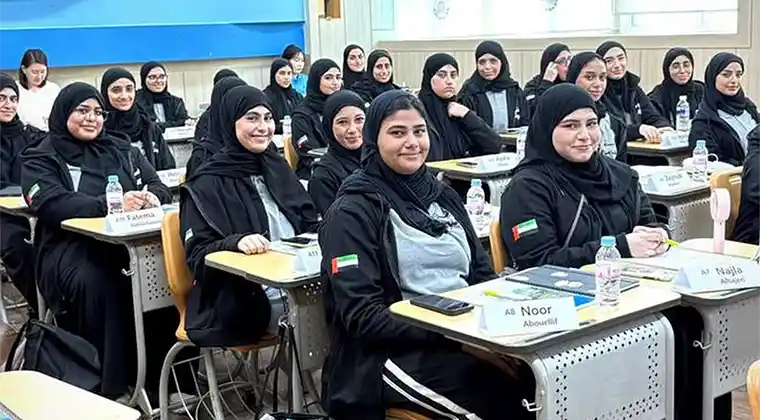
Several schools across the UAE are making education more affordable by offering scholarships that can reduce tuition costs by as much as 50%. These opportunities are not limited to students with exceptional academic records, giving more families access to financial assistance.
UAE Schools Provide Scholarships Covering Half of Tuition Fees, Academic Excellence Not Required.

Schools nationwide are creating more opportunities for talented students by offering financial support, including partial fee concessions and scholarships covering as much as half of tuition costs. These awards recognise excellence in academics, athletics, performing arts, leadership, and other areas.
UAE Schools Broaden Scholarship Opportunities as Families Face Rising Education Costs
For families in the UAE, the cost of private education continues to be an important consideration when choosing a school. With tuition fees forming a substantial part of household budgets, financial assistance through scholarships can offer valuable support. However, schools across the country are making it clear that these awards are not reserved exclusively for students with the highest examination scores.
As the 2026-27 academic year begins, a growing number of schools are drawing attention to scholarship programmes aimed at students approaching important stages of their education. While academic performance remains one of the factors considered, schools are increasingly looking at a much wider definition of achievement.
Students with strengths in sport, music, drama, dance, leadership and other areas can also be considered for financial awards. In many cases, schools say they are looking for young people who can make a meaningful contribution to school life and demonstrate qualities that go beyond their classroom results.
At Arcadia British School, scholarship opportunities are concentrated around Years 7, 10 and 12. These year groups represent significant transition points, making them important stages at which students may benefit from additional recognition and support.
The school primarily provides scholarships in the form of partial reductions in tuition fees. According to Giles Pruett, executive principal of Arcadia British School and a member of the Board of Governors at Arcadia Education, the purpose of the programme extends beyond simply rewarding outstanding academic results.
He said the school views scholarships as a means of identifying young people with exceptional qualities and giving them an environment in which their abilities and ambitions can develop further.
Arcadia’s Principal’s Awards for Excellence are divided into three broad categories: academic achievement, sporting performance and excellence in the performing arts. This structure allows students with different talents to be considered rather than limiting the programme to conventional academic success.
The school emphasises that a scholarship applicant does not necessarily need to be the student with the highest examination grades. Instead, the selection process takes into account potential, achievement and the qualities that a student could bring to the wider school community.
Character plays a growing role in scholarship decisions
One of the clearest changes in the way schools approach scholarships is the increasing emphasis on character.
Academic grades can provide an indication of a student’s performance in the classroom, but schools say they also want to understand how a young person behaves, interacts with others and responds to challenges.
At Arcadia, characteristics such as leadership, kindness, integrity, determination and ambition are regarded as important elements of the scholarship process. The school is interested in students who are likely to have a positive influence on those around them and participate actively in school life.
This broader approach means that families considering a scholarship application should not assume that academic results alone will determine the outcome. A student who demonstrates commitment to a sport, shows leadership among peers, performs on stage or consistently supports others may have strengths that schools consider equally valuable.
For parents, this can also change how they approach the application process. Rather than focusing exclusively on examination certificates and grades, families may need to consider how a student’s wider achievements, interests and personal qualities can be presented.
At Arcadia British School, students applying for sporting scholarships are expected to demonstrate a strong level of ability. Applicants may have represented their school, club or another organisation and are expected to show versatility rather than relying solely on success in one area.
The performing arts category similarly covers several disciplines. Students can demonstrate their abilities through music, dance or drama, giving applicants with different creative interests the opportunity to be assessed.
The financial value of the awards can also be significant. For students entering Years 7 and 10, Arcadia scholarships can provide fee support of up to 25 per cent. A limited number of particularly exceptional students entering Year 12 may be eligible for awards of as much as 50 per cent of tuition fees.
For families managing private-school expenses, such reductions can make a noticeable difference to the overall cost of education, particularly when a student remains at the school for several years.
Scholarships are becoming more diverse
Arcadia is not alone in broadening the criteria used to identify scholarship recipients.
Regent International School is also offering merit-based scholarships for students in selected year groups. The school’s approach similarly recognises that achievement can take different forms and that academic excellence is only one possible route to receiving an award.
David Williams, principal of Regent International School, said the school considers a variety of strengths when assessing candidates.
Academic performance continues to be relevant, but students may also be considered for their accomplishments in sport, music, performing arts or leadership. This creates opportunities for students whose strongest abilities may not necessarily be reflected in examination results.
The approach reflects a wider shift in education towards recognising the individual strengths of students. Schools increasingly place importance on skills such as communication, collaboration, resilience, creativity and leadership, alongside traditional academic measures.
For prospective families, this means scholarship programmes may provide an opportunity to highlight a student’s particular strengths. A child who has achieved success in competitive sport, developed advanced musical skills, taken responsibility within a school organisation or demonstrated leadership in community activities may have a strong case even if they are not at the very top of their class academically.
Regent’s scholarship programme is open to both existing students and children who are seeking admission to the school. This gives current families as well as prospective applicants the opportunity to compete for available awards.
The assessment process varies depending on the type of scholarship being sought. A student applying because of academic achievement may face a different assessment from one seeking recognition for sporting or performing arts ability.
This distinction allows schools to evaluate candidates according to the specific skills relevant to each category rather than applying one standard to every applicant.
What families need to understand about fee support
While scholarships can provide substantial assistance with tuition, parents should carefully examine what an award does and does not cover.
At Regent International School, scholarship funding is generally applied towards tuition fees. Additional expenses associated with attending school are normally outside the scope of the award.
These can include transport, uniforms, examination charges and extracurricular activities. Families therefore need to calculate the complete cost of attendance rather than assuming that a percentage reduction in tuition will automatically reduce every school-related expense.
The same principle is important when comparing scholarship programmes between schools. Two awards offering similar percentages may have different eligibility conditions, assessment procedures or restrictions.
Parents should therefore look closely at the specific terms attached to each scholarship, including the year group covered, the duration of the award, renewal requirements and the expenses excluded from the financial assistance.
Transition years can offer important opportunities
The timing of scholarship applications is another factor families should keep in mind.
Schools often focus scholarship recruitment around particular year groups, especially when students are entering a new phase of their education. At Arcadia, Years 7, 10 and 12 are key entry points for scholarship consideration.
These stages can represent major changes in a student’s educational journey. Year 7 generally marks the move into secondary education, while Year 10 can coincide with the beginning of an important examination phase. Year 12 introduces students to another significant stage as they prepare for post-16 qualifications and eventually university or other future pathways.
For parents, this means scholarship opportunities may need to be considered well before the start of the academic year. Families should monitor application deadlines, eligibility requirements and assessment dates rather than waiting until a child has already entered the relevant year group.
Students may also benefit from preparing a portfolio of achievements. Depending on the scholarship category, this could include academic records, sporting results, certificates, performances, leadership experience or evidence of involvement in school and community activities.
A broader definition of success
The growing variety of scholarship categories reflects changing ideas about what constitutes student success.
Traditional academic scholarships have often focused heavily on examination results, grades and other measurable classroom outcomes. While these remain important, schools are increasingly acknowledging that students develop different abilities and that talent cannot always be captured through academic assessments.
A talented musician may spend years developing an instrument without receiving the same recognition through conventional academic measures. Similarly, a young athlete may demonstrate discipline, teamwork and resilience through competitive sport, while a student involved in drama or dance may develop confidence and communication skills through performance.
Leadership offers another example. Students who organise activities, support younger pupils, take responsibility for projects or encourage their peers may demonstrate qualities that are difficult to measure through examination scores alone.
By including these areas in scholarship programmes, schools can recognise students for a wider range of accomplishments.
What this means for students
For students, broader scholarship criteria can create additional pathways to recognition and financial support.
A child who may not consider themselves an obvious candidate for a traditional academic scholarship could potentially qualify through sporting, artistic or leadership achievements. This can encourage students to continue developing interests outside the classroom and to understand that those activities may have long-term value.
However, competition for scholarships can still be considerable. Meeting the basic requirements does not necessarily guarantee an award, particularly when schools have a limited number of places or a restricted scholarship budget.
Students therefore need to demonstrate not only ability but also commitment and potential. In areas such as sport and performing arts, schools may look for evidence that an applicant has developed their skills consistently and is capable of progressing further.
Character can also become a deciding factor when several candidates have comparable achievements. A student’s attitude, reliability, willingness to work with others and contribution to the school community can all influence the overall assessment.
Financial planning remains important
For UAE families, scholarships can be an attractive way of reducing the financial pressure associated with private education. An award covering 25 per cent of tuition, for example, can represent meaningful savings over an academic year, while an award covering half of tuition can have an even greater impact.
Nevertheless, parents should view scholarships as one part of their overall education budget.
School fees are only one component of the cost of education. Transport, uniforms, technology requirements, examinations, trips and extracurricular programmes can add to the annual expense. Because not all of these costs are necessarily covered by scholarships, families should establish a realistic budget before accepting an award.
It is also important to understand whether scholarships are automatically renewed in subsequent years or whether students must continue meeting certain academic, behavioural or performance standards.
Opportunities extend beyond the classroom
The scholarship programmes being promoted for the 2026-27 academic year highlight a broader message from UAE schools: achievement can take many forms.
Students are being encouraged to demonstrate what they can do academically, but also to develop their talents, take responsibility, participate in activities and contribute positively to their communities.
For parents, this provides a useful reminder that scholarship applications should not be approached simply as a competition for the highest marks. A strong application can involve a combination of academic performance, personal qualities, extracurricular achievements and future potential.
For schools, meanwhile, scholarships provide a way of attracting and retaining talented young people while building a diverse student community.
As education costs remain an important concern for families, financial awards can provide both recognition and practical assistance. The expansion of scholarship categories means that more students may have an opportunity to benefit, provided they can demonstrate excellence, commitment and the potential to make a positive contribution.
For families preparing for the new academic year, the key message is therefore to look beyond grades alone. Whether a student’s strength lies in the classroom, on the sports field, on the stage or in a leadership role, there may be scholarship opportunities designed to recognise those abilities.
Parents should review individual school requirements carefully, identify the areas in which their child has demonstrated the strongest achievements, and prepare applications that show not only what the student has accomplished but also what they could contribute to the school in the years ahead.
GEMS and New Dubai Schools Broaden Scholarship Opportunities
GEMS and new Dubai schools widen scholarship choices
Families searching for financial support for private education in Dubai are seeing an increasingly varied range of scholarship opportunities, with established school groups and newly launched institutions offering programmes aimed at students with different strengths and achievements.
Scholarships are no longer limited to pupils who consistently achieve the highest academic grades. Across a growing number of schools, students can be considered for awards based on areas such as sport, music, performing arts, leadership, creativity, character and their potential to contribute to school life.
One of the largest education providers in the UAE, GEMS Education, offers several scholarship routes for students with different backgrounds and talents. Opportunities are available not only to children already enrolled in GEMS schools but also to students who are considering moving from another school into the network.
The range of programmes means that families do not necessarily have to be existing GEMS customers to explore scholarship opportunities. Depending on the specific award, eligibility can extend to students of different nationalities and educational backgrounds.
Lisa Crausby OBE, Group Chief Education Officer at GEMS Education, said the organisation operates several scholarship pathways, including opportunities designed for expatriate students as well as programmes aimed at Emirati pupils and awards offered by individual schools.
Among the group’s programmes is the GEMS Genius Scholarship, which is open to eligible students regardless of nationality. The scheme can therefore provide an opportunity for talented students studying outside the GEMS network to seek financial support when considering a move to one of its schools.
Crausby said the GEMS Genius Scholarship is available to eligible students entering Year 10/Grade 9 or Year 12/Grade 11 for the 2027 academic year. Applications are scheduled to open in October 2026, giving families an opportunity to prepare their applications well ahead of the relevant academic intake.
Successful recipients receive scholarships for a period of two years, providing support across an important stage of their secondary education.
For families, the two-year duration can be particularly useful when planning education expenses, as it offers a degree of financial certainty beyond a single academic year. However, as with other scholarship programmes, parents should examine the individual conditions attached to an award, including eligibility requirements and any expectations placed on students after receiving the scholarship.
Several scholarship routes within GEMS
The GEMS Genius Scholarship is only one component of the group’s wider scholarship offering.
GEMS Education says hundreds of students receive scholarships each academic year through its different programmes. These include the GEMS Genius Scholarships, Centre of Excellence Scholarships and awards that are administered directly by individual schools.
The variety of programmes reflects the different ways in which schools identify and support talented students.
A student with exceptional academic ability may be considered through one pathway, while another student with outstanding sporting, artistic or other skills could potentially find an opportunity through a different programme.
School-specific scholarships can also allow individual institutions to establish awards that reflect their own educational priorities and community needs. This means the opportunities available to students can differ from one GEMS school to another.
For parents, this makes it important to look beyond the headline scholarship programme and investigate the individual opportunities available at the school their child is interested in joining.
It also means that students should consider their strongest areas when deciding which scholarship opportunities to pursue. A student does not necessarily need to fit the profile of a conventional academic high-achiever if the relevant programme recognises excellence in another field.
Scholarships extend beyond academic grades
The broader approach to scholarships across Dubai schools reflects a changing understanding of student achievement.
Academic results remain an important measure, particularly for students applying for academic awards. However, schools are increasingly recognising that achievement can be demonstrated through a wide range of activities.
Sport, performing arts and leadership can reveal qualities that are valuable within a school environment. Participation in these areas can demonstrate commitment, discipline, teamwork, confidence and the ability to work towards long-term goals.
This wider perspective can be particularly significant for students whose abilities are spread across several areas rather than concentrated solely on examination performance.
For parents preparing applications, it can therefore be useful to present a complete picture of the student. Academic results may form part of the application, but achievements outside the classroom, leadership responsibilities, performances, competitions and evidence of personal development can also help demonstrate the student’s strengths.
Rugby School Dubai offers partial awards
Another Dubai institution offering scholarship opportunities is Rugby School Dubai.
The school plans to provide scholarships for students entering Years 7, 8, 9, 10 and 12 in August 2027. The standard awards are generally partial rather than full scholarships, with financial assistance typically reaching up to 10 per cent of annual tuition fees.
While a 10 per cent award is smaller than some of the larger scholarships available elsewhere, even a partial reduction can help families manage the overall cost of private education.
The school reviews its standard scholarships every two years, providing a structured approach to ongoing support.
Henry Price, Founding Principal of Rugby School Dubai, said scholarship recipients receive more than a reduction in their tuition bill. Students who secure awards are also offered access to a programme designed to support their wider development.
This includes mentoring, enrichment activities and leadership opportunities, as well as chances for scholars to represent the school.
The additional opportunities attached to the scholarship can be an important part of the overall value of the award. Rather than functioning purely as a financial incentive, the programme is designed to give successful students additional opportunities to develop their skills and take on responsibilities within the school community.
For students, being selected as a scholar can therefore provide recognition as well as access to activities that may contribute to their personal and educational development.
Emirati students have a separate scholarship pathway
Rugby School Dubai also has a dedicated scholarship opportunity for Emirati students.
The Ruwad al Emarat Scholarship provides a significantly higher level of financial assistance, covering 50 per cent of fees for eligible students from Years 4 through Year 13.
The programme gives Emirati families another route towards reducing the cost of school fees while supporting students across a substantial portion of their school careers.
The difference between the standard scholarships and the Ruwad al Emarat award illustrates how schools are increasingly developing multiple scholarship structures to meet the needs of different groups of students.
For families, understanding these distinctions is essential. Eligibility can depend on factors including nationality, year group, academic stage and the particular category under which an application is submitted.
Parents considering a scholarship should therefore check the precise requirements for the relevant programme rather than assuming that all awards offered by a school operate under the same conditions.
A new school takes a considered approach
Dubai’s expanding education sector is also bringing new schools into the scholarship landscape.
Queen Elizabeth’s School in Dubai Sports City is among the newer institutions developing its scholarship offering. As the school establishes its identity and builds its founding community, its scholarship programme is still being shaped.
Rather than immediately adopting a large and fixed scholarship structure, the school is taking time to develop a programme that fits with its broader educational vision.
The institution is considering scholarship awards for students in Years 5 to 9. Year 9 is due to open in September 2027, meaning the scholarship programme is being developed alongside the school’s expansion into additional year groups.
Dan Clark, founding principal of Queen Elizabeth’s School, said the school intends to take a thoughtful approach to developing its scholarship system as it establishes its founding culture.
The awards will take the form of contributions towards school fees. However, the school is also looking beyond academic performance when assessing prospective scholarship recipients.
The selection process is intended to consider students’ individual strengths, character and the contribution they could make to school life.
That approach reflects the broader direction being taken by schools across Dubai, where scholarship decisions are increasingly linked to a student’s overall potential rather than simply their examination record.
Building a school community through scholarships
For newly established schools, scholarship programmes can serve a purpose beyond providing financial assistance.
A school beginning to build its community has an opportunity to bring together students with different skills, interests and experiences. Scholarship recipients can help establish traditions, participate in activities and contribute to the culture of the institution during its formative years.
This can make character and potential particularly relevant during the selection process.
For a new school, a student who demonstrates leadership, enthusiasm, creativity or a willingness to participate may offer significant value even if they are not the highest academic performer.
Queen Elizabeth’s School’s approach suggests that scholarship programmes can be used as part of a broader strategy for building a balanced and engaged student body.
The emphasis on contribution also gives families an indication of what schools may be looking for in applicants. Students should not necessarily focus only on what they have achieved in the past. Their ability to become active members of the school community can also be an important consideration.
What parents should consider before applying
The expanding number of scholarship programmes gives families more choices, but it also means that parents need to compare opportunities carefully.
The percentage of fees covered is an obvious consideration, but it is not the only factor that matters.
Families should also look at the year groups covered by the scholarship, how long the award lasts and whether it is subject to periodic review. Some scholarships may be available for two years, while others may be reviewed at different intervals.
The application process can also vary considerably. Depending on the award, students may need to provide academic records, evidence of sporting or artistic achievements, portfolios or other supporting material.
In some cases, assessments may be used to determine whether a student meets the required standard.
Parents should also establish which costs are covered by the scholarship and which remain payable. Tuition support does not necessarily mean that additional expenses such as transport, uniforms, examinations, activities or other school-related costs will be included.
A scholarship can therefore reduce the overall education bill without eliminating all school expenses.
Preparing a strong application
Students hoping to secure a scholarship can benefit from preparing well in advance.
The first step is to identify the category that best reflects the student’s strengths. An academically strong student may be suited to an academic scholarship, while another child may have a stronger application through sport, music, performing arts or leadership.
Evidence is particularly important. Families should keep records of relevant achievements, competitions, performances, awards, certificates and leadership responsibilities.
However, an application should not simply become a list of accomplishments. Schools are increasingly interested in understanding the person behind those achievements.
A student who has demonstrated persistence after a setback, taken responsibility for a project or supported other members of a team may be able to demonstrate qualities that are difficult to capture through certificates alone.
This is particularly relevant where schools emphasise character and contribution to the wider community.
A changing scholarship landscape
The scholarship programmes being developed and promoted across Dubai point towards a broader change in the private education sector.
Financial awards remain an important tool for helping families manage tuition costs, but schools are also using scholarships to recognise and encourage a wider range of student abilities.
GEMS Education’s multiple scholarship pathways, Rugby School Dubai’s combination of financial support and enrichment opportunities, and Queen Elizabeth’s developing programme all demonstrate different approaches to the same broader objective: identifying talented students and giving them opportunities to develop further.
For families, this expansion means there are potentially more routes to financial assistance than the traditional academic scholarship.
Students who excel in the classroom can still benefit, but those with achievements in sport, music, drama, dance, leadership or other areas may also have opportunities to be recognised.
The emphasis on character and contribution is another important development. Schools are increasingly looking at how applicants might enrich the school community, rather than focusing exclusively on their past results.
As Dubai’s school sector continues to expand, scholarship programmes are likely to remain an important part of the conversation around access, affordability and student achievement.
For parents preparing for future school applications, the key is to research each programme carefully and begin early. Understanding eligibility rules, application deadlines, assessment requirements and the financial terms of an award can help families make informed decisions.
Most importantly, students should recognise that academic grades are only one part of their profile. A strong scholarship candidate may be someone who combines achievement with ambition, commitment, character and a willingness to contribute.
With established education groups expanding their scholarship pathways and new schools developing programmes of their own, Dubai families now have a broader range of options to explore when seeking recognition and financial support for talented students.