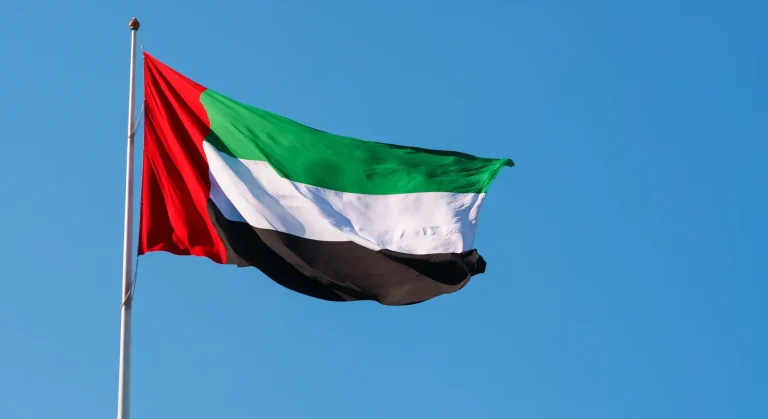
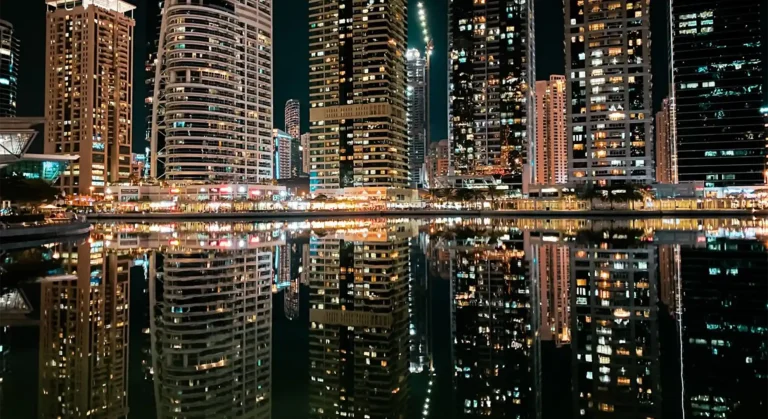
Journeying from the iconic Flame Roundabout to the historic Strand Cinema, discover the remarkable landmarks, cherished attractions, and unforgettable places that have helped shape the UAE’s unique identity and remain deeply connected to its rich cultural heritage and fascinating past.
From Flame Roundabout to Strand Cinema: Exploring the UAE’s Most Memorable Landmarks.
The UAE’s well-known landmarks often evoke memories of earlier times, yet the country has continually transformed alongside its rapid development. Take a closer look at how familiar places have changed over the years, while others continue to evolve with the nation’s changing landscape.
The UAE is a country where transformation has been a constant part of everyday life. Over the decades, cities across the Emirates have expanded at an extraordinary pace, with new highways, bridges, tunnels, residential communities and commercial districts reshaping areas that once looked completely different. As modern developments continue to emerge, some of the landmarks that once stood out across the urban landscape have disappeared, while others have been replaced, relocated or given an entirely new purpose.
For residents who have spent many years in the UAE, these changes can bring back memories of a very different time. A familiar roundabout that once served as a key meeting point, a hotel remembered from the early days of Dubai’s expansion, or a distinctive fountain along Abu Dhabi’s Corniche can all carry a special place in people’s memories. Their disappearance may feel like the end of an era, particularly for those who remember these places before the cities became the modern skylines they are today.
At the same time, redevelopment has played an important role in the UAE’s remarkable growth. As populations increased and tourism, business and infrastructure expanded, older sites often had to make way for projects designed to meet new demands. Some landmarks disappeared completely, while others were replaced by larger developments intended to create new destinations for residents and visitors.
Looking back at these places offers a glimpse into how quickly the UAE has changed. These are some of the landmarks that once formed an important part of the country’s urban landscape.
1. Mina Plaza in Abu Dhabi
Mina Zayed has long been closely connected with Abu Dhabi’s history as an important port and trading centre. For many years, the four towers known as Mina Plaza were among the most recognisable structures in the area. Rising above the waterfront, the buildings became a familiar feature for people travelling through or spending time around the historic port district.
The towers were part of an older phase of development in the capital, when the city’s skyline was considerably less crowded than it is today. Their presence near the waterfront gave the area a distinctive character and made the buildings easy to recognise from a distance.
That familiar view changed dramatically in November 2020. The four Mina Plaza towers were demolished through a controlled implosion, bringing the structures down in a matter of seconds. The carefully planned demolition attracted considerable attention because of the scale of the buildings and the speed with which they disappeared.
The demolition was connected to the wider redevelopment of Mina Zayed. The historic port area was being repositioned as part of a broader vision involving tourism, retail, commercial activity and residential development. As the district moved towards its next chapter, the towers that had dominated the waterfront for years became part of its past.
For longtime residents, the disappearance of Mina Plaza was more than the removal of four buildings. It represented another visible reminder of how quickly Abu Dhabi’s older urban landscape is being reshaped.
2. Volcano Fountain
Abu Dhabi’s Corniche has undergone extensive changes over the years, but older residents may still remember one of its more unusual attractions: the Volcano Fountain.
Built during the 1980s, the fountain became a distinctive feature of the waterfront. Its design was unlike the conventional fountains found in many public spaces. Water flowed down a series of levels, creating an appearance that resembled molten lava moving down the side of a volcano.
The effect became especially striking in the evening, when lighting added colour to the cascading water. The fountain quickly became more than a decorative feature. It served as a popular point for people to meet, spend time with family and friends, and take photographs.
At a time when Abu Dhabi had fewer of the large-scale attractions and entertainment destinations that are common today, landmarks such as the Volcano Fountain could become memorable parts of everyday life. For residents who grew up in the capital during that period, the fountain was closely associated with the Corniche and the city’s social life.
However, the Corniche itself was evolving. The waterfront was being expanded and redesigned to create improved public areas, recreational facilities and additional space for visitors. As part of this redevelopment, the Volcano Fountain was removed in 2004.
Although the fountain no longer exists, memories of it have continued among people who experienced Abu Dhabi during an earlier era. Its story is an example of how even relatively small public attractions can become important symbols of a particular period in a city’s history.
3. Metropolitan Hotel
Dubai’s development from a comparatively small trading city into an international business and tourism destination can be seen clearly through the history of its early hotels.
The Metropolitan Hotel was among the properties that became familiar to generations of residents and visitors. When it first opened in 1979, the surroundings looked very different from the Dubai skyline people know today. Areas that are now filled with major roads, office buildings, hotels and residential communities were, in many places, still largely undeveloped.
Al Quoz, in particular, had not yet become the busy mixed-use district that it is today. Much of the surrounding landscape retained a far more open and desert-like appearance. Against this backdrop, the Metropolitan Hotel became one of the recognisable hospitality establishments of an earlier Dubai.
The hotel remained part of the city’s landscape for several decades. During that period, Dubai experienced enormous economic and physical growth. New communities appeared, major highways expanded, and large developments began transforming the city at an increasingly rapid pace.
Eventually, the original Metropolitan Hotel was demolished in 2012. Its removal was connected to the development of Al Habtoor City, a large-scale project that would introduce hotels, residences and entertainment facilities to the area.
The change illustrates the dramatic scale of Dubai’s transformation. A building that had once stood in surroundings that seemed relatively open was eventually replaced as the area became part of a much larger urban development.
For people who remember the original hotel, the site offers a fascinating comparison between two very different stages of Dubai’s growth. What was once an early hotel surrounded by a far less developed landscape became part of a modern destination reflecting the city’s ambitions for tourism, hospitality and urban development.
4. Flame Monument Roundabout
Few things capture the changing appearance of Dubai quite like the landmarks that once greeted people entering the city. The Flame Monument Roundabout was one such feature and became a memorable sight during an earlier period of Dubai’s development.
The story of the monument goes back to 1969, when the original Fire Monument was constructed. Its flame was lit by Sheikh Rashid bin Saeed Al Maktoum, who was then the Ruler of Dubai. At the time, Dubai’s road network was nowhere near as extensive as the complex system of highways, interchanges and tunnels that exists today.
The roundabout consequently had a different role in the city. For people arriving in Dubai, it could provide an immediate visual reference and a memorable introduction to the growing urban centre. Before the city became filled with towering skyscrapers and enormous infrastructure projects, distinctive monuments and roundabouts often served as important visual markers.
Over the years, Dubai’s population and traffic increased substantially. Roads had to be redesigned to handle growing numbers of vehicles, while new infrastructure was introduced to improve movement between different parts of the city. As this transformation took place, several older road features and landmarks disappeared from the landscape.
The Flame Monument Roundabout eventually became part of that changing history. Its disappearance marked another stage in the evolution of Dubai’s road network and urban environment.
For older residents, however, the monument remains a familiar memory from a time when the city looked very different. Its significance comes not only from the structure itself but also from what it represented: an earlier Dubai, when a relatively small number of distinctive landmarks could leave a lasting impression on anyone travelling through the city.
A changing landscape, but a lasting memory
The stories of Mina Plaza, the Volcano Fountain, the Metropolitan Hotel and the Flame Monument Roundabout highlight different aspects of the UAE’s transformation. Some were demolished to accommodate major redevelopment projects, others disappeared as roads and public spaces were redesigned, and some were replaced as cities adopted new plans for future growth.
Yet the disappearance of a physical landmark does not necessarily mean its story disappears too. Photographs, personal memories and stories shared by longtime residents continue to preserve these places in the collective memory of the UAE.
The country’s cities are likely to keep changing as new communities, infrastructure projects and attractions are developed. What looks permanent today may eventually become part of another generation’s memories. In that sense, the UAE’s vanished landmarks offer more than nostalgia. They provide a visual record of how far the country has travelled and how dramatically its cities have evolved within a relatively short period.
For longtime residents, remembering these places can mean remembering a particular stage of life. For newer generations, their stories offer an opportunity to imagine what Abu Dhabi and Dubai looked like before today’s modern skylines became familiar.
Change has always been central to the UAE’s story. The landmarks that have disappeared are therefore not simply forgotten pieces of the past; they are reminders of the constant process of renewal that has helped shape the country. As new landmarks take their place, they too will eventually become part of the history of an ever-changing UAE.
The UAE’s transformation can also be seen in the landmarks that once served as familiar reference points for residents and visitors. As roads were widened, airports expanded, neighbourhoods developed and new infrastructure was introduced, several well-known structures gradually disappeared from the urban landscape.
For people who lived in Dubai and Sharjah during earlier decades, these landmarks were often more than just buildings or road features. They helped people navigate the city, marked important junctions and became part of everyday routines. Some were associated with family outings, others with long journeys through the city, while a few became memorable simply because of their distinctive designs.
Today, many of these places exist only in photographs and personal recollections. Others have been replaced by modern developments, while a handful are being modified rather than permanently removed. Together, their stories provide another glimpse into how dramatically the UAE’s cities have changed.
4. Flame Monument Roundabout
The story of Dubai’s Flame Monument continued to evolve after the original structure became associated with the city’s growing road network.
In 1975, the monument was relocated to a roundabout positioned at the meeting point of Sharjah Road and Airport Road. The move came during a period when Dubai was investing heavily in improving its roads and transportation infrastructure.
The new location was particularly significant because Airport Road served as an important route for people travelling to and from Dubai International Airport. At a time when air travel was becoming increasingly important to the emirate, the monument provided travellers with a recognisable feature along their journey.
For years, the roundabout formed part of the visual character of the area. Drivers passing through the junction would encounter the monument as part of their route, making it one of the many distinctive road landmarks that helped people identify different parts of an expanding Dubai.
But the city’s rapid growth eventually changed the needs of its transportation network. Increasing traffic, a growing population and the expansion of major roads required older junctions to be redesigned. Roundabouts that had once been practical solutions increasingly gave way to larger intersections, flyovers, tunnels and other forms of modern road infrastructure.
The Flame Monument Roundabout eventually disappeared as the surrounding road system was upgraded. Its removal reflected a broader pattern across Dubai, where familiar landmarks were sometimes sacrificed to create more efficient routes and accommodate rising traffic volumes.
Although the roundabout is no longer part of the city’s roads, its memory remains linked to an earlier Dubai. For residents who remember travelling through the area decades ago, the monument represents a period when the city’s road network was still developing and distinctive structures played a much larger role in helping people recognise their surroundings.
5. Strand Cinema
Before large shopping malls became synonymous with entertainment in Dubai, neighbourhood cinemas played an important role in the social life of the city.
One of the names remembered by longtime residents is Strand Cinema in Bur Dubai. Opening during the 1970s, the cinema became a familiar destination for movie lovers and was part of an era when going to a local theatre was a popular form of entertainment for families, friends and communities.
The cinema occupied a place in the everyday landscape of old Dubai. At a time when the city had far fewer entertainment complexes than it does today, individual cinemas could develop a strong identity of their own. Their names and locations became familiar to generations of residents.
Strand Cinema eventually closed around 2004. As Dubai’s entertainment industry changed and modern multiplexes became increasingly common, the old cinema no longer served the same role it once had.
The building was subsequently demolished, bringing an end to another chapter in the history of Bur Dubai. The site later became associated with Ansar Gallery in Karama, reflecting the wider commercial development of the neighbourhood.
For those who remember Strand Cinema, however, the location continues to evoke memories of an earlier Dubai. The cinema belonged to a time when neighbourhood theatres were important gathering places and when a night at the movies often meant visiting a single-screen or traditional cinema rather than a large entertainment complex inside a shopping mall.
Its story is a reminder that the evolution of Dubai has not only involved skyscrapers and highways. Everyday entertainment has changed too, with older institutions gradually giving way to new ways of shopping, dining and spending leisure time.
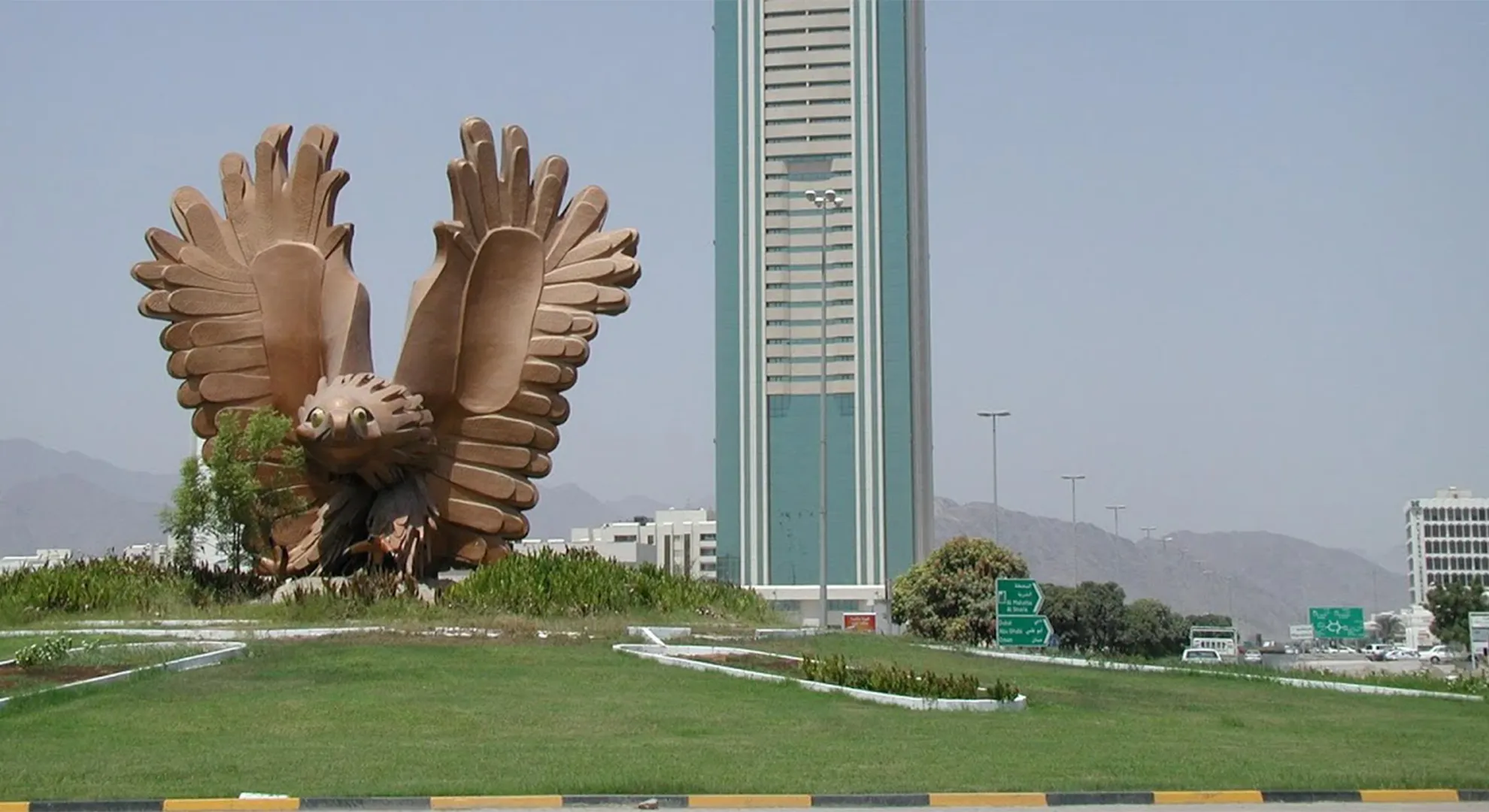
6. Falcon Roundabout
Roads and roundabouts once played an especially important role in defining Dubai’s visual identity. Among the city’s most recognisable examples was the Falcon Roundabout.
Located near the junction of Al Mina Road, Bank Street and Al Ghubaiba Road, the roundabout was distinguished by a large golden falcon sculpture. The monument became a familiar sight for motorists travelling through the area and was closely associated with the appearance of old Dubai.
The falcon itself carried strong symbolic associations with the UAE. Falcons have long been an important part of the country’s heritage and traditions, making the sculpture a fitting feature for a major road junction.
For decades, the roundabout stood as a visual marker in an area that has since undergone extensive redevelopment. Residents who travelled through the neighbourhood regularly could use the landmark as a convenient point of reference when describing locations or giving directions.
However, Dubai’s expanding transportation requirements eventually changed the area dramatically. Major infrastructure projects were planned to improve connections between different parts of the city and increase the capacity of important roads.
The redevelopment associated with the Al Shindagha Corridor and the Infinity Bridge brought further changes to the surrounding road network. As construction progressed, the Falcon Roundabout was removed to make space for the new infrastructure.
Its disappearance illustrates how landmarks that once helped define a neighbourhood can become obstacles when cities require completely different forms of transportation infrastructure. A roundabout that may have worked effectively for an earlier generation of motorists could no longer meet the demands of a much larger and busier city.
Today, the Falcon Roundabout remains part of Dubai’s visual history. Its golden sculpture is remembered by residents who experienced the city before the current network of bridges, tunnels and major road corridors transformed the area.
7. Al Amal Psychiatric Hospital
Not every landmark disappeared because it was demolished for a road project. Some facilities were relocated because their original surroundings had changed significantly.
Al Amal Psychiatric Hospital was one such institution. The original complex along Al Wasl Road dated back to the 1980s and remained a familiar presence in the area for many years.
The hospital was part of an earlier phase of Dubai’s development, when the surrounding neighbourhoods had a very different character. Over time, Jumeirah and neighbouring areas became increasingly urbanised, with new residential, commercial and leisure developments changing the nature of the district.
As Dubai continued to expand, the decision was taken to relocate the hospital to a purpose-built facility designed to provide modern healthcare services.
The new complex was established in Al Rowaiyah Third, in the Al Aweer area along Dubai-Hatta Road. It was designed as a contemporary healthcare facility with upgraded infrastructure and specialised spaces intended to meet the needs of patients and medical professionals.
The new hospital officially opened in December 2016, marking the completion of the relocation process.
Meanwhile, the original site along Al Wasl Road was cleared. The area subsequently became part of the development that would emerge as City Walk, one of Dubai’s modern lifestyle destinations.
The contrast between the old and new locations demonstrates just how dramatically the city has evolved. A site once occupied by a long-established healthcare institution became part of a contemporary mixed-use district featuring retail, restaurants, residences and public spaces.
For people familiar with the old Al Wasl Road landscape, the transformation can be striking. The change is another example of how established buildings and institutions can disappear as neighbourhoods are redesigned around new priorities.
8. Toyota Building
Some landmarks became famous not because of their architectural design alone, but because of a sign, logo or feature that made them instantly recognisable.
The Toyota Building on Sheikh Zayed Road was one of Dubai’s best-known examples.
Constructed in 1974, the residential tower became particularly distinctive after a large Toyota sign was installed in 1981. The prominent branding turned the building into a visual reference point for motorists travelling along one of Dubai’s most important roads.
Over the decades, Sheikh Zayed Road changed almost beyond recognition. What was once a much less developed corridor gradually became one of the defining skylines of modern Dubai, lined with skyscrapers, hotels, commercial towers and major transport infrastructure.
Through all these changes, the Toyota Building remained a familiar presence. Its appearance may have been relatively modest compared with the spectacular towers that later emerged along the road, but that contrast was precisely what made it memorable.
For many residents, the building became part of the mental map of Dubai. Mentioning the Toyota sign could immediately help people identify a particular section of Sheikh Zayed Road.
After standing for decades, however, the building is now facing demolition. Tenants have been asked to leave the property, although a specific demolition date has not been established.
The possible disappearance of the Toyota Building represents the closing of another chapter in the history of Sheikh Zayed Road. A structure that witnessed the transformation of the area from a developing corridor into a world-famous urban skyline could itself soon become a memory.
Its story also highlights how quickly Dubai’s definition of an “old” building can change. A structure that was once considered part of the city’s modern development can eventually become one of the older surviving landmarks as newer towers and developments take its place.
9. Al Taawun Roundabout
While some UAE landmarks have disappeared permanently, others are undergoing temporary changes as new infrastructure projects are constructed.
The Al Taawun Roundabout in Sharjah is an example of a landmark whose story is not necessarily ending. The area is being transformed to accommodate a major road project designed to improve traffic movement between Sharjah and Dubai.
The roundabout has long been a recognisable feature for motorists travelling between the two emirates. Its location made it an important part of a busy transportation corridor, particularly as the volume of traffic between Sharjah and Dubai increased over the years.
As congestion became a growing challenge, plans were introduced for a new double-lane underground tunnel connecting Sharjah with Dubai. The project is intended to improve traffic flow and create a more efficient route through the area.
The construction work requires the existing Al Taawun roundabout monument to be removed temporarily. Unlike landmarks that were demolished without plans for a return, however, the monument is expected to be rebuilt in its original location after the tunnel project is completed.
That makes the Al Taawun landmark somewhat different from many of the places featured in this list. Its temporary disappearance is part of a larger effort to modernise the surrounding transport infrastructure rather than a permanent decision to erase the monument from the cityscape.
For residents who have known the roundabout for years, the redevelopment may initially make the area seem unfamiliar. Yet the eventual return of the landmark means that an important piece of the area’s identity is expected to remain.
More than structures on a map
From the Flame Monument and Strand Cinema to the Falcon Roundabout, Al Amal Hospital, the Toyota Building and Al Taawun Roundabout, these locations reveal different stages of the UAE’s development.
Some were removed because roads needed to be expanded. Others disappeared when new commercial districts were created. A few were relocated to provide better facilities, while others are being temporarily moved as major infrastructure projects take shape.
What connects them all is their place in the memories of people who have watched Dubai and Sharjah change over the years.
The UAE’s urban landscape today is vastly different from what it was several decades ago. Modern highways have replaced older road layouts, large entertainment destinations have taken the place of traditional cinemas, and entire neighbourhoods have been redesigned around new commercial and residential needs.
With every major development, however, there is a sense of continuity. The disappearance of an old landmark does not erase the memories attached to it. A former cinema can remain part of someone’s childhood, a roundabout can continue to serve as a remembered meeting point, and an old building can remain familiar in photographs long after its demolition.
For longtime residents, these landmarks provide a connection to earlier versions of the UAE. For younger generations, their stories offer an opportunity to understand just how much the country has changed within a few decades.
Some landmarks will vanish permanently, while others may return in a new form. Either way, their stories reflect the UAE’s continuing balance between preserving familiar symbols and building the infrastructure needed for the future.
As cities continue to grow, today’s iconic buildings, roads and public spaces may eventually become tomorrow’s memories too. The UAE’s landscape is constantly being rewritten, but the landmarks that once defined earlier chapters remain an important part of the country’s history.