**The UAE’s IB Class of 2026 demonstrates determination and perseverance, overcoming unexpected challenges to earn admission offers from prestigious universities and create successful academic pathways despite difficult circumstances.**
UAE IB Class of 2026 Shows Resilience, Securing Top University Opportunities Against the Odds.
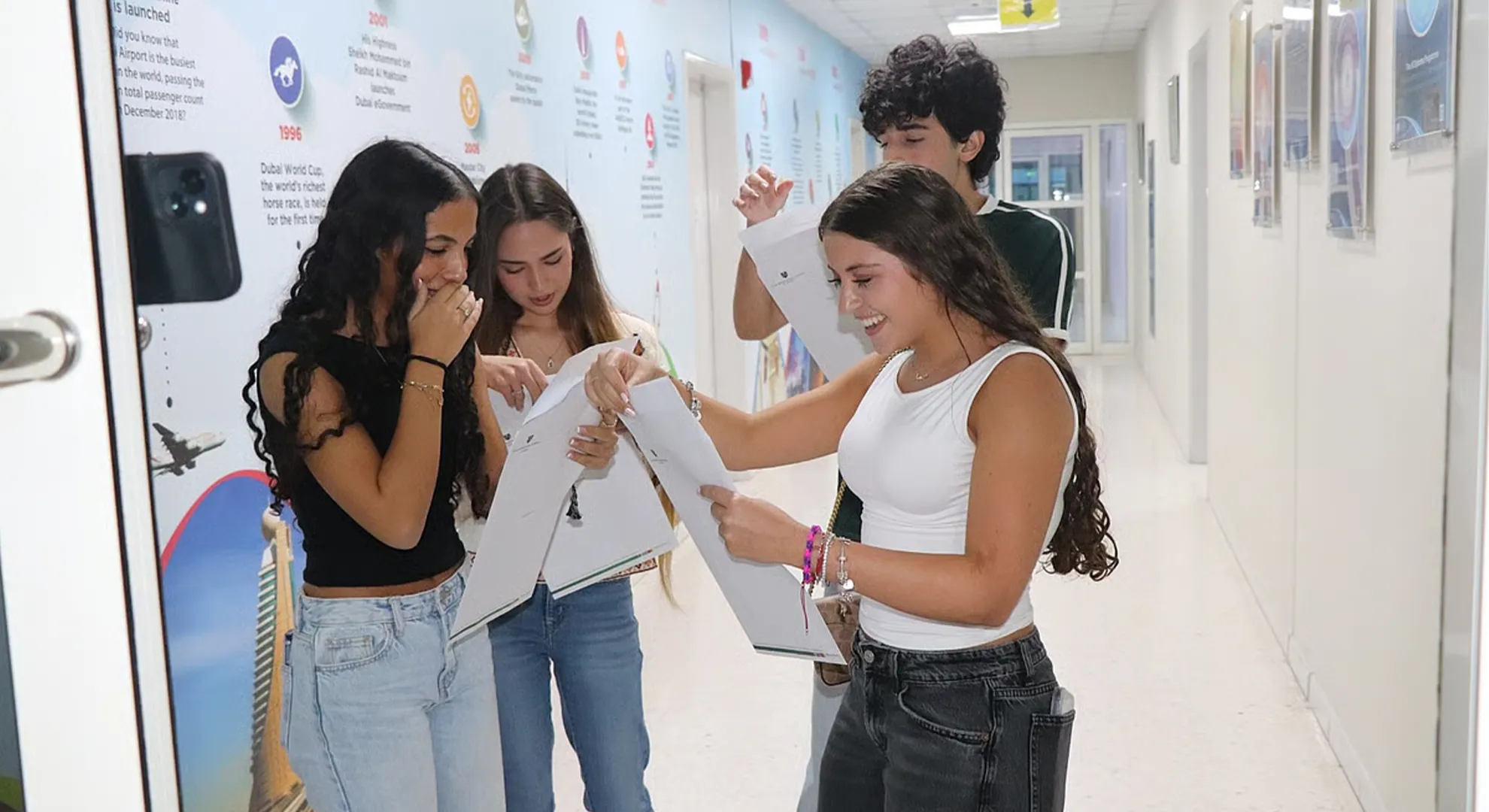
UAE International Baccalaureate students achieved remarkable results this year, outperforming worldwide benchmarks and earning admission opportunities at some of the most respected universities across the globe.
[Editor’s Note: This article appears in INSIDER 18’s Schools and Parents section, a dedicated platform created to help UAE families navigate important education decisions. Through expert perspectives, practical guides, insights from educators, and experiences shared by parents, the section aims to provide valuable information on schools, academic pathways, curricula, and learning communities.]
Thousands of students across the United Arab Emirates reached a major academic milestone this week as they received their International Baccalaureate (IB) examination results, bringing an end to a secondary school experience shaped by unprecedented challenges and uncertainty. For the UAE’s IB Class of 2026, the journey was far from typical, with students facing disruptions that tested their adaptability, determination, and commitment to their studies.
Many of these students began their secondary education during the height of the Covid-19 pandemic, a period that dramatically changed how schools operated around the world. Classrooms moved online, learning methods were transformed, and students had to adjust to new academic environments while managing the personal and social challenges caused by the global health crisis.
As they progressed through their final years of school, another major challenge emerged. Regional developments in the Middle East resulted in the cancellation of final IB examinations in several locations, creating additional uncertainty for students preparing for one of the most important assessments of their academic careers. Despite these obstacles, UAE students demonstrated remarkable resilience and continued to achieve outstanding academic outcomes.
The latest results highlight the strength of the UAE’s IB community, with students recording performances that exceeded international averages. Schools across the country celebrated strong achievements, with graduates earning results that reflect their dedication, the support of teachers and families, and the ability of educational institutions to adapt during challenging circumstances.
Figures published by the International Baccalaureate Organisation (IBO) show that 3,278 students in the UAE completed the Diploma Programme (DP) this year, achieving an impressive average score of 34.5 points. This performance was significantly higher than the global average of 30.88 points, placing UAE students among the strongest-performing IB cohorts worldwide.
The country’s overall IB Diploma pass rate reached 98.32 per cent, demonstrating the consistent academic performance of students across UAE schools. In addition, 428 students achieved scores of 40 points or above, a level of achievement often associated with applications to highly selective universities around the world.
A score above 40 points in the IB Diploma Programme is considered a significant academic accomplishment because it reflects strong performance across multiple areas, including coursework, examinations, research assignments, and extracurricular requirements. Students achieving these results are often competitive candidates for admission to leading institutions in the United States, United Kingdom, Europe, and other international education hubs.
The success of UAE students also highlights the growing reputation of the country’s international education sector. Over the years, the UAE has developed a diverse academic environment with schools offering a wide range of curricula, including the International Baccalaureate programme. The IB system’s emphasis on critical thinking, independent research, creativity, and global awareness has made it an increasingly popular choice among families seeking internationally recognised qualifications.
Educators have also pointed to the dedication shown by students during a period when traditional learning experiences were repeatedly interrupted. From adapting to remote learning during the pandemic to managing uncertainty surrounding examinations, students had to develop skills beyond academics, including flexibility, problem-solving, and perseverance.
The strong results are also a reflection of the efforts made by schools to support students through changing circumstances. Teachers and school leaders played a key role in maintaining academic standards, providing guidance, and ensuring that students remained prepared despite disruptions. Many institutions implemented additional support systems, personalised learning approaches, and wellbeing initiatives to help students navigate the challenges of their final school years.
Parents also played an important role throughout this journey, providing encouragement and stability as students faced academic pressure and uncertainty. The achievements of the Class of 2026 represent not only individual success but also the combined efforts of families, educators, and school communities across the UAE.
Globally, the IB programme continued to grow, with more than 209,600 students receiving results for the Diploma Programme and Career-related Programme (CP) this year. This represents a 3.7 per cent increase in candidates compared with 2025, reflecting the continued demand for internationally recognised education pathways.
The performance of UAE students stands out within this global picture, showing how the country’s IB learners have continued to excel despite facing circumstances unlike previous graduating classes. Their achievements demonstrate that academic success can be maintained even during periods of uncertainty when students, teachers, and communities work together.
For many graduates, these results mark the beginning of a new chapter as they prepare to join universities around the world. With offers from leading institutions and opportunities to pursue a wide range of academic fields, the UAE’s IB Class of 2026 is moving forward with confidence after completing a challenging but rewarding educational journey.
Their story represents more than examination scores. It reflects resilience, adaptability, and the ability to overcome disruption while continuing to aim for excellence. As these students transition into higher education, their achievements serve as an example of how determination and strong support systems can help young people succeed in an ever-changing world.
A graduating class defined by resilience
This year’s International Baccalaureate results hold special importance because students completed their final assessment process under the IB’s Non-Exam Contingency Measure (NECM). The alternative assessment approach was introduced after traditional final examinations were cancelled in the Middle East due to regional circumstances that made it impossible for students to sit their scheduled exams.
For many students, final examinations are traditionally seen as the defining moment of the IB Diploma Programme, representing the culmination of two years of preparation, revision, and academic effort. However, the cancellation of exams meant that schools and students had to adapt to a different method of evaluation while maintaining the same standards expected from the internationally recognised qualification.
Under the NECM system, students were assessed through a comprehensive collection of academic evidence built throughout their IB journey. Instead of relying on final written examinations alone, grades were calculated using a combination of coursework, internal assessments, teacher evaluations, and assignments that had undergone external moderation by IB examiners.
This approach allowed universities and education authorities to continue receiving a reliable measure of student achievement while recognising the work completed by learners throughout the Diploma Programme. The assessment process considered students’ consistent academic performance over an extended period rather than focusing on a single examination period.
Although the method of assessment changed, educators emphasised that the level of academic challenge and expectations associated with the IB Diploma remained the same. Students were still required to meet the programme’s demanding requirements and demonstrate the skills that form the foundation of an IB education.
The International Baccalaureate curriculum is designed to develop more than examination knowledge. It places strong importance on critical analysis, independent research, problem-solving, communication skills, and the ability to apply knowledge across different subjects. Throughout the programme, students complete a range of academic tasks that test their ability to think independently and engage deeply with complex ideas.
Teachers and school leaders highlighted that students completing the programme through the contingency process were still expected to show the same level of commitment, discipline, and intellectual curiosity as previous IB cohorts. The absence of traditional exams did not reduce the academic standards required to successfully complete the qualification.
For the UAE’s Class of 2026, the experience was particularly unique because these students faced significant disruption at both the beginning and the conclusion of their secondary education. Many started their high school years during the Covid-19 pandemic, when schools around the world were adapting to online learning, changing classroom environments, and new approaches to education.
Years later, as they prepared to complete their final stage of school, they encountered another unexpected challenge with the cancellation of examinations. Navigating these two major disruptions required flexibility, patience, and resilience from students, teachers, and families alike.
Despite these circumstances, the strong results achieved by UAE IB students demonstrate their ability to adapt and succeed in uncertain conditions. Their performance reflects the effectiveness of continuous assessment methods and highlights the value of evaluating students through a broader understanding of their academic progress.
For parents, one of the most important outcomes of this year’s results is the reassurance that universities continue to recognise IB qualifications awarded through the NECM process. Higher education institutions around the world have continued to accept these results, acknowledging that the grades are supported by detailed academic evidence collected over the full two-year Diploma Programme.
The recognition of these qualifications provides confidence for students preparing to begin university studies in different countries. Rather than being judged solely on one examination period, graduates have been assessed based on sustained effort, research projects, coursework achievements, and overall academic development.
The experience of the Class of 2026 may also influence discussions about the future of education assessment. Their results demonstrate how alternative evaluation methods can maintain academic credibility when unexpected situations affect traditional examination systems.
For many graduates, this year’s IB journey will be remembered not only for the challenges they faced but also for how they responded to them. Their ability to continue working toward academic goals despite uncertainty reflects the qualities that the IB programme aims to develop in students.
As universities welcome the latest group of IB graduates, the achievements of the UAE’s Class of 2026 serve as a reminder that academic success is built through consistent effort, adaptability, and determination. Their results represent years of learning and commitment, proving that even during extraordinary circumstances, students can achieve exceptional outcomes.
UAE schools celebrate exceptional IB achievements
Schools across the United Arab Emirates have recorded another year of remarkable International Baccalaureate results, with students delivering outstanding performances and achieving scores that place them among the strongest IB candidates internationally. Several institutions reported exceptional academic outcomes, including students who reached the highest possible IB Diploma score of 45 points.
The latest results highlight the continued strength of the UAE’s international education sector, with schools across the country celebrating high average scores, impressive pass rates, and successful university pathways for graduates. Despite the unusual circumstances surrounding this year’s assessment process, students demonstrated strong academic ability, commitment, and resilience.
Among the leading performers was Jumeirah English Speaking School (JESS), which achieved an impressive average Diploma Programme score of 38 points. The school reported that almost all of its IB students performed strongly, with 99 per cent achieving scores above 30 points. In addition, more than one-third of students secured results exceeding 40 points, reflecting a high level of academic excellence across the graduating cohort.
North London Collegiate School Dubai also delivered outstanding results, recording an average IB Diploma score of 38 points. The school reported that a significant majority of students achieved scores above 35 points, while 37 per cent of candidates earned results above the 40-point mark. These achievements demonstrate the strong academic preparation and support provided to students throughout the two-year IB programme.
Schools within the GEMS Education network also celebrated strong performances. GEMS Wellington International School achieved an average Diploma Programme score of 37 points, reflecting another successful year for the institution’s IB students. Meanwhile, Nord Anglia International School Dubai reported an average score of 37.1 points, alongside a perfect pass rate for its graduating students.
A number of other UAE schools also announced impressive results, demonstrating the broad success of IB education across the country. These included:
Sunmarke School, which achieved an average score of 36.4 points and a 100 per cent pass rate.
Dubai International Academy Emirates Hills, with an average score of 36.3 points and a complete pass rate among candidates.
Ambassador International Academy, which recorded an average score of 36.31 points alongside a 100 per cent pass rate.
Aspen Heights British School Abu Dhabi, where students achieved an average of 36 points and all candidates successfully completed the programme.
Deira International School, which achieved an average Diploma score of 35.7 points with a perfect pass rate.
Swiss International Scientific School Dubai, which reported an average score of 35.6 points and a 100 per cent pass rate.
Across the UAE, major education groups reported consistently strong outcomes, with many schools achieving pass rates close to 100 per cent or reaching a complete success rate among their IB Diploma candidates. These results underline the effectiveness of the country’s international school network and the ability of schools to maintain academic standards during a challenging year.
Large education providers, including GEMS Education, Innoventures Education, Nord Anglia Education, Taaleem, and other school groups, highlighted the dedication of students and teachers in achieving these results. Schools credited the success to a combination of academic preparation, personalised support, experienced educators, and strong partnerships between students, families, and school communities.
Innoventures Education, which operates several international schools including Dubai International Academy campuses and Raffles World Academy, reported particularly strong results from its IB students. Across its schools, 311 Diploma Programme candidates achieved a combined average score of 35.8 points.
The group also celebrated exceptional individual achievements, with four students earning the maximum possible IB Diploma score of 45 points. In addition to their academic accomplishments, graduates from Innoventures Education secured more than USD 15 million in university scholarships, reflecting the strong global opportunities available to UAE IB students.
The success of these students highlights the growing recognition of UAE schools as providers of internationally competitive education. IB graduates from the country continue to receive offers from leading universities worldwide, supported by their strong academic records, research skills, and ability to demonstrate independent thinking.
Educators noted that this year’s achievements were particularly meaningful because students completed their IB journey during a period marked by significant disruption. Their results demonstrate not only academic ability but also adaptability and determination in responding to unexpected challenges.
The strong performance of UAE schools in the 2026 IB results reinforces the country’s position as a leading destination for international education. As graduates prepare to move on to universities around the world, their achievements represent the combined efforts of students, teachers, families, and schools working together to deliver outstanding educational outcomes.
Career-focused IB pathways deliver outstanding achievements
Alongside the impressive results achieved by Diploma Programme students, learners pursuing the International Baccalaureate Career-related Programme (CP) also celebrated notable success this year. The CP, which combines IB learning with career-focused qualifications such as BTEC Level 3 programmes, continues to gain popularity among students seeking a more practical and skills-based route toward higher education and future careers.
The latest results demonstrate that career-oriented education pathways are becoming an increasingly important part of the UAE’s diverse education landscape. The strong performance of CP students highlights that academic success can be achieved through different routes, with each pathway offering students the opportunity to develop knowledge, professional skills, and preparation for university or employment.
Several UAE schools reported exceptional outcomes among their CP candidates, with many achieving complete pass rates. Institutions including Jumeirah English Speaking School, Raffles World Academy, Dubai International Academy Emirates Hills, British International School Abu Dhabi, Deira International School, and Bloom World Academy announced that 100 per cent of their CP students successfully completed the programme.
Individual school performances also reflected the high level of achievement among CP learners. Jumeirah English Speaking School recorded particularly strong results, with 92 per cent of submitted qualifications receiving Distinction grades. Raffles World Academy reported that 81 per cent of its students achieved Distinction-level results, while Swiss International Scientific School announced that 95 per cent of its CP candidates earned Distinctions.
These results underline the growing acceptance of alternative academic routes among families in the UAE. While the traditional IB Diploma Programme remains a popular choice for students targeting competitive universities, the Career-related Programme offers another valuable option for learners who want to combine academic study with professional skills and real-world experience.
Education leaders have increasingly highlighted the importance of recognising different definitions of success. University admission and career readiness are not limited to one educational pathway, and programmes such as the IB Career-related Programme provide students with opportunities to build confidence, practical abilities, and specialised knowledge relevant to their future goals.
UAE strengthens its position as a leading IB destination
The latest IB results further reinforce the UAE’s reputation as one of the strongest International Baccalaureate markets globally. Schools across the country continue to achieve average Diploma scores that exceed international benchmarks, reflecting the quality of teaching, student commitment, and support provided by educational communities.
The IB Diploma Programme is designed for students between the ages of 16 and 19 and is recognised by universities worldwide. The two-year programme combines six subject areas with a central core that encourages students to develop independent thinking, research abilities, and awareness beyond traditional classroom learning.
A key part of the programme is the Extended Essay, which requires students to complete an independent research project on a topic of their choice. Through this process, learners develop academic writing, investigation, and analytical skills that prepare them for university-level study.
The Theory of Knowledge (TOK) component encourages students to explore how knowledge is created, evaluated, and applied. Meanwhile, the Creativity, Activity, Service (CAS) element promotes personal development through creative activities, physical engagement, and community involvement.
Together, these components aim to create well-rounded graduates who are not only academically capable but also equipped with critical thinking, communication skills, and a broader understanding of the world.
Richard Drew, Chairperson of the UAE IB Association and Principal of Jumeira Baccalaureate School, praised the achievements of this year’s graduating students, describing their journey as one marked by resilience and determination.
He highlighted that the Class of 2026 completed their studies during a particularly challenging period, facing significant disruption while maintaining their commitment to learning and personal growth. According to Drew, students demonstrated many of the qualities at the heart of an IB education, including curiosity, adaptability, critical thinking, and the ability to respond positively to difficult circumstances.
He also noted that UAE IB schools were supported through the International Baccalaureate’s Non-Exam Contingency Measure, which was implemented after regional disruptions affected scheduled examinations. The alternative assessment process ensured that students could receive internationally recognised IB qualifications based on comprehensive academic evidence collected throughout their programme.
Drew emphasised that the grades awarded through this process remain official IB results and continue to meet the organisation’s strict quality standards. The approach allowed students to progress with confidence toward their next stage of education while ensuring that their achievements were accurately recognised.
Top-scoring students reveal the habits behind their achievements
For students who achieved the highest possible IB Diploma score of 45 points, success was not simply the result of aiming for a perfect grade. Many top performers credited their achievements to consistency, effective time management, genuine interest in learning, and maintaining discipline throughout the demanding two-year programme.
Samarth Singh Juneja from GEMS Modern Academy, who achieved the maximum score, explained that while earning 45 points was a personal ambition, it was not the only focus during his final year. He entered Grade 12 with a clear target but understood that reaching that goal required more than simply chasing marks.
For him, the most important shift was moving away from focusing only on grades and instead concentrating on developing a deeper understanding of each subject. By prioritising learning and building strong conceptual knowledge, he found that academic results naturally followed.
He explained that when students focus too heavily on the number of marks a particular topic may contribute, they can lose sight of the purpose of education. Developing genuine understanding, asking questions, and engaging with ideas proved to be a more effective approach to achieving strong outcomes.
Similarly, Nour Bilal Al Husseini from Dubai International Academy Al Barsha described the final stages of the IB programme as a period that required significant dedication and personal commitment. Like many IB students, she spent long hours completing Internal Assessments and managing the extensive coursework requirements that form a major part of the programme.
She recalled working late into the night during particularly demanding periods, sometimes continuing until the early hours of the morning to complete assignments and ensure the quality of her work. The workload required patience, organisation, and the ability to balance multiple academic responsibilities.
When final examinations were cancelled across the GCC region, she experienced mixed emotions. While the decision removed the pressure of sitting traditional exams, she also felt disappointed because she had invested significant time and effort preparing for that final stage.
However, she ultimately recognised that the cancellation did not change the value of the work completed throughout the programme. The dedication, preparation, and commitment shown over two years continued to be reflected in her final results.
The experiences of top-performing students across the UAE demonstrate that success in the IB programme comes from more than achieving high scores. It requires perseverance, curiosity, self-discipline, and a willingness to embrace challenges. Their achievements reflect not only individual effort but also the support of teachers, families, and schools that helped them navigate one of the most demanding educational journeys.
What the latest IB results mean for UAE families
For students and parents, International Baccalaureate results represent far more than a final academic score. These outcomes can play a major role in shaping future opportunities, influencing university applications, scholarship prospects, and access to competitive fields such as medicine, engineering, finance, business, and law.
A strong IB Diploma result can strengthen a student’s application to leading universities around the world, where admissions teams often consider academic performance as one of several important factors. For many families, achieving a high score represents the culmination of years of effort, preparation, and commitment throughout the demanding two-year programme.
Traditionally, IB Diploma scores above 35 points are viewed as highly competitive by many international universities, demonstrating strong academic performance across multiple subjects and programme requirements. Students achieving scores above 40 points are generally considered to be among the top-performing IB candidates worldwide, placing them in a particularly strong position when applying to selective institutions.
This year, a large number of UAE students achieved results within these high-performance ranges, with many schools reporting impressive numbers of graduates reaching or exceeding these benchmarks. The achievements reflect the continued academic strength of IB schools across the country and the ability of students to perform at an international level.
The latest results also reinforce the UAE’s growing reputation as a major centre for International Baccalaureate education. Over recent years, the country has developed one of the world’s largest and most diverse IB communities, with schools offering the programme to families seeking a globally recognised qualification.
For parents, one of the key advantages of choosing the IB pathway is its worldwide recognition. The qualification is accepted by universities across regions including North America, Europe, Asia, and Australia, giving graduates the flexibility to pursue higher education in a wide range of countries.
Beyond university admissions, many families value the IB curriculum because it focuses on developing skills that extend beyond traditional examinations. The programme encourages independent learning, critical thinking, research abilities, communication, and problem-solving — qualities that are increasingly important in higher education and professional environments.
The strong performance of UAE students in this year’s results provides reassurance for families considering the IB route and highlights the opportunities available through the country’s international education system. For graduates moving on to universities around the world, these achievements represent not only academic success but also the resilience and determination developed throughout their educational journey.