
The UAE’s midday work prohibition carries strict consequences, with offenders potentially facing fines up to Dh50,000, suspension of business licences, and possible legal proceedings if regulations are breached.
UAE Midday Work Ban: Violators Could Face Dh50,000 Penalties, License Suspension and Legal Action.
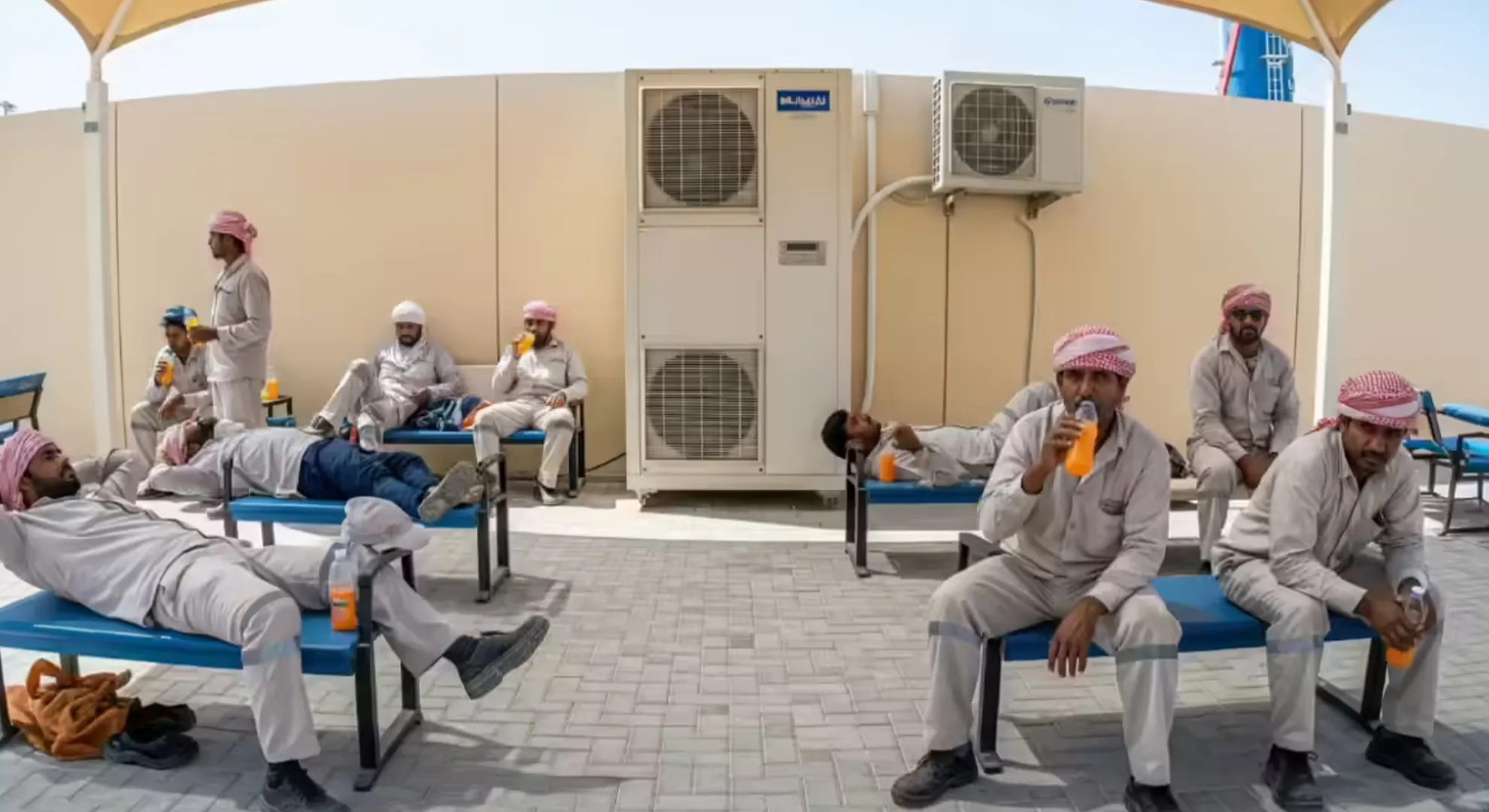
The Ministry of Human Resources and Emiratisation (MoHRE) stated that only essential tasks that cannot be halted are exempt, but employers are still required to comply with all heat safety regulations.
UAE Authorities Intensify Enforcement of Midday Work Ban to Protect Workers from Extreme Heat
The Ministry of Human Resources and Emiratisation (MoHRE) has reaffirmed its strict approach toward any violations linked to worker health and safety during the UAE’s mandatory midday work restriction. The ministry has emphasized that compliance with heat protection regulations is not optional, and companies that fail to adhere to the rules will face significant financial and administrative penalties.
According to MoHRE, businesses found violating the midday work ban can be fined up to Dh5,000 for each individual worker involved in the breach. This per-worker penalty structure is designed to ensure that employers take full responsibility for safeguarding every employee under their supervision, particularly during periods of extreme heat.
In situations where violations affect multiple workers, the total financial penalty can escalate substantially. The ministry has stated that administrative fines may reach as high as Dh50,000 depending on the scale of non-compliance. This tiered penalty system reflects the seriousness with which authorities view repeated or widespread breaches of occupational safety rules.
Stronger Administrative and Legal Consequences for Repeat Violations
Beyond monetary fines, MoHRE has outlined additional enforcement measures that may be applied depending on the severity, frequency, and nature of violations. These measures are intended to reinforce compliance and deter negligence in workplaces exposed to harsh summer conditions.
One of the key administrative actions includes the suspension of a company’s official file with the ministry. Such a suspension can temporarily restrict a business from carrying out certain administrative functions, including labour-related transactions and approvals. This can significantly disrupt operations, particularly for companies heavily dependent on manpower.
In more serious cases, establishments may also face a downgrade in their classification within the MoHRE labour market system. This classification framework plays an important role in determining a company’s regulatory standing and access to certain benefits or streamlined processes. A lower classification can affect business reputation and operational efficiency, potentially influencing future recruitment and compliance procedures.
Additionally, if violations result in worker injuries or if companies fail to meet their legal obligations under labour law, cases may be escalated to public prosecution. This step introduces potential legal proceedings beyond administrative penalties and underscores the importance of strict adherence to occupational safety standards.
MoHRE has made it clear that enforcement is not limited to financial penalties alone. The broader objective is to ensure that employers maintain safe working environments and take proactive steps to prevent heat-related illnesses and injuries during the hottest months of the year.
Occupational Heat Stress Prevention Policy in Effect
These enforcement measures are being implemented as part of the UAE’s broader Occupational Heat Stress Prevention Policy, which is currently in its 22nd consecutive year. The long-running initiative reflects the country’s sustained commitment to safeguarding outdoor workers during the peak summer period.
Under this policy, outdoor work under direct sunlight and in open areas is strictly prohibited during specific hours each day. The restricted timeframe runs from 12:30pm to 3:00pm, a period typically associated with the highest levels of heat stress risk. The rule is enforced annually from June 15 to September 15, coinciding with the most intense summer temperatures in the region.
The primary aim of the policy is to reduce exposure to extreme heat conditions that can lead to dehydration, heat exhaustion, heat stroke, and other serious health complications. By limiting work during peak heat hours, authorities aim to significantly lower the risk of accidents and medical emergencies among outdoor labourers.
Over the years, the initiative has become a key component of the UAE’s labour protection framework, reflecting ongoing efforts to balance economic activity with worker welfare and occupational safety standards.
Focus on Worker Welfare and Preventive Measures
MoHRE has consistently highlighted that the midday break policy is not merely a regulatory requirement but a preventive health measure designed to protect lives. Employers are expected to ensure that workers are provided with adequate rest periods, shaded areas, and access to drinking water and cooling facilities during working hours outside the restricted period.
Companies are also encouraged to adopt internal safety protocols that go beyond minimum legal requirements. These may include adjusting work schedules, providing heat stress awareness training, and monitoring employees for early signs of heat-related illness.
The ministry has reiterated that safeguarding workers during extreme weather conditions is a shared responsibility between employers, regulatory authorities, and workers themselves. Compliance with safety measures is viewed as essential to maintaining productivity while ensuring human well-being.
Inclusion of Delivery Riders Under Heat Protection Rules
In a separate clarification, MoHRE has confirmed that delivery riders are also covered under the midday work ban and related heat protection measures. Given the nature of their work, which often involves continuous movement in outdoor environments, specific safeguards have been introduced to ensure their safety during peak heat hours.
Delivery companies are not permitted to require riders to operate during the restricted midday period if they choose not to do so. This ensures that workers have the autonomy to avoid exposure to extreme heat conditions without fear of penalties or employment consequences.
Furthermore, walking-based delivery operations are explicitly prohibited between 12:30pm and 3:00pm during the enforcement period. This restriction is intended to prevent prolonged exposure to high temperatures, which can be particularly dangerous for individuals engaged in physically demanding outdoor activities.
Delivery platforms and logistics companies are expected to reorganize operations during these hours, relying on alternative scheduling, vehicle-based delivery methods outside restricted zones, or delayed dispatch systems to ensure compliance with regulations.
Continuous Monitoring and Enforcement
MoHRE continues to carry out inspections and monitoring activities throughout the summer months to ensure adherence to the midday work ban. Inspection teams are deployed across various worksites, particularly in construction, landscaping, and other outdoor labour-intensive sectors where the risk of heat exposure is highest.
The ministry has also encouraged workers to report any violations they observe, reinforcing a collaborative approach to enforcement. This reporting mechanism is intended to strengthen oversight and ensure that employers remain accountable for workplace safety standards.
Authorities have emphasized that strict enforcement will continue throughout the implementation period, and that no exemptions apply beyond those officially outlined under labour regulations. While certain essential tasks that cannot be paused may be permitted under controlled conditions, employers are still required to implement all necessary heat protection measures.
Conclusion
The UAE’s midday work ban and broader heat stress prevention framework represent a long-standing commitment to protecting workers from the dangers of extreme summer temperatures. Through a combination of financial penalties, administrative sanctions, and legal accountability, MoHRE aims to ensure that employers fully comply with safety regulations.
By extending protections to all categories of outdoor workers, including delivery riders, and maintaining strict enforcement mechanisms, the policy continues to serve as a key pillar of occupational health and safety in the country. As temperatures rise each summer, authorities remain focused on ensuring that worker welfare remains a top priority across all sectors of the economy.
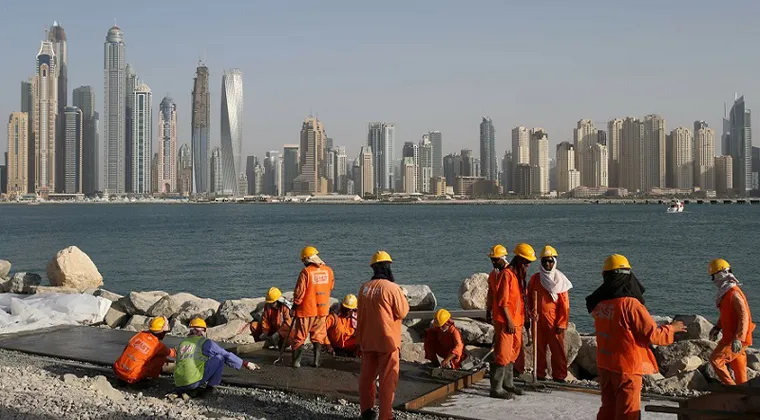

UAE Midday Work Ban: Who Is Exempt and What Rules Still Apply
The Ministry of Human Resources and Emiratisation (MoHRE) has clarified the categories of work that are exempt from the UAE’s midday work restriction, explaining that exceptions are narrowly defined and apply only to specific operational and public safety needs. The ministry emphasized that exemptions are not broad or open-ended, but strictly limited to activities that cannot be paused without causing disruption, danger, or significant impact on essential services.
Exemptions Limited to Essential and Uninterruptible Work
According to MoHRE, only work that is technically or operationally impossible to stop during the restricted hours may continue. These exceptions are primarily designed to ensure continuity of critical infrastructure and to prevent emergencies from escalating during the midday work ban period.
This includes tasks that are necessary to prevent hazards or to repair unexpected faults affecting essential utilities. For example, emergency maintenance work involving water supply systems, electricity networks, and telecommunications infrastructure is permitted when immediate action is required to avoid service interruptions or public inconvenience.
Such activities are considered vital because delaying them could lead to widespread disruptions, affecting households, businesses, and public services. As a result, workers involved in these emergency or essential repair operations are allowed to continue working during the restricted midday hours, provided that all safety requirements are strictly observed.
Public Safety and Traffic Management Operations
MoHRE also stated that certain activities related to maintaining public safety and ensuring the smooth flow of traffic fall under the exempted category. These include urgent work needed to manage road safety, repair traffic infrastructure, or address issues that could lead to congestion or hazards on public roads.
In situations where immediate intervention is required to prevent accidents or restore normal traffic movement, such work may continue even during the midday break hours. The objective is to ensure that essential public services remain functional and that any disruptions are resolved quickly to avoid wider safety risks.
Similarly, activities connected to other critical public services may also qualify for exemption if they are essential for maintaining basic community functions. However, these exemptions are strictly tied to necessity and cannot be used for routine or non-urgent work.
Permitted Activities Requiring Official Authorisation
The ministry further clarified that certain categories of work may require permits or approvals from competent authorities due to their potential impact on public life, traffic movement, or essential services. In such cases, exemption from the midday work ban is not automatically granted but is governed by the existing regulatory framework that applies to those specific activities.
This means that if a project or operation already requires official permission due to its nature, scale, or location, it must continue to comply with those permitting conditions while also adhering to broader safety regulations. However, the exemption from midday restrictions applies only where the activity falls within approved and regulated parameters.
Importantly, MoHRE explained that exempted activities under the midday break policy are clearly defined in advance. Employers do not need to obtain a separate approval specifically for continuing such essential work during the restricted hours, as long as the activity fits within the established exemption criteria.
At the same time, this does not remove the obligation to comply with any other applicable rules. If the nature of the work requires permits from other authorities, such requirements must still be fully observed in parallel with labour regulations.
Continued Responsibility for Worker Safety
Even when work is exempt from the midday restriction, employers remain fully responsible for ensuring that occupational health and safety standards are strictly maintained. MoHRE has stressed that exemption from timing restrictions does not mean exemption from safety obligations.
Companies carrying out approved or essential work during the midday hours must take all necessary precautions to protect workers from heat-related risks and other workplace hazards. This includes implementing comprehensive safety measures designed to reduce exposure to extreme weather conditions.
Mandatory Provision of Heat Protection Measures
Employers are required to provide adequate shaded rest areas at work sites. These rest areas must be appropriately sized to accommodate the number of workers present and should be designed to offer effective protection from direct sunlight and high temperatures.
In addition to shaded areas, companies must ensure the availability of sufficient quantities of cold drinking water throughout the working period. Hydration is considered a critical component of heat stress prevention, particularly during the peak summer months when temperatures can rise significantly.
MoHRE also requires employers to supply hydration support materials such as electrolyte solutions and other locally approved rehydration products. These help workers maintain proper fluid balance and reduce the risk of heat exhaustion or dehydration during physically demanding tasks.
Cooling Equipment and First Aid Requirements
To further enhance workplace safety, employers must also provide industrial cooling systems at work sites. These may include electric fans, mechanical ventilation units, or other approved cooling equipment designed to lower ambient temperatures in rest and working areas.
Such measures are particularly important for outdoor environments where natural shade or cooling may be limited. By improving air circulation and reducing heat exposure, these systems help create safer working conditions for employees operating in essential roles during restricted hours.
In addition to cooling measures, companies are required to maintain accessible first-aid supplies on-site. These supplies must be sufficient to handle common heat-related conditions as well as other minor workplace injuries that may occur during operations.
Employers are expected to ensure that first-aid kits are properly stocked, easily accessible, and regularly maintained. In some cases, trained personnel may also be required to provide immediate medical assistance if needed.
Strict Interpretation of Exemption Rules
MoHRE has reiterated that exemptions under the midday work ban are not intended to be interpreted broadly or used as a general exception to labour protections. The list of permissible activities is specific and limited, focusing only on essential services and emergency situations that require uninterrupted operation.
The ministry has also emphasized that companies must not misuse exemption provisions to continue non-essential work during restricted hours. Any misuse or misclassification of work activities may result in enforcement action, including penalties or other administrative measures.
Balancing Essential Services and Worker Welfare
The overarching goal of the exemption framework is to strike a balance between maintaining critical national services and protecting the health and safety of workers. While certain operations must continue to ensure public welfare and infrastructure stability, worker protection remains a central priority.
By clearly defining exemptions and reinforcing safety obligations, the policy aims to ensure that essential work can continue without compromising the well-being of employees exposed to harsh summer conditions.
Conclusion
The UAE’s midday work ban exemptions are carefully structured to allow only essential, unavoidable, and emergency-related activities to proceed during peak heat hours. These include critical infrastructure repairs, public safety operations, and other time-sensitive tasks that cannot be delayed without significant consequences.
At the same time, employers benefiting from these exemptions are still required to comply fully with occupational health and safety standards, including providing shade, hydration, cooling systems, and first-aid support.
Through this dual approach—allowing necessary work to continue while enforcing strict safety measures—the UAE aims to ensure both operational continuity and strong protection for workers during the hottest months of the year.
UAE Midday Work Ban Enforcement: Inspection Systems, Digital Monitoring, and Public Reporting Channels
The Ministry of Human Resources and Emiratisation (MoHRE) has explained that its enforcement teams undergo specialised training to accurately differentiate between work activities that qualify for exemption under the midday break rules and those that fall under routine outdoor labour, which must be suspended during the restricted hours.
This distinction is a key part of ensuring that the midday work ban is applied fairly and consistently across all sectors. Inspectors are instructed to carefully assess the nature of ongoing work at sites, taking into account whether the activity is essential, emergency-related, or linked to critical infrastructure, or whether it is standard outdoor work that should legally cease between 12:30pm and 3:00pm during the summer enforcement period.
Trained Inspection Teams for Accurate On-Site Assessment
MoHRE has developed a structured training programme for its field inspection staff to ensure they are fully equipped to evaluate workplace conditions in real time. These inspectors are trained not only in labour law provisions but also in practical assessment techniques that help them identify the type of work being carried out at any given site.
Their role includes observing operational activities, verifying the nature of tasks being performed, and determining whether the work falls under approved exemption categories. This requires a clear understanding of the midday work ban regulations, as well as knowledge of industries where exceptions may apply, such as emergency maintenance, utility services, or critical public infrastructure operations.
Inspectors are also trained to identify attempts to misclassify or misrepresent non-essential work as exempted activity. This is an important safeguard to ensure that the policy is not misused and that worker protections are maintained across all sectors without exception.
Use of Advanced Digital Monitoring Systems
In addition to physical inspections, MoHRE has strengthened its enforcement framework through the use of advanced digital tools. These technologies are designed to enhance oversight capabilities and improve the ministry’s ability to detect potential violations across the labour market.
Digital monitoring systems may include real-time reporting platforms, data analytics tools, and integrated labour databases that allow authorities to track employment activity patterns. By combining field inspection data with digital insights, the ministry is able to identify inconsistencies or irregularities that may indicate non-compliance with midday work restrictions.
These tools also help streamline the enforcement process by enabling quicker verification of employer records and operational details. In cases where suspected violations are flagged, inspection teams can be deployed more efficiently to investigate the situation on the ground.
The integration of technology into labour inspections reflects a broader effort to modernise enforcement mechanisms and ensure that regulations are applied consistently across different regions and industries.
Determining Compliance and Applying Legal Measures
When inspection teams arrive at a worksite, they evaluate whether the ongoing activities meet the criteria for exemption under the midday break policy. If the work is found to be genuinely essential or falls within approved categories, it may be allowed to continue under strict safety conditions.
However, if inspectors determine that the activity does not qualify for exemption and should have been suspended during the restricted hours, the ministry takes immediate action in accordance with applicable labour laws and regulations.
These actions may include administrative penalties, warnings, or other enforcement measures depending on the severity and nature of the violation. The objective is to ensure that all employers comply fully with the midday work ban and that worker safety is not compromised.
MoHRE has emphasised that enforcement decisions are based on clear regulatory guidelines and are applied uniformly across all sectors. This helps maintain fairness in implementation and ensures that companies operating in similar conditions are subject to the same standards.
Ensuring Fairness and Preventing Misuse of Exemptions
A key focus of the inspection system is to prevent misuse of exemption provisions. While certain categories of work are permitted to continue during the midday break, these exceptions are strictly limited to essential and unavoidable tasks.
Inspectors are therefore trained to distinguish between legitimate emergency or infrastructure-related work and routine commercial or construction activities that do not meet exemption criteria. This helps ensure that the policy is not exploited to extend working hours unlawfully during restricted periods.
By maintaining strict oversight, MoHRE aims to protect workers from exposure to extreme heat while also ensuring that essential services continue uninterrupted where genuinely required.
Public Participation in Reporting Violations
In addition to official inspections and digital monitoring, MoHRE has encouraged members of the public to play an active role in supporting enforcement efforts. Individuals are provided with multiple channels through which they can report suspected violations of the midday work ban.
The ministry has made its call centre available at 600590000, allowing residents and workers to directly report any concerns or observed breaches. This telephone-based reporting system is designed to provide a quick and accessible method for raising issues related to workplace safety and compliance.
In addition to the call centre, complaints and reports can also be submitted through MoHRE’s official smart application. This mobile platform allows users to file reports digitally, making it easier to provide details such as location, type of violation, and other relevant information.
The ministry’s official website also serves as another channel for submitting complaints. By offering multiple reporting options, MoHRE ensures that individuals can choose the most convenient method for communicating concerns.
Strengthening Community Involvement in Labour Protection
The inclusion of public reporting mechanisms reflects a broader strategy to involve the community in labour law enforcement. By enabling workers, residents, and observers to report violations, the ministry enhances its ability to detect non-compliance across a wide range of locations and industries.
This collaborative approach helps supplement official inspection efforts and ensures that potential violations are identified more quickly. It also reinforces the message that workplace safety is a shared responsibility between employers, employees, and regulatory authorities.
Continuous Enforcement During the Summer Period
MoHRE has confirmed that inspection and monitoring activities are carried out consistently throughout the midday work ban enforcement period, which typically runs during the peak summer months. During this time, enforcement teams actively monitor workplaces across various sectors, particularly those involving outdoor labour.
The combination of trained inspectors, digital monitoring systems, and public reporting channels creates a comprehensive enforcement framework designed to ensure full compliance with the regulations.
Conclusion
The UAE’s enforcement system for the midday work ban relies on a multi-layered approach that includes trained inspection teams, advanced digital monitoring tools, and public participation mechanisms. Together, these elements help ensure that only genuinely exempted work continues during restricted hours while routine outdoor labour is suspended.
By combining on-the-ground inspections with technology-driven oversight and community reporting, MoHRE aims to maintain strong compliance with labour regulations and uphold worker safety standards during the most challenging summer conditions.