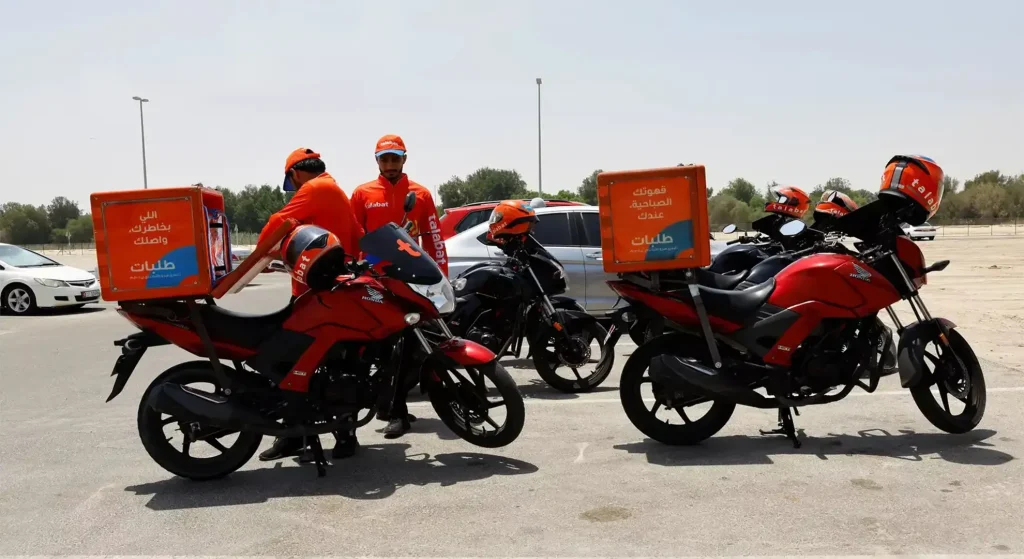
The UAE Ministry has confirmed that delivery riders are not allowed to work during the mandated midday break period, ensuring their protection from extreme heat conditions and reinforcing labour safety regulations.
UAE: Delivery Riders Protected from Working During Midday Break, Ministry Confirms.
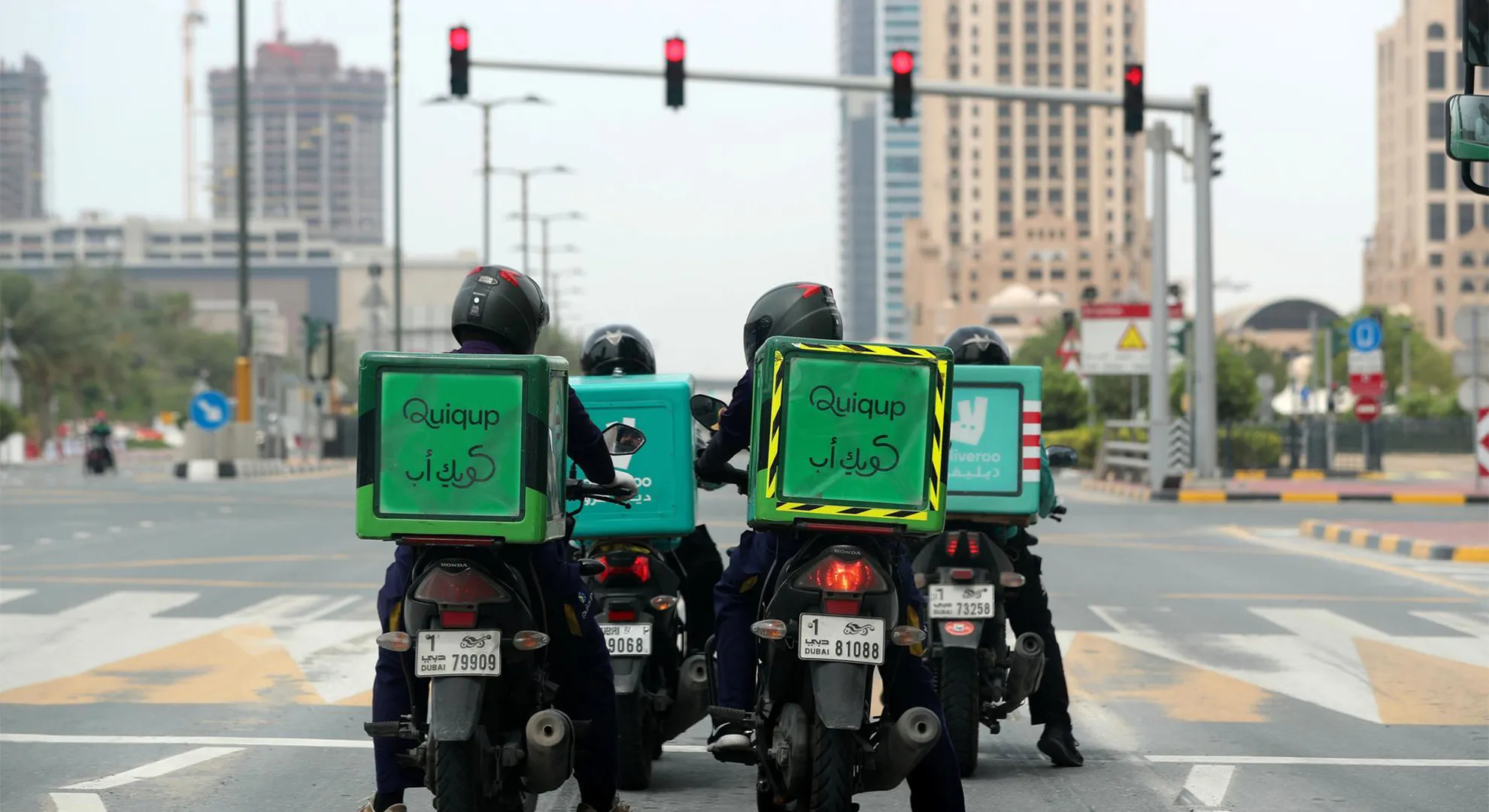
Delivery companies must inform riders about where designated rest areas are located and provide them with appropriate maps, directions, and other guidance so they can easily reach these facilities.
UAE Reinforces Heat Safety Rules for Delivery Riders During Midday Break
The Ministry of Human Resources and Emiratisation (Mohre) has clarified that delivery riders in the UAE are not required to continue working during the country’s mandatory midday break hours if they choose not to do so. The ministry emphasised that workers in the delivery sector are protected under national labour regulations designed to safeguard them from extreme summer temperatures.
According to the ministry, delivery personnel are covered by the Occupational Heat Stress Prevention Policy, which is implemented annually during the hottest months of the year. The policy is in effect from June 15 until September 15 and is aimed at reducing exposure to direct sunlight and high heat conditions during peak afternoon hours.
Under the rules, all work carried out on foot or in open areas is strictly prohibited between 12.30pm and 3pm each day. This restriction applies across the country and is part of broader efforts to ensure worker safety during the summer season, particularly for those performing outdoor duties such as deliveries.
Mohre also highlighted that delivery platforms and service providers are required to regulate workloads during the restricted period. Companies must ensure that riders are not overloaded with assignments during these hours, with a limit placed on the number of deliveries that can be allocated.
Specifically, the ministry stated that riders should not be assigned more than three delivery orders within the restricted timeframe. In addition, the total duration for completing these deliveries must not exceed 60 minutes, helping to prevent extended exposure to heat while still maintaining essential service operations.
These guidelines are intended to balance worker protection with the continued functioning of delivery services, which remain in high demand across the UAE, especially during summer months when reliance on home delivery increases.
The clarification comes as the UAE continues its long-standing midday work ban, now observed for the 22nd consecutive year. This nationwide initiative prohibits outdoor work under direct sunlight during the same daily window, reinforcing the country’s commitment to occupational safety and health standards.
Mohre stated that delivery workers receive specific protections under the Heat Stress Prevention framework, which has been adapted to suit the operational nature of delivery services. The policy recognises the unique challenges faced by riders who frequently move between locations and may be exposed to outdoor conditions for extended periods.
To support compliance, the ministry has worked with both government entities and private sector partners to introduce a range of safety measures. These include operational adjustments, monitoring systems, and awareness initiatives aimed at ensuring that delivery workers are protected during peak heat hours.
In addition, delivery companies are expected to play an active role in informing riders about safety procedures. Platforms are required to ensure that workers are aware of designated rest areas and have access to maps and guidance to reach these locations when needed. These facilities are intended to provide shelter, rest, and hydration during the midday break period.
Mohre reiterated that these measures are part of a wider national framework focused on protecting labour rights and improving working conditions across various sectors. The ministry stressed that worker safety remains a priority, particularly during the summer season when temperatures can reach extreme levels.
By enforcing structured limits on outdoor activity and ensuring access to rest facilities, the UAE aims to reduce heat-related risks while maintaining efficient service delivery systems. The approach reflects ongoing efforts to balance economic activity with the wellbeing of workers across the country.
Officials say the policy continues to evolve in response to operational needs and feedback from both employers and workers, ensuring that protections remain effective and practical in real-world conditions.
UAE Expands Cooling and Rest Facilities for Delivery Riders During Summer Heat
As part of ongoing efforts to protect outdoor workers during the peak summer season, authorities in the UAE have significantly expanded the network of rest facilities available to delivery riders across the country. These measures are designed to reduce heat exposure, improve working conditions, and support the growing demand for delivery services.
Across the UAE, more than 12,000 air-conditioned rest stations have been made available for delivery workers. These facilities have been developed through cooperation between government bodies and private-sector partners, reflecting a shared responsibility in ensuring occupational safety during extreme weather conditions.
In addition to the nationwide network, Dubai’s Roads and Transport Authority (RTA) has introduced 23 temporary rest zones specifically for delivery riders. These locations are distributed across metro and bus stations and are accessible during the midday break period. The number of such rest areas represents a 53 per cent increase compared to 2025, highlighting the emirate’s response to the continued growth of the delivery sector.
Officials said the expansion is intended not only to improve rider wellbeing but also to enhance road safety by reducing fatigue and heat-related stress during peak hours. By providing more accessible rest points, authorities aim to ensure that delivery personnel can pause work safely during the hottest part of the day.
To make these facilities easier to locate, delivery workers are able to access digital maps through their devices, showing the nearest available rest stations. Delivery platforms are required to ensure that riders are fully informed about these locations and are equipped with the necessary navigation tools and guidance to reach them without difficulty.
The guidelines also state that rest stations must be properly equipped to meet the needs of workers during peak heat conditions. This includes the provision of adequate seating, sufficient supplies of cold drinking water, and basic amenities that allow riders to recover comfortably during their break period.
The Ministry of Human Resources and Emiratisation (Mohre) emphasised that delivery companies have a clear responsibility to uphold occupational health and safety standards throughout the summer months. This includes ensuring that workers are provided with essential resources such as hydration supplies, cooling equipment, and other protective measures that help reduce the risk of heat stress.
In addition to providing physical facilities, companies are also expected to manage operational planning carefully. Work schedules and delivery assignments must be organised in a way that limits exposure to high temperatures, ensures adequate rest periods, and fully complies with national labour regulations and safety requirements.
Authorities stressed that these responsibilities are an important part of maintaining a safe working environment for delivery riders, who often spend long hours outdoors moving between different locations. Proper scheduling and resource management are seen as key factors in reducing health risks during the summer season.
Together, these measures form part of a wider national framework aimed at protecting outdoor workers while maintaining the efficiency of essential services. By combining infrastructure support, digital tools, and regulatory oversight, the UAE continues to strengthen its approach to occupational safety in high-temperature conditions.
Officials say the ongoing expansion of rest facilities and safety measures reflects the country’s commitment to balancing economic activity with worker wellbeing, particularly in sectors that operate heavily in outdoor environments.
UAE Strengthens Awareness, Monitoring, and Reporting Systems for Delivery Rider Safety
Authorities in the UAE have emphasized that delivery platforms are required to take an active role in keeping riders informed about heat safety regulations throughout the summer season. Companies must regularly communicate updates and reminders to workers regarding the implementation period of the midday break, the restricted working hours, and the preventive measures designed to reduce heat-related risks.
These communications are intended to ensure that riders clearly understand when outdoor work is prohibited and what safety steps they should follow during periods of extreme temperatures. By maintaining continuous awareness, officials aim to reduce confusion and improve compliance across the delivery sector.
The Ministry of Human Resources and Emiratisation (Mohre) stated that these requirements form part of a broader national strategy that seeks to balance worker protection with the operational needs of essential industries. Delivery services, which play a vital role in daily commerce and logistics, must continue functioning efficiently while still adhering to strict occupational health and safety standards.
According to the ministry, the framework reflects the UAE’s ongoing commitment to safeguarding workers while maintaining productivity in key sectors. This includes ensuring that employees are not exposed to unnecessary risks during the hottest parts of the day and that companies take responsibility for implementing protective systems.
To ensure compliance, Mohre operates a multi-layered monitoring system that combines modern digital technology with on-the-ground inspections. Smart tools are used to track adherence to regulations, while inspection teams conduct field visits to verify that companies are following the required safety procedures.
These inspections are complemented by awareness campaigns that highlight the dangers of heat stress and the importance of preventive measures. The campaigns are designed to educate both employers and workers about safe practices during high-temperature conditions, reinforcing the importance of following official guidelines.
Authorities explained that this integrated approach allows the ministry to identify violations more effectively while also promoting a culture of safety across workplaces. By combining enforcement with education, the system aims to reduce risks and improve overall compliance.
In addition to regulatory oversight, members of the public also play a role in supporting workplace safety standards. The ministry has encouraged individuals to report any violations or unsafe working conditions they may observe. These reports help authorities take timely action when rules are not being followed.
Complaints and reports can be submitted through multiple channels, including Mohre’s dedicated call centre, its official website, and its smart mobile application. These platforms are designed to make reporting simple and accessible, allowing residents to quickly notify authorities about any concerns related to labour safety.
Officials said that public participation is an important part of maintaining safe working environments, particularly during the summer months when outdoor conditions can become hazardous. Quick reporting helps ensure that corrective measures are taken without delay.
Overall, the system reflects a comprehensive approach that combines regulation, technology, awareness, and community involvement. By working together with employers, employees, and the public, the UAE aims to maintain high standards of occupational safety while supporting the continued operation of essential delivery services across the country.