**Football’s most remarkable family stories feature legendary father-son partnerships, where two generations of players created unforgettable moments, carried their legacy forward, and earned a place among the greatest names in FIFA World Cup history.**
Football’s Greatest Family Legacies: Iconic Father-Son Duos Who Made Their Mark on the World Cup Stage.
Only a handful of football families have achieved the rare feat of having both father and son appear on the FIFA World Cup stage. Here are ten iconic pairings whose talent, passion, and achievements created lasting memories in football history.
Father and Son Football Legacies: Generations of World Cup Greatness
Playing in the FIFA World Cup represents the highest ambition for footballers around the world. For most players, earning the chance to wear their national team jersey on football’s biggest stage is a once-in-a-lifetime achievement. However, for a rare group of families, that honour has been experienced across generations.
A select number of football families have seen both father and son reach the World Cup, creating stories that combine talent, dedication, and a shared love for the sport. These players have carried their family names onto the global stage, with fathers setting examples and sons continuing the journey in their own unique ways.
While each generation has faced its own challenges, these father-son partnerships show how football traditions can be passed down while allowing each player to create an individual identity.
Here are some of the most memorable father-and-son duos to have represented their countries at the FIFA World Cup.
1. Alf-Inge Haaland and Erling Haaland — Norway
The Haaland family represents one of the most talked-about football connections between two generations. Alf-Inge Haaland earned his place in Norwegian football history by representing his country at the 1994 FIFA World Cup.
During the tournament, Alf-Inge featured in two matches, becoming part of Norway’s squad on one of football’s biggest stages. Before and after his international career, he built a strong reputation as a hardworking player known for his defensive ability and physical style of play.
Alf-Inge also enjoyed a notable club career in England, playing in the Premier League for teams including Nottingham Forest, Leeds United, and Manchester City. His time in one of the world’s most competitive leagues helped establish the Haaland name in international football.
Years later, his son Erling Haaland emerged as one of the most exciting attacking talents in modern football. Known for his speed, strength, finishing ability, and goal-scoring consistency, Erling quickly became recognised as one of the world’s leading strikers.
Following in his father’s footsteps, Erling took Norway’s football legacy to another level with his performances on the international stage. At the 2026 FIFA World Cup, he made a major impact by scoring four goals in his first two matches, highlighting his status as one of the tournament’s most dangerous forwards.
Although father and son play very different positions — Alf-Inge as a defender and Erling as a striker — both have contributed significantly to Norway’s football story. Their journey reflects how passion for the game can continue from one generation to the next while each player creates a separate legacy.
The Haaland story remains one of football’s most fascinating examples of a family’s connection to the World Cup, showing how a father’s career can inspire a son to reach even greater heights on the international stage.
2. Cesare Maldini and Paolo Maldini — Italy: A Football Legacy Spanning Generations
Few families in football history have built a legacy as remarkable as the Maldinis. Representing Italy across different eras, Cesare Maldini and his son Paolo Maldini became symbols of excellence, leadership, and dedication both for their country and their legendary club, AC Milan.
Cesare Maldini was one of Italy’s respected defenders during the early years of modern international football. He earned a place in the Italian squad for the 1962 FIFA World Cup, where he made two appearances. Known for his defensive intelligence, composure, and leadership qualities, Cesare established himself as an important figure in Italian football.
Beyond his international career, Cesare enjoyed great success at club level, especially with AC Milan. He was part of a generation that helped strengthen the club’s reputation in European football. His understanding of the game and his ability to organise the defence made him a respected figure among teammates and opponents alike.
Years later, his son Paolo Maldini continued the family tradition and became one of the most celebrated defenders the sport has ever seen. Paolo represented Italy at four FIFA World Cups — 1990, 1994, 1998, and 2002 — making 23 appearances in the tournament across his international career.
Unlike many players who built their reputation mainly through attacking contributions, Paolo became famous for his defensive excellence, consistency, and professionalism. His ability to play as both a left-back and centre-back allowed him to remain at the highest level for more than two decades.
Paolo’s career with AC Milan was extraordinary. He spent his entire club career with the Italian giants, becoming a symbol of loyalty and success. Like his father, Paolo also wore the captain’s armband for Milan, creating a rare father-son connection where both generations led one of football’s most historic clubs.
The Maldinis also shared another special achievement — both represented the Italian national team. Their combined contribution to Italian football has made them one of the most respected football families in history.
Paolo is widely considered among the greatest defenders of all time, admired for his technique, reading of the game, calmness under pressure, and leadership. Although he never lifted the FIFA World Cup trophy with Italy, his influence on the national team and club football remains unforgettable.
The Maldini name continues to represent football excellence, with two generations leaving a lasting impact on the sport.
3. Periko Alonso and Xabi Alonso — Spain: From Midfield Tradition to World Cup Glory
The Alonso family is another example of football talent being passed from one generation to the next. Both Periko Alonso and his son Xabi Alonso represented Spain at the FIFA World Cup, creating a unique connection between two different periods of Spanish football.
Miguel Ángel Alonso, better known as Periko Alonso, was a talented midfielder who played for Spain during the 1982 FIFA World Cup. He made five appearances in the tournament and was part of the national team during an important period in Spanish football history.
Periko enjoyed a successful club career and won several honours during his playing days. Known for his technical ability, passing skills, and understanding of midfield play, he became a respected figure in Spanish football.
However, despite his achievements at club level, Periko never experienced the ultimate international success of winning the FIFA World Cup. His generation came before Spain’s golden era, which would later produce one of the strongest national teams in football history.
His son, Xabi Alonso, went on to achieve what his father could not — lifting the World Cup trophy with Spain. Xabi represented the national team at three FIFA World Cups: 2006, 2010, and 2014.
During his international career, Xabi made 13 World Cup appearances and scored two goals. He became one of the key figures in Spain’s historic football era, especially during the team’s dominant period between 2008 and 2012.
A technically gifted midfielder, Xabi was known for his exceptional passing range, tactical awareness, composure, and ability to control the rhythm of matches. His performances played an important role in Spain’s success at the 2010 FIFA World Cup, where the team won its first-ever world title.
At club level, Xabi enjoyed a remarkable career with some of Europe’s biggest teams, including Liverpool, Real Madrid, and Bayern Munich. His intelligence on the pitch made him one of the most respected midfielders of his generation.
After retiring as a player, Xabi Alonso continued his connection with football by moving into coaching. He quickly developed a reputation as one of Europe’s promising young managers, using his playing experience and tactical knowledge to guide teams successfully.
The Alonso story represents more than just a father and son appearing at the World Cup. It reflects two generations of Spanish football — one representing the foundations of the game and the other becoming part of its most successful era.
Both Periko and Xabi Alonso left their own mark on football history, proving that while talent can be inherited, each generation must create its own achievements on the biggest stage.
4. Lilian Thuram and Marcus Thuram — France: A Family Built on Defensive Strength and Attacking Flair
The Thuram family represents two different generations of French football, with father Lilian Thuram establishing himself as one of the greatest defenders of his era and his son Marcus Thuram making his own name as a powerful and talented forward.
Lilian Thuram was a key figure in one of France’s most successful football periods. He represented Les Bleus at three FIFA World Cups — 1998, 2002, and 2006 — making a total of 16 appearances in the tournament.
His most memorable World Cup moment came in 1998, when France hosted the competition and lifted the trophy for the first time in the nation’s history. Thuram played a crucial role throughout the tournament, particularly in the semi-final against Croatia, where he scored both of France’s goals in a 2-1 victory. Those goals were among the most important moments of his international career.
Known for his defensive intelligence, strength, and ability to read the game, Lilian became one of the most respected defenders in world football. His consistency at international level and his leadership qualities made him a vital part of the French national team.
Years later, his son Marcus Thuram followed the family path into professional football, but in a very different role. While his father was known for stopping opponents, Marcus developed a reputation as an attacking player capable of creating and scoring goals.
Marcus has represented France at the FIFA World Cup stage, featuring in the 2022 and 2026 tournaments. With his physical presence, pace, and attacking ability, he has become an important option in France’s forward line.
Interestingly, Marcus Thuram’s name carries a historical connection beyond football. He was named after Marcus Garvey, the Jamaican political activist and one of the influential figures associated with the Pan-African movement.
Together, Lilian and Marcus Thuram represent two different styles of football excellence — one built around defensive mastery and the other around attacking creativity. Their story highlights how football traditions can continue across generations while each player creates a unique identity.
5. Pablo Forlán and Diego Forlán — Uruguay: A Football Family of Skill and Success
Uruguay’s football history has been shaped by many legendary names, and the Forlán family holds a special place among them. Both Pablo Forlán and his son Diego Forlán represented Uruguay at the FIFA World Cup, with each generation contributing to the country’s rich football tradition.
Pablo Forlán was part of Uruguay’s national team during the 1960s and 1970s. He appeared at two FIFA World Cups — the 1966 and 1974 tournaments — making three appearances in total.
A talented defender, Pablo was known for his discipline and reliability at the back. During his playing career, he became an important figure in Uruguayan football and helped establish the foundation for the next generation of the Forlán family.
His son Diego Forlán later became one of Uruguay’s most celebrated footballers. Unlike his father, who played in defence, Diego built his reputation as an attacking player with outstanding technical ability, powerful shooting, and excellent vision.
Diego represented Uruguay at three FIFA World Cups — 2002, 2010, and 2014 — making 12 appearances and scoring six goals across those tournaments.
His greatest international achievement came at the 2010 FIFA World Cup in South Africa. Forlán played a starring role in Uruguay’s impressive campaign, helping the team reach the semi-finals. His performances earned him the Golden Ball award as the tournament’s best player.
Widely regarded as one of Uruguay’s greatest footballers, Diego Forlán became known for his leadership, professionalism, and ability to perform on the biggest stages.
The Forlán family’s World Cup journey shows the evolution of football across generations, with Pablo representing Uruguay’s earlier era and Diego becoming a symbol of the country’s modern success.
6. Mazinho and Thiago Alcântara — Brazil and Spain: A Family Connected to International Football
The Alcântara family is one of the most unique football stories, with father Mazinho and son Thiago Alcântara representing different nations at the FIFA World Cup.
Mazinho was part of Brazil’s squad during two World Cups — the 1990 and 1994 tournaments. He made six appearances across the competitions and achieved the ultimate international honour by winning the 1994 FIFA World Cup with Brazil.
A talented midfielder, Mazinho was known for his technical ability, intelligence, and versatility. His role in Brazil’s successful 1994 campaign made him part of one of the country’s most famous football generations.
His son Thiago Alcântara developed into one of the most technically gifted midfielders of his generation. Born in Italy but raised in a football family with Brazilian roots, Thiago represented Spain internationally.
Thiago appeared at the 2018 FIFA World Cup and became recognised worldwide for his exceptional passing, creativity, and ability to control the pace of a match.
During his club career, Thiago played for some of Europe’s biggest teams, including Barcelona, Bayern Munich, and Liverpool. His style reflected a combination of Brazilian creativity and Spanish tactical discipline.
The football talent in the family continued beyond Thiago, as Mazinho’s second son, Rafinha Alcântara, also became a professional footballer and represented Brazil at international level.
The Alcântara family demonstrates how football identity can cross borders, with different generations creating careers connected by talent, passion, and international competition.
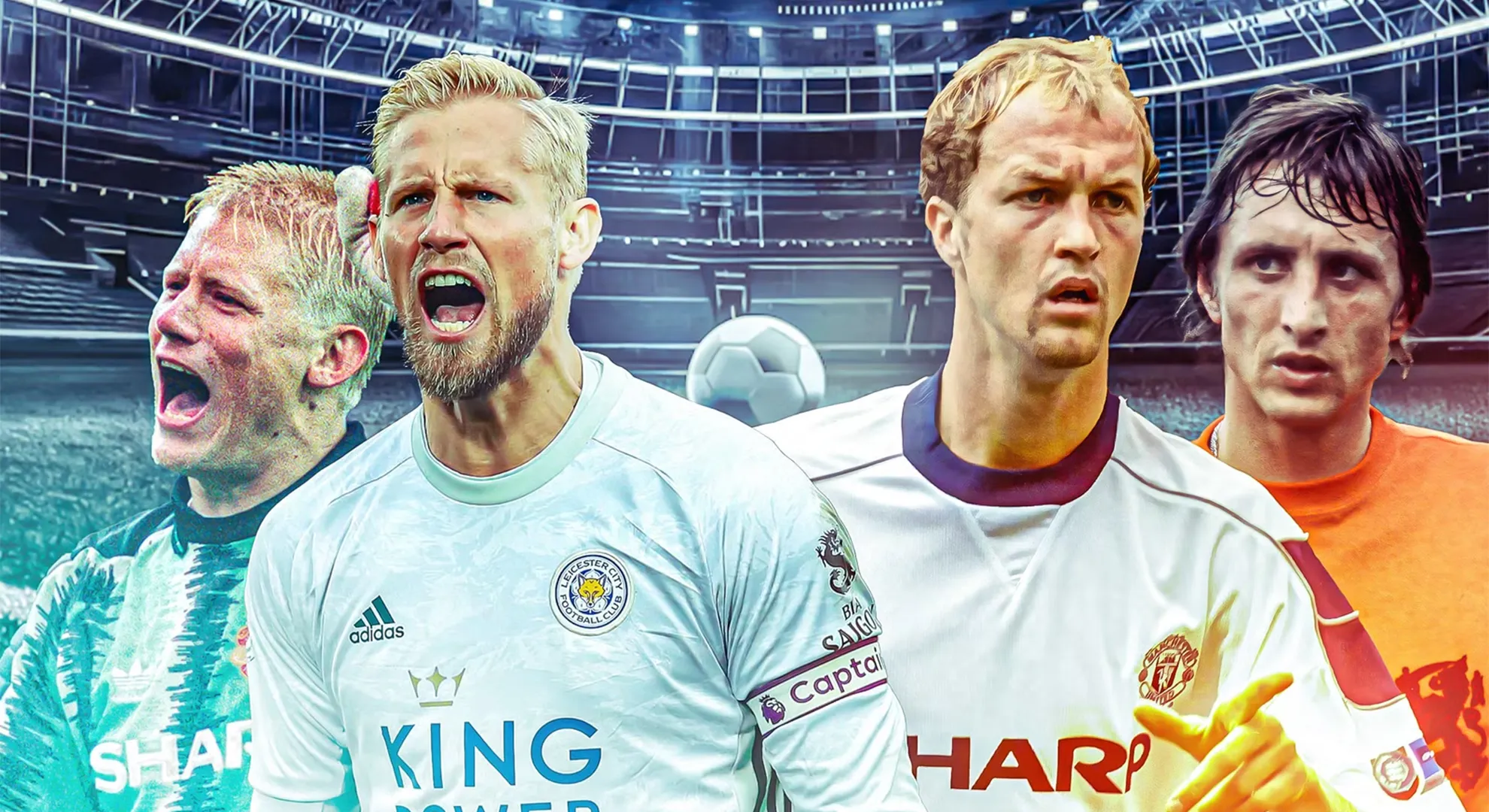
7. Peter Schmeichel and Kasper Schmeichel — Denmark: A Goalkeeping Dynasty
The Schmeichel name is one of the most respected in world football, especially when it comes to goalkeeping. Father Peter Schmeichel and son Kasper Schmeichel both represented Denmark at the FIFA World Cup, continuing a remarkable family tradition between the posts.
Peter Schmeichel was one of the greatest goalkeepers in football history. He represented Denmark at the 1998 FIFA World Cup, making five appearances during the tournament.
Known for his commanding presence, incredible reflexes, and leadership abilities, Peter became a global football icon. His performances for both club and country earned him recognition as one of the best goalkeepers ever.
He was also a key figure in Denmark’s famous football achievements, including the nation’s unforgettable European success in 1992.
Following his father’s footsteps, Kasper Schmeichel built his own successful career as a goalkeeper. He represented Denmark at the 2018 and 2022 FIFA World Cups, making seven appearances across the two tournaments.
Like his father, Kasper became known for his reliability, shot-stopping ability, and leadership qualities. He played an important role for Denmark during several major international competitions.
Although both played in the same position, Kasper created his own legacy rather than simply following his father’s reputation. His career achievements and international performances established him as one of Denmark’s finest goalkeepers.
The Schmeichel story remains one of football’s most famous father-son partnerships, showing how excellence between generations can create a lasting sporting legacy.
8. Patrick Kluivert and Justin Kluivert — Netherlands: A Legacy of Dutch Attacking Talent
The Kluivert family represents another remarkable example of football ability being passed from one generation to the next. Both Patrick Kluivert and his son Justin Kluivert have represented the Netherlands on the FIFA World Cup stage, continuing a proud tradition of Dutch football excellence.
Patrick Kluivert was one of Europe’s most admired strikers during the 1990s and early 2000s. He became known for his intelligence inside the penalty area, technical quality, and ability to score important goals against top opponents.
He represented the Netherlands at the 1998 FIFA World Cup, where he made four appearances. During the tournament, Patrick played an important attacking role for the Dutch team and helped them reach the later stages of the competition.
Beyond his World Cup performances, Patrick enjoyed a highly successful club career. He played for some of Europe’s biggest teams and became especially famous during his time at Ajax, where he scored the winning goal in the 1995 UEFA Champions League final. His combination of skill, movement, and finishing ability made him one of the most respected forwards of his generation.
Years later, his son Justin Kluivert followed the family path into professional football. While Justin developed a different style from his father, he inherited the same attacking instincts and creativity.
Justin has represented the Netherlands at the FIFA World Cup stage, featuring in the 2026 tournament. Known for his pace, dribbling ability, and attacking versatility, he has become an important player for the Dutch national team.
Although Patrick and Justin played in different football eras, both have contributed to the Netherlands’ long tradition of producing talented attacking players. Their story highlights how football knowledge and passion can continue from parent to child while allowing each generation to build its own identity.
The Kluivert name remains connected with Dutch football history, with both father and son earning recognition at the highest level of international competition.
9. Jean Djorkaeff and Youri Djorkaeff — France: Two Generations of International Excellence
The Djorkaeff family is another iconic football connection from France, with father Jean Djorkaeff and son Youri Djorkaeff both representing their country at the FIFA World Cup.
Jean Djorkaeff was part of the French national team during the 1960s and featured at the 1966 FIFA World Cup. He made three appearances in the tournament and became known as a reliable defender with strong technical ability.
During his playing career, Jean was considered one of France’s respected football figures. His performances helped establish the foundation for the next generation of the Djorkaeff family, as his son Youri later became one of France’s most recognised attacking players.
Youri Djorkaeff built a reputation as a creative and intelligent forward who could play in multiple attacking roles. He represented France at two FIFA World Cups — the 1998 and 2002 tournaments — making nine appearances and scoring one goal.
His greatest achievement came during the 1998 FIFA World Cup, when France hosted the tournament and lifted the trophy for the first time in the country’s history.
Youri was a key member of France’s golden generation, playing alongside some of the biggest names in French football. His technical skill, vision, and ability to create opportunities made him an important part of the team’s success.
The Djorkaeff family story reflects two different eras of French football. Jean represented an earlier generation that helped shape the national team, while Youri became part of one of the most successful periods in France’s football history.
Together, father and son created a lasting legacy that connects decades of international football.
10. Diego Simeone and Giuliano Simeone — Argentina: A Football Family Still Writing Its Story
The Simeone family represents one of the most interesting father-son connections in modern football. Diego Simeone established himself as one of Argentina’s greatest footballers before becoming one of the most successful managers in the sport, while his son Giuliano has begun creating his own path as a professional player.
Diego Simeone was a passionate and hardworking midfielder who represented Argentina at three FIFA World Cups — 1994, 1998, and 2002. Across those tournaments, he made 11 appearances and became known for his leadership, determination, and competitive style.
During his playing career, Diego earned respect as one of Argentina’s most important midfielders. His ability to read the game, win battles in midfield, and inspire teammates made him a valuable player at both club and international level.
After retiring from football, Diego moved into management and achieved extraordinary success. As the long-time manager of Atlético Madrid, he transformed the club into one of Europe’s strongest teams, winning major domestic and international honours.
His son Giuliano Simeone has followed the family tradition by becoming a professional footballer. He made his FIFA World Cup debut in 2026, representing Argentina on the international stage.
Giuliano currently plays for Atlético Madrid, where an unusual football situation has developed — his father Diego is the manager of the same club. This makes them one of the rare father-son combinations in football where one leads from the sidelines while the other competes on the pitch.
The relationship between Diego and Giuliano represents a unique combination of family and football. While Diego built his reputation through leadership and tactical excellence, Giuliano is working to establish his own career as a young attacking player.
The Simeone story is still developing, but it already stands as one of football’s most fascinating family journeys. From Diego’s legendary playing career and managerial success to Giuliano’s emergence as a new generation of Argentine talent, the family continues to leave its mark on the sport.
These father-son World Cup stories show that football is more than just a game — it is a tradition, a passion, and a legacy that can be carried across generations. Each family has a different journey, but all share one common achievement: reaching the biggest stage in world football.