Scientists at a UAE university are developing advanced artificial intelligence systems that extend beyond conversational tools, aiming to foster creativity, solve complex challenges, and generate entirely new ideas across multiple fields.
UAE Researchers Build Next-Generation AI Focused on Innovation, Not Just Conversation.

Eric Xing believes current AI chatbots mainly rely on knowledge learned from existing information, describing it as “book intelligence.” He says the next generation of artificial intelligence must be capable of understanding the world, taking meaningful actions, and generating new discoveries.
Inside the Vision Behind MBZUAI: Building Artificial Intelligence That Goes Beyond Today’s Chatbots
A visitor expecting the office of Eric Xing, President and University Professor at the Mohamed bin Zayed University of Artificial Intelligence (MBZUAI), to resemble a futuristic technology hub may be surprised. Instead of walls lined with giant digital displays or rooms filled with rows of powerful computers, the space reflects something much older and quieter. Floor-to-ceiling bookshelves dominate the room, creating the atmosphere of an academic library rather than the headquarters of one of the world’s fastest-growing AI institutions.
The collection is more than a display of rare publications. Every volume tells a story about the evolution of scientific thought and humanity’s pursuit of knowledge. Among the most treasured works is a centuries-old edition of Euclid’s Elements, one of the foundational texts of mathematics and geometry. Nearby are early editions of Isaac Newton’s Principia and writings by Johannes Kepler, whose research on planetary motion helped lay the groundwork for Newton’s revolutionary theories.
For Xing, these historic books represent far more than valuable collector’s items. They symbolize the chain of discovery through which each generation builds upon the achievements of those who came before. In his view, genuine innovation does not appear suddenly—it develops through years of careful learning, research, and the willingness to challenge existing ideas.
Holding one of the historic volumes, Xing explains that universities should serve a much greater purpose than simply awarding degrees. He believes higher education must inspire curiosity, encourage deep thinking, and generate entirely new knowledge rather than simply passing existing information from professors to students.
According to him, a university succeeds when it creates an environment where ideas continue evolving long after students leave the classroom. Education, he argues, is not merely about completing courses or earning qualifications. Instead, it should encourage individuals to understand complex subjects deeply and eventually contribute discoveries that advance science and society.
This philosophy has become central to MBZUAI’s identity.
Although the university was established only a few years ago, it has quickly earned international recognition for its work in artificial intelligence. In a relatively short period, the institution has developed a strong reputation across multiple AI disciplines, including machine learning, computer vision, natural language processing, robotics, and computational biology.
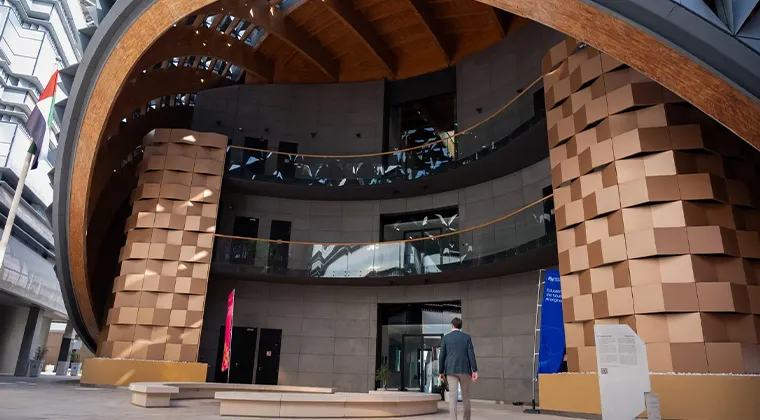
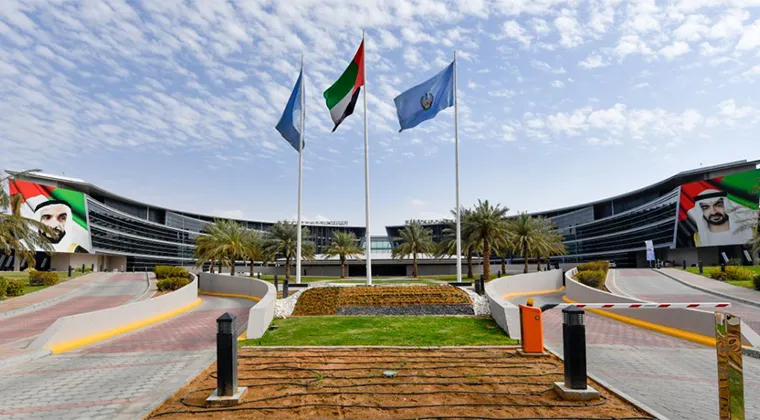
Located in Abu Dhabi’s Masdar City, MBZUAI plays an important role in the UAE’s ambition to become a global leader in advanced technologies and AI research. The university was created not only to educate specialists but also to position the country at the forefront of scientific innovation.
Xing believes the institution should be viewed differently from a conventional university. Rather than competing simply by offering academic programs, he wants MBZUAI to become internationally recognised as a destination where groundbreaking ideas emerge.
He often compares the university’s long-term ambitions with globally respected institutions known for leading specific fields of research. His goal is for scientists, entrepreneurs, governments, and industry leaders to think of MBZUAI whenever they seek pioneering work in artificial intelligence.
Instead of being remembered primarily for teaching existing knowledge, the university hopes to become known for producing discoveries that shape the future of AI itself.
This vision extends beyond improving today’s popular AI applications.
According to Xing, public attention has largely focused on conversational AI systems capable of answering questions, writing text, or generating content. While these technologies have transformed how people interact with computers, he considers them only an early stage in the broader evolution of artificial intelligence.
He describes these systems as possessing knowledge gained mainly from written information. They analyse enormous collections of books, articles, websites, and other text before learning patterns that allow them to generate responses.
Although this capability is impressive, Xing believes it represents only one form of intelligence.
He explains that reading information and reproducing it differs fundamentally from learning through direct experience. Human beings develop many important abilities not by studying books alone but by interacting with the physical world.
To illustrate this distinction, he points to swimming. Someone can read countless books explaining swimming techniques, yet true understanding only develops after entering the water and practising the movements firsthand. Experience teaches lessons that written descriptions cannot fully capture.
In Xing’s opinion, future AI systems must develop similar forms of practical understanding.
Rather than simply recognising patterns in text, tomorrow’s artificial intelligence should interact with real environments, observe outcomes, adapt to changing conditions, and improve through experience. Such systems would not merely answer questions—they would learn continuously from the world around them.
He believes this progression represents the next major milestone in AI research.
Researchers at MBZUAI are therefore looking beyond conversational assistants toward technologies capable of reasoning, experimentation, and discovery. Their objective is to create AI that can participate in solving scientific problems, accelerate research, and uncover insights that humans may not easily identify on their own.
Such systems could contribute to advances across numerous fields, including medicine, engineering, environmental science, robotics, and biotechnology. Instead of acting solely as digital assistants, AI could become an active partner in scientific exploration.
This shift requires a different research philosophy from the one driving many commercial AI products today.
While consumer applications often prioritize convenience and communication, MBZUAI’s researchers are equally interested in developing intelligence that can understand physical environments, interact safely with humans, and make informed decisions in complex situations.
That means combining language understanding with perception, reasoning, planning, and action.
The university’s work spans a wide range of disciplines because Xing believes intelligence cannot be separated into isolated categories. Machine learning, robotics, biology, and computer vision increasingly overlap, requiring researchers to collaborate across traditional academic boundaries.
Creating future AI systems therefore involves integrating expertise from multiple scientific fields rather than focusing on a single technology.
Xing also emphasizes the importance of cultivating a research culture that values patience and long-term thinking. Major scientific breakthroughs rarely emerge overnight, he says. They often result from years of persistent investigation, repeated experimentation, and the gradual refinement of ideas.
The rare books surrounding his office serve as reminders of that process. Each represents generations of scholars who expanded humanity’s understanding by building upon previous discoveries.
For MBZUAI, those historical achievements provide inspiration for the future.
The university hopes that its researchers will contribute the next chapter in that ongoing story—developing artificial intelligence capable not only of processing existing knowledge but also of generating entirely new understanding.
As AI technology continues evolving at remarkable speed, Xing believes society is only witnessing the beginning of what these systems may eventually achieve. Conversational models have introduced millions of people to artificial intelligence, but he argues that the next generation will move far beyond answering questions.
Future systems, he suggests, will combine learning, reasoning, observation, experimentation, and real-world interaction to become genuine partners in scientific discovery and innovation.
For MBZUAI, reaching that future is not simply an academic objective. It is the institution’s defining mission: creating an environment where knowledge grows continuously and where the next generation of transformative ideas is born.
Beyond Chatbots: MBZUAI’s Vision for the Next Era of Artificial Intelligence
Eric Xing believes the future of artificial intelligence extends far beyond systems that generate text or answer questions. While today’s large language models have transformed how people interact with technology, he argues that they represent only the earliest stage in AI’s evolution. The next breakthroughs, he says, will come from machines that can understand the physical world, make independent decisions, and even contribute to scientific discovery.
According to Xing, one of the biggest limitations of current AI systems is that they primarily learn from written information. They excel at recognizing patterns in books, research papers, websites, and other digital content, but they lack genuine experience of how the real world functions.
To overcome this limitation, researchers are developing what are known as “world models.” Unlike conventional language models, these systems are designed to learn the rules governing physical environments rather than simply processing text. Their purpose is to predict how objects, people, and natural systems behave, enabling AI to reason about real-world situations instead of merely describing them.
Xing sees world models as one of the most important frontiers in artificial intelligence research. He believes only a small number of researchers and institutions worldwide are making significant progress in this field, mentioning pioneers such as Yann LeCun at New York University and Fei-Fei Li at Stanford University as leaders advancing similar ideas.
He also maintains that MBZUAI occupies a unique position in the academic landscape. According to Xing, the university has developed expertise in both advanced large language models and world-model technologies, a combination he believes is uncommon among higher education institutions. In his view, bringing these two research areas together allows scientists to pursue more comprehensive forms of artificial intelligence than systems focused solely on language.
For Xing, however, understanding the physical world is only one stage in AI’s development.
He describes another level of intelligence that he refers to as agentic intelligence. Instead of simply responding to prompts, an agentic system would be capable of setting goals, organizing complex projects, coordinating resources, and completing tasks through multiple stages of planning and execution.
He explains that current conversational AI can assist with clearly defined assignments, such as summarizing documents or generating computer code, because the objective has already been specified by a human user. Running an organization or solving a broad business challenge requires a much wider range of capabilities.
A system asked to improve the performance of an entire company, for example, would need to evaluate financial information, coordinate teams, adapt to changing conditions, monitor progress, and revise strategies over time. Achieving that level of intelligence demands more than extensive knowledge gathered from written material. It requires AI systems capable of learning from realistic simulations and interactions that mirror how the world actually operates.
According to Xing, creating such intelligent agents depends heavily on world models because they provide machines with a deeper understanding of cause and effect. Rather than following instructions mechanically, future AI would be able to analyze situations, anticipate outcomes, and make informed decisions while adapting to new circumstances.
Above these capabilities lies what Xing considers the highest form of artificial intelligence—philosophical intelligence.
He describes this stage as the ability to generate genuinely original ideas, uncover previously unknown scientific principles, and invent solutions that have never existed before. Instead of simply processing existing knowledge, AI at this level would actively expand humanity’s understanding of nature.
This ambition is already influencing research projects underway at MBZUAI.
Scientists at the university are developing biological foundation models capable of analyzing enormous quantities of biological information to better understand living systems. Their work has attracted international attention through publication in leading scientific journals and reflects the university’s growing emphasis on applying AI to scientific research rather than limiting it to consumer applications.
One of Xing’s most ambitious initiatives is known as the AI-Driven Digital Organism project.
The goal is to construct highly detailed virtual representations of living cells using advanced AI architectures. These digital models could enable researchers to perform biological experiments in simulated environments before conducting laboratory tests.
If successful, such technology could dramatically accelerate pharmaceutical research. Scientists would be able to investigate how cells respond to diseases, evaluate potential drug candidates, and identify promising treatments through virtual experimentation, reducing both development time and research costs.
The approach could also improve the efficiency of medical innovation by allowing researchers to eliminate less promising options early in the discovery process. Rather than relying exclusively on lengthy laboratory experiments, AI-powered simulations could help narrow the search for effective medicines much more quickly.
For Xing, these projects demonstrate that artificial intelligence should become a partner in scientific discovery rather than merely a digital assistant.
He believes AI’s greatest contribution will come from helping researchers answer difficult questions in biology, medicine, chemistry, engineering, and other scientific disciplines where traditional methods often require years of experimentation.
The university’s ambitions are closely connected to the UAE’s broader national strategy.
Despite having a relatively small population compared with major technological powers, Xing believes the country possesses an important competitive advantage: speed.
Instead of competing through manufacturing capacity or workforce size, he argues that the UAE can distinguish itself by adopting emerging technologies earlier than many larger nations. Becoming an early leader in advanced AI research could attract international investment, talented scientists, and innovative companies seeking to collaborate with cutting-edge institutions.
In Xing’s view, leadership in transformative technologies often creates wider economic opportunities. If Abu Dhabi becomes a centre for AI-driven discoveries in industries such as healthcare, pharmaceuticals, biotechnology, and finance, businesses operating in those sectors may choose to establish research centres nearby to benefit from local expertise.
This creates an ecosystem where universities, startups, multinational companies, investors, and government organizations reinforce one another through collaboration.
Xing’s own decision to relocate from the United States to Abu Dhabi reflects his confidence in that vision.
Having spent much of his career at leading American research institutions, he says one of the most appealing aspects of working in the UAE is the ability to transform ambitious ideas into real projects without many of the obstacles commonly encountered elsewhere.
Large organizations can sometimes be slowed by bureaucracy, competing priorities, or longstanding institutional practices. Xing believes Abu Dhabi offers a more agile environment where promising initiatives receive strong support from both leadership and the wider community.
He says this atmosphere encourages researchers to pursue bold ideas that might otherwise remain theoretical.
Rather than spending years attempting to secure approval for new initiatives, scientists have opportunities to develop and implement projects with greater speed, allowing innovation to move from concept to reality more efficiently.
Even so, Xing consistently returns to what he considers the university’s greatest responsibility: educating people.
While technological breakthroughs are important, he believes lasting success depends on preparing highly skilled researchers capable of driving future innovation long after today’s projects have ended.
His aspiration is for MBZUAI graduates to compete with—and eventually exceed—the standards associated with graduates from the world’s most prestigious engineering and computer science institutions.
Achieving that objective involves more than technical education. Students must also develop creativity, critical thinking, scientific curiosity, and the confidence to tackle problems that have never been solved before.
According to Xing, many talented individuals possess remarkable abilities that remain unrealized simply because they lack the right environment, mentorship, or opportunities. He sees one of MBZUAI’s central missions as helping students unlock that untapped potential.
For him, nurturing the next generation of researchers is as important as developing new AI technologies.
The rare scientific books that currently fill his office symbolize this philosophy.
Eventually, Xing plans for the collection to become part of a university museum where future students can view the works that shaped centuries of scientific progress. He hopes these volumes will remind visitors that every major breakthrough builds upon earlier discoveries and that innovation is a continuous process spanning generations.
In his vision, MBZUAI will contribute its own chapter to that history—not only by developing increasingly capable artificial intelligence systems but also by inspiring researchers whose discoveries may influence science and technology for decades to come.