**Health Professionals and Parents Across the UAE Examine How Rising Temperatures Are Affecting Young Athletes, as Concerns Grow Over Heat-Related Illnesses and the Safety of Children Participating in Outdoor Sports.**
UAE Medical Experts and Parents Assess Impact of High Temperatures on Youth Athletes.

Medical specialists who treat children are urging parents to pay close attention to changes in behaviour during sports activities rather than focusing solely on athletic performance. According to pediatric experts, young athletes do not always openly communicate when they are feeling unwell. In many cases, children may ignore signs of fatigue, dizziness, or discomfort because they want to continue playing, impress coaches, or avoid letting teammates down.
As temperatures continue to climb across the UAE during the summer season, youth sports programmes remain active, particularly in outdoor activities such as football, cricket, and tennis. Organisers and coaches are increasingly planning training sessions around weather conditions, often adjusting schedules to reduce exposure to the most intense heat of the day.
For many families, managing a child’s participation in sports now involves careful consideration of factors such as hydration, adequate rest, nutrition, and recovery after physical activity. Parents are paying closer attention to how heat and humidity may affect their children’s ability to train safely and comfortably.
Coaches and sports professionals generally believe that gradual and supervised exposure to warm conditions can help young athletes build endurance and adapt to challenging environments. They argue that when proper precautions are followed, children can continue to develop their fitness levels and sporting skills even during hotter months.
However, not all parents are convinced. Some remain concerned about training sessions that take place during late mornings or early afternoons when temperatures and humidity levels can be particularly demanding. Their concerns centre on the potential risk of heat-related illnesses, dehydration, and excessive physical strain on young bodies.
The discussion highlights a broader conversation taking place within the UAE’s sporting community. As summer conditions become more intense and heat index readings rise, families, coaches, and healthcare professionals are increasingly weighing the benefits of athletic development against the importance of protecting children’s health and wellbeing during outdoor activities.
Balancing training and heat resilience
Not everyone involved in youth sports believes that children should completely stop outdoor training during the UAE’s hottest months. Many coaches argue that, when managed responsibly, exercising in warm conditions can play an important role in a young athlete’s overall development. They maintain that the objective should not be to eliminate outdoor activity entirely but to create safe training environments through careful planning, appropriate hydration, and gradual adaptation to heat.
One experienced tennis coach working with junior players in the UAE explained that concerns about high temperatures are understandable, but children are often capable of adapting to challenging conditions when proper safeguards are in place. According to the coach, training sessions scheduled during cooler periods of the day, such as early mornings or late afternoons, can allow young athletes to continue developing their skills and fitness without being exposed to the most extreme temperatures.
The coach noted that physical conditioning is a gradual process and that athletes who are never exposed to warm-weather training may struggle when competing in outdoor tournaments. In his view, supervised exposure to heat can help build endurance, improve resilience, and prepare children for real match situations. He stressed that the focus should be on adjusting intensity levels, ensuring regular hydration breaks, and monitoring players closely rather than avoiding outdoor sports altogether.
However, many parents view the issue from a different perspective, particularly after witnessing the effects of summer training on their children firsthand.
One parent, Inga Popescu, a resident originally from Moldova, said she often worries when her son participates in football sessions during particularly hot periods of the day. While her husband believes that proper hydration and electrolyte intake can make outdoor exercise safe, she remains less certain. Drawing on his own sporting experiences, her husband feels that training before midday or later in the afternoon is generally acceptable if children are adequately prepared.
Popescu, however, says her observations have led her to question whether those assumptions always apply to young athletes. She explained that her son often returns home noticeably exhausted after training sessions, especially as temperatures begin to rise in late spring and early summer. Watching him struggle with fatigue has increased her concerns about the physical demands placed on children during periods of extreme heat.
According to her, the impact becomes more obvious as the weather grows hotter. Even relatively short training sessions can leave her son looking depleted and lacking energy. She described seeing him return from practice visibly worn out, requiring a considerable amount of time to recover before feeling normal again.
While she respects her husband’s confidence in sports conditioning, she believes there are important differences between how adults and children respond to heat. In her opinion, younger athletes may be less capable of recognising when their bodies are reaching dangerous levels of exhaustion. The combination of high temperatures and humidity commonly experienced during UAE summers can make outdoor exercise significantly more demanding than it appears.
She also worries about the broader effects of prolonged sun exposure, including sunburn, excessive fatigue, and the physical stress associated with intense heat. Even when children follow hydration guidelines, she believes the environmental conditions themselves can still take a heavy toll on their bodies.
These concerns occasionally lead to disagreements within the family about what constitutes appropriate training. While one parent may see outdoor practice as beneficial for athletic growth and resilience, the other may view the same activity as unnecessarily risky during periods of extreme weather.
Another factor contributing to Popescu’s concern is the possibility that children may not recognise or communicate early warning signs of heat-related illness. She fears that her son, like many young athletes, may continue pushing himself during training despite feeling tired, overheated, or dehydrated. Motivated by enthusiasm for the sport or a desire to keep up with teammates, children may ignore symptoms that would otherwise signal a need to rest.
For many families across the UAE, this balancing act between athletic development and health protection has become an increasingly important conversation. As temperatures and humidity levels continue to rise during the summer months, parents, coaches, and medical professionals are all weighing the benefits of outdoor training against the potential risks. While opinions differ on the best approach, most agree that close supervision, careful scheduling, and attention to a child’s physical condition remain essential for keeping young athletes safe.
Early warning signs often missed
Medical professionals across the UAE are urging parents, coaches, and sports organisers to pay closer attention to signs of heat-related strain in children, warning that symptoms can sometimes be mistaken for ordinary tiredness. As temperatures and humidity levels remain high for much of the year, experts say young athletes face unique challenges that require careful monitoring before, during, and after physical activity.
According to pediatric specialists, children participating in outdoor sports may not always recognise when their bodies are struggling to cope with excessive heat. What appears to be routine exhaustion following exercise can occasionally be an early indication that the body’s cooling mechanisms are becoming overwhelmed.
Dr. Mamata Bothra, a pediatric specialist and neonatologist at International Modern Hospital in Dubai, explained that children in the UAE frequently take part in outdoor activities despite challenging weather conditions. While regular exercise remains vital for healthy growth, fitness, and emotional wellbeing, she noted that young athletes are generally more susceptible to heat-related complications than adults.
She pointed out that children regulate body temperature differently from mature athletes. Their cooling systems are less efficient, making it harder for them to release excess heat generated during intense physical activity. As a result, prolonged exposure to hot and humid environments can increase the likelihood of dehydration, heat exhaustion, and other heat-related illnesses.
One of the key concerns highlighted by healthcare professionals is that the earliest warning signs are often subtle and can easily go unnoticed. Rather than displaying dramatic symptoms immediately, children may begin to show small behavioural changes that signal their bodies are under stress.
Experts say parents and coaches should be alert to unexpected fatigue, declining enthusiasm, reduced concentration, irritability, or a noticeable drop in athletic performance. A child who suddenly struggles to keep up with teammates, appears unusually sluggish, or lacks energy during training may be experiencing more than simple tiredness.
Dr. Bothra explained that these signs are particularly important among children aged between six and sixteen years. In many cases, adults may assume that a young athlete is merely having an off day or lacks motivation. However, such behavioural shifts can sometimes indicate that the child is beginning to experience the effects of overheating.
Medical professionals emphasize that children are not always able to identify or communicate their symptoms effectively. Some may continue exercising despite discomfort because they are determined to finish a training session, impress a coach, or avoid disappointing teammates. This tendency can make early detection even more important.
As temperatures continue to rise during the UAE summer season, healthcare experts recommend reviewing outdoor training schedules carefully. They advise that sporting activities should be adjusted whenever weather conditions become excessively challenging.
Doctors generally suggest exercising caution when temperatures climb above 35 degrees Celsius, particularly when humidity levels exceed 60 percent. Under such conditions, the body’s natural cooling processes become significantly less effective, increasing the risk of heat-related complications.
The combination of intense heat and elevated humidity can be especially problematic because sweat evaporates less efficiently. Since evaporation is one of the body’s primary methods of cooling itself, reduced effectiveness can lead to a faster buildup of internal body heat during exercise.
For this reason, healthcare providers encourage schools, sports academies, and clubs to avoid scheduling strenuous outdoor sessions during the hottest parts of the day. Whenever possible, activities should be moved to cooler periods, such as shortly after sunrise or later in the evening after temperatures begin to decline.
In addition to adjusting schedules, experts stress the importance of structured hydration plans. Waiting until a child feels thirsty may not be sufficient, as thirst often develops after dehydration has already begun. Instead, young athletes should be encouraged to drink fluids at regular intervals throughout training.
Medical professionals recommend hydration breaks approximately every 15 to 20 minutes during outdoor exercise. These breaks provide opportunities for children to replace lost fluids before dehydration becomes significant. Coaches and supervisors should actively encourage water consumption rather than relying on children to request it themselves.
Rest periods are equally important. Specialists advise incorporating regular breaks in shaded or sheltered areas where children can cool down and recover. Access to shade helps reduce direct exposure to sunlight and allows body temperature to stabilise between periods of physical exertion.
Close observation remains one of the most effective safety measures. Coaches, trainers, and parents should monitor participants throughout activities and watch for any changes in behaviour, energy levels, coordination, or appearance. Early intervention can often prevent a mild issue from developing into a more serious medical concern.
Healthcare providers also recommend additional cooling strategies when temperatures are particularly high. Items such as cooling towels, misting sprays, and portable fans can provide relief during breaks and help lower body temperature more quickly. Access to indoor, air-conditioned recovery spaces can offer further protection, especially after prolonged outdoor sessions.
Recovery after exercise is another area that experts believe deserves greater attention. Rehydration should continue well after a training session ends, as the body may still be replacing fluids lost through perspiration. Parents are encouraged to ensure children drink adequate amounts of water and, when appropriate, electrolyte-containing beverages to restore mineral balance.
Monitoring hydration status at home can also be useful. One commonly recommended method involves observing urine colour, which can provide a simple indication of hydration levels. Darker urine may suggest inadequate fluid intake and signal the need for additional hydration.
Adequate rest and recovery time should not be overlooked either. Children who participate in demanding sports activities need sufficient time for their bodies to recover before engaging in another intense training session. Returning to strenuous exercise too quickly may increase fatigue and place additional stress on the body.
Ultimately, healthcare professionals agree that sports remain highly beneficial for children and should continue to play an important role in their lives. However, they emphasize that participation must be balanced with sensible precautions during periods of extreme heat. Through careful scheduling, frequent hydration, proper supervision, and close attention to early warning signs, parents and coaches can help young athletes stay active while reducing the risks associated with hot-weather training.
The message from medical experts is clear: recognising subtle symptoms early and prioritising safety measures can make a significant difference in protecting children as they enjoy sports throughout the UAE’s long summer season.
What parents should watch for
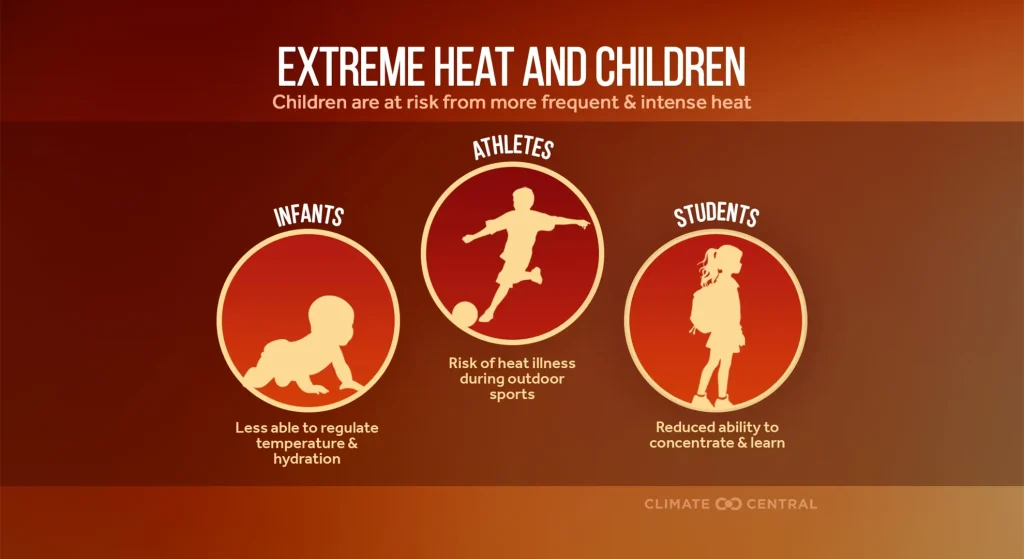
Pediatric specialists in the UAE are increasingly urging parents and sports supervisors to prioritise behavioural changes in children during physical activity, rather than focusing only on athletic output or performance levels. According to them, early signs of heat-related strain or physical distress are often subtle and can be easily overlooked if attention is directed solely toward how well a child is playing.
Dr Naveen Raju, a Specialist Paediatrician at LLH Hospital in Musaffah, explained that younger children, particularly those between the ages of five and ten, often do not clearly express when something is wrong. Instead of directly communicating discomfort, they may show indirect signs that something is affecting their wellbeing during sports or outdoor play.
He noted that one of the most frequently missed indicators in this age group is a sudden change in behaviour. A child who is normally energetic and talkative may become unusually quiet or withdrawn during activity. In other cases, they may display irritability, become easily upset, or show a noticeable drop in enthusiasm for the game.
Dr Raju added that physical complaints in younger children can also serve as important warning signals. Some children may begin to report symptoms such as stomach discomfort or headaches while playing. Although these complaints might seem minor at first, they can sometimes be early indicators that the body is struggling to cope with heat or exertion.
In addition to verbal complaints, changes in movement and coordination can also be significant. A child who starts to move more slowly than usual, appears less coordinated, or struggles with basic physical tasks may be experiencing early fatigue or overheating. He explained that some children may also begin asking for frequent rest breaks, which should not be dismissed as lack of interest or motivation.
As children grow older, particularly in the 11 to 17-year age range, the pattern of symptoms can change. Adolescents may be more aware of their bodies but are also more likely to continue playing despite discomfort, especially during competitive sports or team activities.
Dr Raju pointed out that older children may experience a broader range of warning signs, including headaches, dizziness, nausea, and muscle cramps. In some cases, they may also show difficulty concentrating or appear mentally confused during play. These symptoms can develop gradually or appear suddenly, depending on environmental conditions and the intensity of physical exertion.
A key concern highlighted by medical professionals is that teenagers often attempt to push through these symptoms. Motivated by competition, peer pressure, or a desire to remain in the game, they may ignore early warning signs and continue playing despite their condition worsening. This behaviour can significantly increase the risk of serious heat-related complications.
Dr Raju explained that a child may initially feel only mild discomfort or fatigue and choose to continue participating in activities such as football or other field sports. However, without adequate rest or intervention, their condition can deteriorate rapidly. What begins as minor symptoms may escalate into muscle cramps, severe exhaustion, or even fainting during or after physical exertion.
Medical experts stress that establishing clear rules for stopping activity is essential in all youth sports environments. Parents, coaches, and trainers should not rely solely on the child’s willingness to continue playing but should instead monitor for objective warning signs that indicate the body is under stress.
According to Dr Raju, immediate cessation of activity is necessary if a child begins to show more serious symptoms. These include repeated vomiting, loss of consciousness or fainting, confusion or disorientation, and unsteady or abnormal walking patterns. Another critical warning sign is the absence of sweating during intense heat, which may indicate that the body’s cooling system is failing.
In such situations, medical attention should be sought without delay. Continuing physical activity under these conditions can significantly increase the risk of heat stroke and other severe medical emergencies. Early recognition and prompt response are therefore considered vital in preventing complications.
Healthcare professionals emphasise that these guidelines are not intended to discourage children from participating in sports. On the contrary, they highlight that physical activity is important for growth, fitness, and overall wellbeing. However, they also underline that safe participation requires awareness of the body’s limits and careful monitoring of environmental conditions.
Parents and coaches are encouraged to develop a better understanding of how children communicate discomfort, particularly in younger age groups who may not have the vocabulary or confidence to explain what they are feeling. Observing behaviour, listening to complaints, and recognising small changes in performance can all play a crucial role in early detection.
Experts further suggest that education around heat-related illness should be an ongoing part of youth sports programmes. Teaching children to recognise symptoms in themselves and others can help create a safer sporting environment and reduce the likelihood of serious incidents.
Ultimately, pediatricians stress that safeguarding children during sports is a shared responsibility. While coaches and medical professionals play a key role on the field, parents must also remain vigilant and responsive to signs that something may be wrong. By focusing on behaviour as much as performance, adults can help ensure that young athletes remain safe while continuing to enjoy the benefits of sport.