Lionel Messi once again delivered a standout performance, inspiring Argentina to a crucial World Cup victory and securing their place in the Round of 32 with a display of brilliance and leadership.
Messi’s Magic Powers Argentina into the World Cup Round of 32.
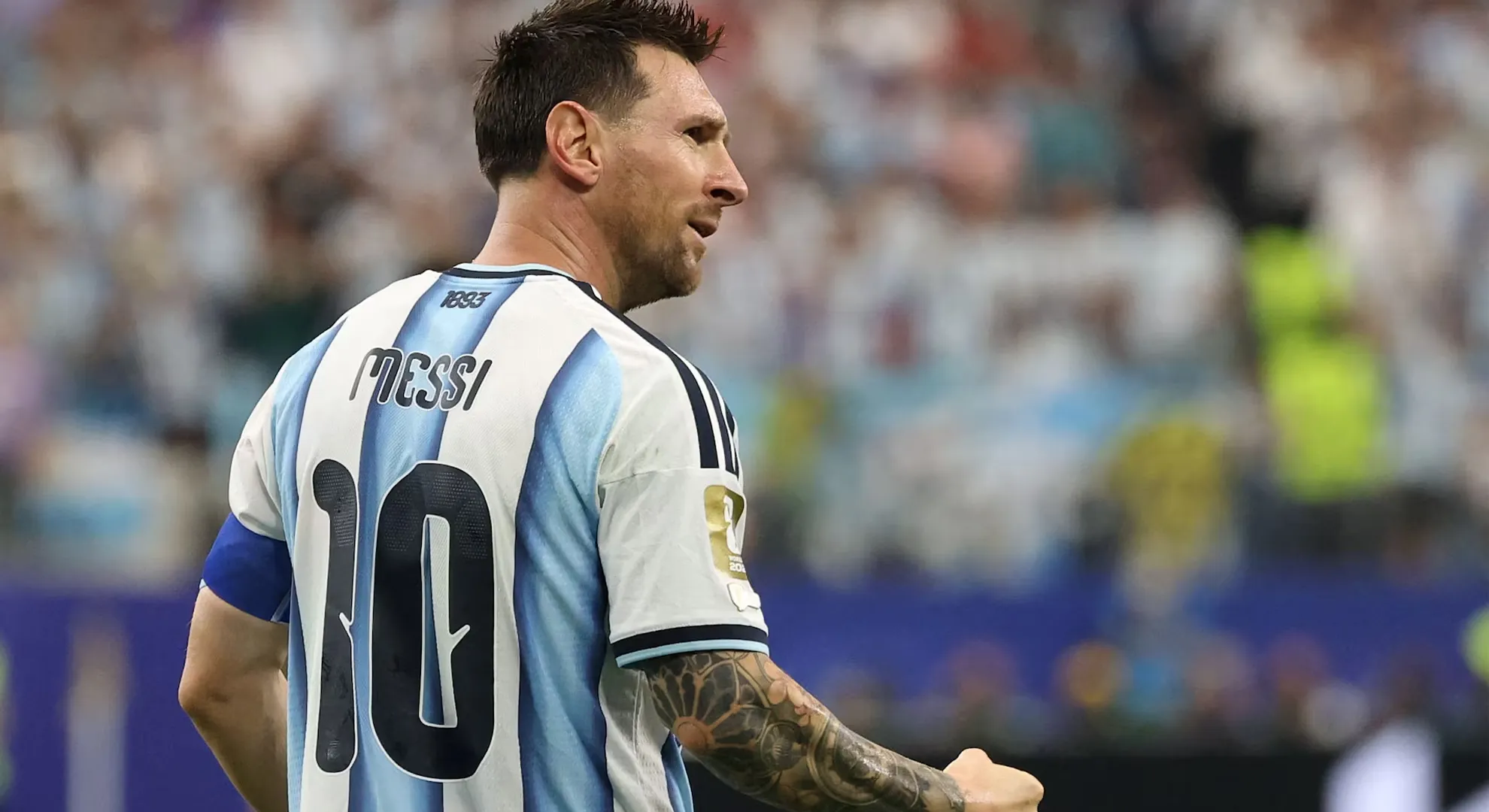
Widely considered football’s greatest-ever player, Lionel Messi netted both goals in Argentina’s 2-0 victory. The 38-year-old also set a new World Cup record, becoming the tournament’s highest scorer with 18 goals.
Lionel Messi added another remarkable chapter to his legendary career by inspiring Argentina to a 2-0 victory over Austria, a result that secured the defending champions a place in the World Cup Round of 32 with one group-stage match still to play. The Argentine captain scored both goals in a dominant display and, in the process, became the highest-scoring player in World Cup history with 18 goals.
Playing before a packed crowd of more than 70,000 fans in Texas, Messi once again proved why he is considered one of football’s greatest icons. Despite an early setback from the penalty spot, the veteran forward responded with two decisive strikes that guided his team to an important victory and confirmed their progression to the knockout phase.
Argentina began the match aggressively, controlling possession and applying pressure from the opening whistle. Their first major opportunity arrived inside the opening 10 minutes when Lautaro Martinez was brought down in the penalty area after being challenged by two Austrian defenders. Following a review by the Video Assistant Referee (VAR), referee Amin Mohamed pointed to the spot, awarding Argentina a penalty.
The stadium erupted as Messi stepped up to take the kick. Supporters expected the Argentine superstar to open the scoring, but the attempt did not go as planned. His run-up lacked conviction and the shot drifted wide of the target, leaving fans stunned and Austria relieved. It was another rare penalty miss for Messi on football’s biggest stage.
Although renowned for his extraordinary technical ability and composure, penalties have occasionally troubled Messi throughout his career. He also failed to convert from the spot during Argentina’s World Cup campaign in Qatar and had another unsuccessful attempt at the 2018 tournament. However, as he has done countless times throughout his career, Messi quickly put the disappointment behind him and focused on influencing the game in other ways.
Argentina continued to dominate possession and create chances. In the 19th minute, Messi nearly found the breakthrough after weaving his way into a dangerous position inside the penalty area. Just as he prepared to shoot, Austria captain David Alaba produced a perfectly timed challenge to dispossess him at the crucial moment.
Alaba was again called into action shortly after the half-hour mark. Messi received the ball in space and unleashed a dangerous effort toward goal, but the Austrian defender reacted brilliantly, blocking the shot with goalkeeper Alexander Schlager out of position. The intervention prevented what looked like a certain goal and kept the match level.
Austria, coached by Ralf Rangnick, adopted a cautious tactical approach. Having won their opening match against Jordan, they appeared content to absorb pressure and wait for opportunities on the counterattack. However, Argentina’s midfield control limited their attacking opportunities, and Austria struggled to test the opposition goalkeeper. Throughout the first half, they failed to register a shot on target.
Argentina’s persistence eventually paid off just before halftime. Following a flowing team move involving several quick passes, Messi found space inside the penalty area. The veteran forward calmly controlled the ball before producing a precise left-footed finish that beat Schlager and found the corner of the net. The goal sparked wild celebrations among Argentina’s supporters and gave the South Americans a deserved lead heading into the break.
The strike was significant for more than just the scoreline. Having already scored a hat-trick in Argentina’s opening World Cup fixture, Messi’s latest goal took his tournament tally to 17, moving him level with some of the greatest goalscorers in World Cup history and setting the stage for another record-breaking evening.
After halftime, Argentina maintained their control of the contest. Their passing remained sharp, and they continued to create openings against an Austrian side that struggled to gain momentum. Messi remained at the heart of nearly every dangerous move, dropping deep to collect possession before driving his team forward.
Austria attempted to increase their attacking threat as the second half progressed, but Argentina’s defence remained organized and disciplined. Whenever Austria looked capable of building pressure, the world champions quickly regained possession and resumed control.
As the match entered its final stages, Austria pushed more players forward in search of an equaliser, creating additional space for Argentina on the counterattack. Messi and his teammates looked increasingly dangerous whenever they broke forward.
Deep into stoppage time, Argentina finally put the result beyond doubt. A chaotic sequence unfolded inside the Austrian penalty area as several defenders attempted to clear the danger. Messi reacted quicker than everyone around him, displaying the anticipation and intelligence that have defined his career. Surrounded by multiple defenders, he found a way to keep possession before calmly finishing to score his second goal of the night.
The goal not only secured victory but also elevated Messi to the top of the World Cup scoring charts with 18 goals, surpassing every player who had come before him. It was another milestone in a career already filled with records, trophies, and unforgettable moments.
The final whistle confirmed a comfortable 2-0 triumph for Argentina and guaranteed their place in the knockout rounds. More importantly, it reinforced their status as one of the tournament favourites. With Messi continuing to perform at an elite level despite approaching his 39th birthday, Argentina appear well-positioned to mount another serious challenge for the World Cup title.
For Austria, the defeat represented a setback but not the end of their campaign. They will still have opportunities to secure qualification in their remaining group matches. Nevertheless, on this occasion, they were unable to contain the brilliance of Messi, whose performance once again reminded the football world why his name remains synonymous with greatness.
As fans left the stadium, the conversation centered on one man. Even after nearly two decades at the top of the game, Messi continues to break records, inspire teammates, and deliver match-winning performances on football’s grandest stage. His latest masterclass not only carried Argentina into the next round but also further strengthened his legacy as one of the sport’s most extraordinary players.
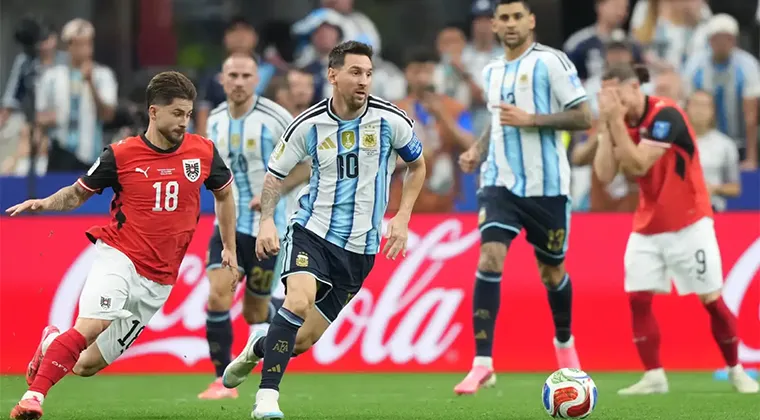
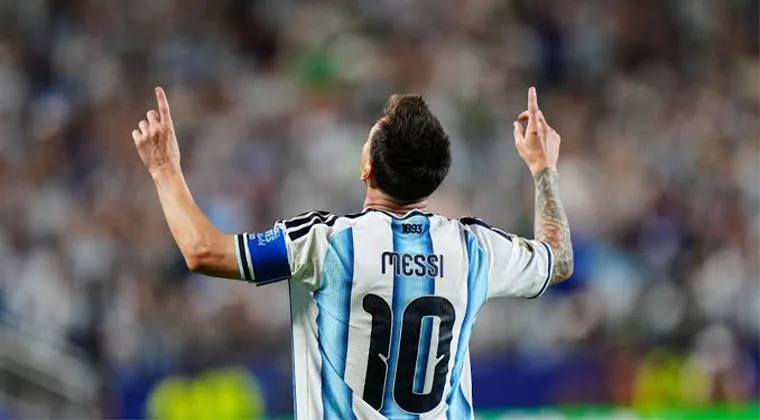
History made
The breakthrough Argentina had been searching for finally arrived in the 38th minute, and it came through the player who has built a career on delivering in football’s biggest moments. After sustained pressure and several near misses, Lionel Messi once again rose to the occasion, putting his team ahead with a finish that showcased the composure and precision that have defined his remarkable career.
The move began with a well-worked attacking sequence down the left side. Facundo Medina advanced confidently before delivering a perfectly weighted pass into a dangerous area. As the ball travelled across the penalty box, Thiago Almada displayed impressive awareness by deliberately allowing it to pass through without making contact. His intelligent decision caught the Austrian defence off guard and created the space Messi needed.
Suddenly finding himself in a prime scoring position, the Argentine captain required no second invitation. With the goal at his mercy and only the goalkeeper left to beat, Messi calmly guided a left-footed effort into the net. The finish appeared effortless, but it was the result of years of experience, sharp movement, and an instinctive understanding of where to be at exactly the right moment.
The reaction inside the stadium was immediate and emotional. Thousands of Argentina supporters, who had turned the venue into what felt like a home match, erupted in celebration. Blue-and-white flags waved throughout the stands as fans jumped to their feet in appreciation of another magical contribution from the man who has carried their hopes for nearly two decades. Chants echoed around the arena as Messi’s teammates surrounded him in celebration.
For many supporters, the goal felt especially significant because it represented yet another milestone in an already historic World Cup career. In Argentina’s opening match of the tournament, Messi had produced a brilliant hat-trick against Algeria in a convincing 3-0 victory. Those three goals allowed him to draw level with legendary German striker Miroslav Klose, whose tally of 16 World Cup goals had stood as the benchmark for years.
By scoring against Austria, Messi moved beyond that mark and further cemented his place among football’s greatest-ever performers. The achievement was another addition to a collection of records that continues to grow despite him approaching the latter stages of his playing career.
What made the moment even more emotional was the context surrounding it. Observers noticed that Messi appeared visibly moved after finding the net. His celebration carried a level of emotion rarely seen from the usually composed superstar. Reports later suggested that his reaction may have been linked to concerns away from football, with his father currently recovering from a health issue. While details remained private, the information helped explain why the goal seemed to carry such personal significance.
The emotional scenes served as a reminder that even athletes who perform on the world’s biggest stages face challenges beyond the sport. For Messi, the goal was not only important for Argentina’s World Cup campaign but also appeared to hold deep personal meaning.
His presence at the tournament itself was something many fans had anxiously awaited. Despite widespread expectations that he would lead Argentina’s title defence, Messi delayed confirming his participation until relatively close to the competition. Questions surrounded whether he would commit to another demanding international campaign, particularly given his age and the physical challenges involved in competing at the highest level.
However, once the tournament approached, few genuinely believed he would stay away. The opportunity to represent Argentina at another World Cup proved impossible to resist. Throughout his career, Messi has repeatedly demonstrated his devotion to the national team, and the chance to defend the trophy won four years earlier was a challenge he eagerly embraced.
The veteran forward had already secured his place in football history long before arriving at this tournament. His achievements with clubs across Europe, including his unforgettable years at Barcelona and his successful spell with Paris Saint-Germain, ensured his legacy was beyond question. Yet international success remained one of his greatest motivations, and lifting the World Cup had only strengthened his desire to continue competing for his country.
Four years earlier, Messi had played a central role in guiding Argentina to global glory. His performances throughout that victorious campaign inspired millions and finally delivered the one major trophy that had eluded him for much of his career. Rather than viewing that triumph as the perfect ending, he chose to continue writing new chapters in his remarkable story.
Following Messi’s opening goal against Austria, many expected Argentina to take complete control of the contest and add further goals. However, despite dominating possession for extended periods, Lionel Scaloni’s team struggled to convert their superiority into clear-cut chances.
The second half developed into a relatively quiet affair. Argentina appeared content to manage the game and protect their advantage, while Austria searched for opportunities to get back into the match. Neither side produced many memorable attacking moments, and the tempo slowed compared to the intensity of the opening period.
Austria gradually showed more ambition as the clock ticked down. While they had spent much of the first half defending deep inside their own territory, they began committing additional players forward in an attempt to find an equaliser. Their efforts created a few promising situations, but Argentina’s defensive structure remained largely intact.
If any team looked more likely to score during certain stages of the second half, it was arguably Austria. They enjoyed brief periods of pressure and managed to push Argentina further back than at any previous point in the match. Nevertheless, turning possession into genuine scoring opportunities proved difficult.
Argentina goalkeeper Emiliano Martinez remained alert whenever called upon. Although he was not heavily involved throughout the evening, the World Cup-winning goalkeeper demonstrated his reliability when required. Austria produced one particularly dangerous attack that forced Martinez into meaningful action, but he responded confidently and ensured Argentina maintained their lead.
As the match entered its closing stages, tension remained because a single goal could have changed the outcome. Austria continued searching for a breakthrough, while Argentina sought a decisive second goal to remove any lingering uncertainty.
Just when it appeared the contest would conclude with a narrow one-goal margin, Messi delivered one final moment of brilliance. Deep into stoppage time, a scramble developed inside Austria’s penalty area. Defenders attempted desperately to clear the danger, but the ball remained loose.
Predictably, Messi was perfectly positioned to take advantage. Reacting faster than everyone around him, he seized possession amid the chaos and displayed remarkable composure under pressure. Surrounded by defenders and operating in a crowded area, he managed to create enough space to finish clinically and score his second goal of the evening.
The strike effectively ended any hopes of an Austrian comeback and sealed a 2-0 victory for Argentina. More importantly, it ensured that the match would be remembered not only for the result but also for another historic performance from Messi.
As celebrations erupted once again among the Argentina supporters, the significance of the moment became clear. Their captain had once more demonstrated his ability to influence the biggest matches, break records, and inspire his team when it mattered most.
For Argentina, the victory secured progression to the knockout stage and strengthened belief that another deep run in the tournament is possible. For Messi, it represented yet another unforgettable night in a career filled with extraordinary achievements. Even at 38 years old, he continues to produce moments that captivate football fans around the world and reinforce his status as one of the sport’s all-time greats.