
Starting in June, Dubai’s Salik system will implement a 5% value-added tax on toll gate charges as well as fees related to purchasing and activating Salik tags for vehicles.
Dubai’s Salik Introduces 5% VAT on Toll Fees and Tag Activation from June.
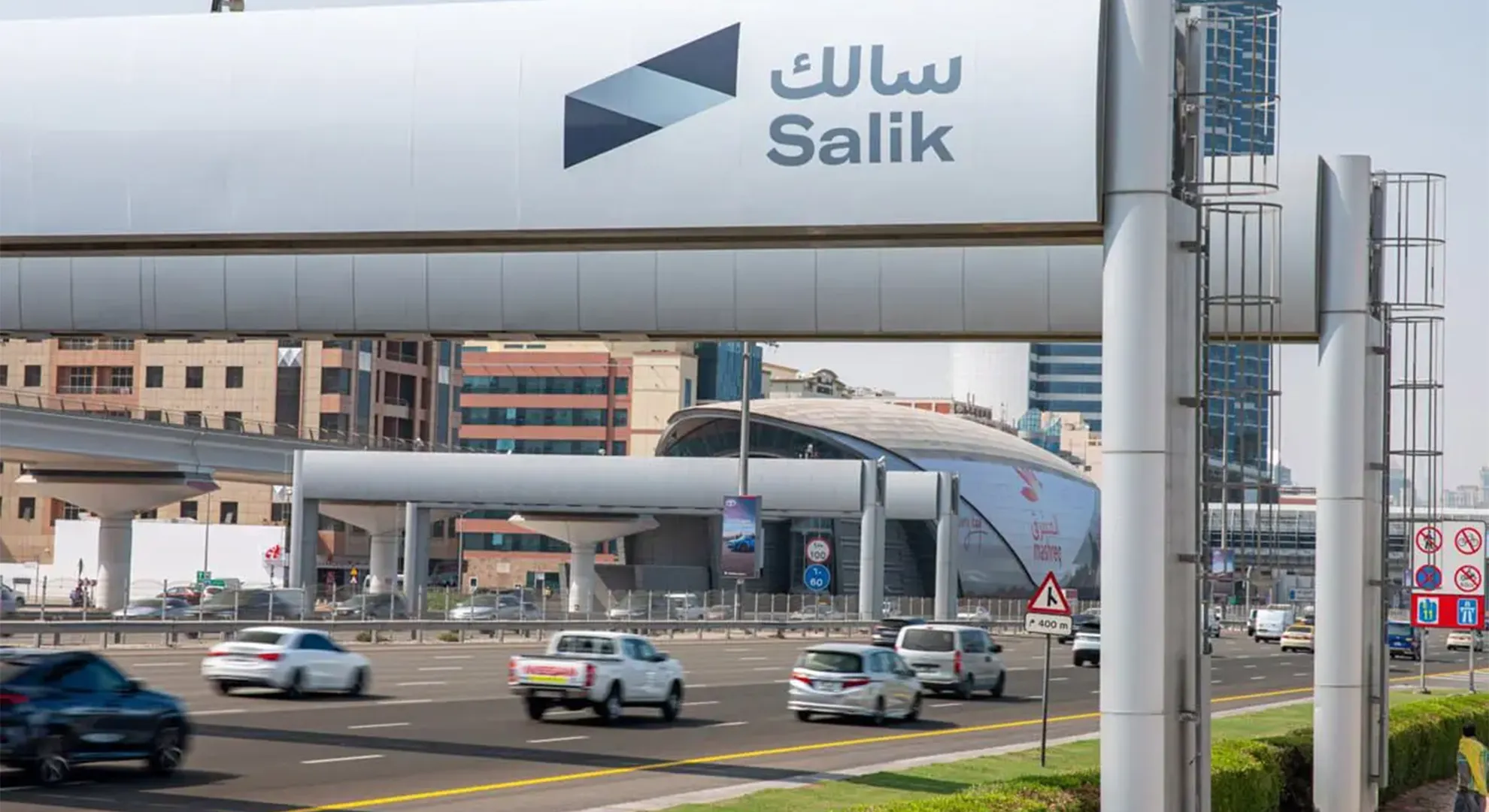
Dubai’s toll gate operator Salik has announced that a 5 per cent value-added tax (VAT) will soon be applied to toll charges and tag activation fees, with the new measure taking effect from June 1, 2026. The company clarified that while motorists will notice the addition of VAT to certain charges, the move will not alter Salik’s underlying pricing structure or affect the company’s financial strength and profitability in the future.
In a statement released on Friday, the Dubai-listed company explained that the VAT component would be collected in accordance with UAE tax regulations and transferred directly to the Federal Tax Authority (FTA). Salik emphasised that the tax does not represent additional operational income for the company, but rather a statutory charge collected on behalf of the government.
The announcement follows a similar move by Dubai’s major public parking operator, Parkin, which recently confirmed that it would also begin applying a 5 per cent VAT to all parking-related services starting June 1. The parallel implementation across transport-related services reflects broader regulatory compliance measures linked to taxation policies in the UAE.
Salik stated that the introduction of VAT would not impact the company’s profitability because the tax functions as a pass-through item rather than a revenue-generating adjustment. In practical terms, this means that customers will pay the VAT amount in addition to the existing toll and service fees, while Salik will simply transfer the collected tax to the authorities without retaining it as profit.
The company further clarified that its standard toll charges and tag-related fees remain unchanged apart from the addition of VAT. Motorists using Dubai’s toll gate system will therefore continue paying the same base rates, with the extra 5 per cent reflecting only the government-mandated tax requirement.
Salik also addressed the issue of retrospective VAT liabilities linked to previous years. According to the company, an agreement had already been reached under which the Roads and Transport Authority (RTA) would compensate Salik for VAT amounts covering the period between July 1, 2022 and May 31, 2026. As a result, the company said there would be no negative financial consequences arising from the retroactive tax component.
The operator noted that this compensation arrangement ensures Salik remains financially unaffected by past VAT obligations during the specified period. The company said the mechanism had been agreed in advance and would fully offset any retrospective liabilities associated with toll revenues collected before the formal implementation date.
In its statement, Salik reaffirmed its commitment to maintaining full regulatory compliance and transparency in all financial and operational matters. The company said it would continue adhering to applicable UAE laws and disclosure requirements while providing further updates to investors and the market whenever necessary.
The toll operator also stressed that the VAT implementation forms part of broader regulatory procedures rather than a strategic pricing increase by the company itself. By framing the tax as a regulatory obligation, Salik sought to reassure shareholders and motorists that the changes are administrative in nature and not tied to alterations in the business model or revenue-generation strategy.
Alongside the VAT announcement, the company also released details regarding its financial performance during the first quarter of 2026. Salik reported that its net profit remained relatively stable during the period despite a more difficult operating environment in March linked to regional geopolitical tensions and military conflict in the surrounding region.
According to the company’s financial results, net profit for the first quarter stood at Dh369.3 million, reflecting resilience despite external factors that affected mobility patterns and traffic volumes during part of the quarter. Salik indicated that regional developments during March contributed to softer road usage trends, which in turn affected toll revenue generation.
Total revenue for the first three months of 2026 reached Dh728.9 million, representing a decline of approximately 3 per cent compared to the same period a year earlier. The company attributed the decrease primarily to lower toll usage resulting from reduced traffic movement during the quarter.
Officials explained that traffic activity slowed during March because of exceptional regional circumstances tied to ongoing military tensions, leading to fewer vehicle movements through toll gates. This softer traffic environment directly impacted toll collection volumes, which remain Salik’s primary source of income.
However, despite the decline in toll-related revenue, the company said certain business segments helped partially offset the impact. Growth in tag activation fees and other supporting revenue streams contributed positively during the quarter, helping maintain overall financial stability despite the reduction in traffic activity.
Salik’s performance highlights how external geopolitical events can influence transportation patterns and mobility-related businesses even in highly developed urban environments like Dubai. Reduced movement during periods of uncertainty can affect road usage, consumer activity, and commuting behaviour, all of which influence toll revenues.
Nevertheless, the company’s ability to maintain broadly stable profitability despite these pressures was presented as evidence of operational resilience and diversified income support. Analysts often view such stability as a sign that the company’s financial structure remains capable of absorbing temporary market fluctuations.
The announcement regarding VAT implementation also comes at a time when Dubai continues expanding and modernising its transportation infrastructure. Salik plays a central role in managing traffic flow across major roads and highways in the emirate, with toll gates positioned along key routes to support congestion management and urban mobility planning.
Since its establishment, Salik has become an important component of Dubai’s transportation ecosystem, contributing both to traffic regulation and public infrastructure funding. The company’s electronic toll system allows motorists to pass through gates without stopping, improving traffic efficiency on some of the city’s busiest roads.
The addition of VAT to toll services reflects the ongoing integration of tax regulations across different sectors of the UAE economy. Since the introduction of VAT in the country in 2018, various industries and service providers have gradually adjusted their systems and pricing frameworks to align with federal tax requirements.
For consumers, the introduction of VAT on toll and parking services means slightly higher day-to-day transportation costs beginning in June 2026. Regular commuters using Salik gates frequently may notice a small increase in their overall travel expenses once the new tax takes effect.
Despite this, Salik emphasised that the actual toll tariffs themselves are not being increased by the company. Instead, the adjustment strictly reflects the application of the mandatory 5 per cent VAT charge under UAE law.
Industry observers note that transparency regarding VAT collection is important for listed companies like Salik, particularly when communicating with investors and shareholders. By clarifying that the tax will not influence profitability or operational performance, the company aimed to minimise concerns about the financial implications of the change.
The compensation agreement covering retrospective VAT obligations also appears designed to reassure stakeholders that there will be no unexpected financial burden arising from earlier tax periods. Such clarity is particularly significant for publicly traded firms operating within regulated sectors.
Salik’s statement additionally highlighted the company’s commitment to maintaining high standards of corporate governance, financial disclosure, and regulatory compliance. The operator said it remains dedicated to keeping investors informed about material developments affecting its operations or financial position.
The toll operator’s first-quarter results provide further insight into the broader transportation environment in Dubai during the early months of 2026. Softer traffic trends linked to regional events suggest that external geopolitical factors can still influence mobility and economic activity even in stable domestic markets.
At the same time, the company’s continued profitability demonstrates the essential role transportation infrastructure services continue to play within Dubai’s economy. Despite temporary fluctuations in traffic volumes, demand for efficient urban mobility systems remains strong due to the emirate’s growing population, tourism activity, and economic expansion.
As VAT implementation approaches, motorists and businesses across Dubai’s transportation sector are expected to adjust gradually to the revised billing structures. Similar transitions have occurred in other service industries following tax-related regulatory updates in recent years.
For Salik, the move represents more of an administrative and regulatory development than a strategic financial shift. By ensuring the tax is passed directly to the FTA while preserving its existing pricing model and profitability structure, the company aims to maintain operational stability while complying fully with federal regulations.
Going forward, analysts are likely to monitor how broader economic conditions, regional developments, and transportation patterns continue influencing toll usage and revenue performance. However, Salik’s latest statement indicates confidence in the company’s financial resilience and long-term operational outlook despite short-term external pressures.
Salik’s financial results for the first quarter of 2026 reflected a mixed operating environment, with some business segments recording growth while others experienced pressure due to softer traffic activity during March amid regional geopolitical tensions. Although overall toll usage declined compared to the same period last year, the company continued to benefit from expanding vehicle registrations, stable enforcement revenues, and the ongoing contribution of its variable pricing system.
One of the stronger performing areas during the quarter was tag activation revenue, which recorded healthy year-on-year growth as more motorists registered vehicles under Dubai’s toll gate network. Salik reported that income generated from tag activation fees rose by 6.1 per cent during the first three months of 2026, reaching Dh12.2 million.
The company attributed this increase primarily to continued expansion in the number of active vehicles registered within the Salik system. According to the latest figures, registered active vehicles increased by 8.4 per cent compared with the same period in the previous year. This growth reflects Dubai’s expanding population, increasing vehicle ownership, and sustained demand for road mobility across the emirate.
The rise in active vehicle registrations demonstrates how Dubai’s transportation ecosystem continues to expand despite temporary fluctuations in traffic activity caused by external conditions. As more residents, businesses, and visitors rely on private transportation, the number of motorists requiring Salik tags has steadily grown, supporting additional activation fee revenue for the company.
Industry analysts often consider growth in active vehicle registrations an important indicator of long-term transportation demand and urban economic activity. In Dubai’s case, the increase also reflects the emirate’s continuing residential and commercial expansion, which has contributed to greater road usage over time even when short-term traffic volumes temporarily soften.
Tag activation fees represent a relatively smaller component of Salik’s total revenue compared with toll collections, but they remain an important supporting income stream. The continued increase in this segment helped offset some of the pressure created by reduced toll usage during the quarter.
At the same time, toll usage fees — the company’s core source of income — recorded a decline during the first quarter of 2026. Salik reported that revenue generated from toll gate usage totalled Dh625.5 million during the period, marking a 6 per cent decrease compared to the corresponding quarter last year.
The decline was primarily linked to softer traffic conditions during March, when regional geopolitical developments and military tensions influenced mobility patterns across the region. According to the company, these exceptional external circumstances contributed to reduced vehicle movement and lower traffic volumes on major roads throughout Dubai.
As toll revenue is directly tied to the number of vehicles passing through Salik gates, any slowdown in commuting activity, tourism-related movement, or commercial transportation can significantly influence overall collections. The more moderate traffic environment experienced during the quarter therefore had a direct impact on toll fee income.
Despite the decrease, Salik noted that the continued impact of its variable pricing mechanism helped partially cushion the decline in revenue. The pricing system, which was introduced in late January 2025, adjusted toll charges depending on traffic conditions and timing, allowing the company to optimise revenue collection during peak demand periods.
The variable pricing model was designed not only to manage congestion more efficiently but also to support balanced traffic distribution across different times of day. Under the mechanism, toll charges may vary according to traffic intensity and demand patterns, encouraging motorists to travel during less congested periods whenever possible.
According to transportation analysts, dynamic toll pricing systems are increasingly being adopted in major cities worldwide as governments and infrastructure operators seek to improve traffic management while maintaining sustainable transportation funding. Dubai’s implementation of variable pricing reflects broader international trends in smart mobility and urban traffic regulation.
Salik indicated that the pricing mechanism continued contributing positively to revenue performance even during a quarter affected by softer traffic conditions. Without the additional support provided by dynamic pricing adjustments, the decline in toll fee income could potentially have been more significant.
The company also revealed that the total number of trips made through Salik toll gates declined during the first quarter. Including discounted journeys, the total number of recorded trips fell by 6.4 per cent year-on-year to approximately 197.2 million trips.
This reduction reflected the same broader traffic moderation observed throughout March amid changing regional market conditions and geopolitical uncertainty. Salik explained that traffic patterns became more subdued during the period as economic and mobility activity slowed in response to regional developments.
The decline in trip numbers highlights the sensitivity of transportation systems to wider economic and geopolitical factors. Changes in consumer confidence, travel behaviour, tourism flows, and business operations can all influence road usage levels, particularly in globally connected cities like Dubai.
While traffic trends weakened during March, the overall number of toll gate trips remained substantial, underlining the continued importance of Dubai’s road network and transportation infrastructure in supporting daily economic activity. Millions of motorists continued using Salik gates throughout the quarter despite the temporary moderation in traffic volumes.
Transportation experts note that fluctuations in toll usage are common during periods of regional instability or economic uncertainty. Businesses may reduce travel activity, consumers may alter commuting patterns, and tourism volumes may temporarily decline, all of which can influence vehicle movement across urban road systems.
However, Dubai’s long-term growth trajectory, expanding infrastructure, and role as a regional commercial hub continue supporting strong underlying transportation demand. Analysts therefore often view short-term declines in toll activity during exceptional circumstances as temporary rather than structural.
In addition to toll collections and tag activation fees, Salik also generates revenue through traffic fines and penalties associated with toll system violations. During the first quarter of 2026, income from fines reached Dh69.1 million.
This represented a modest increase of approximately 1 per cent compared with the same period the previous year. While the rise was relatively limited, the company noted that fine-related income remained resilient despite softer traffic conditions and lower chargeable trip volumes during March.
Salik explained that the slight increase in fines occurred even as the number of chargeable journeys declined due to reduced road activity linked to regional tensions. Normally, lower traffic movement can lead to reduced violation rates because fewer vehicles are passing through toll gates overall.
The fact that fine revenue remained broadly stable despite declining trip volumes suggests that compliance enforcement and toll monitoring systems continued operating consistently throughout the quarter. Salik’s fully automated electronic toll infrastructure allows the company to monitor vehicle passages efficiently and issue penalties when necessary.
Traffic fines are typically issued for situations such as insufficient account balances, unregistered vehicles, or non-compliance with toll payment procedures. Although these revenues form a smaller share of the company’s total income compared to toll collections, they still contribute meaningfully to overall financial performance.
The company’s financial update reflects how different revenue streams within the business respond differently to changing market conditions. While toll revenues are highly sensitive to traffic fluctuations, tag activation fees may continue growing due to longer-term vehicle registration trends, and fine revenues may remain relatively stable because of ongoing compliance enforcement.
Overall, Salik’s first-quarter performance illustrated a transportation sector adapting to temporary external pressures while maintaining operational resilience. Although geopolitical tensions and softer mobility trends affected traffic volumes during March, the company continued generating substantial revenues across multiple business segments.
Financial analysts observing the company noted that Salik’s diversified income structure helped support stability during the quarter. In addition to toll collections, the operator benefits from activation fees, penalties, and other service-related revenues, which can partially offset temporary weakness in one specific area.
The quarter also highlighted the growing importance of smart mobility systems and dynamic pricing models in modern urban transportation management. By implementing variable toll pricing, Salik has attempted to create a more flexible revenue model capable of adapting to changing traffic conditions while also supporting congestion reduction goals.
Dubai’s transportation infrastructure continues evolving alongside the city’s rapid urban expansion. As new residential communities, commercial districts, and tourism developments emerge, demand for efficient road management systems remains strong. Salik’s toll gate network therefore plays a critical role in balancing traffic flow and supporting the broader mobility framework of the emirate.
The increase in active registered vehicles further reinforces expectations for long-term transportation growth in Dubai. Population expansion, economic development, and rising tourism activity continue contributing to increased demand for mobility services and road infrastructure.
At the same time, transportation operators like Salik must remain adaptable to external influences such as economic cycles, geopolitical developments, and shifts in travel behaviour. The first quarter of 2026 demonstrated how regional events can temporarily affect traffic conditions even in a highly developed urban market.
Despite these short-term challenges, the company maintained broadly stable profitability and continued investing in operational efficiency and regulatory compliance. Salik has consistently emphasised transparency in communicating financial performance and market developments to investors and stakeholders.
The company’s latest results also arrive shortly after its announcement regarding the implementation of 5 per cent value-added tax on toll charges and tag activation fees beginning June 1, 2026. Salik clarified that the VAT measure would not impact profitability because the tax will simply be collected on behalf of the Federal Tax Authority and passed directly to the government.
Industry observers believe the combination of dynamic pricing systems, expanding vehicle registrations, and continued urban development positions Salik to maintain long-term relevance within Dubai’s evolving transportation ecosystem. While traffic volumes may fluctuate periodically due to exceptional external events, the city’s continued economic growth supports sustained demand for road infrastructure and toll services.
The toll operator’s first-quarter figures ultimately reflect both the strengths and challenges of operating within a fast-moving urban environment influenced by regional and global developments. Growth in vehicle registrations and activation revenues highlighted continued expansion in the user base, while softer traffic trends underscored the impact external conditions can have on transportation activity.
Nevertheless, Salik’s ability to maintain stable earnings despite lower trip volumes suggests that the company remains financially resilient and operationally adaptable. As Dubai continues investing in mobility innovation and infrastructure expansion, Salik is expected to remain a central component of the emirate’s transportation strategy in the years ahead.