According to a senior Dubai official, the city’s flame trees are helping reduce surface temperatures by as much as 5°C, contributing to cooler outdoor spaces and improving comfort in urban areas.
Dubai’s Flame Trees Lower Ground Temperatures by Up to 5°C, Says Senior Official.
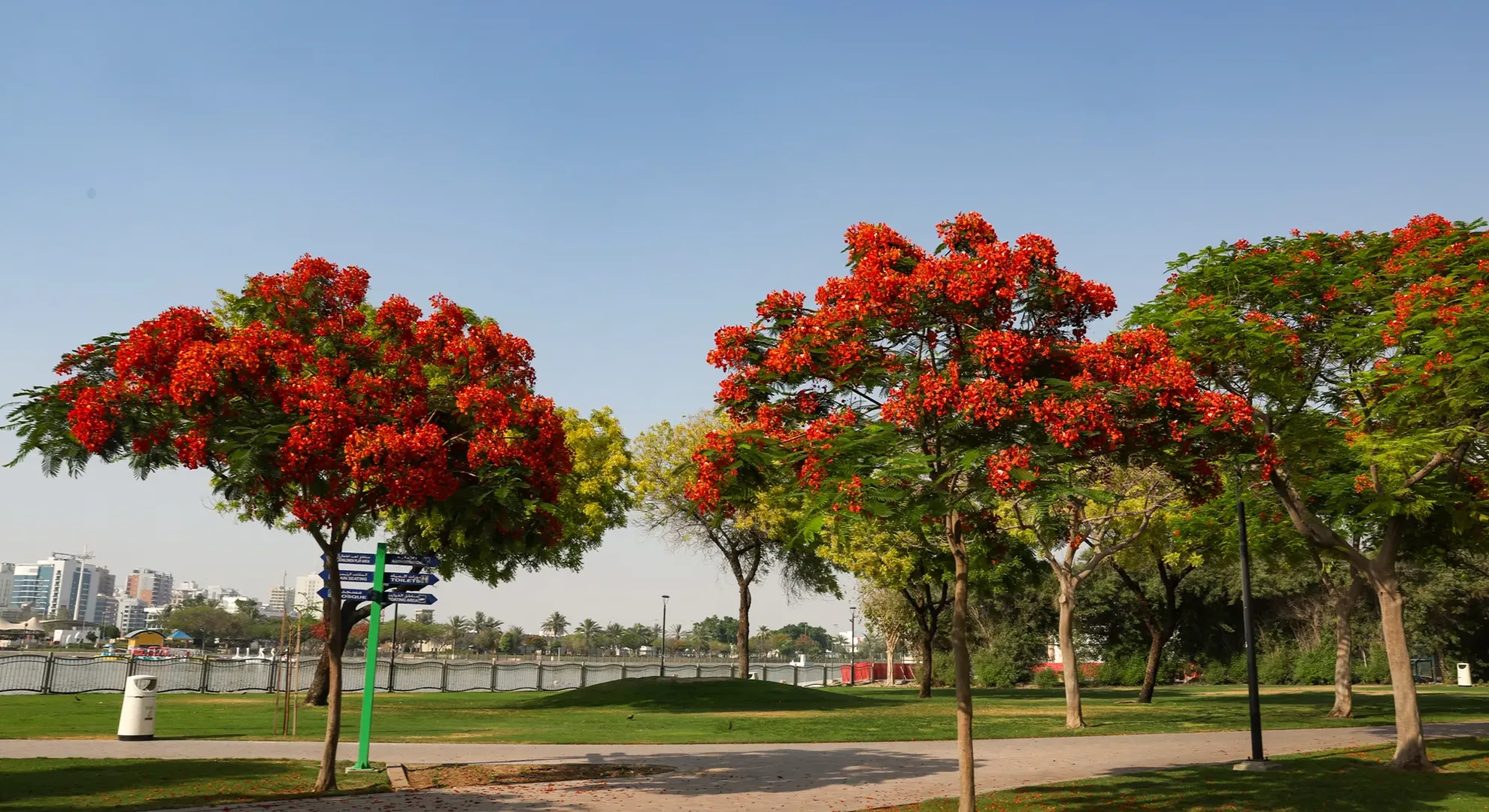
Introduced to Dubai many years ago, the flame tree has gradually become one of the city’s most recognisable natural landmarks, admired not only for its vibrant red and orange blossoms but also for the practical environmental benefits it offers. Over time, these trees have woven themselves into Dubai’s urban identity, lining streets, parks, and residential areas with bursts of seasonal colour while helping create cooler and more comfortable public spaces for residents and visitors alike.
Now, as Dubai marks its first official Flame Tree Season, city officials are drawing attention to the important role these trees play in supporting the emirate’s sustainability and urban greening goals. Municipal experts say the flame tree is far more than a decorative addition to the landscape. Its wide canopy and dense foliage help reduce heat levels in outdoor areas, making it a valuable asset in a city known for its intense summer temperatures.
Khawla Al Ali, who leads the Executive Team for Pioneering and Community Initiatives within the Agriculture Department at Dubai Municipality, highlighted the significance of the species during the launch of the seasonal initiative. According to her, the tree’s environmental contribution is substantial, especially during the hotter months of the year when shaded outdoor areas become increasingly important for public comfort and wellbeing.
She explained that mature flame trees can develop expansive crowns spreading up to 15 metres across, creating broad shaded zones beneath them. These shaded areas are capable of lowering surrounding ground temperatures by as much as five degrees Celsius, helping to ease the impact of extreme heat in urban settings. The cooling effect, she noted, improves outdoor conditions for pedestrians, families, and communities using parks, walkways, and recreational spaces throughout the city.
Officials referenced findings included in the newly released Flame Tree Season Guide, which outlines the ecological and social benefits associated with the species. Beyond its striking appearance, the tree contributes to environmental balance by helping moderate temperatures, supporting biodiversity, and enhancing the visual appeal of urban neighbourhoods. Its flowers, which bloom in vivid shades during the warmer months, have become closely associated with Dubai’s seasonal landscape and are often admired by photographers, nature enthusiasts, and residents across the emirate.
Al Ali stressed that the flame tree should be viewed as both a functional and aesthetic element within Dubai’s city planning strategy. While its colourful blossoms add beauty to roadsides and public spaces, the tree also performs a practical role in improving urban liveability. The shade provided by its extensive branches can encourage more outdoor activity, especially in areas designed for walking, relaxation, and community gatherings.
Urban planners and environmental specialists increasingly recognise the importance of greenery in reducing the effects of heat buildup in rapidly growing cities. In Dubai, where temperatures can climb dramatically during summer, planting trees capable of creating natural cooling zones has become an essential part of long-term sustainability planning. The flame tree, with its combination of resilience, size, and visual appeal, has emerged as one of the preferred species for many public landscaping projects.
The municipality official also noted that these trees contribute to broader ecological goals by supporting local biodiversity. Their branches and foliage can provide shelter for birds and insects, while their presence adds variety and richness to the city’s green spaces. This aligns with Dubai’s wider efforts to create healthier urban ecosystems and expand green infrastructure throughout the emirate.
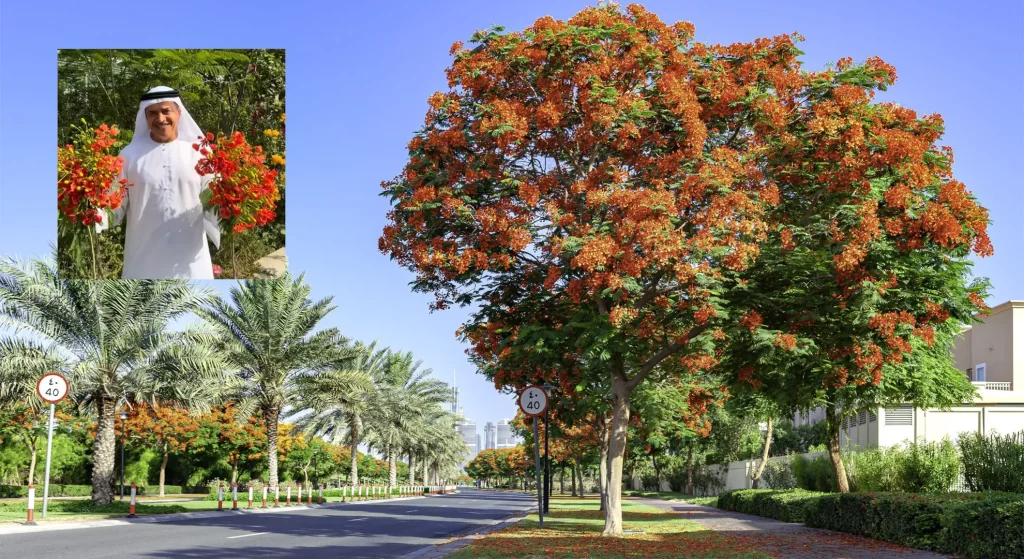
Residents have long appreciated the flame tree for the character it brings to neighbourhoods and streetscapes. During blooming season, entire avenues can transform into corridors of fiery red and orange hues, creating picturesque scenes that stand out against Dubai’s modern skyline. The seasonal flowering has become a familiar and celebrated part of life in the city, symbolising both natural beauty and the success of Dubai’s landscaping initiatives in a desert climate.
The newly launched Flame Tree Season celebration aims to increase public awareness about the environmental importance of urban trees and encourage greater appreciation for green spaces. Through educational campaigns and community engagement activities, Dubai Municipality hopes to inspire residents to value the role trees play in improving quality of life and supporting climate-conscious urban development.
Officials say the initiative is also intended to highlight how carefully selected plant species can contribute to making cities more sustainable and resilient. In addition to reducing heat, trees can help improve air quality, absorb carbon dioxide, and create more inviting public environments. For Dubai, where urban expansion continues at a rapid pace, integrating greenery into infrastructure projects remains a major priority.
Al Ali pointed out that the flame tree perfectly represents the balance between beauty and environmental functionality. Its dramatic seasonal blooms capture public attention, but its practical contribution to cooling and shading urban areas is equally significant. By reducing surface temperatures and offering relief from direct sunlight, the tree helps support healthier and more comfortable outdoor experiences for people across the city.
As Dubai continues to invest in environmental innovation and sustainable city planning, officials believe urban greenery will play an increasingly vital role in shaping future communities. The flame tree, already deeply embedded in the city’s visual and cultural landscape, is expected to remain a central feature of these efforts for years to come.
The municipality’s focus on celebrating the species also reflects a broader global trend in urban planning, where cities are prioritising nature-based solutions to combat rising temperatures and climate challenges. Trees capable of providing shade and cooling effects are becoming essential tools in reducing the urban heat island effect, a phenomenon where built-up areas experience significantly higher temperatures than surrounding regions due to concrete, asphalt, and limited vegetation.
Dubai’s experience with the flame tree demonstrates how carefully managed urban forestry can bring both environmental and social rewards. From lowering temperatures and improving comfort to enhancing biodiversity and beautifying streets, the tree has become an example of how natural elements can positively influence modern city living.
For many residents, the flame tree represents more than just a landscaping feature. It serves as a reminder of Dubai’s transformation over the decades into a greener and more environmentally conscious metropolis. As the city grows and evolves, initiatives like Flame Tree Season are intended to strengthen public connection with nature and encourage sustainable practices that will benefit future generations.
By recognising the contribution of the flame tree, Dubai Municipality hopes to inspire greater appreciation for the role of urban greenery in everyday life. Whether admired for its vibrant blossoms or valued for the cooling shade it provides, the tree continues to hold an important place in the city’s environmental and cultural story.
History of flame tree
Known scientifically as Delonix regia, the flame tree traces its roots back to Madagascar and was brought to Dubai many years ago during the emirate’s early landscaping and urban beautification initiatives. City planners and environmental experts selected the species because of its remarkable ability to thrive in hot climates while also offering visual appeal and practical environmental advantages. Its expansive canopy, vibrant flowering pattern, and capacity to provide generous shade made it particularly suitable for Dubai’s challenging desert conditions and long summers.
Over the decades, the tree has become one of the most recognisable natural features in Dubai’s urban environment. Every year, as temperatures begin to rise toward the summer season, the flame tree bursts into bloom with clusters of vivid orange-red flowers that transform streets, parks, and residential districts into colourful landscapes. The flowering period generally begins in late April and continues into early July, with the most intense and visually striking blooms appearing during May and June.
For many residents, the arrival of the blossoms signals an important seasonal transition in the city. The trees add dramatic colour to public spaces at a time when much of the surrounding environment is shaped by intense heat and bright sunlight. Their striking appearance has made them a favourite subject for photographers, artists, and nature enthusiasts who associate the blooming season with some of Dubai’s most memorable outdoor scenes.
The flame tree’s presence extends across several of Dubai’s older and well-established communities, where generations of residents have grown familiar with its seasonal display. Areas such as Jumeirah, Al Safa, Rashidiya, Deira, and Bur Dubai are especially known for avenues and neighbourhoods lined with these trees. Major roads and public spaces, including Jumeirah Street, Airport Road, and Safa Park, also feature large numbers of flame trees that contribute both beauty and shade to the urban landscape.
As the city expanded over time, the tree gradually became more than just a decorative planting choice. It evolved into part of Dubai’s shared cultural and visual identity, carrying emotional significance for long-term residents who connect its blooming season with childhood memories, family routines, and the rhythm of everyday life in the emirate. Many people remember driving beneath the bright canopy-covered roads during summer evenings or gathering in shaded public spaces protected from the harsh sun by the tree’s wide branches.
Environmental specialists say the tree’s role in Dubai extends beyond aesthetics. In addition to softening the city’s appearance with natural colour, its broad canopy creates cooler outdoor areas that encourage people to spend more time outside despite the summer heat. This cooling effect supports walkability and comfort in residential neighbourhoods, parks, and roadside gathering spots.
Sheena Khan, Head of Environmental Programmes at Terra in Expo City Dubai, explained that the flame tree has become deeply intertwined with Dubai’s social and seasonal rhythm over many years. According to her, the annual appearance of the blossoms carries strong emotional and cultural meaning for many people living in the city.
She noted that for countless residents, the flowering season represents a familiar marker of time and tradition. The vivid blooms often coincide with the closing weeks of the academic year, making them symbolic of school holidays and the beginning of summer activities. Families and long-time residents frequently associate the sight of the bright orange-red flowers with childhood memories, community gatherings, and the unique atmosphere that defines Dubai during the warmer months.
Khan also highlighted the practical importance of the shade created by mature flame trees. In many neighbourhoods, the trees provide shelter for roadside seating areas and informal outdoor meeting spaces where people gather during evenings. Their cooling shade offers relief from direct sunlight, helping make outdoor social interaction more pleasant during a season when temperatures can become extreme.
Beyond their environmental and social value, the flame trees also contribute to Dubai’s broader sustainability and greening ambitions. Urban planners increasingly recognise the importance of planting species capable of reducing heat buildup while also enhancing the city’s appearance. The flame tree’s adaptability to arid climates and its ability to thrive in landscaped urban settings have made it one of the most successful and enduring choices for Dubai’s greenery projects.
Today, the tree stands as both a natural landmark and a symbol of Dubai’s long-term investment in creating a greener urban environment. While skyscrapers and modern infrastructure often dominate the city’s global image, the seasonal bloom of the flame tree offers a softer and more nostalgic side of Dubai that resonates strongly with residents and visitors alike.
Its fiery blossoms, dramatic canopy, and cooling shade continue to shape the atmosphere of many neighbourhoods, reinforcing the connection between urban development and nature in one of the world’s fastest-growing cities. As Dubai continues to expand its sustainability initiatives and public green spaces, the flame tree remains an enduring reminder of how carefully chosen landscaping can influence not only the physical environment but also the emotional and cultural identity of a city.
A city-wide celebration.
Dubai has officially introduced a new city-wide seasonal initiative celebrating one of its most recognisable flowering trees, following the launch of Flame Tree Season by Dubai Crown Prince Sheikh Hamdan bin Mohammed bin Rashid Al Maktoum. The programme shines a spotlight on the spectacular annual blooming of the flame tree, whose bright orange-red flowers have become a familiar and much-loved feature across many of Dubai’s streets, parks, and neighbourhoods.
The initiative is designed not only to celebrate the visual beauty of the trees but also to encourage residents and visitors to reconnect with the city’s natural environment and seasonal cycles. Officials say the campaign aims to inspire people to spend more time outdoors, appreciate Dubai’s green spaces, and engage with the changing landscape during the flowering period. Through community activities and public awareness programmes, the city hopes to create a stronger emotional bond between residents and the urban environment around them.
Flame Tree Season arrives at a time when Dubai continues to place increasing focus on sustainability, environmental awareness, and improving quality of life through greener urban planning. By highlighting the annual bloom of the flame tree, authorities are seeking to create a shared cultural experience that combines nature, community engagement, and city identity.
Khawla Al Ali, who heads the Executive Team for Pioneering and Community Initiatives within Dubai Municipality’s Agriculture Department, explained that the flame tree holds symbolic meaning far beyond its decorative appearance. According to her, the tree represents qualities closely aligned with Dubai’s long-term vision, including resilience, development, civic pride, and environmental transformation.
She noted that the tree’s ability to flourish in Dubai’s climate mirrors the city’s own journey of growth and adaptation over the decades. Just as the flame tree has become deeply rooted within the urban landscape, Dubai itself has evolved into a modern global city while continuing to invest in sustainability and liveability.
Al Ali explained that the municipality views the flame tree as an important symbol of Dubai’s evolving green identity. While the emirate is internationally known for its architecture, infrastructure, and rapid development, officials increasingly want the city to also be recognised for its environmental ambitions and focus on human-centred urban spaces. The seasonal celebration of the flame tree is intended to reinforce this broader vision by reminding residents that nature can play an essential role in shaping the emotional and cultural character of a city.
According to her, Dubai’s leadership is working toward creating urban environments that are not only technologically advanced and environmentally sustainable but also welcoming, memorable, and emotionally meaningful for those who live there. She said initiatives like Flame Tree Season help strengthen the connection people feel with their surroundings by encouraging them to notice seasonal changes, enjoy public parks and streetscapes, and build shared memories around natural experiences within the city.
The municipality official added that the initiative reflects a growing understanding of the importance of urban greenery in enhancing everyday life. Trees and landscaped public spaces are increasingly viewed not merely as decorative additions but as essential parts of a healthy and balanced city environment. Shade, cooling effects, biodiversity support, and opportunities for community interaction all contribute to making urban areas more comfortable and socially vibrant.
Dubai Municipality has also revealed plans to continue expanding the presence of flame trees across different parts of the emirate. Many public parks and landscaped roads already feature the species, but authorities intend to increase planting efforts in the coming years as part of wider sustainability and beautification strategies.
As part of the newly launched season, residents can expect a variety of community-focused events and environmental programmes designed to encourage public participation. These activities are expected to include tree-planting campaigns, seedling distribution drives, educational workshops, and awareness sessions highlighting the environmental importance of urban greenery.
Officials hope these initiatives will encourage people of all ages to become more involved in sustainability efforts and gain a deeper appreciation for the role trees play in urban ecosystems. Educational workshops may also provide information about the history of the flame tree in Dubai, its environmental benefits, and the importance of preserving and expanding green infrastructure in rapidly developing cities.
The campaign is also intended to foster a stronger sense of shared identity and collective pride among residents. By turning the annual bloom into a celebrated seasonal event, Dubai aims to create traditions that people can look forward to each year, similar to internationally recognised flower festivals and nature-related celebrations in other major cities around the world.
Environmental experts say such initiatives can have significant cultural value, especially in highly urbanised environments where seasonal changes may otherwise feel less visible. Public celebrations linked to nature often encourage residents to spend more time outdoors, engage with their communities, and develop stronger emotional ties to their city.
Sheena Khan, Head of Environmental Programmes at Terra in Expo City Dubai, said Dubai’s Flame Tree Season reflects a broader global movement in which cities celebrate seasonal natural phenomena as part of their cultural identity and tourism appeal. According to her, many cities around the world have successfully transformed annual blooming seasons into major cultural events that attract residents and visitors alike.
She pointed to Japan’s world-famous cherry blossom season as one of the most recognised examples. Every year, cities such as Tokyo, Kyoto, and numerous other locations across Japan are transformed by delicate pink sakura blossoms that signal the arrival of spring. The blooming season has become deeply embedded in Japanese culture and is celebrated through festivals, outdoor gatherings, photography, and tourism activities.
Khan explained that the cherry blossom tradition demonstrates how seasonal natural events can create powerful emotional and cultural experiences shared by entire communities. Families, friends, and tourists gather in parks and public spaces to admire the blossoms, participate in picnics, and mark the changing season together. Over time, these traditions have become symbolic expressions of renewal, beauty, and collective identity.
She also highlighted the example of Washington, DC, where the National Cherry Blossom Festival has evolved into one of the city’s most important annual cultural events. The festival, which has existed for more than a century, commemorates the friendship between the United States and Japan while celebrating the arrival of spring through public activities, performances, and outdoor events centred around blooming cherry trees.
According to Khan, these international examples show how cities can use nature and seasonal change to strengthen civic identity and community connection. Public flower festivals and tree celebrations often create memorable experiences that become part of a city’s cultural rhythm and social traditions.
She further referenced the Netherlands’ famous tulip displays as another example of how flowers and seasonal landscapes can shape a city or region’s international identity. Each year, millions of tulips bloom across Keukenhof in Lisse, turning the area into a vibrant attraction filled with colour and attracting visitors from around the world.
The spectacular seasonal transformation of the Dutch landscape demonstrates how nature-based attractions can contribute to tourism, public engagement, and cultural storytelling. Visitors travel specifically to experience the blooming season, photograph the landscapes, and take part in celebrations built around the flowers.
Khan suggested that Dubai’s Flame Tree Season could gradually develop a similar cultural significance over time. While the initiative is still in its early stages, she believes the city’s iconic orange-red blossoms already hold strong emotional meaning for many residents who associate them with the beginning of summer, school holidays, outdoor gatherings, and memories tied to specific neighbourhoods and streets.
She explained that the annual bloom of the flame tree has long served as a natural marker of seasonal transition in Dubai. For many people, seeing the trees covered in bright flowers signals the changing rhythm of daily life as temperatures rise and the city enters the summer season.
The tree’s widespread presence in older neighbourhoods and along major roads has helped make it a familiar visual element across generations. Residents who grew up in Dubai often recall seeing the blossoms during childhood drives through Jumeirah, Al Safa, Deira, or other long-established areas of the city.
Urban planners and environmental experts believe such shared experiences are important in creating emotional attachment to a city. While large-scale infrastructure and modern developments shape Dubai’s international image, smaller seasonal experiences connected to nature can help create a deeper sense of belonging and continuity for residents.
Officials also emphasise that celebrating urban trees can encourage broader public conversations about environmental responsibility and climate resilience. As cities around the world face rising temperatures and increasing urbanisation, expanding green spaces and protecting urban biodiversity are becoming major priorities.
Trees capable of providing shade and cooling effects are especially valuable in hot climates like Dubai’s. In addition to improving visual appeal, they help reduce heat absorption in urban areas, improve comfort for pedestrians, and support healthier outdoor environments.
Dubai Municipality’s continued investment in planting flame trees aligns with wider efforts to create more sustainable and liveable urban communities. Authorities view greenery as a key component of future city planning, helping balance rapid development with environmental wellbeing and public comfort.
As Flame Tree Season becomes part of Dubai’s annual calendar, officials hope it will evolve into a lasting tradition that celebrates both the city’s environmental progress and the emotional connection residents have with their surroundings. Through community participation, educational activities, and public appreciation of urban nature, the initiative aims to strengthen the relationship between people, public spaces, and the changing rhythms of the natural world within the city.