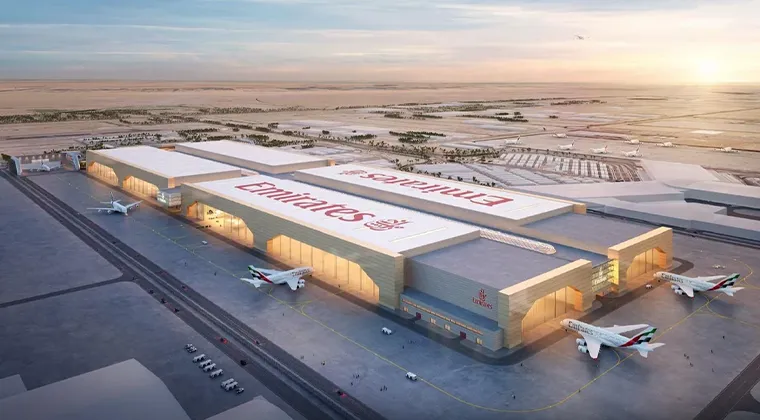
Emirates has announced a $5 billion aviation engineering facility that is expected to become one of the largest in the world, significantly boosting its maintenance and aircraft support capabilities globally.
Emirates unveils $5 billion aviation engineering hub set to rank among the world’s largest.
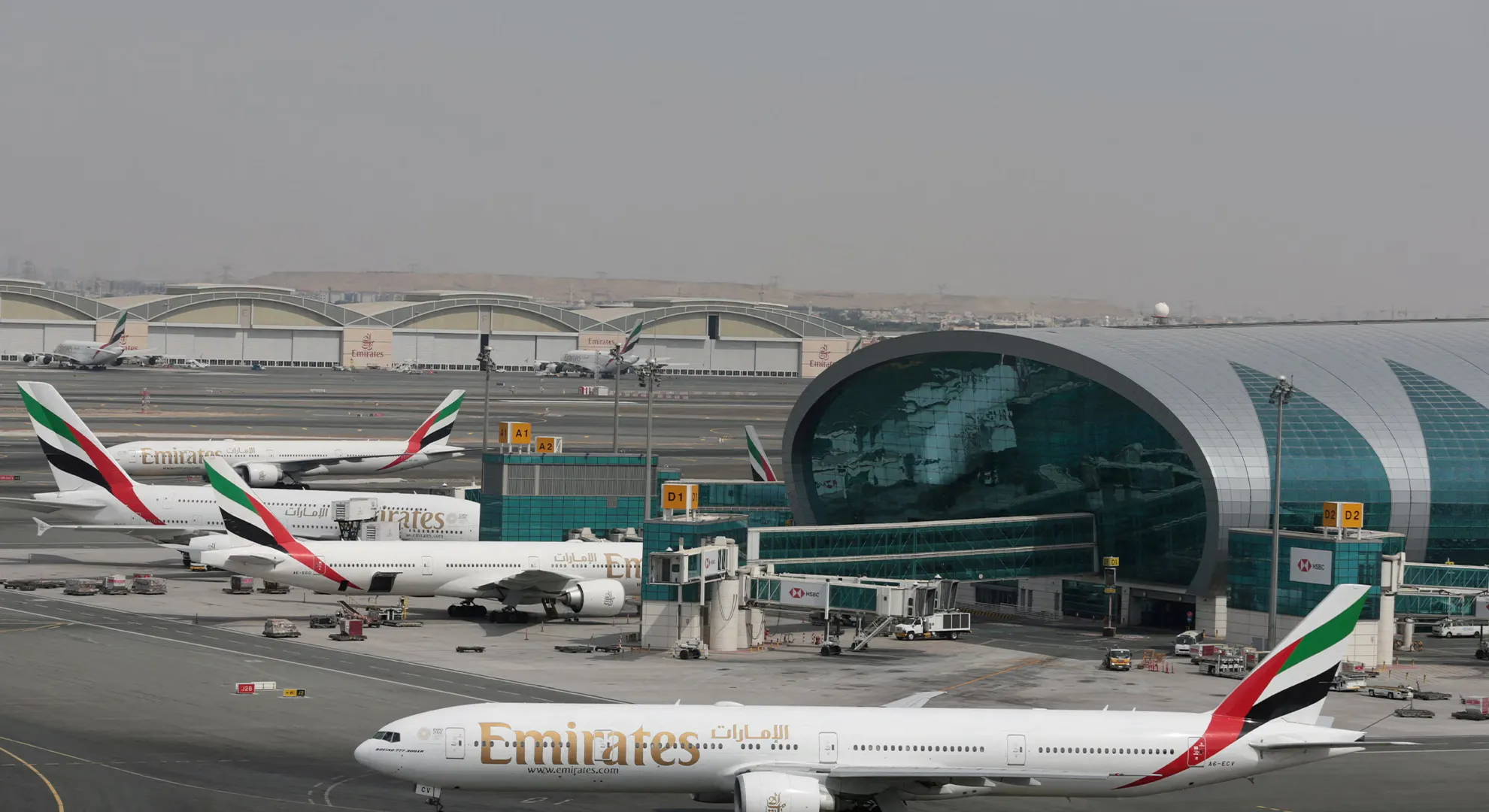
The new aviation engineering complex planned by Emirates is expected to be completed sometime between 2030 and the middle of the 2030s, marking a long-term expansion of the airline’s technical and maintenance capabilities. The facility will be located at Al Maktoum International Airport, which is being developed as a major aviation hub in Dubai’s future infrastructure plans.
Emirates Engineering has confirmed that the project will be developed in partnership with China Railway Construction Company, a major global infrastructure contractor. Together, the two entities aim to construct what is anticipated to become one of the largest and most advanced aviation maintenance facilities in the world. The project reflects Emirates’ long-term strategy to expand its operational capacity in line with its growing fleet and global network.
According to Adel Al Redha, Deputy President and Chief Executive Officer of Emirates Airline, the upcoming engineering complex will be significantly larger than the airline’s existing maintenance facilities. He explained that the new site is expected to nearly double the current capacity, allowing Emirates to handle a much greater volume of aircraft maintenance work simultaneously. This expansion is seen as essential to support the airline’s long-term growth and fleet modernization plans.
One of the most notable features of the facility will be its ability to accommodate up to 28 wide-body aircraft at the same time. This includes not only routine maintenance operations but also more complex engineering tasks such as aircraft conversions. These conversions involve transforming aircraft configurations, for example changing passenger aircraft into freighters or reverting freighter aircraft back into passenger configuration, depending on operational requirements.
Al Redha also highlighted that the facility will be equipped to perform high-level specialized work, including aircraft painting operations. At any given time, the complex will be capable of handling the painting of two to three wide-body aircraft simultaneously. This capability is expected to significantly improve turnaround times and operational efficiency for Emirates’ fleet maintenance activities.
He described the upcoming engineering hub as more than just a maintenance base, suggesting that it will serve as a major centre of excellence for aviation engineering. According to him, the scale and capabilities of the facility will make it a key point of attraction within the global aviation industry, positioning Emirates as a leader not only in airline operations but also in aircraft engineering and technical services.
The strategic location at Al Maktoum International Airport further enhances the importance of the project. As the airport itself is planned to become one of the largest aviation hubs in the world in the coming decades, the engineering complex will be integrated into a broader ecosystem of aviation infrastructure, supporting both passenger and cargo operations on a large scale.
Overall, the development of this facility represents a significant investment in the future of Emirates’ operational infrastructure. By expanding its engineering capacity and incorporating advanced maintenance and conversion capabilities, the airline aims to strengthen its ability to manage a growing and increasingly modern fleet while maintaining high standards of efficiency, safety, and service reliability.
Emirates has announced that it will commit more than $5 billion toward the development of a large-scale aviation engineering complex, marking one of its most ambitious infrastructure investments to date. The planned facility will cover an expansive area of roughly one million square metres, reflecting the scale of operations it is expected to support once completed.
The project is designed as a long-term addition to the airline’s technical and operational ecosystem and is projected to be completed sometime between 2030 and the middle of the 2030s. Once finished, it will be located at Al Maktoum International Airport (DWC), which is already being positioned as a key future hub for aviation growth in Dubai and a central component of the emirate’s wider aviation expansion strategy.
A major milestone in the development of the project was marked on Monday when a formal partnership agreement was signed between Emirates and China Railway Construction Corporation (CRCC). The signing ceremony was attended by senior leadership from both sides, including Emirates’ Chairperson Sheikh Ahmed bin Saeed Al Maktoum and CRCC Chairperson Dai Hegen. The agreement was concluded at Dubai South headquarters, located in close proximity to Al Maktoum International Airport, highlighting the strategic importance of the location.
Under this agreement, CRCC will play a significant role in supporting the construction and development of the engineering complex. The Beijing-based infrastructure giant brings extensive global experience in delivering large-scale engineering and construction projects, including transportation networks, industrial facilities, and major civil infrastructure developments across multiple continents. Once regarded as the second-largest construction company in the world, CRCC’s involvement is expected to provide substantial technical and logistical support to ensure the successful execution of the project.
The partnership between Emirates and CRCC reflects a broader collaboration between the aviation and construction sectors, combining Emirates’ deep expertise in airline operations and aircraft engineering with CRCC’s capabilities in delivering complex infrastructure projects. This synergy is expected to help create a facility that meets high international standards in terms of design, efficiency, and operational functionality.
The planned engineering complex is envisioned as a central hub for aircraft maintenance, repair, and overhaul operations. Its large footprint of approximately one million square metres indicates that it will be capable of handling a wide range of aviation engineering activities at scale. This includes routine maintenance checks, heavy maintenance operations, aircraft modifications, and potentially advanced conversion work depending on future operational requirements.
Emirates’ decision to invest over $5 billion in the project underscores its long-term commitment to strengthening its technical backbone and ensuring that its growing fleet can be supported by world-class infrastructure. As the airline continues to expand its global network and modernize its aircraft fleet, having a dedicated, highly advanced engineering base is seen as essential for maintaining operational efficiency and reliability.
The location of the facility at Al Maktoum International Airport is also strategically significant. DWC is expected to evolve into one of the largest and most important aviation hubs in the world in the coming decades, with capacity planned for both passenger and cargo operations on a massive scale. By situating the engineering complex within this broader aviation ecosystem, Emirates aims to integrate its maintenance operations directly into the heart of future aviation activity in Dubai.
This integration is expected to bring logistical advantages, particularly in terms of reducing aircraft downtime and improving turnaround efficiency. Aircraft will be able to undergo maintenance, inspection, or modification work within a highly coordinated aviation environment, minimizing delays and optimizing fleet utilization.
The scale of the project also reflects Dubai’s broader ambition to remain a global leader in aviation infrastructure and services. Over the years, the city has invested heavily in building an interconnected aviation ecosystem that includes airports, airlines, logistics hubs, and engineering capabilities. The new Emirates engineering complex is seen as a continuation of this strategy, reinforcing the emirate’s position as a global aviation centre.
In addition to its operational significance, the project is expected to have broader economic implications. Large-scale infrastructure developments of this nature typically generate significant employment opportunities during both construction and operational phases. The involvement of international contractors such as CRCC also highlights the global nature of the project and the level of expertise being brought together to execute it.
Once completed, the facility is expected to serve as one of the most advanced aviation engineering centres in the region, capable of supporting multiple wide-body aircraft simultaneously. This will enable Emirates to streamline its maintenance processes and support a large and diverse fleet with greater efficiency.
The engineering complex is also expected to incorporate modern technologies and advanced systems to support aircraft maintenance and operational management. While specific technical details have not been fully disclosed, such facilities typically include state-of-the-art hangars, automated systems for aircraft handling, and advanced diagnostic tools for aircraft systems.
Overall, the development of this $5 billion engineering complex represents a significant step forward in Emirates’ long-term infrastructure strategy. By combining large-scale investment, international collaboration, and strategic location planning, the airline is positioning itself to meet the future demands of global aviation while reinforcing its operational independence and technical capability for decades to come.