Following an attack on a nuclear facility, a senior United Arab Emirates official stated that the nation remains independent and resilient, emphasizing that no external pressure can compel or influence its decisions.
After nuclear facility strike, senior UAE official asserts the country cannot be forced into decisions.

No injuries were reported in the incident, and officials confirmed that radiation levels remained stable, with no disruption to nuclear safety standards at the site.
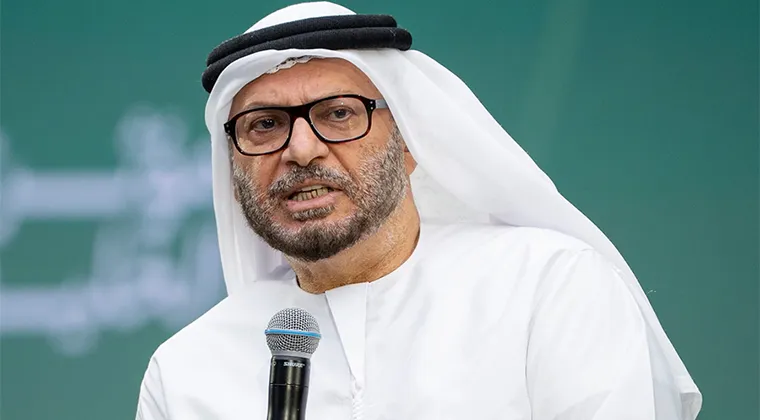
Anwar Gargash, advisor to the President of the United Arab Emirates, strongly condemned the attack on Abu Dhabi’s Barakah Nuclear Power Plant, describing it as a serious act that shows a blatant disregard for civilian lives. He said the strike reflects a “criminal” level of irresponsibility toward people living in the UAE and nearby areas, highlighting the gravity of targeting sensitive civilian infrastructure.
The remarks came after reports that the UAE was targeted on May 17 by three drones. According to official accounts, two of the drones were successfully intercepted before they could cause harm, while the third one crashed in the vicinity of the nuclear facility located in Al Dhafrah. Authorities stated that while the attack was contained, it still resulted in damage due to a fire that broke out in an electrical generator positioned outside the plant’s inner security perimeter.
Despite the fire, emergency teams quickly responded to the situation and brought it under control. Officials later reassured the public that the core nuclear infrastructure was not affected and that there was no leakage or abnormal change in radiation levels. The safety systems at the facility continued to operate within normal limits, preventing any escalation into a more serious nuclear hazard.
At the time of reporting, there was no confirmed identification of the party responsible for the drone attack. In response, Gargash suggested that the incident represents a dangerous escalation in regional tensions. He characterized it as an act of “terrorism,” stressing that whether it was carried out directly by the main actor or through affiliated groups, it still constitutes a violation of international laws and established norms.
He further emphasized that such actions demonstrate a troubling trend of increasing instability in the region. According to him, the attack reflects a broader pattern of behavior that threatens peace and security, especially when critical infrastructure is targeted. He warned that these developments point to what he described as forces of disruption and sabotage operating in a way that undermines regional stability.
Gargash also stressed that the UAE would not be intimidated or coerced by such incidents. Reaffirming the country’s stance, he declared that no external power or group would be able to influence the nation’s decisions or compromise its sovereignty. He added that attempts to pressure the UAE would fail, and that the country remains committed to its long-term vision focused on development, stability, and prosperity for its people and the wider region.
He further stated that the UAE’s approach is grounded in resilience and determination, and that its national path toward security and economic progress would not be altered by acts of aggression. According to him, the country continues to serve as a model in the region for stability and advancement, and such attacks would not derail its progress or weaken its resolve.
Following the incident, the International Atomic Energy Agency (IAEA), the United Nations’ nuclear watchdog, expressed serious concern about the proximity of the drone strike to a nuclear facility. The agency emphasized that any military activity near nuclear installations poses unacceptable risks and should be avoided under all circumstances. The IAEA also confirmed that it was closely monitoring the situation to ensure that nuclear safety was maintained.
Rafael Grossi, the Director General of the IAEA, echoed these concerns, stating that actions which endanger nuclear safety are unacceptable in any context. He underscored the importance of protecting nuclear facilities from any form of attack or nearby military activity, given the potential consequences for both human safety and the environment.
Meanwhile, several countries in the Gulf region issued statements condemning the attack. Regional governments expressed solidarity with the UAE and warned that targeting critical infrastructure could further destabilize an already fragile security environment. The incident has added to growing concerns about escalating tensions in the region, particularly as it occurred during a temporary ceasefire arrangement involving the United States and Iran.
Authorities continue to investigate the drone incident, while security around sensitive installations in the UAE remains heightened. Officials have reiterated their commitment to ensuring public safety and maintaining strict protective measures around critical infrastructure, especially nuclear facilities that require the highest level of security oversight.
What is UAE’s stance?
In an official statement issued on Sunday, the United Arab Emirates Ministry of Foreign Affairs strongly condemned the attack, describing it as a serious and worrying escalation in regional tensions. The ministry characterized the incident as an unacceptable act of aggression that directly threatens the nation’s safety, stability, and sovereignty. It added that any assault on civilian infrastructure, particularly peaceful nuclear energy facilities, represents a grave breach of established international norms and carries potentially severe consequences.
The ministry highlighted that such actions are in clear violation of international law, including the principles outlined in the United Nations Charter as well as internationally recognized humanitarian law. It stressed that targeting facilities intended for peaceful energy production cannot be justified under any circumstances, especially given the potential risks to civilian populations, environmental safety, and broader regional and global security.
Furthermore, the statement emphasized that global nuclear governance frameworks strongly prohibit any form of attack or military threat against peaceful nuclear installations. It pointed out that the rules and resolutions set by the International Atomic Energy Agency (IAEA) consistently underline the importance of ensuring the protection, safety, and security of nuclear infrastructure. According to the ministry, these international guidelines exist precisely to prevent dangerous incidents that could endanger human life or lead to catastrophic environmental damage.
The UAE government reiterated its firm position that it will not accept or tolerate any threats directed at its national security, sovereignty, or territorial integrity. It made clear that the country retains all legitimate rights, under international law, to respond appropriately to any hostile actions, provocations, or acts that jeopardize its safety. These rights, the ministry explained, include diplomatic, legal, and other measures deemed necessary to safeguard national interests.
In addition, the statement underscored that the UAE remains fully committed to protecting its citizens, residents, and visitors, as well as all critical infrastructure within its borders. The government emphasized that ensuring the security of the nation is a fundamental responsibility and that all available means will be used to preserve stability and public safety.
The ministry further warned that any attempt to threaten or undermine the country’s sovereignty would be met with firm and lawful responses in accordance with international principles. It stressed that the UAE’s approach is grounded in respect for international law while also firmly defending its right to self-protection.
Reiterating its broader concerns, the Ministry of Foreign Affairs stated that the deliberate targeting of civilian and essential infrastructure is universally condemned. It noted that such actions are incompatible with humanitarian values and are rejected under all recognized legal and ethical frameworks. The ministry stressed that attacks of this nature not only endanger immediate lives but also risk destabilizing wider regional security and undermining efforts toward peace and cooperation.
The statement also called for an immediate cessation of all such hostile activities, urging all parties involved to halt any further escalation. It emphasized the importance of adhering strictly to existing ceasefire arrangements and ensuring that no further violations take place that could worsen the situation or trigger broader conflict.
Additionally, the UAE urged the international community to take a clear and unified stance against actions that threaten peaceful infrastructure. It called for stronger adherence to global agreements designed to protect nuclear facilities and prevent their exploitation or targeting during conflicts.
Concluding its statement, the ministry reaffirmed the UAE’s commitment to peace, stability, and constructive engagement in addressing regional challenges. However, it made equally clear that this commitment does not diminish the country’s resolve to defend itself. The UAE, it stated, will continue to act responsibly within the framework of international law while ensuring that any threats to its sovereignty or security are met with appropriate and lawful measures.
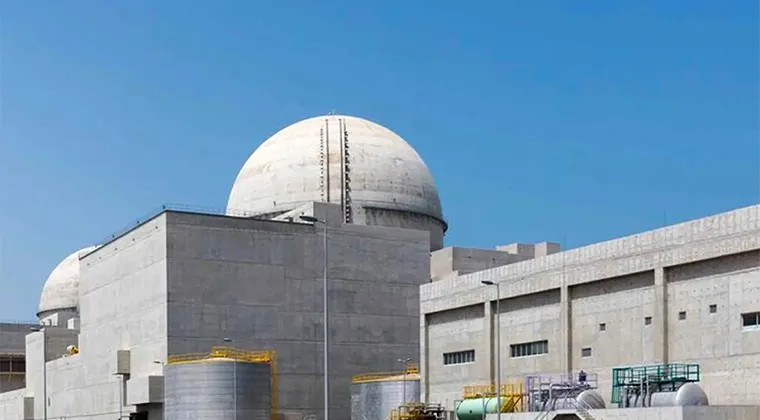
Barakah Nuclear Energy Plant
In September 2025, the Emirates Nuclear Energy Company (ENEC) announced a significant milestone, commemorating one year since the Barakah Nuclear Energy Plant began full commercial operation across all its reactor units. This achievement marked the completion of the plant’s phased development, with all four APR1400 reactors now fully operational and collectively supplying a substantial share of the country’s electricity demand.
Together, the four units are now responsible for producing around 25 percent of the United Arab Emirates’ total electricity consumption. This makes Barakah one of the most important contributors to the national power supply, particularly in strengthening baseload generation capacity. Baseload electricity is essential for meeting continuous energy demand, and the plant’s output helps ensure a stable and reliable supply for homes, industries, and critical infrastructure across the country.
The Barakah facility is situated in the Al Dhafra region of Abu Dhabi, an area chosen for its strategic importance and suitability for large-scale energy infrastructure. Since its development, the plant has been designed and operated with a strong emphasis on safety, compliance, and long-term sustainability. It functions under the supervision of the Federal Authority for Nuclear Regulation (FANR), which serves as the independent regulatory body responsible for overseeing nuclear safety and ensuring that all operations meet stringent national and international standards.
Continuous monitoring systems are in place at the facility to track operational performance, environmental conditions, and safety parameters. These systems are supported by regular inspections, technical reviews, and independent assessments to ensure that every aspect of the plant’s functioning aligns with established regulatory requirements. The oversight framework is intended to guarantee that the plant operates securely while minimizing any potential risks to people and the environment.
Beyond its role in electricity generation, the Barakah Nuclear Energy Plant plays a major part in the UAE’s broader strategy to diversify its energy sources. By reducing reliance on fossil fuels, the country is working to build a more balanced and resilient energy mix. Nuclear energy, in this context, provides a dependable source of large-scale, low-emission power that supports both economic growth and environmental commitments.
One of the key advantages of the plant is its contribution to reducing carbon emissions. The electricity generated at Barakah is classified as zero-carbon at the point of production, making it an important asset in the UAE’s efforts to address climate change and meet sustainability targets. This aligns with national and international goals aimed at lowering greenhouse gas emissions and transitioning toward cleaner energy systems.
In addition to environmental benefits, the plant enhances the stability of the national electricity grid. Large nuclear facilities like Barakah provide consistent output that is not subject to fluctuations caused by weather or fuel supply interruptions, unlike some other forms of energy generation. This steady production helps maintain balance within the grid and supports the integration of other renewable energy sources, such as solar and wind power.
The success of the Barakah project is also frequently cited as evidence of the UAE’s growing expertise in advanced energy technologies. It reflects long-term planning, international cooperation, and investment in building local capabilities in the nuclear energy sector. Training programs, operational experience, and regulatory development have all contributed to establishing a robust framework for safe nuclear operations.
International observers and regulatory bodies have consistently recognized the plant’s adherence to high safety standards. Regular assessments and inspections ensure that it continues to operate within globally accepted benchmarks for nuclear safety, security, and environmental protection. These ongoing evaluations are a core part of maintaining public confidence and ensuring transparency in operations.
Overall, the milestone reached in September 2025 highlights the Barakah Nuclear Energy Plant’s central role in shaping the UAE’s energy future. By combining large-scale clean power generation with strict safety oversight and strategic energy planning, the facility stands as a key component of the country’s long-term vision for sustainability, energy security, and economic development.