Spot gold climbed 0.58% to $4,641.5 an ounce by 9.10am UAE time, reaching its strongest level since mid-May. Meanwhile, silver slipped 0.37% to $68.95 an ounce as precious-metal markets showed mixed movements.
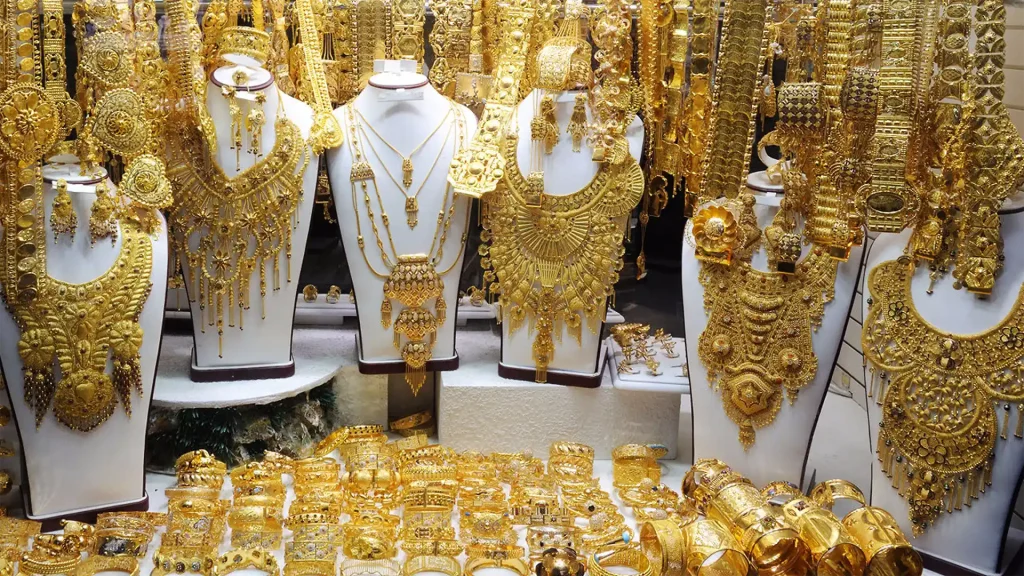
Dubai Gold Rates Surge to Three-Month High, With 24K Prices Moving Close to Dh560 per Gram.

Dubai gold rates continue their upward move as global prices strengthen
Gold prices in Dubai started the week on a stronger note, with the precious metal continuing its recent climb and moving closer to the Dh600-per-gram level.
The latest increase places local gold rates at their highest point in more than three months, extending the upward movement seen during August as international market conditions continue to support demand for the precious metal.
At the opening of trading on Monday, the 24-karat gold rate stood at Dh559.50 per gram, representing an increase of Dh3.50 compared with the previous weekend’s level.
The move brings the benchmark 24K rate within reach of the Dh600 mark, although prices would need to rise considerably further before reaching that level.
Different gold purities also rise
The increase was reflected across the main gold categories traded in the UAE.
The 22K rate stood at Dh518 per gram, while 21K gold was priced at Dh496.75 per gram.
Meanwhile, 18K gold traded at Dh425.75 per gram, with the 14K category at approximately Dh332 per gram.
The difference between these prices reflects the varying gold content of each category, with 24K representing the highest purity commonly available in the retail market.
Dubai’s gold rates typically respond closely to movements in international bullion prices, meaning changes in global markets can quickly influence prices offered to local buyers.
International gold reaches a multi-month peak
The rise in Dubai came as gold also gained ground in international trading.
Spot gold was trading at approximately $4,641.50 per ounce at 9.10am UAE time, representing a rise of around 0.58 per cent.
The move pushed the international benchmark to its strongest level since the middle of May.
The latest advance reflects continued strength in the global gold market and comes as investors assess economic conditions, currency movements and expectations surrounding US monetary policy.
Gold is often viewed as a defensive asset during periods when investors face uncertainty, particularly when concerns about economic conditions or financial markets increase.
Silver moves in the opposite direction
While gold advanced, silver recorded a modest decline.
International silver prices were trading at around $68.95 per ounce, down approximately 0.37 per cent.
The contrasting movements show that precious-metal markets do not always move together, even though both are closely watched by investors.
Gold tends to attract significant attention as a store of value and safe-haven asset, while silver also has substantial industrial demand, meaning its price can be influenced by different economic factors.
What is supporting gold prices?
Market analysts have pointed to several factors behind the recent strength in gold.
One of the important influences is the movement of US Treasury yields.
When Treasury yields decline, non-interest-bearing assets such as gold can become relatively more attractive to investors.
Gold does not provide an interest payment, so the opportunity cost of holding it can become less significant when yields on competing assets fall.
The US dollar has also played a role.
A weaker dollar supports bullion
The dollar remains one of the most important influences on international gold prices.
Gold is generally priced globally in US dollars, meaning movements in the currency can affect how attractive bullion becomes to buyers using other currencies.
A weaker dollar can make gold comparatively cheaper for international buyers, potentially supporting demand and contributing to upward pressure on prices.
Recent weakness in the US currency has therefore been another factor watched closely by bullion traders.
Policy uncertainty remains important
Another factor supporting the precious-metal market is continuing uncertainty surrounding economic and monetary policy.
Investors closely monitor signals from central banks, particularly the US Federal Reserve, because interest-rate expectations can have a significant impact on gold.
Changes in expectations around future rate decisions can influence Treasury yields, the dollar and investor appetite for non-yielding assets.
When uncertainty increases, some investors turn towards assets such as gold as part of their efforts to protect portfolios against market volatility.
Gold as a defensive asset
Gold has traditionally been regarded as a safe-haven asset.
During periods of geopolitical tension, financial uncertainty or concerns about economic stability, investors may increase their exposure to bullion.
This does not mean gold prices rise every time uncertainty appears.
However, persistent uncertainty can strengthen demand for assets that investors perceive as offering protection during volatile periods.
The recent rise in international gold prices reflects the combination of several market influences rather than a single factor.
Implications for UAE buyers
For consumers in the UAE, movements in international gold prices are reflected relatively quickly in local retail rates.
This is particularly relevant in Dubai, where gold jewellery has long been an important part of the retail and tourism sectors.
The latest increase means shoppers looking to purchase jewellery may now face higher prices than they did earlier in the year.
The impact will depend on the purity selected, the weight of the jewellery and any additional making charges applied by individual retailers.
The 24K benchmark
The 24K rate is closely followed because it represents the highest-purity category commonly traded in the UAE retail market.
At Dh559.50 per gram, Monday’s rate places 24K gold close to an important psychological threshold.
The Dh600 level has become a notable point for consumers watching local bullion prices because crossing it would represent another significant milestone for the Dubai market.
Whether prices eventually reach that level will depend on developments in international bullion markets and the factors currently influencing gold.
Other purity levels
Consumers who are looking for jewellery rather than investment-grade bullion often consider 22K, 21K or 18K products.
These categories contain different proportions of pure gold.
As a result, their prices per gram are lower than the 24K benchmark.
However, the prices of these categories also move broadly in line with changes in the international gold market.
For jewellery shoppers, the final amount paid can also depend on design, craftsmanship, making charges and retailer-specific costs.
Weekend gains carry into Monday
The latest Dubai prices indicate that the upward movement continued after the weekend.
The 24K rate gained Dh3.50 per gram compared with the previous weekend, bringing it to Dh559.50.
For larger purchases, even a relatively small change in the per-gram price can make a noticeable difference to the final bill.
For example, shoppers purchasing heavier jewellery pieces may want to compare current rates with recent prices before making a purchase.
Investors remain focused on global markets
The rise in gold is also attracting attention from investors who use bullion as part of a diversified portfolio.
The precious metal can play different roles depending on an investor’s strategy.
Some view it as protection against inflation or currency weakness, while others use it as a hedge against geopolitical or financial uncertainty.
However, gold prices can also be volatile and may fall as quickly as market conditions change.
Treasury yields and gold
The relationship between Treasury yields and gold is particularly important for market participants.
US government bonds are considered relatively low-risk assets and provide interest income.
When yields rise significantly, investors may have greater incentive to hold interest-bearing assets instead of gold.
Conversely, falling yields can reduce that disadvantage for bullion.
The recent decline in US Treasury yields has therefore provided an additional supportive factor for gold prices.
Currency movements add another layer
The US dollar’s performance is another key component of the current market environment.
Because gold is internationally quoted in dollars, currency fluctuations can affect purchasing power for investors outside the United States.
A softer dollar can contribute to stronger bullion demand, particularly among international buyers.
This relationship is one reason gold traders closely follow US economic data, Federal Reserve signals and currency-market movements.
Policy expectations remain in focus
Investors are also watching central-bank policy closely.
Interest-rate expectations can influence several factors simultaneously, including bond yields, the dollar and demand for gold.
If markets anticipate lower interest rates, gold can become relatively more appealing.
If expectations shift towards higher rates for longer, bullion can face additional pressure.
This makes upcoming economic data and central-bank communications important for the direction of the precious-metal market.
Geopolitical uncertainty
Geopolitical developments can also influence investor sentiment.
Periods of heightened tension can increase demand for assets viewed as safe havens.
Gold’s long history as a store of value means it often attracts additional attention when investors are uncertain about the global economic or political environment.
However, geopolitical events can produce unpredictable market reactions, so prices may move sharply in either direction.
What UAE shoppers should watch
Consumers in Dubai who are considering buying gold may want to monitor the international spot price as well as local retail rates.
The Dubai price can change during the day as global markets move.
Buyers should also remember that the quoted gold rate is not necessarily the final price of jewellery.
Making charges, design costs and other retailer fees can add to the amount paid.
Comparing these additional charges between shops can therefore be useful.
A strong start to the week
Monday’s figures show that Dubai gold prices remain on an upward trajectory.
With 24K gold at Dh559.50 per gram, the local market is now approaching another major price milestone.
At the same time, global spot gold has reached its strongest level since mid-May.
The combination of lower Treasury yields, a softer dollar and continued uncertainty over economic and policy conditions has created a supportive environment for bullion.
Gold and silver diverge
The performance of silver provides an interesting contrast.
While gold advanced 0.58 per cent, silver declined 0.37 per cent to $68.95 an ounce.
This divergence highlights the different factors influencing the two metals.
Although both are considered precious metals, silver has a particularly strong connection with industrial activity.
Gold, meanwhile, is more heavily influenced by investment demand, interest-rate expectations, currency movements and safe-haven sentiment.
What could happen next?
The future direction of Dubai’s gold rates will largely depend on international market developments.
If global bullion prices continue to rise, local rates could move closer to the Dh600-per-gram threshold.
On the other hand, a recovery in the dollar, higher Treasury yields or a change in investor sentiment could place downward pressure on gold.
For now, however, the market remains supported by several factors that have helped push the precious metal higher.
A key level for Dubai’s gold market
The latest price movement places Dubai’s 24K gold rate only a short distance below Dh560 per gram and within sight of the much-watched Dh600 level.
For shoppers, investors and jewellery retailers, further movements in international gold prices will remain important.
The market’s direction will continue to be shaped by developments in US monetary policy, Treasury yields, currency movements and broader economic and geopolitical conditions.
With spot gold already at its highest point in more than three months, attention is now turning to whether the rally can continue and whether Dubai’s retail gold prices will move towards new highs in the weeks ahead.
Analysts weigh tariff developments, geopolitical risks and changing investor preferences
Market strategists say several competing forces are currently influencing the direction of gold prices, with investors balancing easing trade tensions against continuing geopolitical uncertainty and changes in the broader investment environment.
Naeem Aslam, chief investment officer at Zaye Capital Markets, said the decision by US President Donald Trump to temporarily pause proposed 50 per cent tariffs on Canada had removed one source of immediate economic pressure.
The three-day pause could reduce concerns surrounding an escalation in trade tensions between the two countries, at least temporarily. According to Aslam, this may have a short-term effect on demand for defensive investments such as gold.
Trade tensions remain on investors’ radar
Gold often attracts investor interest when uncertainty rises across financial markets.
Concerns over tariffs can contribute to that uncertainty because higher trade barriers may affect business costs, international commerce and economic growth.
A temporary suspension of the proposed tariffs could therefore reduce some of the immediate pressure that had been supporting safe-haven assets.
However, analysts say the broader picture remains complicated.
While developments involving Canada may have eased one source of concern, other geopolitical issues continue to influence investor sentiment.
Iran remains a key geopolitical factor
Aslam pointed to comments by Trump regarding Iran as another factor keeping geopolitical risks in focus.
Uncertainty surrounding international relations can continue to support demand for gold because investors often use the precious metal as a way of managing exposure to unexpected events.
The result is a market in which gold faces opposing forces.
On one side, reduced trade tensions could encourage investors to move towards riskier assets.
On the other, continuing geopolitical concerns could preserve demand for bullion as a defensive holding.
Gold’s safe-haven appeal remains intact
According to Aslam, the current environment has not completely removed the premium investors place on gold during periods of uncertainty.
Even if some short-term risks ease, concerns about geopolitical developments can remain sufficient to support interest in the metal.
This is particularly important because gold’s price is influenced by several factors simultaneously.
The precious metal does not move solely on the basis of geopolitical news.
Interest rates, real yields, currency movements, government finances and investor positioning can all affect the direction of bullion.
Technology and artificial intelligence add another dimension
Aslam also highlighted the US administration’s emphasis on maintaining leadership in artificial intelligence, technology and digital assets.
These areas could contribute to stronger investor confidence and encourage greater appetite for riskier parts of the financial market.
If investors become more optimistic about economic growth and technological development, some capital could move away from traditional defensive assets.
That could potentially reduce demand for gold in the short term.
However, Aslam stressed that these themes do not eliminate the fundamental factors that influence bullion.
Gold remains particularly sensitive to real interest rates, movements in the US dollar, fiscal conditions and geopolitical risks.
The importance of real yields
Real yields are an important consideration for gold investors.
Unlike bonds, gold does not generate regular interest income.
As a result, the attractiveness of holding bullion can change depending on the returns available from inflation-adjusted government debt.
When real yields rise, investors may find interest-bearing assets more attractive.
When real yields decline, the opportunity cost of holding gold can become less significant.
This relationship means changes in US Treasury markets remain an important indicator for bullion traders.
Currency movements also matter
The US dollar is another major influence on international gold prices.
Gold is primarily priced in dollars, so fluctuations in the value of the currency can affect the cost of bullion for buyers using other currencies.
A weaker dollar can provide support to gold by making the metal relatively cheaper for international purchasers.
Conversely, a stronger dollar can create additional pressure on prices.
This means investors watching gold are also paying close attention to US economic data and monetary-policy expectations.
Fiscal conditions remain relevant
Government spending, borrowing and debt levels can also influence investor sentiment towards gold.
Concerns about fiscal sustainability may encourage some investors to diversify away from traditional financial assets.
Gold can benefit from such diversification because it is not directly tied to the creditworthiness of a particular government or company.
However, fiscal developments interact with other market forces, meaning their impact on gold is not always immediate.
A changing capital cycle
Samer Hasn, senior market analyst at XS.com, offered another perspective on the recent recovery in gold.
He said the market is entering a new phase in its capital cycle, with investors beginning to reconsider the traditional attraction of high-yield US Treasury securities.
According to Hasn, uncertainty within fixed-income markets is encouraging some investors to explore alternative assets.
This shift in capital allocation could provide another source of support for gold.
Why Treasury markets matter
US Treasury bonds have traditionally been among the most closely watched assets in global financial markets.
They are widely used by institutional investors, central banks and other large market participants.
When Treasury yields are attractive and investors have confidence in the stability of the fixed-income market, bonds can draw substantial amounts of capital.
But when uncertainty increases, investors may reconsider how much exposure they want to maintain.
That can create opportunities for alternative assets, including gold.
Investors reassess traditional safe assets
The current environment is unusual because both government bonds and gold can be viewed as defensive investments, but they respond differently to changes in interest rates.
Treasuries provide a yield, while gold does not.
However, gold has no issuer and is not dependent on a government’s ability to make interest payments.
When investors become uncertain about the outlook for bonds, they may look for other ways to preserve capital.
This can contribute to greater interest in precious metals.
Gold’s recovery reflects several factors
The recent recovery in gold therefore cannot be attributed to a single event.
Instead, the market is responding to a combination of economic, financial and geopolitical developments.
Trade-policy decisions can alter expectations for global growth.
Geopolitical tensions can increase demand for defensive assets.
Movements in Treasury yields can change the relative attractiveness of gold.
Currency fluctuations can influence the price of dollar-denominated bullion.
At the same time, changing expectations about where investors should allocate capital can create additional demand.
Risk appetite could influence the next move
One of the major questions for gold investors is whether global risk appetite will continue to strengthen.
If investors become increasingly confident about economic growth and technology-related opportunities, they may shift more money towards equities and other risk assets.
Such a move could reduce demand for gold.
However, if geopolitical or economic concerns persist, investors may continue to maintain exposure to bullion as a portfolio hedge.
The balance between these two forces could determine the direction of prices.
The role of US policy
Developments surrounding the US administration remain particularly important for financial markets.
Tariff decisions can influence inflation expectations, economic growth and international trade.
Statements relating to foreign policy can affect geopolitical risk.
Meanwhile, policies involving technology, artificial intelligence and digital assets can influence expectations for future investment and economic activity.
Each of these areas can indirectly affect gold through changes in investor sentiment.
Trade disputes can have wider consequences
Tariffs are not simply a political issue.
Changes in import duties can affect the prices of goods, supply chains and business investment.
If investors believe tariffs will weaken economic activity or increase inflationary pressure, they may adjust their portfolios accordingly.
That can affect demand for bonds, equities, currencies and commodities, including gold.
The temporary pause in the proposed Canadian tariffs therefore represents only one part of a much wider market picture.
Geopolitical uncertainty provides continued support
Even when some economic risks decline, geopolitical concerns can remain.
For gold, this is important because investors often turn to bullion when they are concerned about developments that are difficult to predict or quantify.
Aslam’s comments suggest that geopolitical uncertainty surrounding Iran continues to provide an element of support for gold.
This means that the precious metal may retain some of its safe-haven appeal even if trade tensions ease elsewhere.
Alternative assets gain attention
Hasn’s comments also highlight a broader change in investor behaviour.
When investors begin questioning the attractiveness of traditional fixed-income assets, capital can move towards alternatives.
Gold is one such alternative.
Other areas, including commodities, equities and digital assets, can also attract capital depending on market conditions.
The resulting competition between asset classes can influence gold prices as investors reassess their portfolios.
A more complicated gold market
The current market environment demonstrates why gold prices can remain strong even when some traditional sources of uncertainty begin to ease.
A reduction in one risk does not necessarily remove all the factors supporting bullion.
Instead, investors may simply shift their attention towards other considerations.
For example, lower trade tensions could reduce immediate safe-haven demand, while weaker real yields or concerns about fiscal conditions could provide offsetting support.
What investors are watching
Market participants are likely to continue monitoring several key indicators.
These include US Treasury yields, inflation data, Federal Reserve policy expectations, movements in the dollar and developments in international trade.
Geopolitical events will also remain important.
Any major change in these areas could quickly alter expectations for gold.
Gold versus risk assets
The relationship between gold and riskier assets is also worth watching.
When investor confidence is strong, money often moves towards equities and other growth-oriented investments.
When confidence weakens, defensive assets can become more attractive.
However, the relationship is not always straightforward.
Gold can rise alongside other assets when investors have ample liquidity and are looking for diversification.
This means that a stronger appetite for technology, artificial intelligence or digital assets does not automatically mean gold prices will fall.
Why the outlook remains uncertain
The combination of competing influences makes the outlook for gold difficult to predict.
Trade tensions could ease, reducing some demand for defensive assets.
At the same time, geopolitical concerns could intensify.
Treasury yields could rise or fall depending on economic data and central-bank expectations.
The dollar could strengthen or weaken.
Each development could push gold in a different direction.
Implications for Dubai’s gold market
International developments are particularly relevant for Dubai’s physical gold market because local prices closely follow global bullion movements.
When international gold prices rise, UAE retail rates generally respond accordingly.
This means Dubai shoppers and investors are also exposed to the same global forces affecting international markets.
For consumers, changes in the spot price can influence the cost of jewellery and bullion.
For investors, the movement provides an indication of how global sentiment towards precious metals is developing.
The bigger picture
The recent recovery in gold reflects a market navigating a complicated combination of easing and persistent risks.
The temporary pause on proposed tariffs against Canada may reduce one source of immediate uncertainty.
However, geopolitical concerns involving Iran continue to provide a reason for investors to maintain defensive positions.
At the same time, developments in artificial intelligence, technology and digital assets could encourage greater risk-taking and potentially compete with gold for investment capital.
Meanwhile, movements in Treasury yields and the dollar remain crucial to the metal’s valuation.
Looking ahead
For gold to maintain its upward momentum, investors will likely need to see continued support from some combination of lower real yields, currency weakness, geopolitical uncertainty or stronger demand for alternative assets.
Conversely, a sustained recovery in the dollar, rising real yields and a broad improvement in risk sentiment could limit further gains.
For now, analysts appear focused on the interaction between these forces rather than any single headline.
The precious metal’s recent strength shows that investors continue to value gold as a portfolio hedge, even as some risks in the global economy begin to change.
With trade policy, geopolitical developments, Treasury markets and emerging investment themes all influencing sentiment, gold’s next move is likely to depend on which of these competing forces becomes dominant.


Gold begins the week with renewed momentum as investors assess dollar weakness and rising yields
Gold entered the new trading week on a stronger footing, with market sentiment turning more supportive toward the precious metal as investors responded to movements in the US dollar and changes in bond yields.
Tim Waterer, chief market analyst at KCM Trade, said the latest improvement in gold prices was largely connected to the weaker dollar. A softer US currency can provide support for dollar-denominated commodities because it makes gold relatively more affordable for buyers holding other currencies.
Weaker dollar provides support
The movement of the dollar remains one of the key factors influencing international gold prices.
Because bullion is primarily traded in US dollars, changes in the currency can have a direct effect on how investors around the world view the metal.
When the dollar loses value, gold can become more attractive to overseas buyers. This can contribute to stronger demand and help lift prices.
For gold traders, therefore, even relatively modest movements in the currency can have an important impact on market sentiment.
Investors are also watching bond yields
The dollar is not the only factor attracting attention.
Investors are also closely examining movements in government bond yields, particularly in the United States.
Higher yields can normally create a challenge for gold because the precious metal does not generate regular interest income.
When bonds offer more attractive returns, investors may have less incentive to hold an asset that does not pay interest.
However, the current situation is more complicated.
Rather than simply viewing higher yields as negative for gold, market participants are also asking what those increases might reveal about the broader economic outlook.
What rising yields could be signalling
Higher bond yields can reflect changing expectations about inflation, economic growth and future interest-rate decisions.
They can also indicate that investors are demanding greater returns to hold government debt.
In the present environment, Waterer suggested that markets are paying attention not only to the level of yields but also to the reasons behind their movement.
If rising yields reflect concerns about fiscal conditions or uncertainty surrounding economic and monetary policy, those concerns could ultimately provide support for defensive assets such as gold.
Gold’s safe-haven role remains important
Gold has long been used by investors as a hedge during periods of uncertainty.
The metal can attract demand when markets become concerned about geopolitical developments, inflation, currencies or the wider economic outlook.
That defensive role can become particularly important when investors are uncertain about how policy decisions will affect financial markets.
As a result, gold can sometimes remain resilient even when traditional factors such as higher yields would normally be expected to weigh on its price.
A mixed market backdrop
The current environment presents investors with several competing signals.
A weaker dollar is generally supportive for gold.
Higher yields can create pressure because they increase the appeal of income-generating assets.
At the same time, uncertainty surrounding economic conditions and policy decisions can encourage investors to retain exposure to bullion.
These forces can operate simultaneously, creating a more complicated outlook for the precious metal.
Why the start of the week matters
The strength seen at the beginning of the trading week is significant because it indicates that investors are continuing to show interest in gold despite a changing financial backdrop.
Markets often reassess their positions at the start of a new week as traders respond to developments that occurred during previous sessions.
Currency movements, bond-market activity and geopolitical news can all influence those decisions.
Gold’s positive start suggests that demand for the metal remains present as investors evaluate the latest signals from financial markets.
Currency and commodities
The relationship between the dollar and commodities extends beyond gold.
Many major commodities are priced in US currency, meaning fluctuations in the dollar can influence their international value.
A weaker dollar can support commodity demand by reducing the effective cost for buyers using other currencies.
For gold, the effect can be particularly visible because investment demand plays such an important role in determining prices.
The importance of economic uncertainty
Economic uncertainty is another major consideration for gold investors.
When the economic outlook becomes difficult to assess, investors may seek assets that can provide diversification.
Gold is often included in portfolios for this reason.
Concerns about inflation, government finances, interest rates or geopolitical developments can all influence the demand for bullion.
The current market appears to be balancing these concerns against the possibility of stronger returns elsewhere.
Interest-rate expectations remain crucial
Expectations surrounding central-bank policy are closely linked to both the dollar and Treasury yields.
If markets believe interest rates will remain elevated for longer, bond yields can rise and the dollar may receive support.
That combination can create headwinds for gold.
On the other hand, if investors begin expecting lower rates, yields may decline and the dollar can weaken, potentially creating a more favourable environment for bullion.
This is why traders continue to monitor economic data and central-bank communications.
Looking beyond the headline yield
Waterer’s comments point to an important distinction for investors.
The question is not simply whether yields are rising.
The more important issue may be why they are rising.
If higher yields reflect stronger economic growth and improving investor confidence, they could encourage money to move into riskier assets.
But if yields rise because markets are worried about fiscal sustainability, inflation or policy uncertainty, the same movement could signal risks that increase the appeal of gold.
Gold and investor positioning
Market positioning can also influence short-term price movements.
When traders become more optimistic about bullion, additional buying can reinforce the upward trend.
Conversely, a shift towards riskier investments can result in profit-taking or reduced demand for gold.
The balance between these positions can change quickly as new economic or political information emerges.
A defensive asset in uncertain times
Gold’s long-standing reputation as a defensive asset continues to make it relevant during periods of market uncertainty.
Unlike currencies or government bonds, bullion does not depend on the financial performance of a particular company.
It is also not issued by a government.
These characteristics are among the reasons investors may use gold as a way of diversifying their portfolios.
However, gold remains subject to market volatility and can experience significant price movements in response to changes in investor sentiment.
The dollar’s next move could be important
For gold traders, the future direction of the US dollar will remain one of the most closely watched indicators.
If the currency continues to weaken, bullion could receive additional support.
If the dollar stages a sustained recovery, gold may face greater resistance.
The relationship is not absolute, but it is an important part of the broader market equation.
Bond markets offer another signal
Investors will also continue to follow the US Treasury market.
Changes in Treasury yields can provide information about expectations for inflation, interest rates and economic growth.
They can also affect how investors allocate money between bonds, equities, gold and other assets.
A sharp change in yields could therefore have consequences for precious metals even if there is no major change in physical demand.
What it means for gold buyers
The international market movement is also relevant to consumers in Dubai and the wider UAE.
Local gold prices typically respond to changes in global bullion prices, meaning international gains can feed into retail rates.
For jewellery buyers, even a small change in the price per gram can influence the final cost, particularly for heavier pieces.
Investors purchasing bullion also monitor international spot prices closely when deciding whether to buy or wait.
Short-term movements can remain volatile
Although gold has started the week positively, traders should expect prices to remain sensitive to incoming information.
Currency movements can change rapidly.
Bond yields can react to economic data.
Political developments can alter risk sentiment almost immediately.
These factors can create both upward and downward movements in gold prices.
The broader market question
The central issue for investors is whether current economic and policy uncertainty will remain strong enough to support defensive demand for gold.
If uncertainty persists, the metal could continue benefiting from its safe-haven reputation.
If confidence improves significantly and investors move towards higher-risk assets, gold could face some pressure.
At the same time, the direction of real yields and the dollar will remain crucial.
A stronger opening, but several factors remain in play
Gold’s firmer start to the week reflects a combination of currency movements, investor positioning and concerns about the wider economic environment.
The weaker dollar has provided an immediate source of support.
Meanwhile, higher yields are being examined more carefully because they may contain signals about economic pressures, inflation expectations and uncertainty surrounding policy.
This creates a market in which rising yields are not necessarily interpreted as a straightforward negative for gold.
What investors will watch next
Traders are likely to remain focused on several developments in the coming sessions.
These include movements in the US dollar, Treasury yields, economic indicators and expectations for interest-rate policy.
Geopolitical developments will also remain relevant because unexpected events can quickly increase demand for safe-haven assets.
Together, these factors will help determine whether gold can extend its recent gains or whether the metal faces renewed selling pressure.
Gold remains firmly on investors’ radar
For now, the precious metal has demonstrated that it can attract buyers even in an environment where some conventional indicators appear challenging.
The softer dollar has helped create a supportive backdrop, while questions surrounding higher yields and broader economic conditions have kept investors cautious.
Waterer’s assessment highlights the importance of looking beyond individual market movements.
For gold, the direction of prices depends not only on whether yields rise or fall, but also on what those movements tell investors about inflation, economic health, fiscal conditions and future policy.
As the new trading week develops, the interaction between the dollar, bond yields and economic uncertainty will therefore remain central to the gold market’s outlook.