Many UAE firms still permit overseas remote working arrangements, and there is no general requirement for employees to resume full-time office attendance or abandon flexible work policies at the moment.
A large number of UAE companies are continuing to support remote work for international employees, with no widespread push to return to office-based setups.
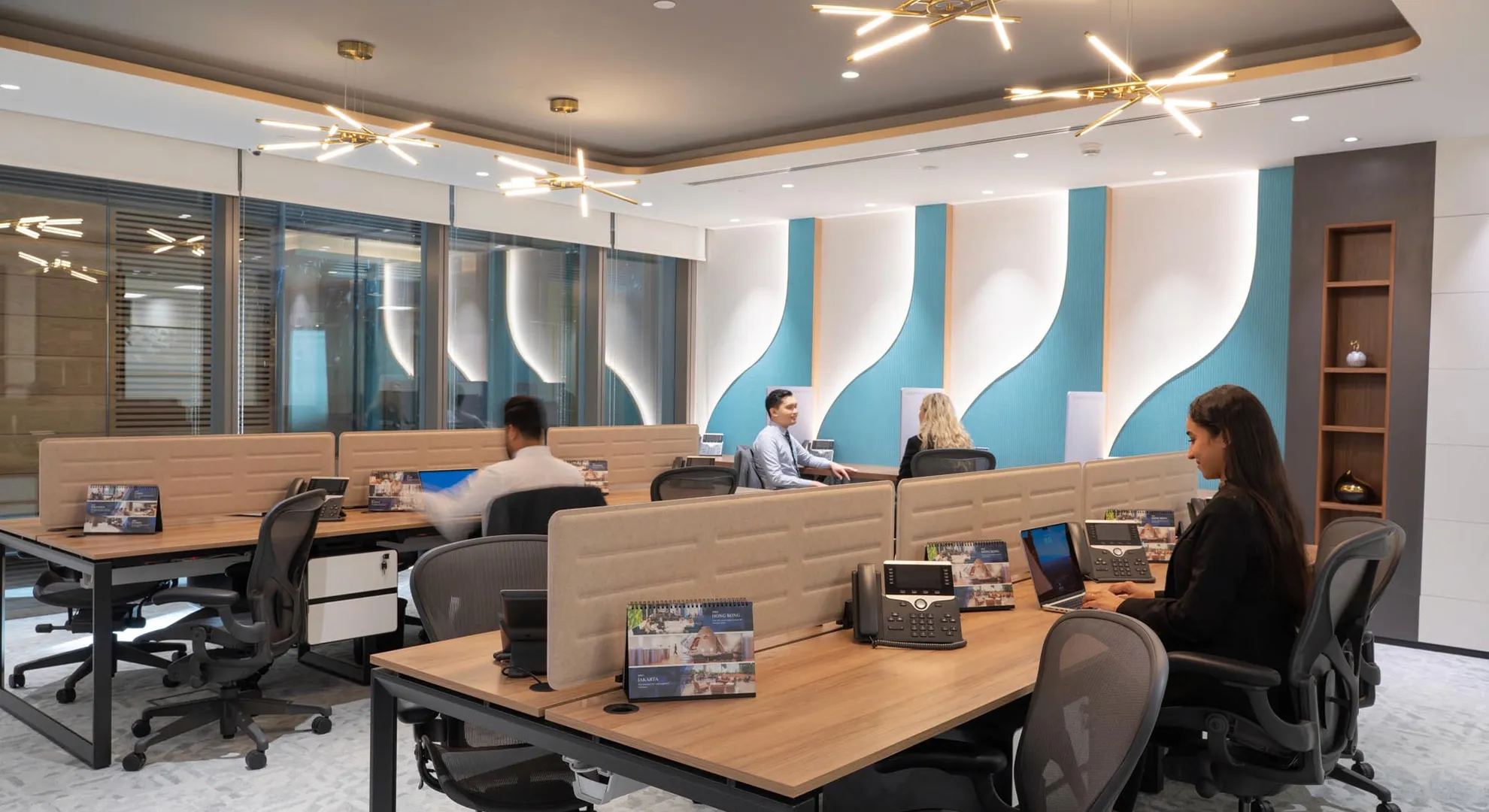
According to Mercer’s research, a significant majority of employers in the UAE—about 82 per cent—are not enforcing a mandatory return to traditional office environments. This trend is not limited to the UAE alone but is also visible across several countries in the Gulf region, where flexible and remote work models continue to remain widely accepted. The findings suggest that most organisations are still maintaining hybrid or fully remote working structures rather than reverting to pre-pandemic workplace norms.
The consulting firm highlights that businesses in the region have increasingly embraced adaptable work policies, allowing employees to perform their duties from outside their home countries in certain cases. This reflects a growing openness among employers to international remote working arrangements, where staff may temporarily or permanently work from different global locations depending on operational needs and company policies.
Mercer’s analysis further indicates that this shift is not merely a temporary reaction to earlier global disruptions, but rather part of a broader, more strategic transformation in workforce planning. Initially, many organisations introduced remote and flexible working as an emergency response to major disruptions, including the COVID-19 pandemic and more recent geopolitical tensions affecting the region. However, over time, these arrangements have evolved into structured, long-term policies integrated into human resource strategies.
Instead of pushing employees back into office-only environments, many companies are reassessing how work can be organised more efficiently. This includes evaluating productivity outcomes, employee satisfaction, and talent retention when flexibility is offered. As a result, remote and hybrid work models have become embedded in corporate culture across various sectors.
The report also notes that employers are gradually transitioning from short-term contingency measures to more sustainable workforce management approaches. This means organisations are no longer treating flexible work as a temporary solution but as a permanent feature of their operating model. Businesses are increasingly focusing on building systems that support distributed teams, digital collaboration, and performance measurement across different locations.
In addition, companies in the UAE and wider Gulf region are showing greater willingness to accommodate employee requests for mobility, including opportunities to work internationally for limited periods. This flexibility is often seen as a way to attract and retain skilled professionals in a competitive labour market, where work-life balance and location independence are becoming important factors for employees.
Overall, Mercer’s findings reflect a continued evolution in workplace culture across the region. Rather than returning fully to traditional office-based setups, organisations are adapting to a more modern, flexible approach that blends physical presence with remote capabilities. This shift suggests that hybrid and remote work arrangements are likely to remain a key feature of employment practices in the UAE and neighbouring Gulf countries for the foreseeable future.
Ted Raffoul, who serves as a partner and leads career and workforce products for the MENA region at Mercer, observed that flexible working practices continue to be deeply embedded across the Middle East. He noted that a significant proportion of employees are still working from home on a regular basis, reflecting how widely remote work has been adopted and sustained in different markets within the region.
According to the data he referenced, the average levels of work-from-home remain notably high. In the UAE, around 62 per cent of employees continue to work remotely at least part of the time, while Kuwait reports an even higher share at approximately 64 per cent. Lebanon stands out with a particularly elevated figure, where as many as 86 per cent of workers are still engaged in remote working arrangements. These numbers illustrate that flexible work is not a short-lived phenomenon but rather an established part of the employment landscape across several countries.
Raffoul further explained that despite the passage of time since the initial shift to remote work, most organisations in the region have not reversed these arrangements. A large proportion of companies are still not mandating employees to come back to physical office spaces on a full-time basis. In the UAE specifically, about 82 per cent of employers indicated that they were not enforcing a compulsory return-to-office policy. Similar patterns are observed throughout neighbouring Gulf countries, where flexible working continues to be widely accepted and practiced.
He pointed out that these trends highlight how remote work has become an important element in maintaining business operations and continuity. What initially began as a rapid response to unexpected global disruptions has gradually developed into a more stable and long-term way of working. However, Raffoul also noted that the continued use of these arrangements, which were originally implemented quickly and under pressure, is now creating new considerations for organisations. Employers are beginning to evaluate how these flexible setups function over time, especially in relation to consistency across teams, clarity in communication, and setting clear expectations for the future workforce structure.
In addition to these evolving workplace trends, many companies in the UAE and the broader Gulf region adopted remote working models during periods of heightened geopolitical tension involving the United States, Israel, and Iran. These decisions were also influenced by official guidance from authorities, which emphasised the importance of safeguarding employee well-being and ensuring workplace safety during uncertain conditions. As a result, organisations were encouraged to reduce physical office attendance and rely more heavily on digital and remote working systems.
Overall, the situation reflects a broader shift in how organisations across the region are approaching work. Rather than treating remote and flexible arrangements as temporary solutions, many businesses are now integrating them into long-term operational strategies. At the same time, they are working through the challenges that come with sustaining distributed workforces, ensuring alignment between teams, and balancing flexibility with organisational efficiency.
Ted Raffoul further emphasized that the scope of workplace flexibility in the Middle East is no longer confined to employees working from home within their own countries. Instead, it is increasingly expanding into international remote working, where staff are permitted to perform their roles from overseas locations under structured company policies. This shift marks a broader evolution in how organisations define and manage flexibility, moving beyond domestic arrangements to more globally mobile work models.
He pointed out that, based on Mercer’s findings, a majority of organisations across several key markets in the region have already introduced formal policies that allow international remote work. These policies are becoming increasingly common rather than exceptional. For example, in the UAE, approximately 59 per cent of companies reported having an established framework that supports employees working remotely from other countries. The same proportion was observed in Kuwait, indicating a consistent regional approach in some labour markets.
Similarly, in Saudi Arabia, around 57 per cent of employers have implemented international remote working policies, while in Qatar the figure stands at about 56 per cent. These statistics suggest that more than half of employers across these countries are now open to structured cross-border remote working arrangements. This reflects a notable change in traditional workplace boundaries, where physical presence in a specific country or office was once considered essential for most roles.
Raffoul highlighted that this development is not static. Many organisations are actively reviewing their current frameworks and making adjustments where necessary. Some companies have already revised their policies to better accommodate international remote working, while others are still in the process of evaluating whether changes should be introduced. This indicates that employers are still refining how such arrangements should function in practice, particularly in relation to compliance, taxation, employee monitoring, and operational coordination across different jurisdictions.
In the UAE specifically, Mercer’s data shows a clear trend toward policy evolution. Around 46 per cent of organisations have already updated their international remote working guidelines to reflect new realities and employee expectations. Meanwhile, an additional 30 per cent of employers are actively considering modifications to their existing policies. This means that more than three-quarters of companies in the UAE are either adapting or preparing to adapt their approach to international remote work, underscoring the momentum behind this shift.
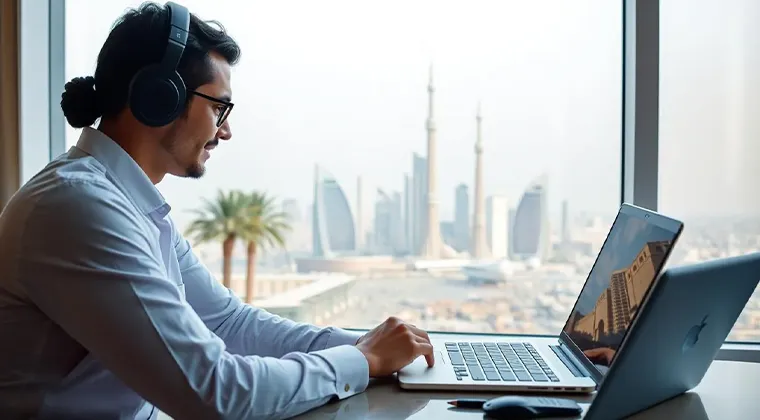

Raffoul also offered insight into how employers are thinking about the long-term implications of these changes. He explained that in periods of uncertainty, organisations often introduce temporary measures to address immediate challenges. However, if these measures are not clearly defined from the outset, they can gradually become embedded in ways that were not originally intended. Over time, this can make them difficult to withdraw or modify, especially when expectations among employees have already formed around them.
He further noted that unclear or loosely defined policies can create additional complications for organisations. These may include inconsistencies in how rules are applied, confusion among employees about what is permitted, and challenges for managers who are responsible for implementing policies across different teams and locations. Without a structured framework, companies may also struggle to ensure fairness and transparency in decision-making, particularly when dealing with employees working from multiple countries under different conditions.
According to Raffoul, this is why organisations in the Middle East are now entering a new phase in their approach to workforce management. The focus is shifting away from short-term responses and toward building more coherent, long-term systems that can support flexible working in a sustainable way. Employers are increasingly recognising the importance of aligning flexibility with broader organisational strategies, rather than treating it as an isolated benefit or temporary arrangement.
He explained that the next stage of development will likely involve a stronger emphasis on clarity and structure. Companies are expected to define more precise rules around international remote working, including eligibility criteria, duration limits, tax and legal considerations, and performance expectations. At the same time, they are also working to ensure that flexibility remains meaningful and attractive to employees, particularly in a competitive labour market where talent retention is a key priority.
Raffoul added that support mechanisms will also play an important role in shaping the future of work in the region. This includes providing managers with the tools and guidance needed to oversee distributed teams effectively, as well as ensuring that employees working remotely from different countries remain connected to organisational culture and communication channels. In addition, contingency planning is becoming a more prominent part of workforce strategy, helping companies prepare for future disruptions while maintaining operational stability.
Ultimately, Mercer’s observations suggest that international remote working is becoming a more permanent feature of employment practices across the Middle East. Rather than being viewed as an exceptional arrangement, it is increasingly being integrated into standard workforce policies. However, this transition also requires careful planning and ongoing refinement to ensure that flexibility is balanced with clarity, consistency, and long-term organisational effectiveness.