
With major roadworks entering their third week, many Sharjah residents are changing their daily travel routines, exploring alternate routes, adjusting work schedules, and finding practical ways to reduce commuting delays.
How Sharjah Residents Are Adjusting After Two Weeks of Major Roadworks.
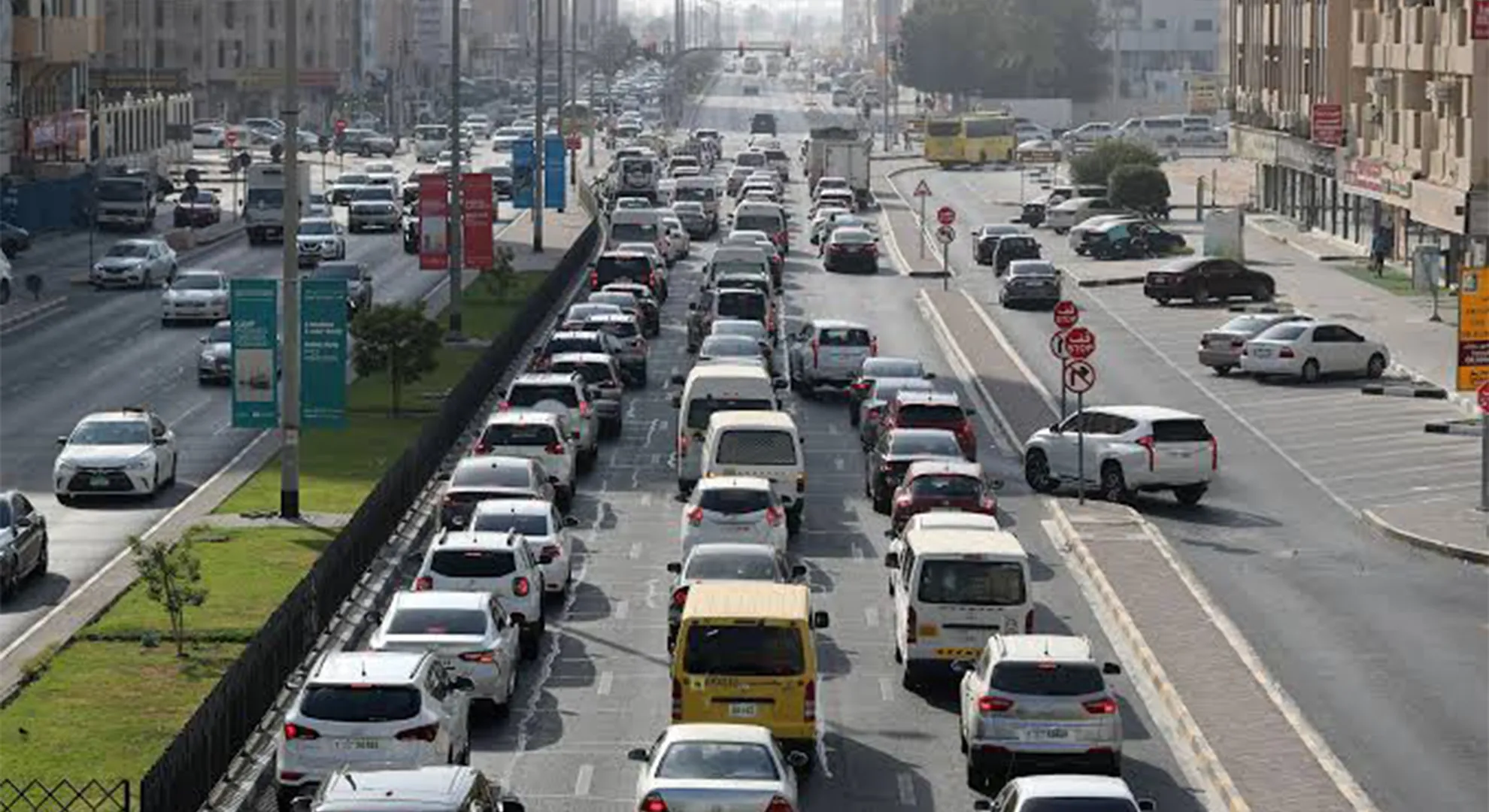
Residents across Sharjah say ongoing roadworks have significantly changed their daily routines, with many parking farther from home, adjusting office timings, and sharing rides to avoid heavy traffic.
Residents living in several of Sharjah’s busiest neighbourhoods, including Jamal Abdul Nasser Street, Al Taawun, Al Khan and parts of the Industrial Area, say the ongoing road improvement works have significantly altered their daily lives. Since construction and traffic diversions began about two weeks ago, many commuters have been dealing with longer travel times, limited parking options and increased congestion during peak hours.
For many people, what initially seemed like a temporary inconvenience has gradually evolved into a major lifestyle adjustment. Instead of making small changes to their commute, residents now find themselves reorganising their entire daily schedules around road closures, traffic bottlenecks and changing travel conditions. Simple activities such as leaving for work, dropping children at school or running errands now require careful planning to avoid lengthy delays.
One of the biggest challenges has been finding parking. Several residents say they are no longer able to park close to their homes because of construction-related restrictions and heavy traffic. As a result, some have started leaving their vehicles more than a kilometre away and completing the rest of the journey on foot. While this solution helps them avoid spending long periods searching for parking, it has added extra time and physical effort to their daily routines.
Working professionals have also had to rethink their schedules. Some employees have arranged flexible working hours with their employers, while others have adopted hybrid work arrangements that allow them to split their time between the office and home. By avoiding rush-hour travel, they hope to reduce the stress and uncertainty caused by traffic congestion around the affected areas.
Families with school-going children are facing their own set of challenges. Parents say school drop-offs and pick-ups now require much more coordination than before. In some households, family members have divided responsibilities by taking turns driving children or adjusting their work schedules to manage transport more efficiently. These changes have become necessary to ensure children arrive on time despite slower traffic conditions.
Community cooperation has also increased since the roadworks began. Many residents have turned to neighbourhood WhatsApp groups to stay informed about changing traffic patterns, parking availability and road closures. These online groups have become valuable platforms for exchanging real-time updates, suggesting alternative routes and arranging carpooling with neighbours who have similar travel schedules. Residents say these shared efforts have helped ease some of the daily challenges created by the ongoing construction.
Although the disruptions have tested the patience of many commuters, residents understand that the project is intended to improve Sharjah’s road infrastructure in the long term. With the first phase of the wider road development programme expected to be completed later this year, many remain hopeful that the temporary inconvenience will eventually lead to smoother traffic flow and better connectivity across the city.
In the meantime, residents continue to adapt in different ways, demonstrating flexibility and resilience as they navigate changing road conditions. INSIDER 18 spoke to several Sharjah residents to learn how they are managing the impact of the roadworks and the practical steps they have taken to make their daily commutes more manageable.
1. Working around traffic, not through it
For Amit Sarda, a shipping industry professional living in the Al Khan area, changing his work routine has proved to be one of the most effective ways to deal with the traffic disruptions caused by Sharjah’s ongoing roadworks.
Because he manages accounts linked to clients in Turkey, Amit has the flexibility to organise his schedule around the time difference. Rather than travelling during the busiest hours of the morning, he begins his workday from home at around 8am. During those first few hours, he focuses on tasks related to local operations and completes work that does not require him to be in the office.
Once the peak-hour congestion begins to ease, he drives to his workplace, significantly reducing the amount of time spent in traffic. His Turkish clients generally start business later in the day due to the difference in time zones, allowing him to handle international communications and remaining responsibilities after reaching the office. He also chooses to leave work later in the evening, when traffic conditions are typically lighter.
According to Amit, this arrangement has made his daily commute far less stressful while allowing him to maintain the same level of productivity. “The time difference works in my favour. By delaying my commute, I avoid the worst of the traffic and can still complete all my responsibilities without disruption,” he explained.
The revised routine has brought unexpected personal benefits as well. Instead of spending hours sitting in slow-moving traffic each morning, Amit now enjoys extra time at home with his wife before heading to work. What began as a practical response to road closures has turned into a schedule that offers a better balance between professional commitments and family life, making the ongoing traffic situation easier to manage while infrastructure work continues.
2. Parking far from home
For Fahim Abbas, a resident of Jamal Abdul Nasser Street, the daily journey home has become far more complicated since road improvement works began in the area. Reaching his neighbourhood is no longer the biggest challenge—finding a place to leave his car has become part of his everyday routine.
With several nearby roads either closed or partially inaccessible because of construction, Fahim often has no choice but to search for parking in surrounding areas. Most days, he ends up leaving his vehicle along Al Ittihad Road or on other streets where spaces are still available. From there, he walks the remaining distance to his home, which can sometimes exceed one kilometre.
According to Fahim, this has become the most practical solution despite the inconvenience. “There are days when I have to walk more than a kilometre after parking my car. It’s certainly not convenient, but until the roadworks are finished, I don’t see a better alternative,” he said.
He explained that the situation becomes particularly difficult during the evening when many residents return home from work. Parking spaces in roads that remain accessible are usually occupied quickly, forcing drivers to spend additional time searching for an available spot. On some occasions, he has had to circle nearby streets before finally finding a place to park.
Although the longer walk adds extra time to his commute, Fahim believes it is still preferable to waiting in heavy traffic or repeatedly driving around congested streets in search of parking closer to his building. Like many others living in the affected neighbourhoods, he hopes the temporary inconvenience will eventually lead to better roads and smoother traffic movement once the infrastructure project is completed. Until then, adapting to new parking habits has become an unavoidable part of his daily life.
3. Shared Commutes Become a Practical Choice
As traffic diversions continue to affect several parts of Sharjah, many residents have started looking for alternatives to driving alone. Carpooling, which was once mainly a way to reduce fuel expenses, has now become an effective solution for saving both time and money while avoiding heavily congested roads.
Naseem Ahmed, a master cutter who lives in Al Khan and works in Abu Hail, is among those who have changed the way they travel each day. Before the roadworks began, he would drive directly from his workplace to his apartment without much difficulty. However, temporary road closures and restricted access around his neighbourhood have made that journey much less convenient.
Instead of navigating through multiple diversions and waiting in long queues of traffic, Naseem now relies on a shared transport service. The vehicle takes him to the closest point accessible by car, after which he completes the remaining distance on foot.
According to him, the arrangement has simplified his evening commute. Although he has to walk a little farther than before, he believes the extra few minutes are preferable to spending much longer behind the wheel.
“I’d rather walk for a short distance than sit in traffic every evening. It saves me time and removes the stress of trying to drive through blocked roads,” he explained.
Drivers working in the taxi industry have observed similar changes in commuter behaviour. Several taxi operators told INSIDER 18 that more passengers now request drop-offs near affected neighbourhoods instead of insisting on being taken directly to their residential buildings.
In many cases, construction work has limited vehicle access to internal roads, forcing drivers to stop at nearby junctions or open streets. Passengers then continue the rest of the journey on foot.
Carpooling has also helped office workers lower commuting expenses.
Sajjad Ahmed, who commutes every weekday from Al Taawun to Al Quoz, said he and four colleagues decided to travel together instead of using separate vehicles.
The group rotates driving responsibilities while sharing the cost of fuel and Salik toll charges equally. Besides reducing transportation expenses, travelling together has made the daily commute more enjoyable.
“Each of us is saving close to Dh100 every week. Apart from the financial benefit, it’s much better travelling with colleagues than spending hours driving alone,” Sajjad said.
He added that sharing one vehicle instead of several has also reduced the stress associated with navigating heavy traffic every day.
4. Families Coordinate School Transport
Parents with school-going children have also had to rethink their morning routines as road diversions continue to slow traffic across several residential areas.
For many families, school drop-offs that once took only a few minutes now require additional planning and earlier departures to ensure children arrive on time.
Asfiya Tanzeem, a mother of two, said the ongoing construction work has significantly affected her family’s mornings.
Instead of every household making separate trips to school, she and two neighbouring families came up with a cooperative solution.
The three families created a rotating schedule under which one parent is responsible for driving all seven children to school each day. The responsibility then passes to another parent the following morning.
The arrangement has reduced the number of vehicles travelling during busy hours while making mornings less hectic for everyone involved.
“Sharing the responsibility has made a noticeable difference,” Asfiya said. “Each family only needs to manage school transport on selected days, which has made our mornings much smoother.”
She noted that schools are due to close for the summer holidays next week, providing temporary relief from the daily commute. Nevertheless, she expects similar planning will be necessary once classes resume if roadworks are still underway.
Many parents say working together has helped them balance family responsibilities while reducing unnecessary travel through congested roads.
5. Community Groups Offer Real-Time Solutions
Technology has emerged as another important tool helping residents cope with changing traffic conditions.
Neighbourhood WhatsApp groups, once primarily used for community announcements and casual conversations, have become valuable platforms for sharing practical travel information.
Residents regularly post updates about available parking spaces, temporary road closures, newly introduced diversions and areas experiencing unusually heavy traffic.
Others use these groups to organise carpool arrangements, recommend quicker routes or alert neighbours to delays before they begin their journeys.
Many residents say these instant updates often prove more useful than waiting to discover traffic problems after leaving home.
Community members also exchange information about parking availability, allowing neighbours returning from work to head directly towards locations where vacant spaces have recently become available.
Several residents believe these online groups have strengthened community cooperation, with neighbours helping one another navigate the ongoing disruptions through constant communication and shared local knowledge.
Rather than dealing with traffic challenges individually, residents are increasingly relying on collective information to make smarter travel decisions.
6. Longer Walks Become Part of Everyday Life
One of the most visible changes brought about by the roadworks is the increased amount of walking residents now include in their daily routines.
Many drivers who previously parked directly beneath their apartment buildings are no longer able to do so because several access roads remain closed or partially restricted.
Instead, they leave their vehicles at the nearest accessible location before walking the remaining distance home.
For some commuters, this means covering only a few hundred metres. Others regularly walk more than a kilometre after being dropped off by taxis, ride-sharing vehicles or family members.
Although the additional walking requires more time and effort, many residents say it is still preferable to sitting in prolonged traffic while searching for access to their buildings.
The increased movement on foot has also become noticeable around key pedestrian crossings.
Residents say the subway near Sharjah City Centre now sees considerably higher footfall than before. Many commuters use it every day to travel safely between vehicle drop-off points and nearby residential communities.
Delivery workers have experienced similar challenges.
Shahriyar, who works as a delivery rider, explained that reaching customers has become more complicated because some buildings are no longer directly accessible by motorcycle.
“There are several places where I can’t stop outside the entrance anymore,” he said. “I park wherever I find a suitable spot and carry the delivery the rest of the way.”
While this means extra walking and slightly longer delivery times, he has adjusted to the new routine as construction continues.
Like many other workers whose jobs require constant travel, flexibility has become essential.
Across Sharjah’s affected neighbourhoods, residents continue to adapt through a combination of shared transportation, better coordination, digital communication and simple lifestyle adjustments. Whether by organising carpools, taking turns with school runs, using community messaging groups or accepting longer walks as part of the journey, people are finding practical ways to manage the disruptions. Although these changes have required patience and flexibility, many residents remain optimistic that the temporary inconvenience will ultimately result in improved roads, smoother traffic flow and a more efficient transport network once the infrastructure upgrades are completed.

7. Focusing on the Long-Term Benefits
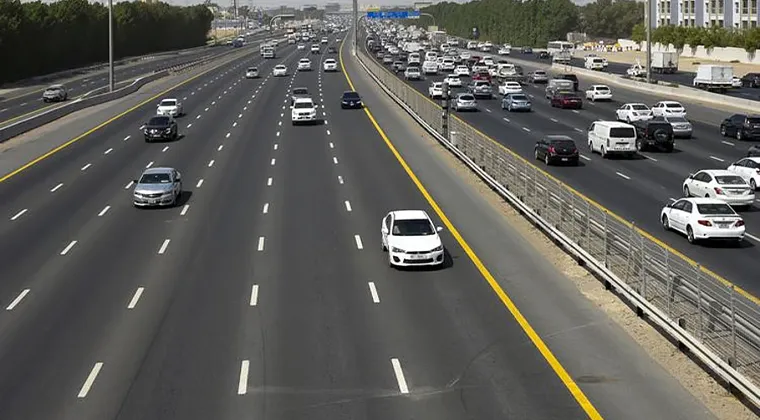
Although the ongoing roadworks have disrupted daily routines across several parts of Sharjah, many residents say they recognise that the inconvenience is temporary and view the construction as an investment in the city’s future. While longer commutes, road diversions and limited access have become part of everyday life over the past few weeks, most people believe the upgrades will eventually deliver lasting improvements to the emirate’s transport network.
Residents acknowledge that adapting to changing traffic patterns has not been easy. Many have had to leave home earlier, adjust work schedules, walk longer distances from parking areas or find alternative ways to reach their destinations. Even with these challenges, they say they understand that major infrastructure projects often require short-term sacrifices before the benefits can be realised.
Several commuters noted that Sharjah has experienced growing traffic volumes in recent years as the city’s population and business activity continue to expand. They believe improving roads, intersections and traffic flow is essential to meeting future transport demands and reducing congestion over the long term.
Ahmed Saeed, who lives in Al Taawun, said that while the ongoing construction has certainly affected his daily routine, he remains optimistic about the outcome.
“Nobody enjoys delays or road diversions, but these projects are being carried out to improve the roads for everyone,” he said. “At the moment we’re adjusting our schedules and finding different ways to manage our commutes. If the improvements lead to smoother traffic and shorter travel times in the future, then the temporary inconvenience will have been worthwhile.”
Ahmed added that patience is necessary whenever large-scale development projects are underway. He believes residents are gradually adapting to the new conditions and are becoming more flexible in planning their daily travel.
Other residents shared similar views, saying they are trying to focus on the bigger picture rather than the day-to-day disruptions. Many pointed out that road construction on this scale cannot be completed without affecting traffic for a period of time, especially in busy residential and commercial areas.
Some residents said they have already developed new habits that make commuting easier, such as travelling outside peak hours, sharing rides with colleagues, or relying on community updates through neighbourhood messaging groups. While these adjustments were initially made out of necessity, many now see them as practical solutions until the construction work is finished.
Several commuters also expressed confidence that once the upgrades are complete, the city will benefit from better road connectivity, improved traffic circulation and safer travel for both motorists and pedestrians. They hope the completed infrastructure will reduce bottlenecks, shorten journey times and make everyday commuting more predictable.
Despite the current frustrations, residents say they remain supportive of efforts to modernise Sharjah’s transport infrastructure. They believe that enduring a few months of disruption is a reasonable trade-off if it results in a more efficient road network that benefits thousands of commuters every day.
For now, people continue to adapt with patience, knowing that the changes are temporary. While traffic delays and altered routines remain part of daily life, many are looking beyond today’s challenges and focusing on the long-term improvements the road projects are expected to bring. Their shared hope is that once construction is complete, travelling across Sharjah will become faster, smoother and far more convenient for residents, workers and visitors alike.