Sharjah is undertaking significant infrastructure upgrades, including the construction of five bridges and a tunnel, to ease traffic congestion on routes connecting to Dubai. The projects aim to improve travel efficiency, reduce commuting times, enhance road capacity, and support the region’s growing transportation needs.
Sharjah advances major road projects with five bridges and a tunnel to improve Dubai-bound traffic flow
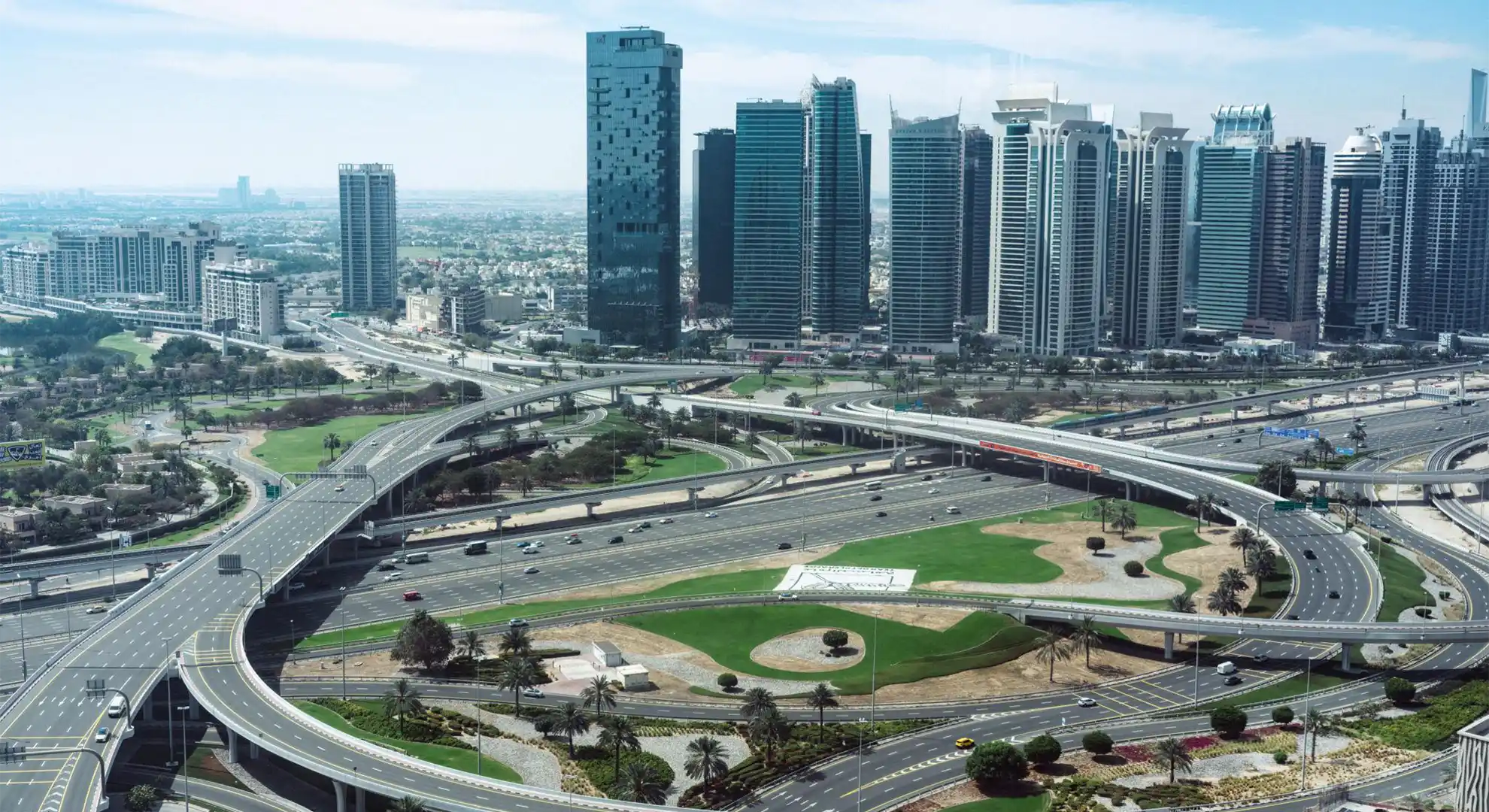
Sharjah Unveils Dh750 Million Road Network Upgrade to Improve Travel Between Sharjah and Dubai
Sharjah has launched a major infrastructure initiative valued at Dh750 million, aimed at addressing traffic congestion and improving mobility for thousands of commuters travelling between Sharjah and Dubai every day.
The large-scale project, directed by His Highness Sheikh Dr. Sultan bin Muhammad Al Qasimi, Supreme Council Member and Ruler of Sharjah, includes the construction of a modern transportation network featuring tunnels, bridges, expanded roadways, and free-flow intersections. Authorities expect the first phase of the development to be partially operational by November 2026.
The ambitious programme is being carried out jointly by Mubadara (Authority for Initiatives Implementation) and the Sharjah Roads and Transport Authority (SRTA), with support from various government organisations, including Sharjah Police, Sharjah Municipality, and the Sharjah Electricity, Water and Gas Authority (SEWA).
Transforming Key Traffic Corridors
A central focus of the project is the redevelopment of the Al Taawun corridor, one of the busiest routes connecting Sharjah and Dubai. The upgrade will create smoother links between Al Taawun Street, Al Nahda Bridge, and surrounding districts while also enhancing connectivity along Al Khan Street toward Sheikh Mohammed bin Zayed Road.
To speed up construction and minimise disruption, engineers are using precast concrete technology, allowing multiple project phases to progress simultaneously. Five interconnected developments are being implemented as part of the broader transport strategy.
Al Taawun Tunnel to Become a Key Traffic Artery
One of the most significant elements of the project is a new 500-metre tunnel being built beneath Al Taawun Roundabout. Designed with three lanes in each direction, the tunnel will create a direct route connecting Al Taawun Street with Dubai via Al Nahda Bridge.
The underground passage will be supported by a high-capacity signalised intersection capable of accommodating approximately 4,200 vehicles per hour in both directions during peak travel periods. Officials believe this will substantially reduce congestion around the roundabout and nearby junctions.
Construction of the tunnel required the temporary removal of the well-known Al Taawun monument. Authorities have confirmed that the landmark will be redesigned and reinstalled at its original location once construction works are completed.
The tunnel will also improve accessibility to important destinations such as Expo Centre Sharjah and will eventually form part of a wider transportation corridor linked to Al Noor Road.
New Al Noor Road to Offer Alternative Route
Another major component of the plan is the creation of Al Noor Road, a new connection extending from Al Orooba Street toward Dubai through Al Nahda Bridge. Scheduled for completion later this year, the route is expected to provide motorists with an additional option when travelling between residential and commercial districts in both emirates.
The road is intended to help distribute traffic more efficiently while reducing pressure on existing routes frequently affected by heavy congestion.
Expansion of Al Khulafa Al Rashideen Intersection
Work is also progressing at the Al Khulafa Al Rashideen intersection, where substantial improvements are being introduced to increase road capacity and improve traffic movement.
The project includes the installation of underground box culverts and the addition of two extra lanes in each direction across a 37-metre section of roadway. These enhancements are designed to maintain uninterrupted traffic flow for vehicles travelling to and from Dubai.
A new 315-metre flyover will provide direct access to Gamal Abdel Nasser Street, while an additional free-flow connection will link Al Ittihad Road directly to Al Khan Street.
Authorities estimate the upgraded junction will accommodate around 2,600 vehicles per hour in each direction while maintaining accessibility for nearby commercial establishments.
New Bridges to Improve Traffic Flow
To further ease congestion, Sharjah is constructing two new bridges over Industrial Streets 1 and 2. Each bridge will extend approximately 130 metres and feature two traffic lanes in both directions.
Approach roads measuring roughly 200 metres on either side will help ensure smooth vehicle movement and eliminate several existing bottlenecks.
The bridges will provide uninterrupted access toward Maleha Road, Sheikh Khalifa bin Zayed Road, and Al Waset Road, with the capacity to handle approximately 2,800 vehicles per hour during busy periods.
Major Improvements at Industrial Street 3
The fourth phase of the project focuses on Industrial Street 3, where additional bridges and road enhancements are being introduced to strengthen links between industrial districts and the emirate’s wider road network.
The works include two new bridges, dedicated turning lanes and a culvert connecting Industrial Street 3 to Ring Road. The upgraded corridor will improve connectivity with Sheikh Mohammed bin Zayed Road, Al Khan Street and Al Ittihad Road.
Spanning approximately 2.7 kilometres, this section is expected to accommodate around 5,200 vehicles per hour in both directions, making it one of the highest-capacity components of the overall project.
Sheikh Mohammed bin Zayed Road Interchange Upgrade
The final phase involves significant improvements to the interchange connecting Sheikh Mohammed bin Zayed Road with key residential and commercial districts.
The upgraded interchange will provide faster and more efficient access to Al Taawun, Al Khan and Al Buhaira areas while helping reduce traffic pressure on Al Ittihad Road and several nearby intersections.
Officials believe these improvements will play a crucial role in managing future traffic growth as Sharjah’s population and economic activity continue to expand.
Benefits for Residents and Daily Commuters
Once fully completed, the integrated network of five bridges, a major tunnel and several free-flow intersections is expected to transform commuting patterns between Sharjah and Dubai.
Residents living in densely populated communities such as Al Nahda, Al Majaz and surrounding areas are likely to experience shorter travel times, fewer delays and smoother journeys during peak hours.
The project will also enhance access to major landmarks and event venues, including Expo Centre Sharjah, the Sharjah International Book Fair and the Sheikh Khalid bin Sultan Al Qasimi Mosque in Al Mamzar.
Supporting Sharjah’s Long-Term Growth
Officials say the initiative is about more than simply reducing congestion. The project forms part of a broader vision to strengthen connectivity, support economic development and improve quality of life for residents.
According to Sheikh Dr Sultan, the objective is to create a more accessible and interconnected urban environment while reinforcing Sharjah’s position as a welcoming destination for residents, visitors and businesses alike.
Temporary Traffic Diversions in Place
To facilitate construction activities, the Sharjah Roads and Transport Authority has introduced temporary traffic management measures across several locations.
These include partial closures along Al Taawun Street, with motorists travelling toward Dubai and Al Nahda Bridge being redirected through Al Corniche Street. Vehicles arriving from Al Nahda Bridge are currently being guided via newly developed sections of Al Taawun Street.
Authorities have urged motorists to follow diversion signs and plan their journeys accordingly while construction work continues over the coming months.
Addressing Long-Standing Traffic Challenges
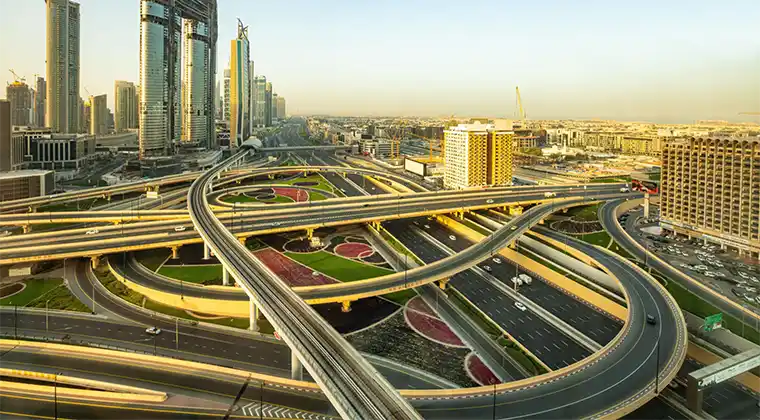
The latest infrastructure programme is expected to address some of the most persistent traffic bottlenecks experienced by residents travelling between Sharjah and Dubai. For years, rapid population growth and increasing vehicle numbers have placed significant pressure on major road networks, particularly during morning and evening peak hours. The new developments aim to provide long-term solutions rather than temporary relief measures.
Supporting Population Growth
Sharjah continues to attract new residents due to its affordable housing options and family-friendly communities. As more people choose to live in the emirate while working in Dubai, demand for efficient transportation infrastructure has increased considerably. The new road network is designed to accommodate future population growth and ensure that transport services keep pace with urban expansion.
Economic Benefits Beyond Transportation
Improved road connectivity can generate benefits that extend beyond shorter travel times. Reduced congestion often leads to lower fuel consumption, decreased transportation costs for businesses, and improved productivity as commuters spend less time on the road. The upgraded infrastructure may also enhance the attractiveness of Sharjah as a destination for investment and commercial activity.
Improved Access to Commercial Hubs
Several of the upgraded routes will provide easier access to key business districts, shopping centres, industrial zones and logistics facilities across the emirate. Better connectivity can help facilitate the movement of goods and services while supporting businesses that rely on efficient transportation links between Sharjah and Dubai.
Enhancing Road Safety
Modern road designs, grade-separated intersections and free-flow traffic systems are expected to contribute to safer driving conditions. By reducing traffic conflicts at busy junctions and minimising stop-and-go congestion, authorities hope to improve overall road safety and reduce the likelihood of accidents in heavily travelled areas.
Environmental Advantages
Traffic congestion contributes to higher vehicle emissions and increased fuel consumption. By creating smoother traffic flows and reducing idle time at intersections, the new infrastructure could help lower carbon emissions and support broader environmental sustainability goals. More efficient transportation networks can play an important role in creating greener and more sustainable cities.
Strengthening Regional Connectivity
The project reinforces the close economic and social ties between Sharjah and Dubai. Thousands of residents commute between the two emirates daily for work, education and business activities. Improved transportation links will strengthen these connections and support greater integration across the wider metropolitan region.
Supporting Major Events and Tourism
The upgraded network will also benefit visitors attending major exhibitions, cultural events and conferences in Sharjah. Improved access to destinations such as Expo Centre Sharjah, museums, waterfront developments and cultural landmarks could enhance the overall visitor experience and support growth in the tourism sector.
Future-Ready Infrastructure
Authorities have indicated that the project has been designed with future transportation needs in mind. The new roads, bridges and tunnel are expected to provide sufficient capacity for years to come while allowing flexibility for future upgrades as traffic volumes continue to increase.
A Transformational Project for the Emirate
Once completed, the Dh750-million initiative is expected to become one of the most significant transportation upgrades undertaken in Sharjah in recent years. By combining modern engineering solutions with long-term urban planning objectives, the project aims to create a more efficient, connected and accessible road network that will benefit residents, businesses and visitors alike for decades to come.