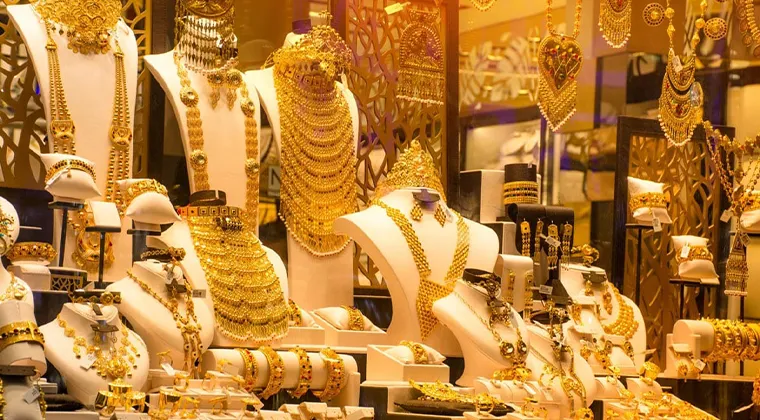
During early trading in Dubai, gold prices bounced back, with 22-karat gold increasing once again and moving past the Dh500 per gram level amid renewed market strength today in markets.
Gold prices rebound in early Dubai trading as 22K gold climbs back above Dh500 per gram.
Investors in global commodity markets are closely monitoring a combination of geopolitical developments and upcoming US economic indicators, as sentiment around precious metals continues to shift. In particular, traders are watching for updates related to the ongoing US–Iran peace negotiations, which could have a significant impact on broader risk appetite and safe-haven demand. At the same time, attention is also focused on the release of key US labour market figures, including the non-farm payrolls data and the broader employment report, both scheduled for later this week. These indicators are expected to provide fresh clues about the health of the American economy and may influence expectations around interest rates, which in turn affect gold pricing trends.
Against this backdrop, gold prices in Dubai showed a clear recovery during Tuesday morning trading after experiencing a sharp decline in the previous session. On Monday, the market had witnessed a notable drop, with prices falling by more than Dh11 per gram, reflecting short-term volatility and profit-taking activity. However, the downward pressure did not persist into the new trading day, as buyers returned to the market and helped push prices higher once again.
The rebound was visible across different gold categories, with 24-karat gold, which is considered the purest form of the metal and often used as a benchmark for pricing in the region, registering an upward movement. On Tuesday morning, 24K gold was priced at Dh544.25 per gram. This marked an increase compared to its previous closing level of Dh539.75 per gram recorded at the end of trading on Monday. The movement suggests a modest but steady recovery, as market participants adjusted positions following the earlier dip.
Similarly, the widely traded 22-karat gold segment, which is particularly popular among jewellery buyers in the UAE due to its balance of purity and durability, also regained strength during early trade. The price of 22K gold moved back above the Dh500 threshold, trading at Dh504 per gram. This recovery above the psychologically important Dh500 level is often seen as a key signal for retail buyers and traders in the regional market, as round-number thresholds tend to influence buying behaviour and sentiment.
Other gold purity levels also reflected the broader upward trend in the market. The 21-karat variant was recorded at Dh483.25 per gram during early trading hours, showing alignment with the general recovery seen across higher purity segments. Meanwhile, 18-karat gold, which is commonly used in lighter jewellery designs and is popular among a wider consumer base due to its relatively lower cost compared to higher karat options, was priced at Dh414.25 per gram.
In addition, the 14-karat gold category, which typically caters to more budget-conscious buyers and is often used in fashion jewellery, was trading at Dh323.0 per gram. Although this segment remains the most affordable among the listed categories, it also followed the same upward trajectory observed across the gold market in Dubai, indicating a broad-based recovery rather than isolated movement in a specific purity level.
In the international bullion market, spot gold also showed positive momentum during the same period. Prices were holding above the $4,500 per ounce mark, a level that continues to serve as a significant reference point for global traders. As of 9am UAE time on Tuesday, spot gold was trading at $4,517 per ounce, reflecting a gain of approximately 0.9 per cent compared to the previous session. This increase highlights renewed buying interest in gold, which is often viewed as a safe-haven asset during periods of economic uncertainty or geopolitical tension.
The slight rise in global gold prices aligns with ongoing caution among investors who are balancing expectations of economic data releases with geopolitical uncertainties. Movements in US interest rate expectations remain a central driver of gold prices, as the metal typically performs differently depending on the direction of yields and currency strength, particularly the US dollar.
Alongside gold, silver also experienced an upward movement in global markets. The white metal, which often moves in tandem with gold but can also exhibit higher volatility due to its industrial demand component, increased by around one per cent during the same trading window. Silver was priced at $75.8 per ounce, reflecting renewed strength in the broader precious metals complex.
The combined movement in both gold and silver suggests a short-term improvement in investor sentiment toward precious metals after the previous session’s decline. While the drop on Monday indicated some selling pressure and possible profit booking, the recovery on Tuesday points toward continued underlying demand, especially at lower price levels.
Market participants are now evaluating whether this rebound marks the beginning of a more sustained upward trend or simply a temporary correction within a broader volatile trading range. The outcome may largely depend on upcoming macroeconomic data from the United States as well as developments in geopolitical negotiations, both of which are expected to influence risk sentiment in the days ahead.
If the US employment data shows stronger-than-expected job creation, it could strengthen expectations of tighter monetary policy for longer, which may put pressure on gold prices. Conversely, weaker labour market numbers could support the case for policy easing, which typically benefits non-yielding assets like gold. Similarly, any significant progress or setback in the US–Iran negotiations could shift demand between safe-haven assets and riskier investments, further influencing price direction.
In the Dubai retail market, the recovery in gold prices is also important for jewellery buyers and traders who closely track daily fluctuations. Even small changes per gram can significantly affect overall purchasing costs, especially for larger jewellery items or bulk purchases. The move back above key levels in 22K gold, in particular, may restore some confidence among buyers who were waiting for prices to stabilise after the previous day’s sharp fall.
Overall, the latest trading session reflects a market that is still highly responsive to global economic signals and geopolitical developments. While volatility remains present, the rebound seen on Tuesday morning indicates that demand for gold has not weakened significantly and that buyers are still active at adjusted price levels. The coming days, especially with major US data releases on the horizon, are likely to play a decisive role in shaping the next direction for both global and Dubai gold prices.
Market participants have been carefully assessing the implications of a newly reported partial ceasefire agreement involving Hezbollah and Israel, while also keeping a close watch on ongoing diplomatic discussions between the United States and Iran. These developments are unfolding at a time when global investors are increasingly sensitive to inflationary pressures and the potential for further interest rate increases by central banks.
On Monday, Lebanese authorities confirmed the announcement of a limited ceasefire arrangement between Hezbollah and Israel. This development is being viewed as a tentative and partial step toward reducing hostilities in a conflict that has already resulted in significant loss of life and has further intensified tensions across the wider Middle East, particularly in relation to Iran’s broader regional influence. Although the ceasefire does not represent a full resolution to the conflict, it is still being interpreted as a cautious attempt to de-escalate violence and prevent further escalation in an already fragile geopolitical environment.
The conflict between Hezbollah and Israel has been one of the key sources of instability in the region, and any change in its intensity tends to have wider implications for global markets. Investors are particularly attentive to such developments because geopolitical instability in energy-rich regions can have a direct impact on oil prices, shipping routes, and overall inflation expectations. As a result, even partial or temporary ceasefire arrangements are closely analysed for their potential to either ease or prolong uncertainty.
At the same time, financial markets are also focused on diplomatic developments involving the United States and Iran. Negotiations between the two countries continue to be a major point of interest for investors, as they carry implications for sanctions, energy supply conditions, and broader geopolitical stability in the Middle East. Any progress or setback in these talks could influence global risk sentiment, particularly in commodity markets and safe-haven assets such as gold.
In addition to geopolitical factors, attention is increasingly shifting toward upcoming economic data releases from the United States. Among the most closely watched indicators are the non-farm payroll figures and the broader employment situation report, both of which are scheduled for release later this week. These reports are considered critical measures of the strength and resilience of the US labour market and are often used by investors to gauge the direction of monetary policy.
The significance of these labour market indicators has grown in recent months due to ongoing concerns about inflation. Market participants are trying to determine whether the US economy is still generating enough jobs to sustain consumer demand, or whether signs of weakening employment could signal a slowdown in economic activity. Strong employment data could reinforce expectations that the Federal Reserve may keep interest rates elevated for a longer period in order to control inflation. Conversely, weaker-than-expected job numbers could increase speculation about a potential easing of monetary policy in the future.
Inflation concerns have been further amplified by the geopolitical tensions stemming from the Middle East conflict. Disruptions or uncertainties in the region can affect global energy supplies, which in turn influence transportation costs, production expenses, and overall price levels across multiple sectors. Investors are therefore attempting to balance economic data expectations with geopolitical risk factors when forming their outlook for interest rates and market performance.
Overall, the current market environment is being shaped by a combination of geopolitical uncertainty and key macroeconomic indicators. The partial ceasefire between Hezbollah and Israel has introduced a cautious sense of relief, but it has not fully removed concerns about regional instability. Meanwhile, ongoing US–Iran negotiations continue to represent a significant variable in the global risk landscape.
As investors await the release of US labour market data later in the week, trading sentiment is likely to remain sensitive to any new developments. The interaction between geopolitical events and economic indicators is expected to play a decisive role in shaping expectations around inflation, interest rates, and overall market direction in the near term.