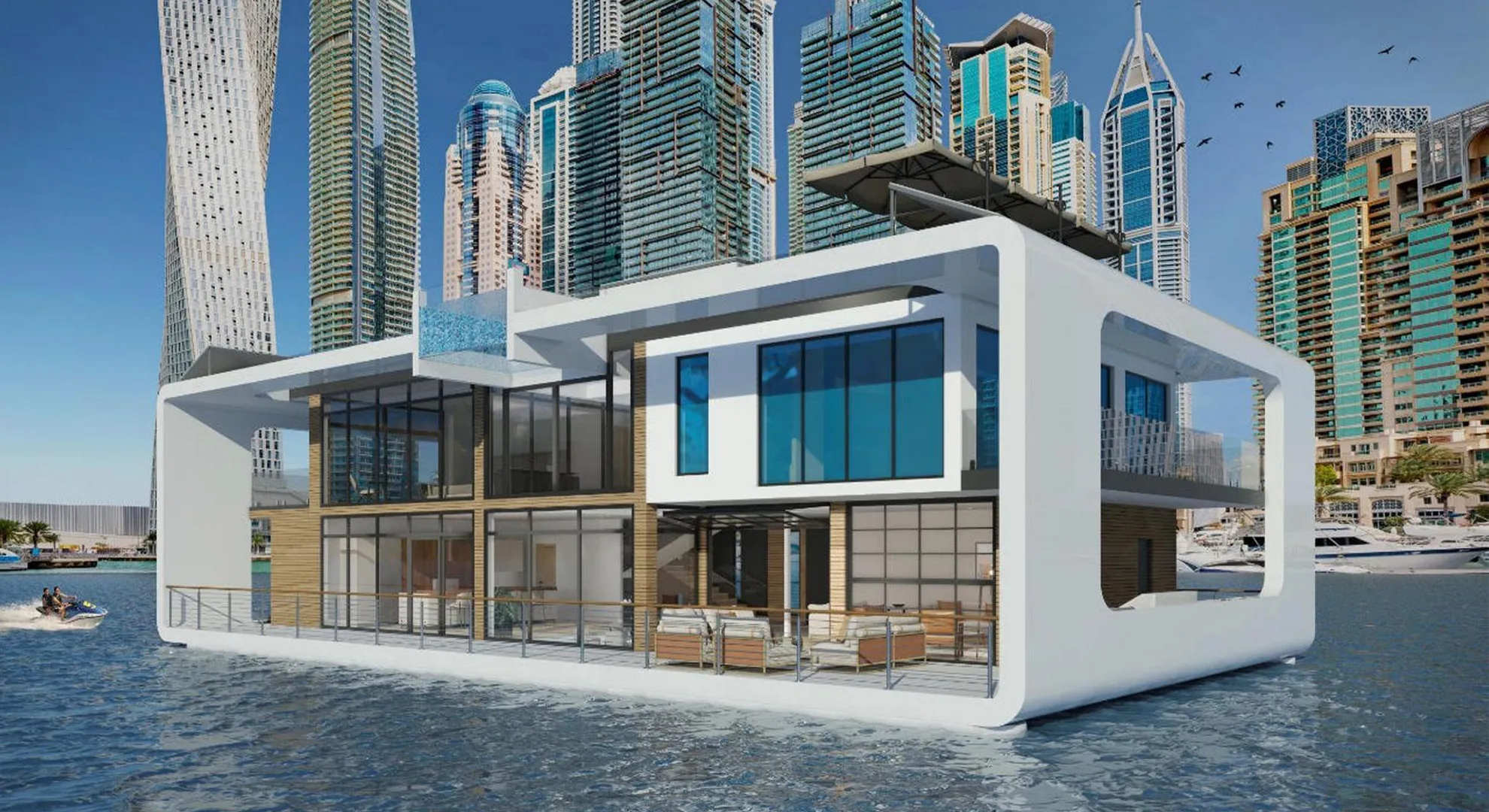
The UAE is becoming a major production center for high-end floating homes designed for European buyers, with luxury waterfront properties now being manufactured in large-scale marine facilities across the country.
UAE Emerges as Manufacturing Hub for Europe’s Floating Luxury Properties.
Inside a huge shipbuilding complex in Umm Al Quwain, towering yacht frames dominate the production floor as teams of workers carry out different stages of construction across the sprawling facility. Massive unfinished vessels stand several metres high, surrounded by steel scaffolding, industrial platforms and heavy machinery, while engineers and technicians move between sections working on various components of the luxury boats.
Across the yard, activity continues simultaneously in multiple production zones. In one area, workers focus on shaping and refining enormous hull structures that form the foundation of the yachts. Nearby, other teams handle interior installations, fitting premium materials, preparing custom glass panels and adding detailed finishing work that transforms the vessels into high-end floating residences.
The shipyard operates like a large-scale manufacturing hub where several luxury yachts are under construction at the same time. Different sections of the facility are dedicated to specialised tasks, allowing work on structure, design, engineering and interiors to progress together. From a distance, the giant vessels resemble partially completed buildings rather than boats, reflecting the scale and complexity involved in producing modern superyachts.
One of the latest vessels completed at the facility is the Majesty 145, a superyacht measuring 145 feet in length. Built at Gulf Craft’s shipyard, the yacht took around 14 months to complete from initial construction to final delivery. The vessel represents one of the company’s flagship projects and is part of a growing market for ultra-luxury yachts designed for wealthy clients around the world.
According to the company, these superyachts are increasingly viewed as “homes on water” rather than simply recreational boats. Designed with luxury living in mind, the vessels include spacious living areas, designer interiors and advanced onboard facilities tailored for multimillionaire owners seeking privacy and exclusivity at sea.
Much of the yacht-building process takes place entirely within the Umm Al Quwain facility itself. Unlike smaller operations that outsource major sections of production, the shipyard manages a significant portion of the work internally. Construction begins with moulding and structural fabrication before moving through engineering, interior fitting, electrical systems, glazing and final finishing.
Large industrial cranes suspended from the ceilings move heavy yacht components across the production halls, while teams below work on separate sections of partially completed vessels. Some yachts remain in early skeletal stages, exposing their framework and support structures, while others are already taking shape with polished exteriors and luxury interiors beginning to emerge.
The scale of the operation becomes clear as unfinished yachts sit side by side across the enormous halls, each at a different stage of development. Workers climb scaffolding surrounding the vessels, carefully installing components and carrying out detailed finishing work. The environment combines heavy industrial manufacturing with precision craftsmanship, as every section of the yacht requires careful engineering and customised detailing.
Specialised teams focus on different aspects of the build process. Some workers shape fiberglass structures and reinforce hull sections, while others install large panoramic windows and custom-designed interiors. Upholstery, lighting systems, flooring and luxury fittings are added gradually as the vessels move closer to completion.
The facility’s production process is designed to maintain quality control by handling most stages in-house. Engineers, designers and technicians collaborate closely throughout construction to ensure the yachts meet international standards and client specifications. This integrated system also allows the company to manage multiple high-value projects simultaneously within the same complex.
As construction progresses, the giant vessels slowly evolve from industrial frameworks into polished superyachts intended for global waters. Once completed, these floating luxury homes are shipped to owners across Europe, the Middle East and other international markets.
The atmosphere inside the shipyard reflects both the precision and scale required in modern yacht manufacturing. Sparks from welding operations light up sections of the halls while workers in protective gear move between towering yacht structures carrying tools and materials. In quieter areas, craftsmen focus on detailed interior work, fitting luxury finishes and preparing living spaces that will eventually host elite clients at sea.
Months after standing incomplete inside the production halls, these yachts will leave the UAE facility fully transformed into luxury vessels capable of travelling across international waters. For many buyers, they serve not only as private yachts but also as mobile waterfront residences equipped with the comforts of high-end real estate.
The growing demand for luxury yachts has helped position the UAE as an important centre for high-end marine manufacturing. Facilities such as the one in Umm Al Quwain continue to produce increasingly sophisticated vessels for international clients, combining industrial engineering with luxury design under one roof.
Company representatives say the shipyard maintains a strong production output throughout the year, with more than 200 vessels constructed annually at the Gulf Craft facility. A significant share of this production, roughly half, is exported to international buyers, with Europe being one of the key markets for these luxury yachts and leisure boats.
Speaking about the production timeline, Chairman Mohammed Hussein Alshaali explained that build duration varies widely depending on the size and complexity of each vessel. Smaller boats can be completed relatively quickly, sometimes within about a month, while larger superyachts require far more time. In some cases, highly customised luxury yachts may take up to 18 months or even two years before they are fully completed and ready for delivery. He noted that factors such as design specifications, materials used, and level of customisation all influence the final construction schedule.
Inside the facility, much of the manufacturing process is kept under one roof, which company officials say helps improve efficiency and quality control. Brian Vicencio, who works in the administrative division of the company, explained during a tour of the shipyard that handling multiple stages internally gives the organisation greater oversight of production flow. According to him, this integrated approach allows the company to better manage deadlines and maintain consistency across different phases of construction.
He added that various parts of the yacht-building process, including moulding, structural assembly, interior design, furniture installation, glass fitting, and final detailing, are all coordinated within the same facility. By avoiding external outsourcing for these critical stages, the company is able to adjust schedules more easily and ensure that every component meets its required standards before moving to the next phase of production.
Not far from the industrial section of the yard, where unfinished hulls and steel frameworks dominate the landscape, a striking contrast emerges in the form of completed luxury yachts anchored nearby. One of the most notable among them is the Majesty 145, a finished superyacht that presents a sharp visual and functional contrast to the construction zones surrounding it.
The vessel spans four fully developed decks and is designed as a floating luxury residence rather than a conventional boat. It includes six guest cabins, along with a spacious owner’s suite designed for privacy and comfort. Each area has been carefully planned to offer high-end living conditions at sea, reflecting the growing trend of yachts being treated as mobile homes rather than simple recreational crafts.
The interior layout features dedicated dining areas, multiple lounge spaces, and entertainment zones spread across different levels of the yacht. These spaces are designed to accommodate both private relaxation and social gatherings, depending on the owner’s preferences. Large windows and open deck areas allow natural light to enter the interior spaces while also providing uninterrupted views of the surrounding sea.
In addition to living and entertainment areas, the yacht also includes wellness and leisure facilities such as a gym and a sauna. These amenities are part of a broader shift in yacht design, where comfort and lifestyle features are increasingly prioritised alongside navigation and performance capabilities.
The outdoor decks are equally expansive, offering open-air seating and relaxation zones that overlook the water. These areas are often used for dining, sunbathing, or simply enjoying the marine environment while at anchor or underway. The design of the vessel reflects a careful balance between privacy, luxury, and functionality, catering to the expectations of high-net-worth individuals who purchase such superyachts.
The contrast between the active construction zones and the completed yacht highlights the full lifecycle of production within the shipyard. While one part of the facility is filled with noise, machinery, and ongoing fabrication work, another showcases the final outcome of months or even years of coordinated effort between designers, engineers, and craftsmen.
Company officials say this combination of large-scale manufacturing capacity and in-house production expertise is what allows them to maintain consistent output while meeting international demand. With buyers from Europe and other regions continuing to show interest, the facility has positioned itself as a key player in the global luxury yacht industry, blending industrial-scale production with bespoke craftsmanship.
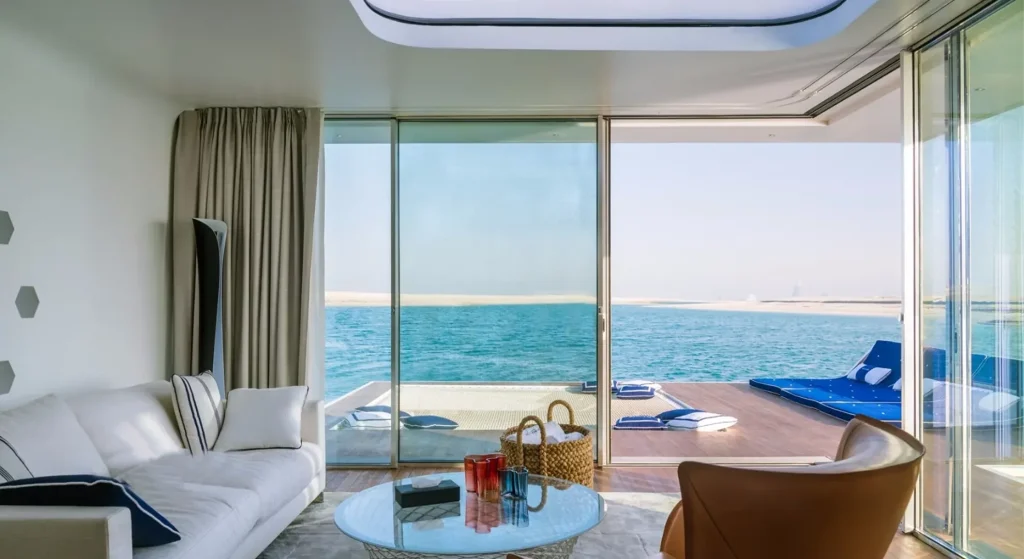
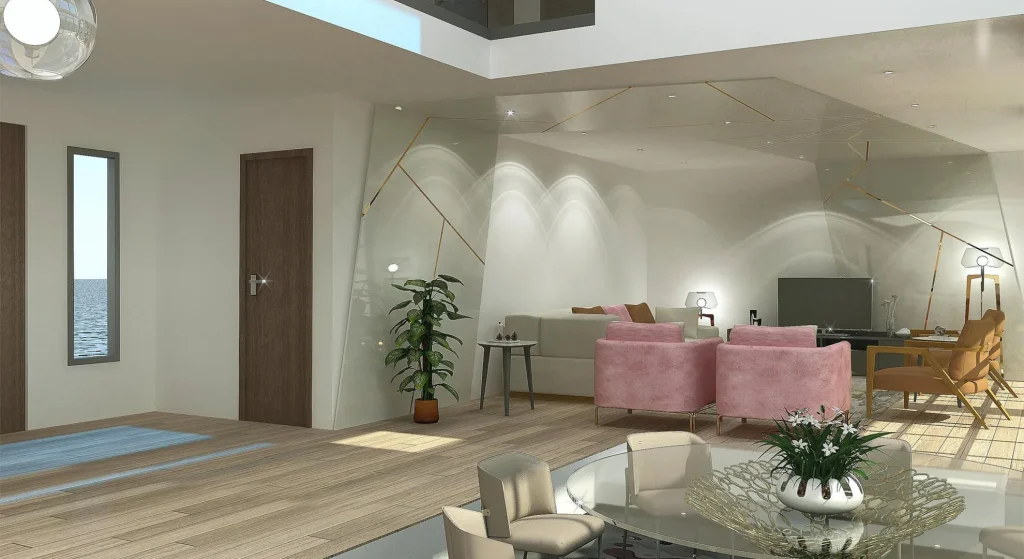
The interior design of the yacht gives the impression of a high-end waterfront residence rather than a conventional marine vessel. The overall aesthetic is built around comfort and sophistication, with carefully planned spaces that mirror the layout and ambience of a luxury apartment overlooking the sea. Soft, ambient lighting runs throughout the cabins and shared areas, creating a warm and relaxed atmosphere that contrasts with the industrial environment where the vessel was originally assembled.
Premium materials have been used extensively across the interiors. Bathrooms are finished with polished marble surfaces, while wooden textures and paneling add warmth and elegance to living spaces. The main lounges are wide and open, positioned to face the ocean through large windows, allowing uninterrupted views of the water and enhancing the feeling of being in a floating villa rather than a traditional yacht.
The vessel has been designed to host up to 12 guests comfortably, in addition to a professional crew of nine members responsible for navigation, hospitality, and maintenance. This separation of guest and crew areas ensures privacy while maintaining smooth onboard operations. Each section of the yacht has been carefully planned to support long-duration stays at sea, with attention given to both functionality and luxury.
One of the most prominent areas onboard is the owner’s suite, which has been designed as a private retreat within the yacht. It features expansive panoramic windows that allow natural light to flood the space while offering uninterrupted views of the surrounding ocean. The suite also includes dedicated private sections that allow the owner to relax, work, or entertain guests in complete seclusion.
Across the vessel, open-air decks are arranged on multiple levels, each offering different uses and experiences. Some are designed for relaxation and sunbathing, while others serve as dining or entertainment spaces. These outdoor areas connect seamlessly with the interior lounges, creating a continuous flow between indoor comfort and outdoor exposure to the sea environment.
The yacht’s bridge, located at an elevated position, provides commanding visibility over the surrounding waters. From here, the navigation crew can monitor the vessel’s course while enjoying a clear, wide-angle view of the horizon. This elevated control centre is a key operational feature, ensuring safe and efficient travel during long voyages.
The transformation from an unfinished structure to a fully completed superyacht becomes even more striking when viewed in context with the production environment. Just a few hours before the yacht’s completion was observed, the same structure was seen as a partially assembled frame inside the shipyard. Workers had been operating beneath its steel hull, surrounded by scaffolding, industrial tools, and construction materials, as different sections of the vessel were still being fitted and assembled.
At that stage, the yacht existed primarily as a structural framework, with exposed surfaces and incomplete interiors. The contrast between the construction phase and the finished product highlights the complexity and precision involved in yacht manufacturing. What once appeared as a bare industrial shell has now been transformed into a fully functional luxury vessel featuring refined interiors, decorative staircases, hotel-style suites, and expansive sea-facing windows.
According to Mohammed Hussein Alshaali, Chairman of Gulf Craft, the UAE has steadily developed a strong international reputation in the field of yacht manufacturing over the years. He noted that vessels produced in the country are now regularly delivered to clients across various global markets, reinforcing the UAE’s position as an important hub for luxury marine craftsmanship.
He also pointed out that yachts such as the Majesty 145 are not limited to private ownership alone. In many cases, these superyachts are also used for charter operations, offering luxury travel experiences in popular maritime destinations such as the Mediterranean Sea and the Caribbean region. This dual usage has expanded the commercial appeal of such vessels, making them attractive not only to private buyers but also to investors in the luxury tourism sector.
Alshaali further explained that the Majesty 145 is equipped with advanced marine engineering systems, including twin engines that generate around 2,400 horsepower. These powerful engines provide the yacht with the capability to undertake long-distance journeys while maintaining smooth and stable performance at sea.
In addition to propulsion, the yacht is fitted with stabilisation technology designed to enhance passenger comfort, particularly during extended voyages or in challenging sea conditions. These systems help reduce motion on board, ensuring a smoother experience for guests and crew alike.
As the guided tour of the facility concluded, the scale of ongoing activity inside the Umm Al Quwain shipyard remained evident. Workers continued moving between massive production bays where additional yacht frames were still under construction. The environment remained busy and highly organised, with multiple projects progressing simultaneously across different stages of completion.
Despite the focus on finished luxury vessels showcased near the waterfront, much of the facility was still dedicated to building new yachts from the ground up. Steel structures, moulded hull sections, and partially assembled frames stood side by side, representing future projects that would eventually follow the same transformation process.
Reflecting on the broader vision of the company, Alshaali remarked that the journey of these vessels does not end within the shipyard. Once completed, they are destined to leave the facility and travel across international waters, eventually reaching clients and destinations around the world.
He added that soon these yachts will not just be seen inside production halls or docked at the facility, but will be actively sailing across oceans, becoming part of global waters and fulfilling their purpose as luxury floating residences.