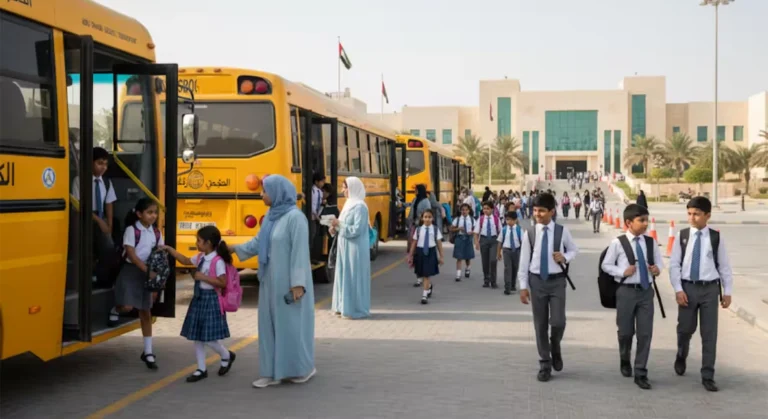
Beginning July 1, CBSE will implement a compulsory three-language policy for affiliated schools, while Indian schools operating in the UAE will remain outside the scope of the newly introduced academic regulation.
CBSE’s New Three-Language Rule to Start July 1; UAE-Based Indian Schools Get Exemption.
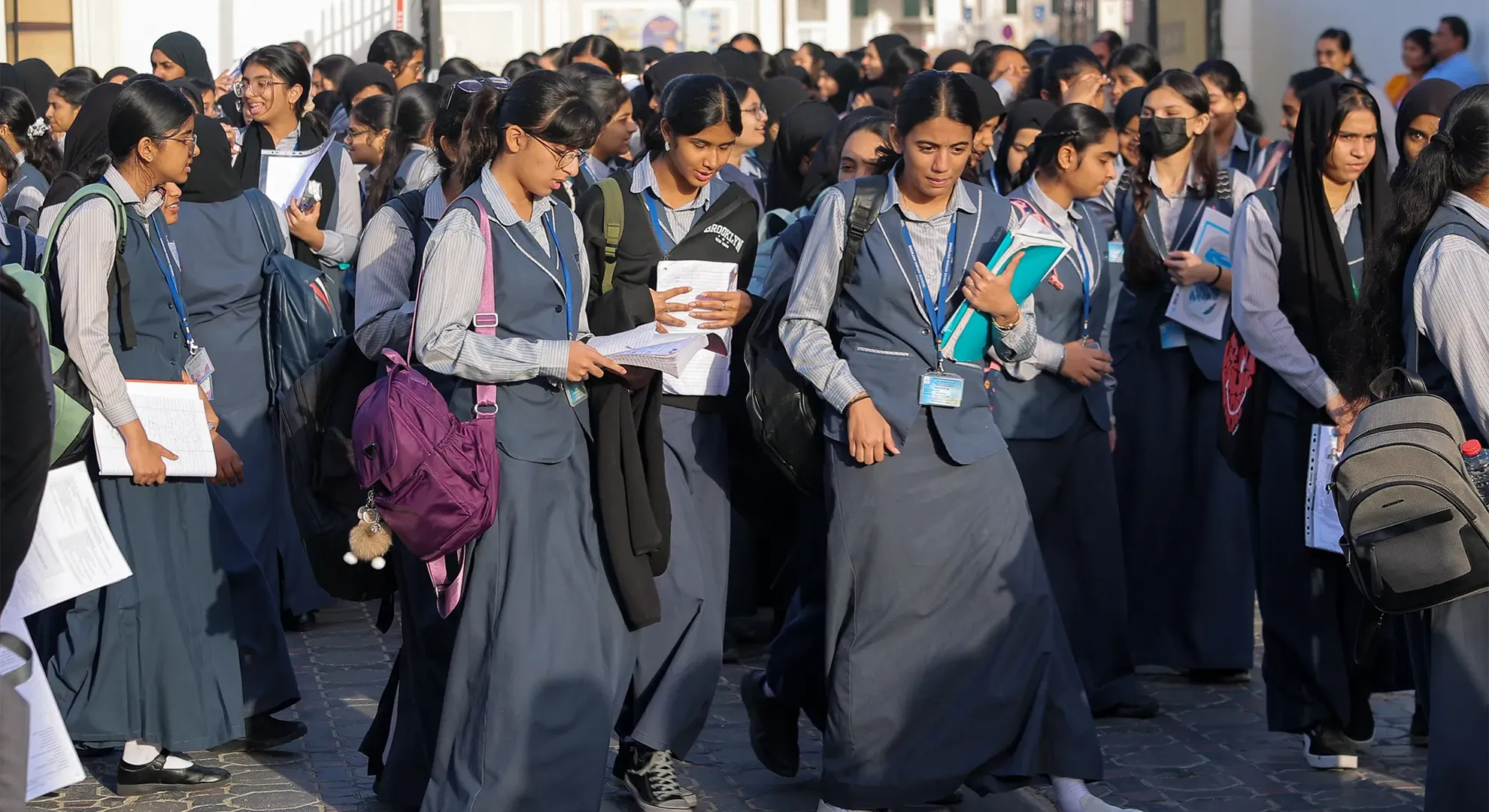
School leaders across the UAE have said that the latest language policy introduced by the Central Board of Secondary Education (CBSE) appears to be far more flexible for Gulf-based institutions than many had first feared. According to principals of Indian curriculum schools in the Emirates, the updated framework gives institutions enough room to continue teaching Arabic as part of the third-language category, commonly referred to as R3, while still complying with the board’s revised academic structure.
The clarification has brought relief to both educators and parents who had initially expressed concern over the possible impact of the new three-language model on students already managing demanding academic schedules. When details of the revised policy first emerged, many families worried that children studying in CBSE-affiliated schools outside India, especially in the UAE, might face an increased academic burden or be forced to take on an additional language requirement beyond what schools currently offer.
However, school administrators now say that discussions with education authorities and a closer reading of the framework indicate that overseas institutions, particularly those in Gulf countries, will have sufficient flexibility in implementation. This means schools can continue integrating Arabic into the curriculum in a practical manner without placing unnecessary pressure on students.
The concerns began after CBSE announced modifications to its language structure for students in Classes 9 and 10 as part of broader educational reforms linked to India’s National Education Policy (NEP) 2020 and the National Curriculum Framework for School Education (NCF-SE) 2023. The revised rules are scheduled to come into effect for students entering Grade 9 from July 1, 2026, marking a significant shift in language learning requirements for CBSE schools.
Under the new structure, students will study three languages, identified within the framework as R1, R2, and R3. The policy is intended to strengthen multilingual learning and align Indian school education with the broader goals outlined in the NEP, which encourages linguistic diversity and deeper cultural understanding among students.
Initially, the announcement sparked confusion among several Indian schools in the UAE because Arabic is already a mandatory subject in the country under local education regulations. Parents feared students would have to study Arabic in addition to three other languages, effectively increasing the number of compulsory language subjects and adding stress to an already competitive academic environment.
Many educators also questioned how schools would fit the revised requirements into existing timetables while balancing core academic subjects, extracurricular activities, and ministry-mandated lessons. For families with children preparing for board examinations, there were concerns that additional language obligations could affect academic performance and increase workload significantly.
School principals now say those fears are gradually easing. According to administrators, the framework provides enough adaptability for Gulf schools to classify Arabic within the R3 category, allowing schools to meet both UAE educational requirements and CBSE regulations simultaneously. This interpretation has reassured many stakeholders that students will not necessarily face an additional language load beyond what they already study.
Education leaders have also pointed out that the policy appears to recognize the unique realities of international CBSE schools operating outside India. Unlike schools within India, institutions in countries such as the UAE must follow local ministry requirements alongside CBSE regulations. Principals believe the revised framework acknowledges these differences and allows schools to tailor implementation according to regional educational needs.
Several UAE-based schools have already begun reviewing their language offerings and consulting with parents to ensure a smooth transition before the policy takes effect in the 2026–27 academic year. Administrators say the long lead time before implementation will help schools reorganize schedules, train teachers if required, and guide families through any curriculum adjustments.
Parents, meanwhile, have welcomed the clarifications from schools. Many had worried that children might be required to learn an entirely new language at secondary level, which could have created difficulties for students already balancing English, Hindi or other Indian languages, and Arabic. The possibility of Arabic being counted within the CBSE framework has therefore reduced anxiety considerably among families.
Educators also believe the revised language structure may ultimately benefit students if implemented thoughtfully. Supporters of multilingual learning argue that exposure to multiple languages can strengthen communication skills, cultural awareness, and cognitive development. In the UAE context, where students grow up in a multicultural environment, many school leaders say maintaining Arabic within the academic structure makes practical and educational sense.
At the same time, principals have emphasized the importance of flexibility in execution. They say every school community has different linguistic backgrounds, and implementation should remain student-friendly rather than overly rigid. Many schools are expected to seek further guidance from CBSE over the coming months to ensure compliance while maintaining manageable academic workloads for learners.
The updated framework represents one of several reforms being introduced under India’s evolving education policy. The NEP 2020 aims to modernize school education through a greater focus on skill development, conceptual learning, flexibility, and multilingualism. The language policy, in particular, has been a major talking point because of its implications for both domestic and overseas Indian schools.
For now, UAE school leaders say the situation appears much clearer than it did when the policy was first announced. With Arabic likely to remain integrated under the R3 category, schools believe they can continue operating without major disruption while still aligning with CBSE’s revised educational vision.
One of the primary worries among Indian schools in the UAE following CBSE’s revised language policy was the possibility that students would be required to study two Indian regional languages in addition to Arabic, which is already compulsory under UAE education regulations. Parents and educators feared this could significantly increase the academic load for students in Classes 9 and 10, particularly those preparing for board examinations.


However, school leaders now say the revised framework offers overseas institutions, especially those in Gulf countries, enough flexibility to adapt the language structure according to local educational requirements. According to principals, the updated policy allows Arabic to be accommodated within the R3 category, ensuring that students in the UAE will not need to take on an extra language subject beyond their existing curriculum.
Educators have clarified that the system is not as restrictive as initially interpreted when the policy announcement first emerged. They explain that CBSE has taken into account the unique circumstances of international schools operating outside India, where local government regulations often require specific language instruction alongside the Indian curriculum.
Pramod Mahajan, principal of Sharjah Indian School, said the concerns surrounding the implementation of the policy in foreign schools were largely unnecessary because the framework already includes provisions designed for overseas institutions. According to him, the revised structure does not require students studying abroad to learn two Indian native languages.
Mahajan explained that international CBSE schools are expected to include only one Indian language within the revised format. He noted that schools still have considerable flexibility in deciding how the three-language structure will function for students in the UAE and other Gulf nations.
He outlined that under the framework, the first language category, referred to as R1, can continue to be English, which remains the primary medium of instruction in most Indian schools across the UAE. The second category, R2, can include an Indian language such as Hindi, Malayalam, Tamil, or Urdu, depending on the school’s student population and curriculum offerings.
For the third language category, R3, Mahajan said schools in the UAE can continue using Arabic, allowing institutions to comply simultaneously with both CBSE regulations and UAE education ministry requirements. This clarification has brought significant relief to many parents who feared students would be forced to study an additional Indian language on top of Arabic.
Another major point of reassurance for families is that Arabic under the R3 category will not require students to appear for a separate CBSE board examination in Grade 10. According to Mahajan, the subject will instead be assessed internally by schools through grading and periodic evaluations.
Although Arabic grades will still appear on the final marksheet, they will be based on internal assessment rather than external board testing. Educators believe this approach will reduce pressure on students while still recognizing language learning as part of the overall academic structure.
Mahajan emphasized that the CBSE appears to have considered the realities of its international network while drafting the revised framework. The board currently operates in schools across 26 countries, and he said the policy reflects the understanding that educational systems and local language requirements vary significantly from one country to another.
He further explained that in Grade 10, only the R1 and R2 language categories will be formally evaluated through CBSE board examinations. The R3 category, meanwhile, will remain more flexible and may differ depending on the country in which a school is located.
According to school leaders, this country-specific adaptability is particularly important for Gulf schools, where Arabic instruction is mandatory by law. Principals say the ability to integrate Arabic within the CBSE framework prevents unnecessary duplication and ensures students are not overloaded with multiple compulsory language subjects.
Mahajan also highlighted that the revised policy contains special provisions and exemptions aimed at supporting students with different educational needs and backgrounds. This includes accommodations for People of Determination as well as students who transfer between schools in India and institutions overseas.
School administrators believe such exemptions are essential because international student mobility is common in CBSE schools abroad. Families frequently relocate between countries due to employment changes, and educators say flexibility within the curriculum is necessary to ensure students can transition smoothly without facing major academic disruption.
Parents in the UAE have responded positively to the clarifications provided by school authorities. Many had initially feared the revised language framework would complicate secondary education for students already balancing demanding academic schedules. The possibility of avoiding an additional board-level language examination has therefore eased anxiety considerably.
Educators also note that the policy’s adaptable structure may help preserve cultural and linguistic diversity within schools while still aligning with the goals of India’s National Education Policy 2020. By allowing schools to continue teaching Arabic under the R3 category, the framework supports both regional requirements and multilingual learning objectives.
Several schools across the UAE are now reviewing implementation strategies and preparing guidance for parents ahead of the policy rollout in the 2026–27 academic year. Principals say ongoing communication with CBSE will remain important to ensure schools interpret the framework consistently and maintain student-friendly academic structures.
Overall, school leaders believe the revised language policy is turning out to be more practical and internationally adaptable than many initially expected. With Arabic likely to remain part of the approved third-language category and without an added board examination burden, educators say the framework appears manageable for both schools and students in the UAE.
Relief for foreign schools
Education experts say one of the main issues surrounding CBSE’s revised language framework was its impact on non-Indian students enrolled in Indian curriculum schools across the UAE. Many schools feared that requiring two Indian languages under the R1, R2, and R3 categories would create difficulties for students from other nationalities who may not have any background in Indian regional languages.
Muhammad Ali Kottakkualm, principal of Cosmopolitan International Indian School, said schools had already started preparing for the implementation of the three-language structure, but the earlier interpretation of the rule raised practical concerns. According to him, the expectation that students study two Indian languages was especially challenging for expatriate students from non-Indian backgrounds.
He explained that a recent CBSE clarification has eased many of those worries for international schools as well as Students of Determination. Although the board has not yet outlined the exact nature of exemptions, he said CBSE generally considers individual cases involving foreign students relocating back to their home countries.
Kottakkualm also noted that Gulf-based schools are awaiting further details about CBSE’s upcoming Global Curriculum, which is expected to better address the academic needs of international institutions.
French challenge remains
While many UAE-based schools believe including Arabic under the R3 category will not create major implementation issues, some educators remain concerned about how the revised CBSE language framework could affect the teaching of foreign languages such as French.
Abhilasha Singh, principal of Shining Star International School, said her institution currently provides students with multiple language options, including Hindi, Urdu, Malayalam, Tamil, and French. According to her, the latest CBSE circular makes it clear that schools are expected to include two Indian native languages within the revised three-language structure.
She explained that Arabic itself is unlikely to become a challenge for schools in the UAE because most institutions are expected to classify it under the R3 category. Singh also pointed out that students will not be required to appear for a Grade 10 board examination in R3, which has helped reduce concerns among parents and educators regarding additional academic pressure.
However, she noted that schools currently offering French as part of the R2 category may face complications under the updated guidelines. Since the framework emphasizes Indian languages, institutions that have traditionally allowed students to choose French as a second language could need to reconsider their language combinations in the future.
Singh said schools are hopeful that CBSE’s proposed Global Curriculum for overseas institutions will eventually provide greater flexibility for international schools. Educators expect the future framework may recognize foreign languages like French more formally, allowing schools abroad to continue offering broader multilingual choices while still complying with CBSE regulations.