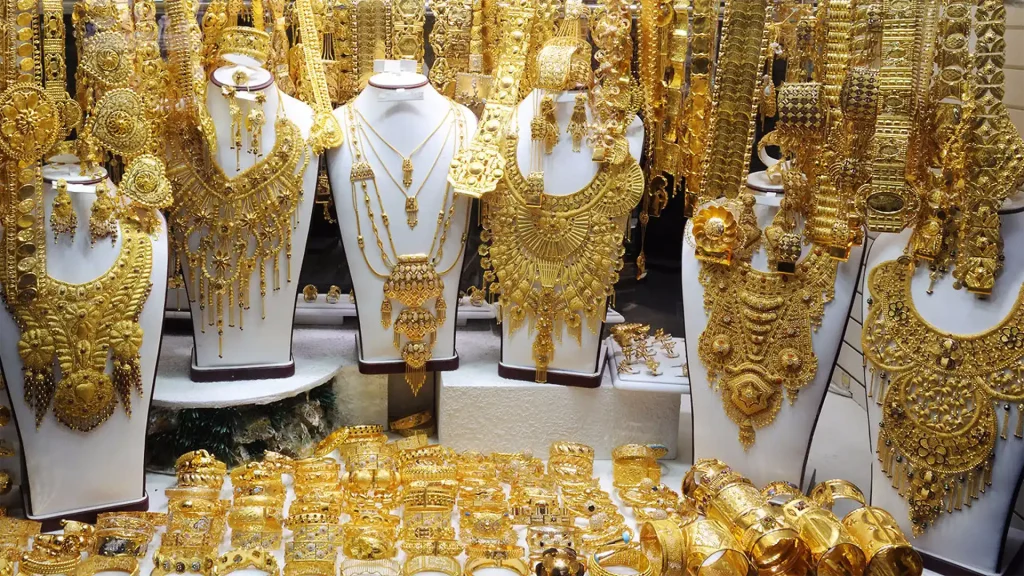
Gold prices in Dubai have regained momentum following Washington’s announcement of additional trade tariffs on China and India, bringing renewed attention to movements in the precious metals market and investor sentiment.
Dubai Gold Rates Bounce Back Following Fresh US Tariff Announcements Targeting China and India
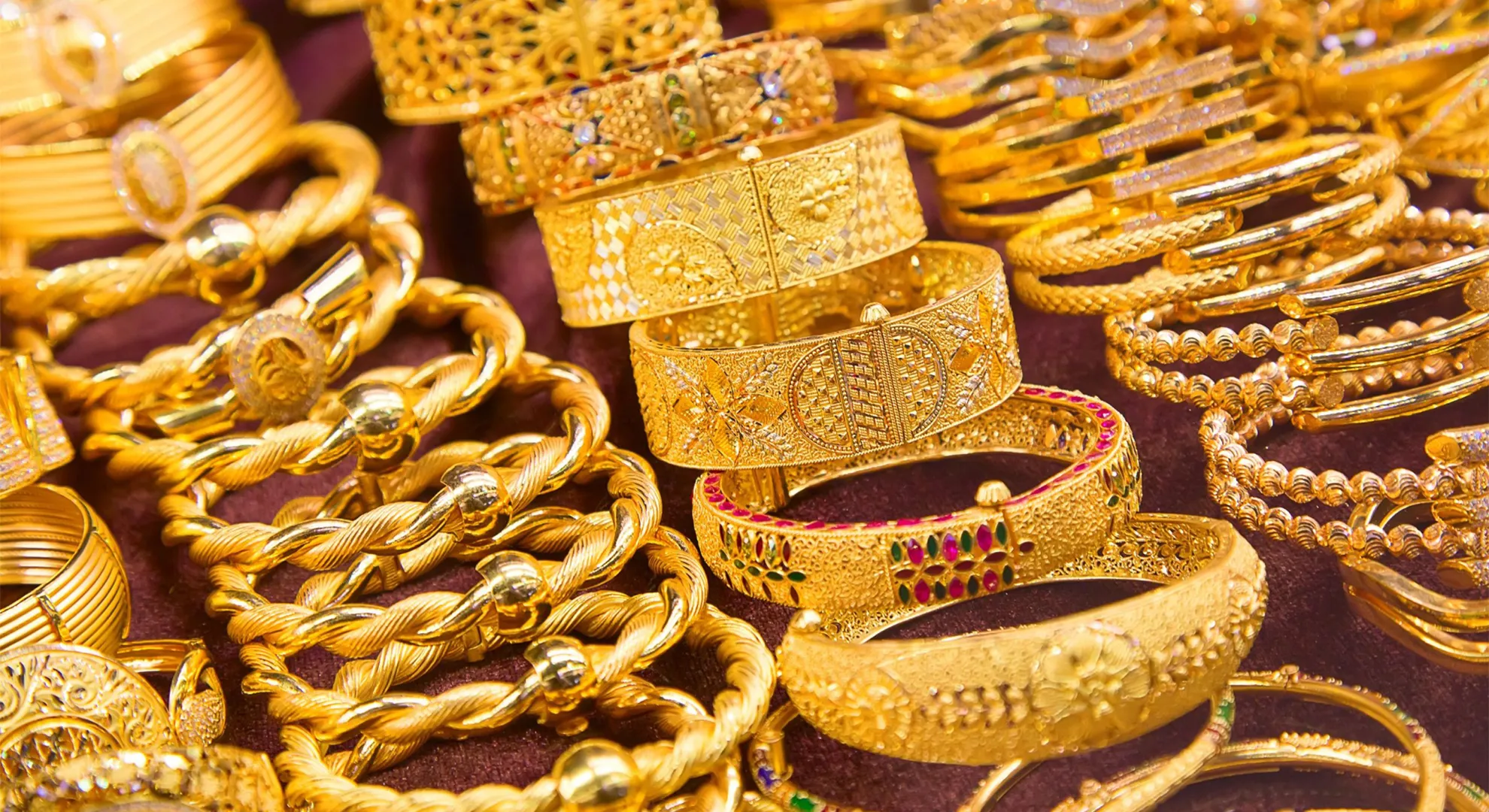
Dubai Gold Prices Rebound as US Tariff Decisions Shake Global Markets
Gold prices in Dubai staged a recovery after experiencing recent declines, with the precious metal gaining ground following fresh tariff announcements by the United States against some of its major international trading partners.
According to the latest figures released by the Dubai Jewellery Group, the price of 24-karat gold increased to Dh433.25 per gram, compared with Dh426 recorded a day earlier.
Other gold categories also registered gains. The 22K variety was priced at Dh401.25 per gram, while 21K gold stood at Dh384.75. Meanwhile, 18K and 14K gold were trading at Dh329.75 and Dh257.25 per gram, respectively.
The recovery in the UAE market came as international bullion prices also moved higher.
In global trading, spot gold gained 1.69 per cent to reach $3,597.01 per ounce as of 9.06am UAE time. Silver recorded an even stronger increase, rising 3.92 per cent to $41.94 per ounce.
Despite the latest improvement, market specialists believe gold could continue facing pressure as investors assess the possibility of further interest-rate increases, developments in international trade and movements in financial markets.
Experts warn of continued uncertainty in gold trading
Axel Rudolph, Chief Technical Analyst at IG, said the recent movement in gold prices appeared to reflect more than an ordinary market correction.
He suggested that the precious metal was facing a more serious reassessment among investors, particularly following its earlier strong performance.
Expectations of additional interest-rate increases, combined with uncertainty surrounding international trade policies, have created conditions that could encourage further selling activity.
Rudolph’s assessment suggests that investors are becoming more cautious about gold’s near-term prospects as financial markets respond to changing economic expectations.
Vijay Valecha, Chief Investment Officer at Century Financial, also pointed to interest-rate expectations and weakness in equity markets as important factors influencing bullion prices.
He explained that some investors were anticipating further monetary tightening, while losses in stock markets had encouraged certain traders to sell their gold holdings to generate cash and offset losses in other investments.
This combination of developments has contributed to fluctuations in precious metal prices, despite gold traditionally being viewed as a safe-haven asset during periods of economic uncertainty.
Trump’s latest tariff proposals add pressure to financial markets
US President Donald Trump announced fresh tariff proposals on Wednesday targeting several major trading partners, including China and the European Union.
The announcement triggered selling across parts of the stock market, with technology shares experiencing notable declines.
Valecha said the latest developments had added to the challenges facing gold, which was already under pressure from persistent inflation and increasingly hawkish comments from Federal Reserve policymakers.
Investors are closely monitoring how the latest trade measures could affect economic growth, inflation and the future direction of US monetary policy.
Higher interest rates generally make gold less attractive because the precious metal does not generate interest income. A stronger US dollar can also make bullion more expensive for international buyers, potentially limiting demand.
These factors have contributed to the uncertainty surrounding the direction of gold prices.
US inflation figures in focus as traders assess interest-rate outlook
Market participants are now turning their attention to important economic indicators from the United States for further guidance on the Federal Reserve’s next policy decisions.
According to Valecha, the personal consumption expenditures (PCE) price index is among the most closely watched releases because it is the Federal Reserve’s preferred measure of inflation.
The figures could provide fresh insight into whether price pressures are easing or remaining strong enough to justify additional interest-rate increases.
Traders are also monitoring US jobless claims and new home sales data as they evaluate the broader condition of the American economy ahead of the Thanksgiving holiday on Thursday.
Valecha explained that stronger-than-expected inflation figures could strengthen expectations of further monetary tightening and provide additional support to the US dollar.
“Any upside surprise in inflation would reinforce the case for more rate hikes and could boost the dollar, putting additional pressure on gold.”
His comments underline the importance of upcoming economic releases for investors attempting to understand whether gold prices can maintain their recent recovery.
Gold market remains sensitive to global economic developments
The latest movement in Dubai’s gold market highlights how quickly international developments can influence local bullion prices.
Changes in US trade policy, expectations surrounding interest rates, inflation figures and movements in equity markets are all contributing to investor uncertainty.
Although gold and silver have recorded gains, analysts believe the direction of the precious metals market will largely depend on incoming economic information and how policymakers respond to inflationary pressures.
For buyers in the UAE, fluctuations in international bullion prices are particularly important because they directly influence local retail gold rates.
Investors and jewellery buyers are therefore likely to keep a close watch on global market movements and upcoming US economic releases before making their next decisions.