Gold rates in Dubai have slipped below the Dh450 mark, creating a fresh opportunity for shoppers and investors. But is this the right moment to purchase gold, or could prices decline even further in the coming days, making it worth waiting?
Dubai Gold Prices Drop Below Dh450: Should Buyers Make a Move Now or Wait for a Bigger Dip?
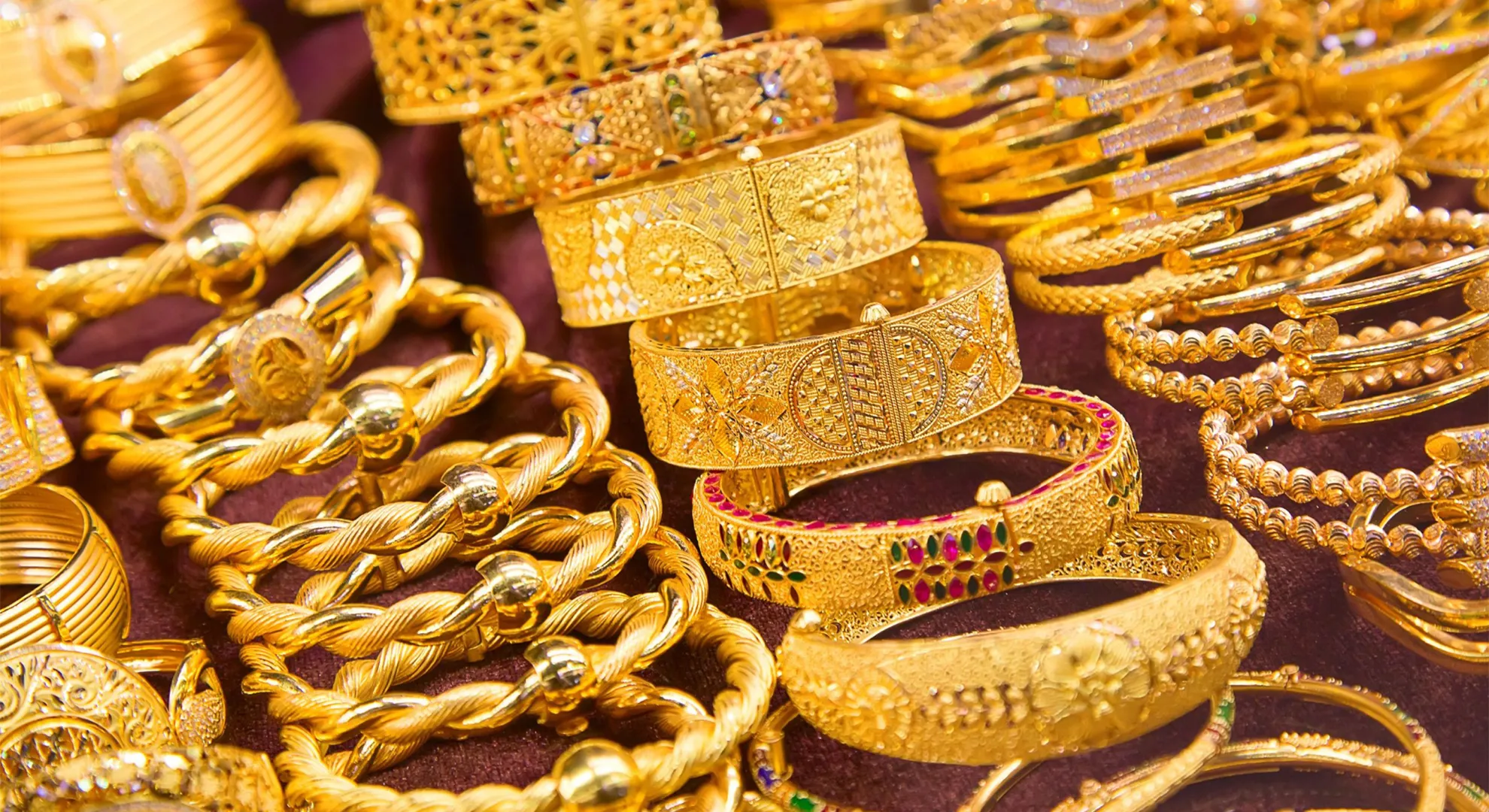
Dubai Gold Prices Slide Sharply: Should Investors Hold, Buy More or Wait for Further Declines?
Gold prices have come under significant pressure in international markets, with the precious metal falling to levels not seen in approximately 14 months. The steep decline has raised questions among investors and jewellery buyers about whether the current market offers an attractive opportunity to purchase gold or whether prices could weaken further in the near term.
Market experts believe the yellow metal may continue facing challenges in the coming weeks, particularly as expectations surrounding US monetary policy remain uncertain. However, despite the recent correction, analysts are not abandoning their positive long-term outlook for gold.
Their broad recommendation is to avoid making hurried investment decisions. Existing investors may benefit from holding their positions, while those planning to enter the market could consider purchasing in smaller quantities over time rather than investing their entire amount at once.
Gold Prices Record Significant Losses
International gold prices ended the weekend at approximately $3,525 per ounce, marking a decline of 4.33 per cent. The correction has also affected prices across the UAE, where gold became considerably cheaper for jewellery buyers.
According to Dubai Jewellery Group figures, 24-karat gold closed at Dh426.50 per gram, while the price of 22-karat gold settled at Dh395 per gram.
Jafar Hashem, CEO of Zentara Solutions, explained that the current international price represents a substantial decline from the record high of approximately $5,590 per ounce reached in January.
Gold has reportedly lost around 36 per cent of its value compared with that peak, while the decline since the beginning of the year stands at approximately 19 per cent. A considerable portion of the correction has taken place over the past several weeks.
The speed of the recent decline has caught the attention of investors, particularly those who entered the market when gold was trading considerably higher.
Why Is Gold Losing Its Appeal?
Analysts believe movements in US interest rates have become the dominant factor influencing gold prices.
Unlike bonds and other interest-bearing investments, gold does not provide regular income. Consequently, when government bond yields increase, investors may find interest-generating assets more attractive than holding the precious metal.
Hashem pointed out that inflation-adjusted yields on 10-year US Treasury bonds are approaching 2.9 per cent. At the same time, the US dollar has strengthened considerably and is trading near its highest level in approximately 18 months.
These developments have created an unfavourable environment for gold.
A stronger dollar generally makes gold more expensive for buyers using other currencies, potentially reducing international demand. Meanwhile, higher real yields increase the opportunity cost of holding an asset that does not generate interest.
The latest inflation figures from the United States have added to these concerns. Inflation came in hotter than expected earlier this month, encouraging investors to reassess the possibility of tighter monetary policy.
As a result, market participants are closely monitoring the Federal Reserve’s December 9 meeting.
Hashem believes the central bank’s communication will be particularly important. Since financial markets have already factored in a possible rate increase, investors will pay close attention to indications about the direction of monetary policy in the months ahead.
Any suggestion that borrowing costs could remain elevated for longer may create additional pressure on gold.
Oil Prices and Stock Market Volatility Add to Pressure
Apart from interest rates and currency movements, developments in global financial markets have also contributed to gold’s weakness.
Vijay Valecha, chief investment officer at Century Financial, highlighted the impact of higher crude oil prices associated with tensions involving the United States and Iran.
Rising energy costs can make inflation more difficult to control. If inflation remains persistent, the Federal Reserve may have fewer reasons to reduce interest rates or could maintain a restrictive monetary stance for an extended period.
This possibility has weakened investor confidence in gold’s near-term prospects.
Valecha also identified volatility in technology stocks, particularly companies associated with artificial intelligence, as another factor influencing market behaviour.
When investors experience sharp losses in equity markets, they sometimes sell holdings across different asset classes to generate cash or reduce overall portfolio risk.
This type of selling can affect gold as well, even though the precious metal is traditionally regarded as a defensive investment during periods of financial uncertainty.
Madhur Kakkar, founder and CEO of Elevate Financial Services, said the combination of these developments has reduced the additional value investors are currently willing to pay for gold as a safe-haven asset.
In other words, gold is facing pressure not only because of monetary policy expectations but also because investors are reassessing their exposure to different financial assets.
Could Gold Prices Fall Even Further?
Although the recent correction has already been substantial, analysts are warning that the market may not have reached its bottom.
Kakkar believes international gold prices could experience another decline of approximately $100 to $200 from current levels if existing market pressures continue.
Valecha is also watching important technical and psychological price levels.
According to him, $3,500 per ounce is an important support area. If prices move below this level, the next significant zone to monitor would be around $3,450.
For now, some investors are treating temporary recoveries as opportunities to reduce their exposure rather than signals that a sustained upward trend has begun.
Firas Bechwaty, head of business development at ICM Mena, has outlined a more cautious possibility.
He believes gold could move towards $3,250 and potentially $3,000 if negative developments in financial markets intensify.
However, the outlook could improve if expectations surrounding US monetary policy become less restrictive and global equity markets regain stability.
Under such circumstances, gold may find support and begin trading within a relatively narrow range instead of experiencing another sharp decline.
Hashem expects the precious metal to fluctuate between $3,350 and $3,850 over the next four to eight weeks.
He explained that the Federal Reserve’s guidance will be a major influence on which direction prices take.
If policymakers indicate that the current tightening phase is approaching its conclusion, gold could recover towards $3,800.
On the other hand, if the central bank suggests that additional interest rate increases may continue into 2027, prices could come under renewed pressure and potentially test the $3,300-$3,400 range.
Long-Term Outlook Remains More Encouraging
Despite the short-term uncertainty, analysts believe the broader investment case for gold remains intact.
Hashem expects the precious metal to regain some of its lost value over the next three to six months.
His central forecast places gold within a potential range of $3,800 to $4,300. Under more favourable economic conditions, prices could even approach $4,500.
A weaker US dollar, softer American economic data and a more accommodative Federal Reserve could provide the support required for such a recovery.
However, his assessment also includes a downside possibility.
If borrowing costs continue moving higher and the dollar maintains its strength, gold could retreat towards $3,100-$3,200.
Hashem also referred to longer-term projections from Goldman Sachs, which reportedly expects gold to reach approximately $4,150 by the end of the year and potentially $4,800 by the end of 2027.
Bechwaty shares a broadly positive medium-term view.
He believes prices could gradually move towards $4,000-$4,500 if bond yields decline consistently and expectations surrounding interest rates become more favourable.
These projections suggest that analysts are distinguishing between the current market correction and the longer-term factors that have supported gold over recent years.
Physical Gold Demand Continues Despite Falling Prices
Interestingly, the decline in international prices has not eliminated underlying demand for gold.
According to Hashem, central banks and institutional investors continue to demonstrate interest in the precious metal.
Central banks purchased approximately 321 tonnes of gold during the third quarter. This represented a 42 per cent increase compared with the corresponding period a year earlier and marked the strongest quarterly buying activity in nearly two years.
Gold-backed exchange-traded funds also attracted around $31 billion in investments during the quarter, recording their strongest quarterly inflows despite the market downturn.
These figures suggest that some major investors continue to view gold as an important component of their long-term portfolios.
Hashem believes the recent correction has been influenced more by activity in futures markets and short-term trading decisions than by a complete deterioration in fundamental demand.
However, Valecha warned that further volatility cannot be ruled out.
Trend-following investment funds have increased their bearish positions, while a significant number of exchange-traded fund investors have not yet substantially reduced their holdings.
If selling pressure increases, additional price declines could follow.
Therefore, strong physical demand does not necessarily mean that the market will recover immediately.
Should Existing Gold Investors Sell Their Holdings?
For investors who already own gold, analysts generally recommend avoiding panic-driven decisions.
Valecha believes holding existing investments remains a reasonable strategy, particularly for people who purchased gold with a longer investment horizon.
Nevertheless, he advised investors to remain careful because elevated interest rates and a strong US dollar could continue affecting prices.
Hashem also warned against selling gold simply because the market has experienced a major correction.
Investors who sell after such a substantial decline may end up converting temporary losses into permanent ones.
For individuals with an investment horizon of approximately three to five years, he suggested maintaining a strategic gold allocation of around 5 to 10 per cent of their overall portfolio.
Rather than committing the entire investment amount at once, investors could spread their purchases across different price levels.
For instance, potential buying opportunities could be considered around $3,400 and $3,200, depending on market conditions and individual financial circumstances.
However, Hashem advised short-term traders who use borrowed money or leveraged positions to prioritise risk management.
Such investors face greater exposure to sudden market movements and should focus on protecting their capital.
Is This a Good Time for First-Time Gold Buyers?
For people who have not invested in gold before, the recent price decline could present an opportunity to begin building a position.
Kakkar believes new investors can consider entering the market gradually instead of waiting for a perfect buying level.
Since predicting the exact bottom of a volatile commodity market is difficult, spreading purchases over several weeks or months can help reduce the risk of investing the entire amount before prices fall further.
Bechwaty also believes that purchasing decisions should depend on an individual’s financial objectives, ability to tolerate market fluctuations and expected investment period.
People buying gold for jewellery, long-term savings or portfolio diversification may have very different priorities.
Therefore, a short-term price decline should not automatically determine whether someone should buy or sell.
Investors should also consider additional costs associated with physical gold purchases, including making charges, applicable taxes and the difference between buying and selling prices.
Why Are UAE Gold Buyers Feeling the Full Impact?
The recent international correction has had a direct effect on customers purchasing gold in Dubai and other parts of the UAE.
Hashem explained that the UAE dirham is pegged to the US dollar. Consequently, changes in international gold prices are generally reflected directly in local gold rates.
Buyers in countries such as India and several European markets may experience some differences because exchange-rate movements can partially offset or amplify changes in international gold prices.
For UAE consumers, however, the movement in dollar-denominated gold prices is transmitted more directly into the local market.
This makes international developments particularly important for people planning to purchase jewellery or investment-grade gold in Dubai.
With 24K gold closing at Dh426.50 per gram and 22K gold at Dh395 per gram, the recent correction has brought local prices below the Dh450 level.
For jewellery buyers who have been waiting for lower prices, this could make the market worth monitoring closely.
Nevertheless, a further international decline could lead to additional reductions in UAE retail rates.
What Could Help Gold Prices Recover?
Analysts broadly agree that a shift in the Federal Reserve’s approach would be one of the strongest potential catalysts for a recovery.
If inflation begins slowing and policymakers become comfortable with reducing borrowing costs, real bond yields could decline.
A weaker US dollar under such circumstances could also make gold more attractive to international buyers.
Several other developments could support the precious metal.
These include:
- Increased central-bank purchases: Continued accumulation by central banks could strengthen long-term demand and provide support to international prices.
- Renewed institutional investment: Greater participation from Western investment funds and other large financial institutions could bring additional money into gold markets.
- Reduced geopolitical tensions: Any improvement in the situation involving the United States and Iran could change investor sentiment and influence demand for traditional safe-haven assets.
- Concerns about US government debt: Growing worries surrounding government borrowing and long-term fiscal sustainability could encourage investors to diversify into gold.
- A weaker dollar: Any sustained decline in the US currency could make dollar-priced gold more affordable for international buyers.
These factors could gradually improve market sentiment if they develop alongside a more supportive interest-rate environment.
What Are the Biggest Risks for Gold Investors?
Despite the possibility of a recovery, the market still faces several important challenges.
Further increases in US interest rates could make gold less attractive compared with interest-bearing investments.
A stronger dollar could also restrict international demand and place additional pressure on prices.
Another concern is the possibility of forced selling across financial markets.
If equity markets experience another significant decline, investors facing liquidity requirements may sell gold holdings to raise cash.
Such developments could create additional short-term volatility, even if the longer-term fundamentals remain favourable.
Analysts are also monitoring the $3,400-$3,500 region closely. A sustained break below this area could weaken market confidence and encourage further selling.
Hashem believes the pace of central-bank purchases is another important factor to watch.
If central banks reduce their gold acquisitions significantly, one of the major sources of support for the precious metal could weaken.
Final Verdict: Buy Gold Now or Wait for Lower Prices?
The latest correction has made gold considerably more affordable than it was at the beginning of the year. However, the possibility of further declines means buyers should approach the market carefully.
For existing investors, analysts generally favour holding rather than selling in panic, particularly when the investment is intended for the long term.
For first-time buyers, gradual accumulation may be a more practical strategy than making a large purchase in one transaction.
Short-term traders, meanwhile, should remain cautious because interest-rate expectations, dollar movements and global market volatility could continue driving prices lower.
The next Federal Reserve meeting on December 9 could provide important clues about the direction of gold prices.
Ultimately, the long-term outlook remains supported by central-bank demand, institutional investment and continuing concerns about global economic and financial stability.
However, the immediate direction of the market will largely depend on whether US monetary policy becomes more restrictive or begins moving towards a less aggressive approach.
For Dubai’s gold shoppers, prices below Dh450 per gram may appear attractive, but patience and staggered purchases could prove more sensible than trying to predict the exact market bottom.