Sharjah is introducing measures to collect and store rainwater during the current season, with the aim of providing an additional water supply for agricultural activities. The initiative is expected to help local farmers irrigate their crops and make better use of seasonal rainfall.
Sharjah Plans to Harvest Rainwater to Support Local Farms During the Season
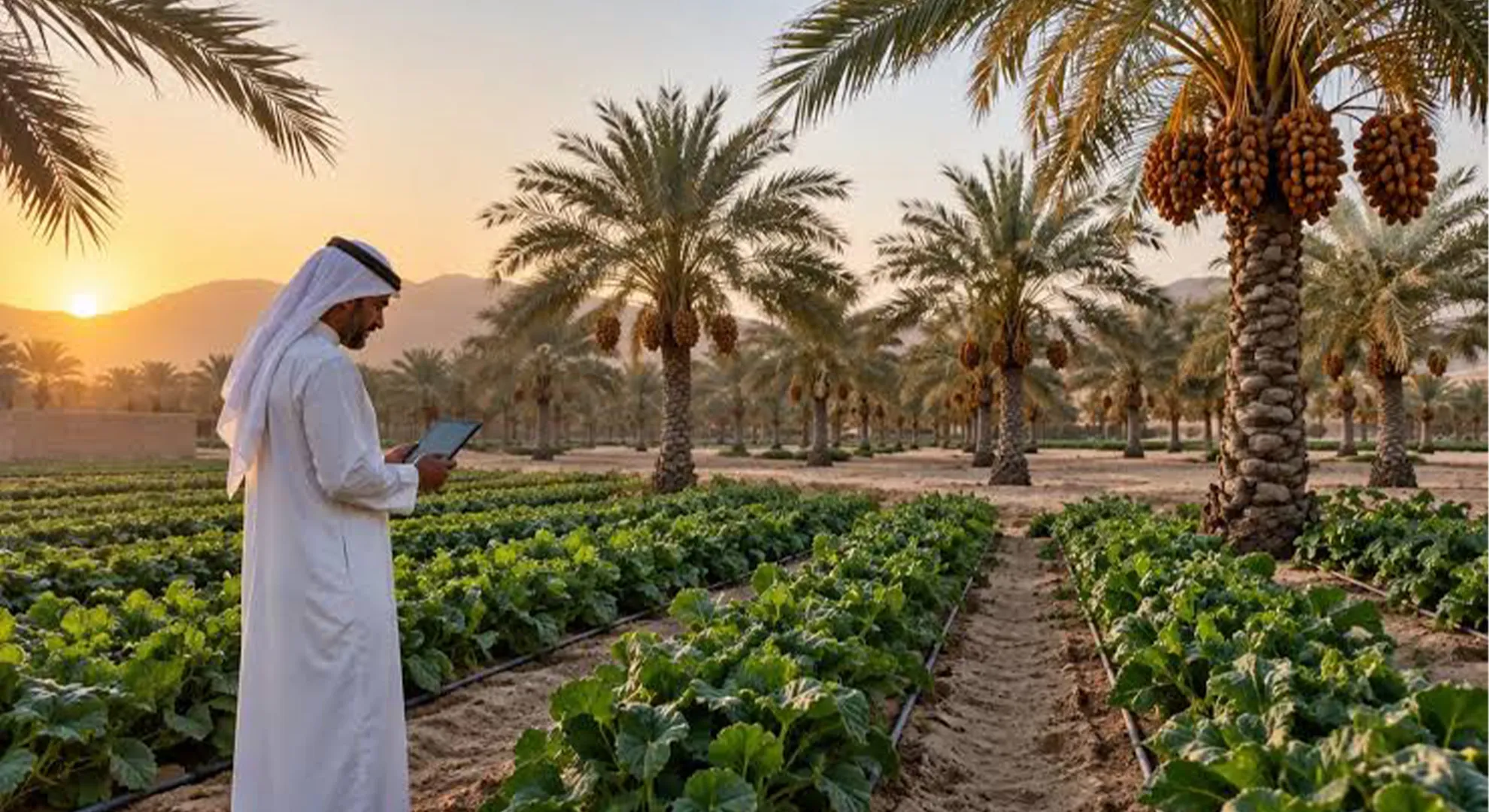
Sharjah Introduces Underground Rainwater Collection System to Strengthen Farming and Support Local Agriculture
As the UAE prepares for the arrival of the winter rainy season, Sharjah is taking steps to make better use of seasonal rainfall by developing an underground water collection system designed to support agricultural activities. The initiative aims to help farmers preserve valuable water resources, improve irrigation arrangements and reduce dependence on conventional water treatment facilities.
The project, being implemented in Al Dhaid by Al Dhaid Municipality and the relevant agricultural authorities, involves the installation of specialised underground pipelines that collect rainwater during periods of heavy rainfall. Instead of allowing large quantities of rainwater to go unused, the system is designed to capture and store it beneath the ground for agricultural purposes.
The initiative comes at a time when water conservation has become an important priority for the UAE’s agricultural sector. Farming in the region faces several challenges, including limited natural freshwater resources, high temperatures, changing weather patterns and soil salinity.
By introducing infrastructure that can collect and preserve rainwater, Sharjah hopes to give local farmers an additional source of water while improving the long-term sustainability of agricultural production.
The underground approach also offers an alternative to conventional surface storage methods. By keeping collected water below the surface, the system can help reduce exposure to evaporation, which is particularly important in a country where high temperatures can quickly affect stored water supplies.
How the underground rainwater harvesting project works
The new initiative in Al Dhaid focuses on capturing rainfall through a network of underground pipes and associated storage infrastructure.
When heavy showers occur, rainwater can be collected and directed into the underground system rather than being allowed to drain away unused. The stored water can subsequently contribute to agricultural irrigation requirements.
This approach is particularly relevant for farms operating in areas where access to reliable freshwater supplies can be challenging.
Agricultural production requires a consistent supply of water, and farmers often have to manage irrigation carefully to protect their crops. Having another source of water available during the farming season could help reduce pressure on existing supplies.
The project also reflects a shift towards more organised water management, with government authorities looking beyond immediate rainfall conditions and developing infrastructure that can support agricultural activities over a longer period.
Rather than depending entirely on conventional water supplies, farmers could benefit from a system that makes seasonal rainfall a more useful agricultural resource.
The underground design is also intended to limit water loss through direct exposure to sunlight and high outdoor temperatures.
This is an important consideration for agriculture in Sharjah, where water conservation plays a major role in maintaining productive farms.
Government focuses on long-term water security
The Sharjah government’s approach highlights the importance of combining infrastructure development with agricultural planning.
An official from the Department of Agriculture and Livestock explained that the objective is to develop a more proactive approach to managing available water resources.
The official said: “Our goal is to move from just watching the weather to actively managing our water resources. By building the infrastructure to catch rainwater, we are securing the foundation needed for successful farming being executed by Al Dhaid Municipality and agricultural authorities.”
The statement reflects the wider objective of strengthening local food production by making better use of naturally available resources.
Rainfall in the UAE is generally seasonal and can vary considerably from one year to another. Therefore, collecting water when rainfall is available could provide additional support for farms during periods when other sources face pressure.
For agricultural authorities, the challenge is not simply to increase production but also to ensure that farming remains viable despite environmental limitations.
Water availability, soil conditions and weather fluctuations all influence agricultural output. Projects that improve water management can therefore play an important role in supporting the sector.
The Al Dhaid initiative is part of this broader effort to develop practical solutions for farming in an arid environment.
Local farmers see opportunities for more reliable production
For farmers working in Sharjah, water availability and soil quality are among the factors that can determine whether a growing season is successful.
Ali Al Kitbi, a local farm owner, described how changing environmental conditions previously created uncertainty for agricultural activities.
He said: “Before, changing weather and salty soil made farming a gamble. With automated underground watering and treated water supplies, we have stabilized our harvests and grown more essential crops. It has turned a difficult challenge into a dependable living.”
His experience highlights the importance of reliable irrigation arrangements for farms operating in challenging conditions.
Soil salinity can affect the ability of plants to absorb water and essential nutrients. If salt levels become excessive, crop growth may be affected, potentially reducing agricultural productivity.
Similarly, irregular weather can make it difficult for farmers to plan irrigation schedules and maintain consistent growing conditions.
Automated irrigation arrangements and access to treated water can help farmers manage these challenges more effectively.
The new rainwater collection project adds another element to this approach by focusing on the use of seasonal rainfall.
However, the effectiveness of harvested rainwater will depend on factors such as collection capacity, water quality, storage arrangements and the irrigation requirements of individual farms.
Careful management will therefore remain important to ensure that collected water can be used safely and efficiently.
Sharjah expands its agricultural ambitions
The Al Dhaid project forms part of a wider agricultural development strategy in Sharjah.
Over recent years, the emirate has explored different approaches to improving local food production, including crop development, agricultural research and education.
One area of progress has been the cultivation of vegetables using original plant strains. Such initiatives can contribute to agricultural diversity and help identify crops suitable for local environmental conditions.
Sharjah has also recorded its first successful grape harvest through the Ghamam agricultural project on Jebel Deem.
Located approximately 850 metres above sea level, the project represents another effort to explore agricultural opportunities in different geographical conditions within the emirate.
The achievement is significant because grape cultivation requires suitable environmental conditions and careful management of water, temperature and soil.
Developments such as these demonstrate how agricultural experimentation can help identify new possibilities for local farming.
Rather than concentrating exclusively on traditional crops, agricultural projects can explore varieties and growing techniques that may perform well in specific locations.
This can contribute to a more diverse food production system and provide additional opportunities for farmers.
University of Al Dhaid to support future agricultural development
Developing agricultural infrastructure is only one part of building a stronger farming sector. Training skilled professionals and supporting research are also essential.
As part of its wider ambitions, Sharjah has introduced academic programmes at the University of Al Dhaid focusing on agriculture, veterinary medicine and desert sciences.
These subjects are intended to help prepare students for careers connected to farming, animal health, environmental research and the management of agricultural resources.
The development of specialised educational programmes can support the emirate’s long-term food security objectives by creating a workforce with relevant technical knowledge.
Agriculture in the UAE increasingly requires expertise in areas such as irrigation technology, soil management, crop science, climate adaptation and modern farming systems.
Veterinary medicine also has an important role in supporting livestock production and maintaining animal health.
Meanwhile, desert sciences can contribute to research into environmental conditions and the challenges associated with agriculture in arid regions.
By investing in education alongside practical agricultural projects, Sharjah is working towards a more comprehensive approach to food production.
Why rainwater collection matters for farming in the UAE
Water scarcity remains one of the most important challenges facing agriculture in the UAE.
The country’s climate is characterised by limited annual rainfall, high temperatures and considerable evaporation. These conditions make it difficult to depend exclusively on natural freshwater sources for large-scale agricultural activities.
Farmers must therefore use available water carefully to maintain crops and avoid unnecessary losses.
Rainwater harvesting offers one possible way to make seasonal precipitation more useful.
When rainwater is collected and stored appropriately, it can potentially be used for irrigation and other suitable agricultural applications.
Underground storage systems can be particularly useful in hot environments because they reduce direct exposure to sunlight.
However, collected rainwater must be properly managed and assessed before being used on crops. Water quality, possible contaminants and soil conditions need to be considered to prevent damage to agricultural land.
For farms dealing with saline soil, irrigation management is especially important. Using an appropriate water source and monitoring salt levels can help protect soil conditions and support crop development.
The new Al Dhaid project is therefore part of a wider effort to improve how available water resources are collected, stored and distributed.
UAE explores technology-driven solutions to improve food production
Sharjah’s rainwater harvesting initiative reflects a broader national effort to make agriculture more productive and less dependent on traditional farming methods.
Across the UAE, authorities and agricultural businesses are exploring technologies that can help overcome the limitations created by the country’s climate.
Vertical farming is one example.
Unlike conventional agriculture, vertical farming involves growing crops in stacked layers within specially designed indoor facilities.
These systems can operate in controlled environments, allowing growers to manage lighting, temperature, humidity and irrigation.
They can also make productive use of limited land space, which is an important consideration in urban and densely developed areas.
Another emerging area is the use of artificial intelligence in agricultural operations.
AI-based systems can help monitor crop conditions, analyse environmental information and identify changes that may affect plant growth.
When combined with sensors and automated irrigation equipment, such technology can help farmers make more informed decisions about when and how much water to provide.
The UAE has also been exploring drought-resistant crop varieties and agricultural techniques designed to perform under difficult environmental conditions.
Such research is important because traditional crops may not always be suitable for regions experiencing high temperatures, limited rainfall and challenging soil conditions.
Developing crops that can tolerate water stress and other environmental pressures could provide additional opportunities to strengthen local food production.
A broader strategy to reduce dependence on food imports
Improving domestic agricultural production is closely connected to the UAE’s wider food security objectives.
The country imports a substantial share of its food requirements, making reliable international supply chains an important part of national food availability.
At the same time, strengthening local farming can provide additional sources of fresh produce and improve the country’s ability to respond to supply disruptions.
However, expanding agricultural production in an arid environment requires careful planning.
Farmers need access to suitable land, dependable irrigation, appropriate crop varieties and modern agricultural technology.
Water conservation is particularly important because increasing production without managing water resources responsibly could create additional environmental pressure.
This is why initiatives such as rainwater harvesting, automated irrigation and controlled-environment agriculture are attracting attention.
Each approach addresses a different aspect of the agricultural challenge.
Rainwater collection makes better use of seasonal precipitation, vertical farming allows crops to be grown in controlled spaces, and AI-based monitoring can improve the management of available resources.
Together, these developments can contribute to a more efficient agricultural system.
What the Al Dhaid initiative could mean for the future
As the winter rainy season approaches, the underground collection project offers an opportunity to make seasonal rainfall a more useful resource for local agriculture.
Its success will depend on how effectively rainwater can be captured, stored and made available to farmers when required.
Regular monitoring and proper maintenance of the underground infrastructure will also be important to ensure that the system continues operating effectively.
For local farmers, access to additional irrigation resources could provide greater flexibility when managing their crops.
For agricultural authorities, the project represents an opportunity to develop practical water conservation measures that can support long-term food production.
Sharjah’s wider investments in agricultural research, specialised education and innovative farming methods also indicate that the emirate is approaching food security as a long-term development priority.
The combination of government planning, modern infrastructure and private-sector participation could help create better conditions for agricultural growth.
As climate conditions continue to influence farming decisions, making efficient use of every available water resource will remain essential.
Through initiatives such as the Al Dhaid rainwater harvesting project, Sharjah is seeking to turn seasonal rainfall into a valuable resource for its farms while supporting the emirate’s broader ambitions for sustainable agriculture and stronger local food production.