Writing Following disappointing results in the US midterm elections, members of the MAGA movement are increasingly questioning Donald Trump’s political influence, with growing concerns emerging over his leadership, electoral strategy and the future direction of the Republican movement.
MAGA Faces Uncertainty After US Midterm Setbacks as Supporters Question Trump’s Political Influence
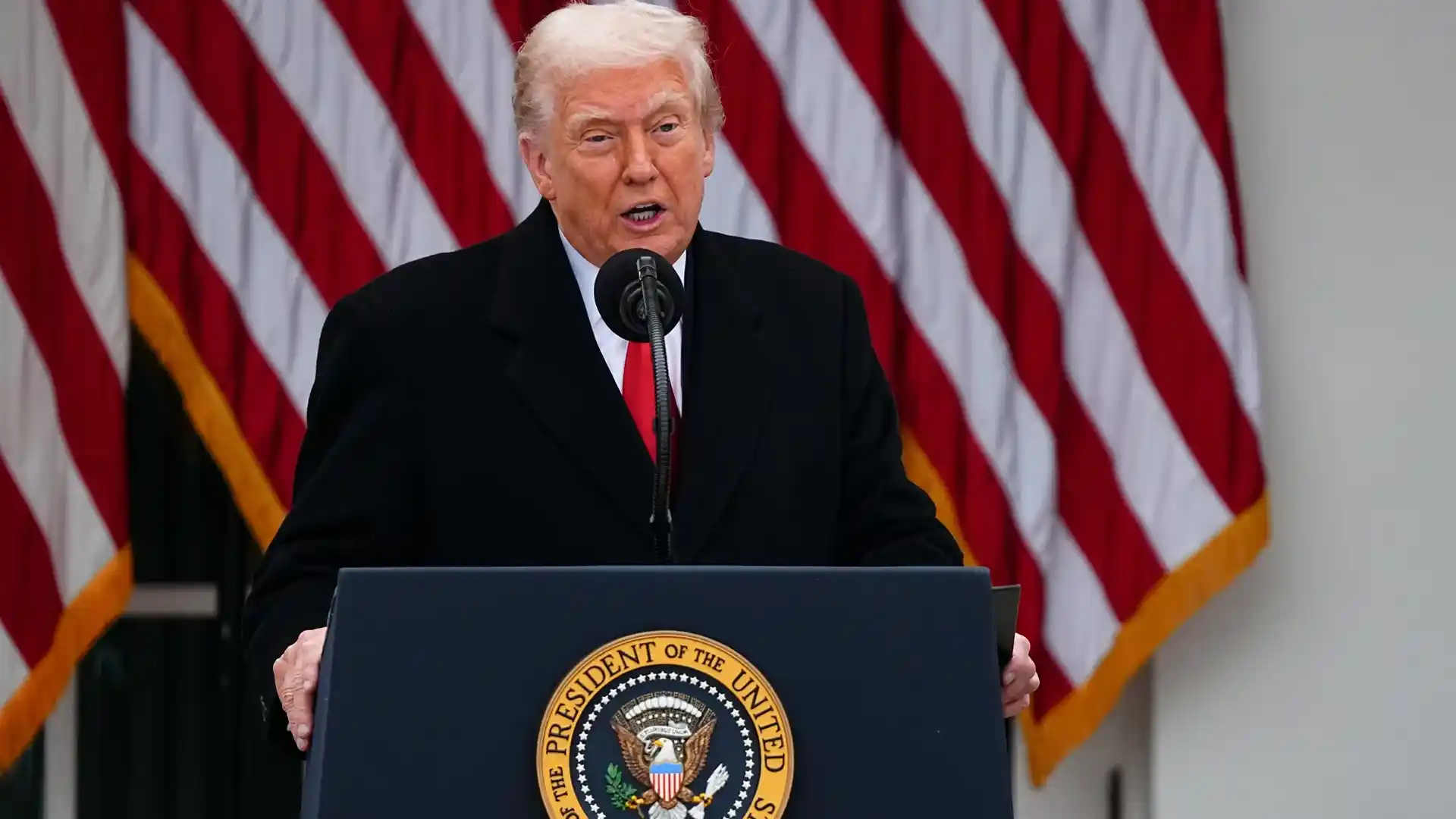
Trump’s Midterm Setbacks Spark Internal Crisis Within MAGA Movement as Supporters Question Its Future
The Republican Party’s disappointing performance in the US midterm elections has triggered an intense debate within President Donald Trump’s Make America Great Again (MAGA) movement, with some of his longtime supporters questioning whether his political influence is becoming a disadvantage for the party.
The electoral setback has exposed growing divisions among Republican voters, activists and conservative commentators, many of whom are now reconsidering the movement’s leadership, priorities and future direction.
The scale of the losses became particularly evident in Dallas, Texas, where Republican supporters gathered at a hotel ballroom expecting to celebrate a victory for US Senate candidate Ken Paxton, who had received Trump’s endorsement.
Instead, the atmosphere turned disappointing as election results indicated a major defeat for Republican candidates across the country. Supporters gradually left the venue, abandoning their earlier expectations of a successful election night.
Among those watching the developments was Michael Little, a 59-year-old businessman who had voted for Trump in three presidential elections. Sitting inside the hotel’s bar, he watched the president’s image appear on a television screen and expressed frustration over the Republican performance.
Little suggested that Trump’s political decisions had contributed to the party’s losses, reflecting a growing concern among sections of the MAGA base that the president may no longer be helping Republican candidates win elections.
His reaction represents a wider discussion taking place within the conservative movement, where some supporters are beginning to question whether Trump’s leadership remains an electoral advantage or has become a burden for the Republican Party.
However, the consequences of the midterm results extend beyond the president’s personal popularity. The outcome has also raised questions about the future of the political and cultural movement that Trump developed over nearly a decade.
MAGA movement faces a difficult political crossroads
What initially began as a campaign slogan during Trump’s 2016 presidential campaign gradually developed into one of the most influential political movements in modern American politics.
MAGA reshaped the Republican Party’s identity, influenced national discussions and transformed the way conservative voters approached several major political issues.
Its influence extended across immigration, international trade, national identity, race, gender and the role of government institutions.
The movement also helped Trump maintain a strong relationship with a large section of Republican voters, even during periods of political controversy and criticism.
However, the latest midterm results have created a difficult situation for the movement, with Democrats securing decisive congressional victories and Republicans facing one of their most damaging electoral performances in decades.
Several political and economic concerns appear to have contributed to voter dissatisfaction. Rising fuel prices, public frustration over the Iran war and continuing controversy surrounding government transparency and political accountability became important issues during the election campaign.
These developments created difficulties for Republican candidates attempting to maintain the support of voters who had previously backed Trump’s political agenda.
For many MAGA supporters, the election results have become an opportunity to reconsider whether the movement should continue to depend heavily on Trump’s leadership or begin developing a broader political identity.
The debate is particularly significant because MAGA has historically been closely associated with the president himself.
While some supporters believe the movement can recover by returning to its original populist and nationalist principles, others argue that its future should not depend entirely on one political figure.
There are also individuals within the conservative movement who believe the election results indicate a much deeper problem and that MAGA, in its current form, may have reached the end of its political influence.
Trump chooses to reinforce his core political agenda
Trump’s initial response to the Republican electoral losses did not suggest a major change in political strategy.
On Friday, the president made an important personnel decision by promoting Stephen Miller, one of the leading architects of his administration’s strict immigration policies, to the position of White House chief of staff.
Miller replaced Susie Wiles, who had been regarded by several observers as an important stabilising presence within an administration frequently affected by internal disagreements and political controversies.
The appointment attracted considerable attention among conservative activists and prominent MAGA supporters.
For many of the movement’s strongest advocates, Miller’s elevation represented a renewed commitment to the immigration policies and nationalist principles that helped define Trump’s political identity.
His supporters viewed the decision as evidence that the administration was not preparing to abandon its core ideological positions despite the Republican Party’s poor election performance.
Right-wing social media personality Benny Johnson welcomed the appointment in a post on X, where he has approximately 4.1 million followers.
Johnson described the move as the kind of leadership decision the movement needed and expressed support for Miller’s appointment.
His reaction reflected the position of conservative commentators who believe the Republican Party should respond to electoral setbacks by strengthening its existing political message rather than moving towards the centre.
The appointment also highlighted an important division within MAGA. While some supporters are calling for changes in leadership and strategy, others believe a stronger commitment to the movement’s original priorities is the best way to restore its political position.
White House defends Trump’s position after Republican defeats
The White House did not provide direct answers to Reuters’ questions concerning the reasons behind the Republican Party’s disappointing performance.
Questions included the defeat of candidates who had supported Trump’s disputed claims about the 2020 presidential election, the political consequences of the administration’s decisions and the future direction of the MAGA movement.
Instead, the administration referred to Trump’s public comments delivered on Wednesday following the election.
The president expressed confidence in his own electoral appeal, suggesting that Republican candidates would have performed better if his name had appeared on the ballot.
Trump also acknowledged that the Iran war may have affected the party’s performance by contributing to higher petrol prices.
He indicated that the conflict had created additional economic pressure for American consumers and suggested that rising fuel costs had influenced voter sentiment.
Nevertheless, he maintained that he would have made the same decision again.
The president’s comments highlighted the challenge facing Republican leaders as they attempt to explain the election results while maintaining support for the administration’s broader political and foreign policy agenda.
For some MAGA supporters, the president’s response demonstrated continued confidence in his leadership. Others, however, believe that the party needs to take a closer look at the economic and political consequences of its decisions.
A movement that transformed American political debates
Over the past decade, MAGA has become a major force within the Republican Party and has influenced several aspects of American political life.
Its rise changed the party’s approach to international trade, border security, immigration and national identity.
The movement also encouraged a more confrontational political style, with Trump and his supporters frequently challenging established institutions, political opponents and traditional Republican leadership.
During his first presidency, Trump appointed individuals sympathetic to his political agenda across various federal institutions.
His administration introduced strict immigration measures and pursued policies intended to reduce the number of people entering the United States without authorisation.
The movement also supported efforts to reverse diversity, equity and inclusion programmes across government institutions and encouraged businesses and public organisations to reconsider such initiatives.
MAGA’s political influence remained significant even after the January 6, 2021, attack on the US Capitol and the controversy surrounding Trump’s efforts to challenge the 2020 presidential election outcome.
Despite the criticism and legal challenges that followed, Trump successfully returned to the White House, demonstrating the continuing strength of his support among Republican voters.
However, the latest midterm election results have created a new challenge for the movement.
The Democratic Party’s strong performance has forced MAGA supporters to consider whether the political approach that helped Trump regain power is still capable of delivering victories for Republicans.
The question is no longer limited to Trump’s personal popularity. It also concerns whether the wider movement can maintain its appeal among voters who are increasingly concerned about economic conditions, foreign policy and the performance of the federal government.
MAGA supporters turn their criticism towards party leadership
A review of reactions following the midterm elections suggests that dissatisfaction within the movement is becoming increasingly visible.
Reuters spoke with more than a dozen individuals, including MAGA activists, political influencers, Republican strategists, movement leaders and researchers who follow conservative politics.
The news agency also examined discussions taking place across online forums, social media platforms and political podcasts after the election results became clear.
The findings indicated that supporters were increasingly directing their frustration towards Republican politicians, senior advisers and, in some instances, Trump himself.
This represented a noticeable change in the nature of political discussions within the movement.
For years, allegations that the 2020 presidential election had been stolen remained an important part of MAGA’s political messaging following Trump’s defeat by Democrat Joe Biden.
However, those claims were largely absent from the discussions examined after the latest midterm losses.
Instead, supporters were focusing on issues they believed had weakened the Republican Party’s appeal.
These included the rising cost of living, dissatisfaction with the administration’s handling of the Iran war and concerns about the government’s approach to releasing investigative records relating to the late convicted sex offender Jeffrey Epstein.
Some supporters argued that Republican leaders had failed to deliver on promises made during the election campaign.
Others criticised Trump’s advisers and questioned whether the administration had given sufficient attention to domestic economic concerns.
The controversy surrounding the withholding or redaction of substantial portions of the Epstein investigative files also became a source of frustration among sections of the MAGA base.
These discussions demonstrate how the movement’s internal debate has shifted from challenging the results of previous elections towards examining the decisions and priorities of its own political leadership.
Steve Bannon calls for MAGA to return to its original principles
Despite the divisions, several prominent figures within the movement believe that MAGA can recover if it renews its commitment to populist and nationalist policies.
Steve Bannon, a former senior adviser to Trump during his first administration and a prominent conservative political commentator, has called for a renewed effort to rebuild the movement.
Speaking to Reuters, Bannon argued that Republicans should strengthen their commitment to the political principles that originally attracted millions of voters to MAGA.
He advocated a more aggressive populist and nationalist approach, suggesting that the party should avoid abandoning the agenda that helped establish its political identity.
Bannon also welcomed the appointment of Stephen Miller as White House chief of staff.
He viewed the decision as evidence that Trump remained committed to the movement’s ideological foundations.
According to Bannon, Miller represents one of the strongest advocates of the MAGA agenda, particularly on immigration and national sovereignty.
His comments reflect the position of supporters who believe the movement’s problems are not necessarily connected to its central political philosophy but rather to the way that philosophy has been implemented.
For this section of the MAGA base, the solution is to reinforce the movement’s original priorities and communicate them more effectively to voters.
However, other conservatives believe that a return to the same political strategy may not be sufficient to address the concerns exposed by the election results.
Social media analysis reveals growing doubts among MAGA supporters
An analysis of online discussions conducted for Reuters by data intelligence company PeakMetrics found that a considerable section of self-identified MAGA supporters were expressing doubts about the movement’s leadership and future direction.
The research examined political conversations across X and Reddit following the midterm elections.
According to the analysis, more than 20 per cent of the sampled group of self-described MAGA loyalists raised questions about the movement’s leadership or its political direction.
Within this group, opinions were divided.
Approximately half continued to support the wider MAGA movement but no longer considered Trump the appropriate person to lead it.
The remaining portion continued to support the president, although their comments included criticism of some of his decisions and political priorities.
The findings suggest that dissatisfaction with Trump’s leadership does not necessarily mean that all critics have abandoned the political principles associated with MAGA.
For some supporters, the movement’s ideology remains important even as they question the individual leading it.
This distinction could become increasingly significant as Republican politicians and conservative activists consider how the movement should develop in the coming years.
The analysis was based on 12,850 posts selected from a much larger collection of approximately 4.6 million Trump-related comments published on X and Reddit.
The material was collected between 9pm on Election Day and 8pm the following evening.
Researchers also examined the reasons supporters gave for the Republican Party’s poor electoral performance.
Among posts that directly assigned responsibility for the losses, nearly one-third pointed towards concerns about the Iran war and the influence of Israel on American foreign policy.
Around one-quarter argued that Republican politicians who had not fully embraced the MAGA agenda had weakened the movement’s electoral performance.
These findings illustrate the competing explanations emerging within the conservative coalition.
While some supporters believe Trump’s foreign policy decisions and rising energy costs damaged the party’s appeal, others argue that Republican candidates failed because they did not sufficiently represent the movement’s central political positions.
The disagreement highlights the difficulty of developing a unified response to the election results.
Economic pressure and foreign policy become major sources of frustration
Economic concerns appear to have become an important factor in the discussions taking place among Republican supporters.
Rising petrol prices have created additional pressure for households and businesses, making the cost of living a central issue for many voters.
For a movement that has frequently emphasised economic nationalism and improving conditions for American workers, concerns about fuel prices and household expenses present a political challenge.
The Iran war has added another layer of difficulty by creating debate over the administration’s foreign policy decisions and their consequences for ordinary Americans.
Some MAGA supporters believe the government should focus more heavily on domestic priorities rather than becoming involved in prolonged international conflicts.
Others continue to defend the president’s approach, arguing that national security considerations should take precedence over short-term economic concerns.
The disagreement has exposed differences between the movement’s foreign policy priorities and the expectations of voters concerned about everyday financial pressures.
Questions surrounding the Epstein investigation have also contributed to frustration.
Some MAGA supporters had expected greater transparency from the administration regarding the investigative material.
The decision to withhold or redact substantial portions of the records has therefore become another issue attracting criticism from sections of Trump’s political base.
Together, these developments have created a challenging environment for the Republican Party as it attempts to restore confidence among its supporters.
What lies ahead for Trump’s political movement?
The latest electoral setback has opened a difficult debate about the future of MAGA and its place within the Republican Party.
The movement remains influential, with a substantial base of committed supporters and a political identity that has reshaped conservative politics over the past decade.
However, the midterm results have exposed disagreements about leadership, policy priorities and the direction the movement should take.
One group wants Trump to return to the economic populism, immigration restrictions and nationalist messaging that originally helped build MAGA.
Another section believes the movement needs a broader identity that can survive beyond the president’s personal political career.
There are also supporters who remain strongly committed to Trump but want him to reconsider certain decisions, particularly those involving foreign policy and the cost of living.
Meanwhile, a smaller but vocal group believes the movement has already lost its political momentum.
The debate is likely to influence discussions within the Republican Party as its leaders assess the reasons behind the election results and consider their future electoral strategy.
For Trump, the challenge will be to maintain the loyalty of his existing supporters while addressing the concerns of voters who may have become dissatisfied with the administration’s performance.
For MAGA, the question is even broader: whether it can preserve its political influence, maintain a united coalition and remain a defining force in American politics without depending entirely on one individual.
The movement has overcome significant political controversies in the past, including the aftermath of the January 6 Capitol attack and Trump’s defeat in the 2020 presidential election.
Its ability to recover from the latest setback will depend on how effectively its leaders respond to internal criticism and whether they can reconnect their political agenda with the priorities of American voters.
The Republican losses have therefore created more than a difficult moment for Trump. They have placed the future identity and leadership of the MAGA movement under renewed scrutiny.
Trump Faces Growing MAGA Backlash as Democrats Make Historic Gains in US Midterm Elections
The Republican Party’s poor performance in the US midterm elections has created a major political challenge for Donald Trump, with Democrats emerging in a considerably stronger position across Congress and several key states.
The election outcome has left the president facing potentially large Democratic majorities in both chambers of Congress, raising concerns about his ability to advance important policy decisions during the remainder of his term.
The Senate results could prove particularly difficult for the Republican administration. Democrats could secure control of as many as 56 seats in the 100-member chamber, giving them sufficient strength to block Trump’s future judicial nominations and create obstacles for several important appointments.
The scale of the Republican setback has also raised questions about how quickly the party can recover its position in the upper chamber.
Republican Florida Governor Ron DeSantis expressed concern about the party’s prospects during a briefing held the morning after the election. He suggested that Republicans might have to wait until 2032 before they could regain control of the Senate.
DeSantis described the election outcome as an extraordinary political disaster, comparing its impact to a meteor strike that had affected communities across the country.
His comments reflected the seriousness of the situation confronting Republicans, particularly as the results indicated that Democratic gains were not limited to a handful of closely contested constituencies.
The party also made significant advances in state-level elections, including several areas that had supported Trump during the 2024 presidential contest.
Democrats were set to control the governorships of seven battleground states that Trump had carried in the previous presidential election.
One of the most striking developments came from Texas, where Democratic candidates won every statewide contest despite the state’s long-standing Republican preference in presidential elections.
Texas has not voted for a Democratic presidential candidate since 1976, making the latest statewide results particularly significant for both parties.
The outcome has raised concerns among Republican strategists about whether traditional conservative strongholds can continue to be taken for granted in future elections.
MAGA supporters begin questioning the movement’s political direction
The election losses have also produced a noticeable change in discussions among conservative activists and prominent supporters of Trump.
Since the results became clear, allegations of widespread election fraud have largely disappeared from conversations involving several influential right-wing commentators.
Instead, attention has shifted towards the reasons behind the Republican defeat, with some supporters openly criticising party leaders for failing to address issues that mattered most to voters.
Rogan O’Handley, a prominent MAGA influencer known online as DC_Draino, addressed the issue in a post on X, where he has approximately 2.3 million followers.
O’Handley acknowledged that he had repeatedly raised concerns about alleged election irregularities since the 2020 presidential election.
However, he argued that such claims did not explain the Republican Party’s latest electoral difficulties.
In his assessment, Republicans had failed because they had not delivered on the commitments that voters expected them to fulfil after giving the party political power.
His comments represented a shift in the discussion among sections of the MAGA movement, where attention was increasingly being directed towards political performance rather than allegations concerning election procedures.
O’Handley did not respond to a request from Reuters for additional comment.
Isabella DeLuca criticises Republican leaders over voter dissatisfaction
Conservative influencer Isabella DeLuca also expressed disappointment with the Republican Party’s performance, directing her criticism towards political leaders whom she considered disconnected from the concerns of younger Americans.
DeLuca had previously attracted attention following her involvement in the January 6, 2021, attack on the US Capitol.
She was among the thousands of Trump supporters who entered the Capitol during the incident and faced five criminal charges, including an allegation involving the theft of a table from inside the building.
She pleaded not guilty to the charges. Her case was later dismissed after Trump returned to the White House and granted her a pardon.
Following the latest midterm elections, the 26-year-old influencer argued that Republican politicians had failed to recognise the priorities of Generation Z voters.
She identified affordability, economic pressure and concerns about involvement in foreign conflicts as issues that deserved greater attention from the party.
According to DeLuca, Republican leaders had become too confident about their electoral position and assumed that conservative voters would continue supporting them regardless of their performance.
She argued that political parties cannot expect voters to remain loyal indefinitely without delivering meaningful results.
The Republican defeat in Texas, traditionally regarded as a strong conservative state, was particularly important in her assessment.
She suggested that the results demonstrated that even areas with a long history of Republican support could become politically competitive when voters felt their concerns were being ignored.
DeLuca also described the MAGA movement as increasingly tired, suggesting that the enthusiasm surrounding it was not as strong as it had been during earlier election campaigns.
Researchers identify declining enthusiasm among conservative supporters
Concerns about weakening enthusiasm have also emerged from researchers examining political discussions within online conservative communities.
Jennifer Golbeck, a professor at the University of Maryland who has studied MAGA-related online activity since 2016, said engagement among some of Trump’s most committed supporters had been falling for several months.
Her research indicated that activity across conservative online communities had gradually weakened since January.
One example was Patriots.Win, a popular online forum associated with MAGA supporters.
According to Golbeck, the platform recorded a 27 per cent decline in posts and comments, suggesting that participation among some highly committed supporters had become less active.
She observed that the change was not limited to the number of discussions taking place.
The enthusiasm and intensity that had previously characterised conversations among Trump’s strongest supporters also appeared to be declining.
Golbeck said some participants were increasingly describing MAGA as an outdated political movement that no longer generated the excitement it once did.
Her observations suggest that the Republican Party’s challenges may extend beyond the immediate consequences of the midterm election results.
A political movement that previously benefited from strong online mobilisation and highly engaged supporters may now be facing difficulties maintaining the same level of participation.
For MAGA, this could become an important concern as Republican leaders attempt to rebuild their political support and prepare for future elections.
Fox News also experiences a decline in daytime viewership
The changing political environment has coincided with a fall in television audiences for Fox News, one of the most influential media platforms for conservative commentators and MAGA supporters.
According to audience measurement company Nielsen, the network’s total daytime viewership in October was 27 per cent lower than during the same month a year earlier.
The decline came shortly before the midterm elections, when political discussions and election coverage traditionally attract significant attention from viewers.
Fox News has long played an important role in shaping conservative political conversations and providing a platform for prominent Republican figures and supporters of Trump.
The latest audience figures have therefore attracted attention amid wider questions about the level of enthusiasm within the conservative movement.
However, Fox News rejected the suggestion that the figures represented a loss of its broader position in cable television news.
In a statement provided to Reuters, spokesperson Caley Cronin said the network had attracted more viewers than its competitors during election night coverage.
She also highlighted Fox News’ long-standing position as the leading cable news network, stating that it had held the top ranking for 25 years.
The network’s response indicated that it continued to regard its overall audience position as strong despite the decline recorded in daytime viewership.
Conservative commentators blame advisers and political decisions
Reactions among influential right-wing personalities have been varied, with many directing their criticism towards Trump’s advisers, Republican lawmakers and the administration’s handling of important domestic issues.
Some commentators have been reluctant to place direct responsibility on the president, preferring instead to question the decisions made by members of his administration.
Economic dissatisfaction has emerged as one of the most frequently mentioned explanations for the Republican losses.
However, conservative voices have also identified other factors, including political instability, government transparency and disagreements over foreign policy.
Ben Shapiro, co-founder of the conservative media organisation Daily Wire, argued that economic affordability alone could not explain the scale of the Republican defeat.
Speaking on his online programme on Wednesday, Shapiro suggested that a combination of problems had contributed to the party’s poor performance.
He highlighted political disorder and allegations of corruption as additional factors that may have damaged Republican candidates.
His comments suggested that voters were reacting not only to financial pressures but also to wider concerns about the administration’s conduct and effectiveness.
This assessment reflects a broader discussion among conservative commentators about the need for Republican leaders to address several different sources of public dissatisfaction.
Laura Loomer insists MAGA remains essential to Republican politics
Despite the criticism emerging within the movement, some of Trump’s closest online supporters have rejected suggestions that the election results represent the end of MAGA.
Laura Loomer, a right-wing influencer known for her close association with the president, expressed deep frustration following the Democratic victories.
In a post on X, she made a strongly worded assessment of the country’s political situation, declaring that the American Dream was effectively over.
However, during an interview with Reuters, Loomer argued that the MAGA movement remained central to the Republican Party’s identity.
She maintained that any politician seeking the Republican presidential nomination in 2028 would need the support of Trump’s political base.
According to Loomer, the Republican Party continues to depend heavily on the voters who have supported the president and his political agenda.
She argued that candidates who underestimate Trump’s influence could face serious difficulties when competing for the party’s presidential nomination.
Her position highlights the continued importance of the MAGA coalition, even as disagreements emerge over Trump’s leadership and the party’s election strategy.
Loomer’s comments also suggest that the movement may retain considerable influence within Republican politics despite the disappointing midterm results.
On Thursday, she announced that her podcast would temporarily stop broadcasting.
Loomer explained that she had been dealing with exhaustion for an extended period and wanted to devote more attention to her personal life and preparations for her upcoming wedding.
She indicated that the programme would return in January.
Election losses create new challenges for election denial movement
The Democratic Party’s strong performance has also affected another important component of MAGA politics: the movement built around Trump’s claims that the 2020 presidential election was stolen.
For several years, allegations of widespread voter fraud have remained a central feature of Trump’s political messaging and the activities of several Republican candidates.
However, the latest election results have delivered a major setback to candidates who embraced those claims and sought to challenge the legitimacy of the previous presidential election.
Several Republicans associated with efforts to overturn the 2020 outcome suffered significant defeats.
According to research published by States United Action, a nonprofit organisation that monitors candidates who question election results, election denial candidates are expected to hold at least 41 fewer congressional and statewide positions next year.
The organisation also reported that candidates associated with election denial lost 70 per cent of the declared contests for statewide positions responsible for overseeing elections.
These developments represent an important change in the political landscape, particularly because election administration has become a major area of contention within Republican politics.
The results suggest that candidates who made election fraud allegations a central part of their campaigns struggled to secure sufficient support from voters.
Trump himself did not attempt to challenge the midterm results and instead criticised Republican politicians for their electoral performance.
The absence of a major dispute over the outcome also created a different environment for supporters who had previously focused heavily on allegations of election manipulation.
Most prominent election sceptics move away from fraud claims
With relatively few closely contested races and no credible evidence presented to challenge the overall results, several prominent Trump supporters avoided making widespread fraud allegations.
Instead, many encouraged conservative activists to continue political organising and prepare for future elections.
However, a small number of individuals continued to claim, without providing evidence, that the election had been manipulated.
Mike Lindell, founder of the MyPillow company and a prominent promoter of false claims about voting machines during the 2020 presidential election, maintained his position despite Trump’s willingness to accept the latest results.
Lindell told Reuters that he did not share the president’s assessment and continued to believe that the election had been stolen.
His comments demonstrated that election denial arguments had not disappeared completely, although they appeared to occupy a less prominent position in post-election discussions.
The movement may also face financial and organisational difficulties if its supporters lose interest in challenging election results.
Wendy Via, co-founder of the Global Project Against Hate and Extremism, a nonprofit organisation that monitors extremist movements and online activity, said the lack of disputed election contests could reduce the resources available to organisations promoting election fraud claims.
She suggested that without major controversies or closely contested races, donors and political supporters may become less willing to provide financial backing.
The potential loss of funding, public attention and organisational momentum could weaken the election denial movement over time.
Mike Flynn criticises Trump administration over unfulfilled commitments
Retired Lieutenant General Mike Flynn, another influential figure within the MAGA movement, also accepted the scale of the Republican defeat.
Flynn had previously promoted false allegations that the 2020 presidential election was stolen and remained an important voice among Trump’s conservative supporters.
However, following the latest midterm results, he described the Republican performance as a major political massacre.
He also criticised Trump and members of his administration for failing to deliver on several commitments made to voters.
Among the issues he highlighted were the rising cost of living and the government’s handling of investigative records relating to Jeffrey Epstein.
His comments reflected the frustration of supporters who believe that the administration has not fulfilled some of the promises that helped secure its political support.
Flynn also responded to comments by Vice-President JD Vance, who had identified the Iran war as a major reason behind the Republican losses.
While acknowledging the importance of the conflict, Flynn argued that the problem was much broader than a single foreign policy decision.
He suggested that the accumulation of unfulfilled commitments had played a major role in creating the political conditions behind the Democratic victories.
His assessment pointed towards a growing belief among sections of MAGA that voters were expressing dissatisfaction with the administration’s overall performance rather than reacting to one particular issue.
Republican Party faces difficult questions ahead of future elections
The midterm results have created a complicated situation for Trump and Republican leaders as they attempt to understand the reasons behind the party’s losses.
Although MAGA continues to have a significant presence within the Republican electorate, the election has revealed disagreements about the movement’s priorities and the political strategy required to maintain its influence.
Some supporters want the administration to concentrate more heavily on domestic economic concerns, including fuel prices, household expenses and employment opportunities.
Others believe that the party should strengthen its immigration policies and return to the nationalist messaging that helped establish Trump’s political identity.
There are also growing discussions about whether MAGA can maintain its influence beyond Trump’s personal leadership.
The decline in online engagement, criticism from conservative commentators and disappointing election results have added pressure on the movement to reconsider its approach.
At the same time, the continued loyalty of influential supporters suggests that Trump remains a central figure in Republican politics.
The immediate challenge for the president will be to address concerns among his political base while dealing with a Congress in which Democrats could hold substantial majorities.
For Republicans, the results also raise questions about the future of their candidates in traditionally conservative states and the party’s ability to attract younger voters.
The election has demonstrated that long-standing political loyalties do not guarantee electoral success when voters become dissatisfied with economic conditions, public policy or government performance.
Whether MAGA can regain its earlier momentum will depend on its ability to respond to these concerns and rebuild confidence among its supporters.
For now, the Democratic victories have placed Trump and the Republican Party under significant pressure, while the internal debate over the movement’s leadership and future direction continues to intensify.