Dubai Police are using advanced drone technology to improve emergency response, allowing aerial units to reach certain incidents before patrol cars arrive. The 999 control room coordinates these operations, helping officers assess situations quickly and prepare an appropriate response.
Inside Dubai Police’s 999 Centre: How Drones Help Respond to Emergencies Faster.
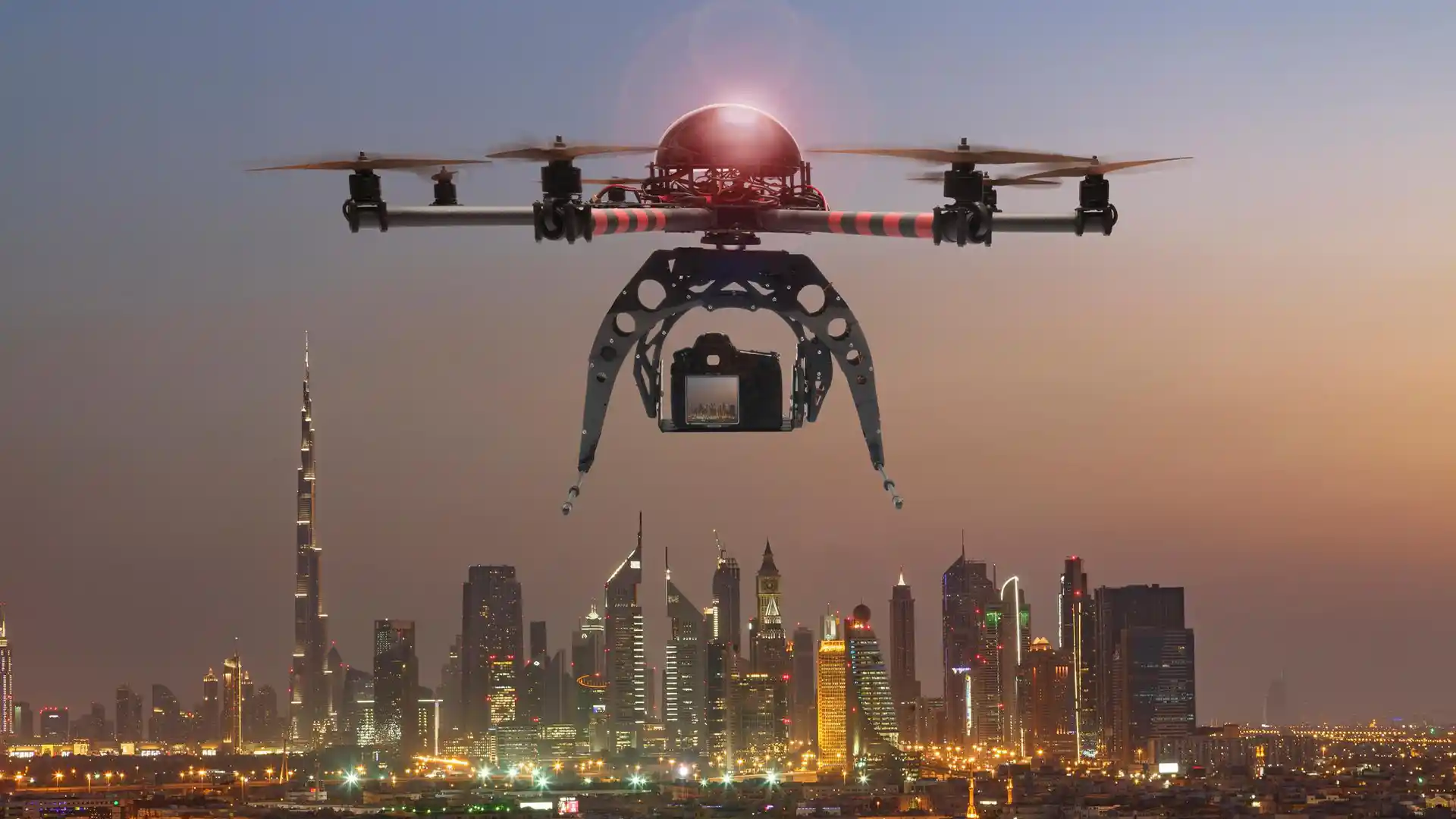
Inside Dubai Police’s Emergency Operations Centre: How Drones and AI Help Officers Respond to 999 Calls
When someone in Dubai dials 999 for help, the response may begin long before a police patrol reaches the location. Inside Dubai Police’s command and control centre, operators use location-tracking technology, surveillance cameras and aerial monitoring systems to gather information about emergencies and help officers determine what action is needed.
In situations where fixed cameras cannot provide a view of the scene, a drone may be deployed to capture live footage. This allows personnel at the operations centre to gain an early understanding of what is happening and assess whether additional assistance may be required.
The technology forms part of a wider emergency management system designed to connect incoming calls with incident locations, available information and police resources across the emirate.
Speaking to INSIDER 18, Captain Abdullah Rashid Al Maamari, Head of the Command and Control Section at Dubai Police, explained how the centre manages emergency calls, identifies callers’ locations, uses drones to monitor incidents and applies artificial intelligence to examine reports after each shift.
His account offers a look at the processes behind emergency response, from the first moments of a telephone call to the review of incident patterns that can help police prepare for future demands.
How Dubai Police identifies an emergency location
One of the first tasks facing an emergency operator is establishing where assistance is required. Although some callers can provide a complete address or identify a familiar landmark, others may be unable to explain their whereabouts clearly.
A person might be unfamiliar with the neighbourhood, travelling through an area they have never visited before or experiencing an emergency that makes it difficult to communicate. In such circumstances, obtaining a reliable location becomes an important part of the response.
Al Maamari explained that Dubai Police uses GPS and other location-based technologies to help determine where an incident has occurred.
Once a location has been established, the operations centre can check whether surveillance cameras cover the surrounding area. If suitable footage is available, officers can use it to obtain a better understanding of the scene while coordinating the response.
This information can be particularly useful when a caller is unable to provide detailed descriptions of nearby roads, buildings or other landmarks. Instead of relying exclusively on verbal directions, personnel can use available technical systems to support their assessment.
The process also illustrates why emergency calls are handled through several connected stages. Operators must establish the nature of the problem, identify the location as accurately as possible and relay the relevant information to the personnel responsible for responding.
The speed and accuracy with which these details are obtained can influence how quickly officers identify the right destination.
However, technology does not remove the need for communication between callers and emergency personnel. Information supplied during a call can still help operators understand the circumstances, identify potential risks and determine what assistance is needed.
A late-night call demonstrates the importance of location tracking
The importance of identifying a caller’s location became apparent in a case disclosed by Dubai Police in August.
According to the incident described in the supplied report, a woman contacted the police at approximately 3.30am but managed to communicate only a few words about being at an intersection before falling silent.
With limited information available from the caller, officers used phone-location information to trace her to the Nad Al Sheba area and alerted nearby patrols.
Police eventually located the woman unconscious inside a locked vehicle and rescued her.
The incident illustrates how an emergency response may depend on more than the information a caller can provide verbally. When someone is distressed, injured or unable to continue speaking, identifying their location can become crucial to locating them.
In situations like this, location information can help narrow the search area and give responding officers a starting point. Nearby surveillance cameras, when available, may provide further information about the surroundings.
Al Maamari also explained that even a small piece of information, such as a vehicle registration number, can help police identify a vehicle through the systems available to specialised teams.
Such details may help officers connect information supplied by a caller with records and surveillance resources that can assist the investigation or response.
The broader lesson is that emergency operators must work with whatever reliable information is available. A caller may provide a precise address, a partial description, a vehicle number or only a few words. Each detail can contribute to the process of identifying the incident and directing assistance to the correct place.
What happens when surveillance cameras cannot see the scene?
Surveillance cameras provide an important source of information, but they cannot offer a view of every road, building entrance or open area across Dubai.
When a suitable camera is unavailable at the reported location, Dubai Police can use its Drone Box system to obtain an aerial view of the incident.
Al Maamari described how the system can deploy a drone to a scene when additional visual information is needed.
“If there is no camera at the location, we have a system called Drone Box. The drone can be deployed automatically to the scene without direct intervention,” he explained.
The aerial footage can help personnel at the command centre understand the situation before a ground patrol arrives. Rather than relying solely on a caller’s description, officers may be able to observe relevant details from above.
That early view can support decisions about the resources needed to handle an incident. For example, personnel may be better placed to assess the situation and determine whether additional units should be sent.
“Even before the patrol arrives, the drone provides us with information about the incident and whether additional resources are required,” Al Maamari said.
The ability to obtain information before ground officers reach the location is an important feature of the system. It gives the operations centre another source of information during the early stages of an emergency.
Nevertheless, a drone’s role is to support assessment and coordination. It does not eliminate the need for police officers or other emergency personnel to attend incidents that require action on the ground.
The footage may help the command centre understand what responders are likely to encounter, but the appropriate response will depend on the nature of the emergency and the information available.
Dubai Police introduced the Drone Box initiative in 2021
The Drone Box initiative was introduced in 2021 as part of Dubai Police’s use of aerial technology to support emergency operations.
An earlier visit by INSIDER 18 to the drone operations facility highlighted how the aircraft transmit live images to the command centre. These images can help personnel assess an incident while response teams are still travelling to the scene.
The technology has also been deployed in high-rise communities, including Jumeirah Lake Towers and Uptown Dubai, according to the supplied report.
Such locations can present particular challenges for emergency monitoring because incidents may occur around residential towers, access roads and shared public spaces. An aerial view can provide a different perspective from that available through a fixed camera.
For personnel coordinating an emergency, this additional visual information can help clarify the circumstances and support decisions about the response.
The system also illustrates the growing role of connected technologies in police operations. Information from callers, location services, surveillance cameras and drones can contribute to a more complete picture of an incident.
The usefulness of these tools depends on the circumstances, including whether a drone can be deployed, whether the scene can be observed clearly and whether the resulting information is relevant to the emergency.
The objective is to give operators and responding officers as much useful information as possible while assistance is being organised.
Artificial intelligence helps analyse incidents after each shift
Dubai Police’s use of technology extends beyond the immediate handling of emergency calls. Artificial intelligence is also being used to review incident reports and identify patterns in the information collected by the command centre.
Al Maamari said AI does not currently intervene directly in the process of receiving emergency calls. Instead, its role includes analysing and categorising reports after a shift has ended.
“At present, artificial intelligence does not directly intervene in receiving calls. However, we use it to analyse reports and identify areas where incidents are concentrated,” he said.
The analysis can help police identify locations where incidents occur more frequently and examine patterns across the reports received.
Understanding where incidents are concentrated can provide useful information for operational planning. It can help officers discuss local patterns, consider changes in demand and prepare for the requirements of subsequent shifts.
The findings are reviewed during daily briefings, according to Al Maamari. These discussions allow personnel to consider the information produced by the analysis and use it to support their understanding of the operational situation.
The distinction between analysing reports and answering calls is important. Emergency operators continue to handle incoming calls, gather information and coordinate responses, while AI assists with reviewing incident data.
In this context, the technology is used as a support tool rather than a replacement for the personnel responsible for emergency communication.
The approach also demonstrates that emergency management involves more than responding to individual incidents. Reviewing previous reports can help an organisation understand recurring patterns and make more informed operational decisions.
How incident analysis can support future planning
Emergency services must prepare for incidents that occur across different locations and at different times of the day. Demand may change according to traffic conditions, public activity and other circumstances.
Examining reports after each shift provides a way to review what has happened and identify patterns that might otherwise be difficult to recognise from individual calls.
AI-assisted categorisation can help organise information from multiple reports so that personnel can examine where incidents are concentrated.
Those findings can then form part of discussions during operational briefings. Officers can consider the information alongside their experience and other available details when preparing for the next shift.
The analysis does not mean that every future emergency can be predicted. Instead, it provides another source of information that may help the police understand previous activity and make decisions about operational priorities.
For example, identifying recurring incidents in a particular area may prompt closer examination of the circumstances and the resources needed there. Any resulting action would still depend on the information available and the decisions of the relevant personnel.
Al Maamari’s explanation indicates that AI currently has a supporting role in this process, with the technology helping officers organise and examine reports rather than independently managing emergency calls.
As the police continue to develop their systems, the relationship between live emergency operations and post-incident analysis may become increasingly important to how information is shared across the organisation.
Preparing staff to handle thousands of emergency calls
Technology is only one part of the work carried out by Dubai Police’s command and control centre. The operation also requires sufficient personnel to answer incoming calls and coordinate responses throughout the day.
Al Maamari explained that the police examine call patterns to determine how staffing should be organised. By understanding when demand is higher or lower, the command centre can adjust personnel levels to suit operational requirements.
The aim is to ensure that calls can be answered promptly while operators continue to gather essential information and coordinate the appropriate response.
During the second quarter of 2025, Dubai Police answered 99.8 per cent of emergency calls within 10 seconds, according to the figures provided in the report.
The statistic reflects the organisation’s reported performance in answering calls during that period. It is distinct from the time required for a patrol or other emergency resource to reach an incident.
Answering the telephone is an important first step, but the response also involves identifying the caller’s location, understanding the circumstances and communicating the information to the relevant personnel.
A quick answer can help establish contact with someone seeking assistance, while effective coordination is needed to turn that initial contact into an appropriate response.
Al Maamari said the organisation’s objective is to ensure that every emergency call receives attention.
“Our goal is not to miss a single emergency call. We want to respond to every emergency call we receive,” he said.
The statement reflects the importance of maintaining a reliable communication service even when call volumes are high.
Dubai Police reports a response time of two minutes and 27 seconds for critical emergencies
Alongside its call-answering performance, Dubai Police reported an average response time of two minutes and 27 seconds for the most critical emergency incidents in 2025.
The figure provides a separate measure of the time taken to respond to high-priority incidents. It should not be confused with the time taken to answer an incoming telephone call, as the two measures relate to different stages of the emergency process.
Response times can be affected by factors such as the location of an incident, the nature of the emergency and the availability of the appropriate resources.
The command centre’s role is to coordinate the information received and support the deployment of police units. Technologies such as GPS, surveillance cameras and drones can contribute to the assessment, while staffing arrangements help ensure that calls are handled.
The reported figures offer an indication of Dubai Police’s performance against its operational objectives. However, the supplied information does not provide a detailed breakdown of response times by incident type or location.
For residents, the central purpose of these systems is to ensure that calls for help are received, assessed and directed to the appropriate responders.
The combination of trained personnel and technical systems helps support that process, from the initial conversation with a caller to the arrival of officers at the scene.
Why residents should use 999 for emergencies and 901 for other enquiries
Not every call made to Dubai Police’s emergency number concerns an immediate threat or urgent situation.
Al Maamari said operators also receive calls about traffic information, routine problems and matters that may be handled more appropriately by other authorities.
Although these enquiries may be important to the person making them, they can add to the workload of a service intended to deal with urgent incidents.
Previous cases reported by INSIDER 18 have included callers asking for directions, seeking information about traffic fines and, in one unusual instance, inviting police officers to lunch.
Such examples illustrate the variety of calls received by the command centre and the importance of choosing the correct channel for assistance.
Residents are advised to dial 999 when they need emergency police assistance. For non-emergency police enquiries, they should use 901.
Keeping routine questions on the appropriate line can help ensure that the emergency number remains available for people who need urgent help.
The distinction is especially relevant in a city where residents and visitors may have questions about traffic, regulations, public services and other everyday matters.
Tourists may also be unfamiliar with local telephone arrangements. Al Maamari said Dubai’s emergency system can receive calls made using international emergency numbers, including 911 and 112, allowing visitors to reach emergency services.
Visitors who are uncertain about the correct number should still follow official guidance and use emergency services appropriately.
The broader message is that efficient emergency response depends not only on the systems operated by police but also on the public understanding when to use emergency and non-emergency channels.
A wider technology upgrade is planned for the coming years
Dubai Police is preparing further changes to its command and control operations, with a comprehensive systems transformation planned over the next two years, according to Al Maamari.
The proposed development is expected to involve greater integration of artificial intelligence and other advanced technologies into the processes supporting emergency management.
The aim is to strengthen the systems already used to receive calls, identify incidents, assess available information and coordinate responses.
At present, different technologies support different parts of the operation. Location-based systems can help identify where an incident has occurred, surveillance cameras may provide images of the surroundings, and drones can offer an aerial view when suitable fixed-camera coverage is unavailable.
AI is also used to organise and analyse reports after shifts, helping officers examine incident patterns and discuss their findings during briefings.
A broader systems transformation could bring further integration to these processes. However, the supplied interview does not specify every feature planned for the upgrade or provide a detailed implementation timetable.
The stated objective is to improve the operation of the command centre and build on the technologies already supporting emergency response.
For residents, the effectiveness of these developments will ultimately depend on how well the systems help police handle calls, understand incidents and coordinate assistance.
The use of advanced technology also remains part of a wider operation that depends on trained personnel, reliable communications and appropriate decisions by officers.
What happens after someone calls 999?
The process described by Al Maamari shows that an emergency call can trigger several connected activities.
First, an operator answers the call and gathers the information available about the situation. Establishing the location is a priority, particularly when the caller cannot provide a complete address.
GPS and other location-based technologies may help identify where assistance is required. The command centre can then check whether surveillance cameras cover the area and use available images to assess the surroundings.
If suitable camera coverage is unavailable, the Drone Box system may be deployed to provide an aerial view of the incident. The information gathered can help personnel determine whether further resources may be required before ground units arrive.
Once the immediate response has been coordinated, information about the incident can form part of the records reviewed by police. AI-assisted analysis can help categorise reports and identify areas where incidents are concentrated.
Personnel then discuss relevant findings during daily briefings, supporting their understanding of recent activity and the requirements of upcoming shifts.
These stages do not necessarily occur in exactly the same way for every incident. The response depends on the information available, the nature of the emergency and the systems that can be used at the location.
Nevertheless, the process demonstrates how Dubai Police combines communication, location information, visual monitoring and operational analysis to support emergency management.
A combination of people and technology
The systems operating inside Dubai Police’s command and control centre illustrate how emergency services can use technology to gather information more quickly and support decisions about the response.
Drones can provide a view of incidents where suitable surveillance cameras are unavailable. GPS and location-based services can assist when callers struggle to explain where they are. AI can help analyse reports and identify patterns after a shift.
At the same time, operators remain responsible for handling incoming calls, while police personnel assess information and coordinate the appropriate response.
The reported figures—99.8 per cent of emergency calls answered within 10 seconds during the second quarter of 2025 and an average response time of two minutes and 27 seconds for the most critical emergencies in 2025—highlight two separate aspects of the operation.
The planned technology upgrade is intended to strengthen these processes through greater integration of AI and other advanced systems.
For the public, the practical advice remains straightforward: use 999 for emergencies and 901 for non-emergency police enquiries.
As Dubai Police continues to develop its operations, the command centre’s role will remain central to connecting callers with assistance, helping officers assess incidents and supporting the wider effort to respond to emergencies across the emirate.