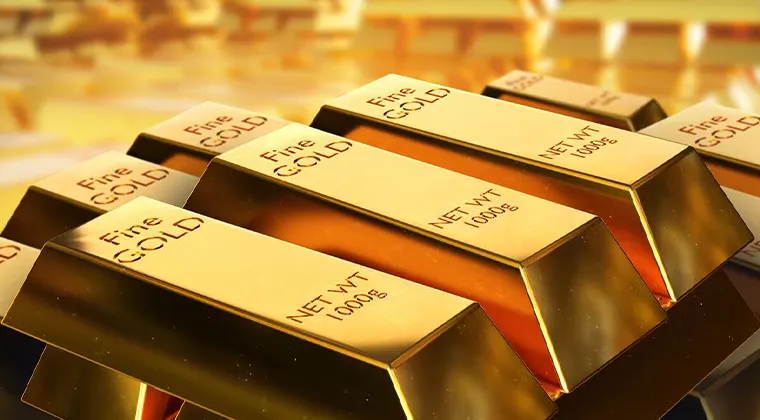
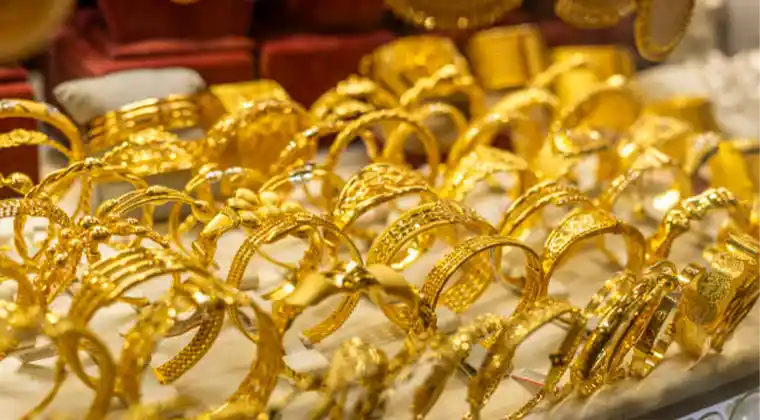
Gold prices in Dubai have slipped beneath the Dh500 mark as the strengthening US dollar puts pressure on the precious metal. The decline offers local buyers slightly lower rates, although market movements could continue to influence prices in the coming sessions.
Gold Becomes Cheaper in Dubai as Dollar Strength Sends Rates Below Dh500.

Dubai Gold Prices Slide as Investors Watch US Fed Signals
Dubai Gold Rates Ease as Stronger Dollar and Fed Outlook Weigh on Precious Metal
Gold prices in Dubai moved lower on Wednesday as traders assessed the outlook for US monetary policy and waited for further indications about the Federal Reserve’s approach to interest rates.
The decline came as the US dollar strengthened, putting pressure on gold prices in international markets. Investors were also looking ahead to the release of the minutes from the Federal Reserve’s latest meeting, hoping the document would provide greater clarity about the central bank’s future policy direction.
24K gold falls below Dh500
Data from the Dubai Jewellery Group showed that 24K gold was quoted at Dh498.25 per gram when the local market opened on Wednesday.
That represented a noticeable decline from Tuesday’s closing price of Dh504 per gram.
The move translated into a one-day decrease of Dh5.75 per gram for the highest-purity gold category.
The drop also pushed the 24K rate below the Dh500-per-gram level, a price threshold closely watched by consumers and traders in Dubai’s active gold market.
The other commonly traded gold categories also opened lower.
The 22K rate stood at Dh461.50 per gram, while 21K gold was priced at Dh442.50 per gram.
Meanwhile, 18K gold was trading at Dh379.25 per gram and the 14K category was quoted at Dh295.75 per gram.
The declines across the different purity levels reflected the broader weakness in international gold prices.
International gold prices retreat
The downward movement was not limited to the Dubai market.
Spot gold prices internationally declined by 0.62 per cent to $4,134.70 per ounce as of 9:10am UAE time.
Silver also moved lower during the same period, falling 0.91 per cent to $60.71 per ounce.
The precious metals market was under pressure as the US dollar strengthened, making dollar-denominated commodities such as gold relatively more expensive for buyers using other currencies.
Currency movements can have a significant effect on gold because the precious metal is traded globally in US dollars.
When the greenback gains strength, demand for gold can come under pressure, particularly when investors are simultaneously assessing the possibility of higher interest rates.
Investors await Federal Reserve minutes
A major focus for traders on Wednesday was the release of minutes from the Federal Reserve’s latest policy meeting.
Investors were looking for clues about how strongly policymakers support additional interest-rate increases and whether further tightening remains a possibility.
The minutes could influence expectations surrounding the next stages of US monetary policy.
Markets closely monitor such signals because expectations for interest rates can affect bond yields, the dollar and investor demand for non-yielding assets such as gold.
Higher interest rates can make interest-bearing investments more attractive compared with gold, which does not provide a regular yield.
For that reason, changes in expectations surrounding the Federal Reserve’s policy path can have a direct impact on precious-metal prices.
Dollar strength weighs on gold
The recent performance of the US currency has been another important factor for the gold market.
The dollar has strengthened in recent weeks, partly reflecting expectations surrounding Federal Reserve policy.
A stronger dollar can create headwinds for gold by increasing the effective cost of the metal for investors holding other currencies.
That relationship was evident in Wednesday’s trading, with international gold prices declining as the greenback strengthened.
However, currency movements are only one of several factors affecting the precious-metal market.
Investors are also watching US Treasury yields, interest-rate expectations, geopolitical developments and developments in energy markets.
Analysts watching policy signals
Frank Walbaum, a market analyst at Naga.com who was quoted by Reuters, said the Federal Reserve minutes could offer important insight into the debate among policymakers.
According to his comments, the minutes could help clarify the central bank’s monetary-policy position and indicate the level of support within the Federal Reserve for additional rate increases.
Any shift in expectations surrounding future rate hikes could subsequently influence financial markets.
Changes in long-term Treasury yields, the US dollar or oil prices could amplify the effect on gold prices, particularly if developments linked to the Middle East lead to further movements in those markets.
The comments underline how closely gold traders are monitoring several interconnected markets rather than focusing solely on the precious metal itself.
US interest-rate expectations remain important
The Federal Reserve’s decisions are closely followed by gold investors because monetary policy can influence the relative attractiveness of different assets.
When markets expect interest rates to remain elevated or rise further, investors may favour assets that offer returns through interest payments.
Gold, by comparison, does not pay interest.
On the other hand, expectations of lower interest rates can support demand for precious metals by reducing the relative opportunity cost of holding gold.
This makes every major Federal Reserve policy signal potentially important for the direction of the metal.
The latest decline in Dubai therefore came against a broader backdrop of investors reassessing US monetary-policy expectations.
Dollar outlook could change
A separate Reuters report indicated that the US dollar could surrender much of its recent strength over the next year.
The greenback had benefited from the Federal Reserve’s September interest-rate increase, according to the report.
At one stage, futures markets had priced in expectations for nearly four additional rate increases.
Such expectations have implications beyond the currency market.
If expectations for further rate increases weaken, the dollar could lose some of its recent gains, potentially providing support to gold.
Conversely, stronger-than-expected expectations for higher US rates could continue to support the dollar and create pressure for precious metals.
Dubai remains sensitive to global gold movements
Gold prices in Dubai are closely linked to movements in international markets.
Although local retail prices can vary depending on purity, retailer margins and other costs, global gold prices remain a major influence on the rates quoted in the UAE.
The Wednesday decline therefore followed the broader direction of the international market.
The fall in the 24K rate from Dh504 to Dh498.25 per gram also illustrates how quickly local prices can respond to changes in global conditions.
For consumers, even relatively small changes in the per-gram rate can make a noticeable difference when purchasing larger quantities of gold or jewellery.
Different purity levels also decline
The movement was visible across all the gold purity categories quoted by the Dubai Jewellery Group.
24K gold opened at Dh498.25 per gram.
22K gold was priced at Dh461.50 per gram.
21K gold stood at Dh442.50 per gram.
18K gold was quoted at Dh379.25 per gram.
14K gold was trading at Dh295.75 per gram.
The different prices reflect the varying gold content of each category, with higher-purity products generally commanding higher rates per gram.
For jewellery buyers, the appropriate rate depends on the purity of the item being purchased, as well as other factors such as craftsmanship and retailer charges.
Gold and silver both move lower
Gold was not the only precious metal affected by the market’s latest moves.
International silver prices fell 0.91 per cent to $60.71 per ounce as of 9:10am UAE time.
Gold, meanwhile, declined 0.62 per cent to $4,134.70 per ounce.
The simultaneous movement in the two metals reflected broader pressure across the precious-metals market.
Currency movements and expectations for interest rates were among the key issues being monitored by investors.
What could determine the next move?
The direction of gold prices in the near term could depend heavily on how markets interpret the Federal Reserve’s latest meeting minutes.
If the minutes indicate strong support for additional rate increases, investors could revise their expectations for US interest rates.
That could strengthen the dollar or push Treasury yields higher, potentially creating additional pressure on gold.
If policymakers appear less supportive of further increases, markets could instead reduce expectations for additional tightening.
Such a shift could weaken the dollar and provide some support for precious metals.
The reaction will therefore depend not only on what Federal Reserve officials have said but also on how investors interpret the balance of views among policymakers.
Middle East developments could add volatility
Geopolitical developments are another factor that could influence the precious-metals market.
Changes in the Middle East can affect oil prices, the dollar, Treasury yields and investor demand for assets viewed as safe havens.
These interconnected movements can amplify changes in gold prices.
As Walbaum noted in comments cited by Reuters, movements in long-term Treasury yields, the dollar or oil prices triggered by developments in the Middle East could influence the direction of gold.
This means traders will be watching both economic and geopolitical developments when assessing the outlook for the precious metal.
What the latest decline means for Dubai buyers
For gold shoppers in Dubai, Wednesday’s opening price provided some relief compared with the previous day’s closing level.
A 24K rate of Dh498.25 per gram was Dh5.75 lower than Tuesday’s Dh504 closing price.
Buyers looking to purchase gold jewellery or bullion may therefore find the lower market rate more attractive than the previous day’s level.
However, consumers should remember that the final amount paid for jewellery is not determined solely by the quoted gold rate.
Retail prices can also reflect workmanship charges, design costs and other applicable charges.
As a result, the daily movement in the benchmark gold rate is an important reference point, but it does not necessarily represent the final price a jewellery customer will pay.
Market remains focused on US monetary policy
The latest move in Dubai gold prices highlights the strong connection between precious metals and expectations for US monetary policy.
The combination of a stronger dollar and uncertainty surrounding the Federal Reserve’s next steps has created pressure on gold.
Investors are now waiting for the meeting minutes to provide additional information about policymakers’ views on interest rates.
The information could influence expectations for future rate increases and subsequently affect the dollar, Treasury yields and precious metals.
For Dubai’s gold market, those international developments are likely to remain important in determining prices in the coming sessions.
Gold falls below the Dh500 mark
With 24K gold opening at Dh498.25 per gram, the Dubai market moved below the Dh500 level on Wednesday.
The decline from Dh504 at Tuesday’s close represented a fall of Dh5.75 per gram in a single day.
At the same time, global spot gold was down 0.62 per cent at $4,134.70 per ounce, while silver fell 0.91 per cent to $60.71.
The stronger dollar and expectations surrounding Federal Reserve policy were among the main factors influencing the market.
Investors are now assessing whether the latest central-bank signals point towards additional rate increases or a less aggressive approach.
The outcome of that assessment could determine whether the dollar maintains its recent strength and whether gold remains under pressure.
For Dubai consumers and traders, the next major price movements will therefore depend heavily on developments in global financial markets, particularly US interest-rate expectations, currency movements, Treasury yields and geopolitical developments.