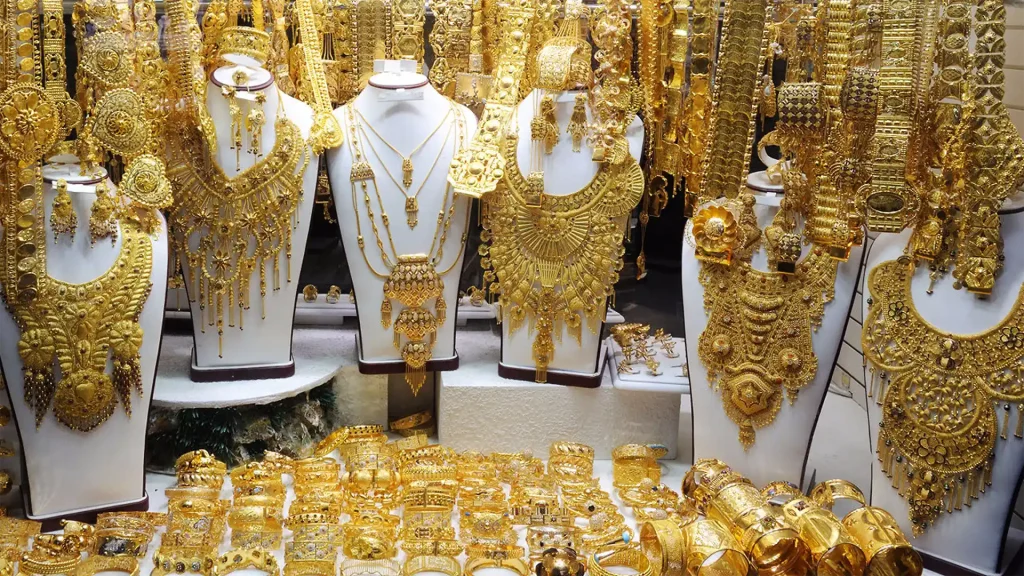
Gold prices in Dubai have recovered by Dh4, with the rate for 24-karat gold rising to Dh503.75 per gram, marking a modest rebound in the local precious metals market after recent price movements.
Dubai Gold Market Sees Dh4 Rebound as 24K Touches Dh503.75 a Gram.
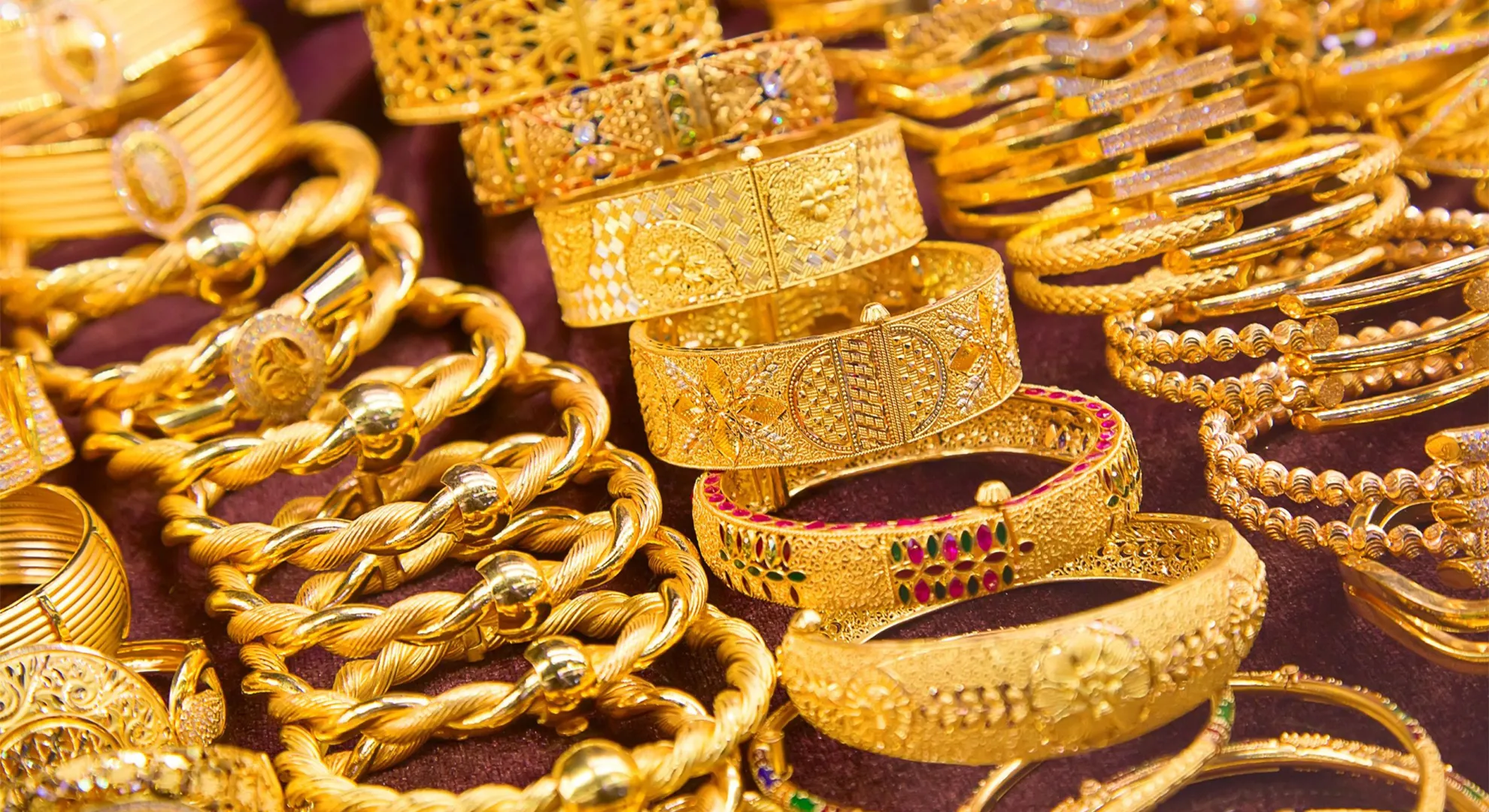
Dubai Gold Prices Recover as Global Market Weighs US Rate Outlook
Dubai Gold Prices Rebound as Investors Assess Inflation and Interest Rate Risks
Gold prices in Dubai moved higher on Thursday morning, recovering from the previous session’s decline as developments in the oil market and changing expectations around US monetary policy provided support to bullion.
The local market saw the price of 24-karat gold rise by Dh4 per gram at the start of trading. The increase brought the benchmark 24K rate to Dh503.75 per gram, compared with Dh499.75 when markets closed on Wednesday.
The latest move comes as international gold prices also strengthened, with investors continuing to assess the outlook for US interest rates, inflation and Treasury yields.
Dubai gold rates move higher
At the opening of Thursday’s trading session, 24K gold was priced at Dh503.75 per gram in Dubai.
That represented a Dh4 increase from the previous day’s closing price of Dh499.75.
Other commonly traded gold categories also recorded gains.
The 22K rate stood at Dh466.50 per gram, while 21K gold was priced at Dh447.25.
The price of 18K gold reached Dh383.25 per gram, while 14K gold was trading at Dh299 per gram.
The rise across the different categories followed an improvement in international bullion prices, with market participants continuing to monitor developments that could influence the direction of gold in the coming sessions.
Spot gold also records an increase
The recovery was not limited to the UAE market.
International spot gold was trading at approximately $4,180 per ounce as of 9.02am UAE time, representing a gain of 0.6 per cent.
Silver also moved higher during the same period. The precious metal was trading at $61.20 per ounce, up 1.59 per cent.
Gold’s latest performance comes as investors weigh a combination of factors, including interest rate expectations, inflation risks, oil prices and movements in US government bond yields.
These factors can have a significant influence on bullion because changes in interest rates affect the relative attractiveness of non-yielding assets such as gold.
Analysts point to technical support
Financial analyst and Century Financial chief investment officer Vijay Valecha said the recent recovery in gold came after prices found support at an important technical level.
Technical support levels are closely followed by traders because they can indicate areas where buying interest may emerge after a period of price declines.
According to Valecha, gold’s rebound reflects the interaction between market expectations and broader economic developments.
However, he also highlighted several risks that could limit the precious metal’s recovery.
Among them are continued inflation concerns and the possibility that interest rates could remain elevated or rise further.
Lower oil prices provide some support
Valecha also pointed to the recent movement in oil prices as one factor supporting the gold market.
Oil prices have eased as crude exports from the region recovered to approximately 80 per cent of levels seen before the war.
Lower oil prices can influence inflation expectations because energy costs form an important part of the broader price environment.
A moderation in energy prices can potentially reduce some inflationary pressure, although the relationship between oil, inflation and gold is complex and depends on wider economic conditions.
For gold investors, the latest changes in oil markets are therefore another factor to monitor alongside central-bank policy and economic data.
Expectations for US rate increases have changed
Another important factor influencing the gold market is the outlook for US interest rates.
Investors have reduced their expectations for an interest rate increase in October.
Valecha said the market was now assigning approximately a 50 per cent probability to an October rate hike, down from earlier expectations of around 70 per cent.
The shift followed comments from New York Federal Reserve President John Williams.
According to Valecha, Williams’ remarks suggested that one additional adjustment to interest rates later in the year could potentially be enough.
Changes in expectations surrounding US monetary policy can quickly affect financial markets, including gold.
When investors expect interest rates to rise, gold can face pressure because higher yields can increase the appeal of interest-bearing assets.
Conversely, when expectations for additional rate increases decline, bullion can receive some support.
Inflation remains a concern for the gold market
Despite the changing outlook for US interest rates, inflation remains an important issue for investors.
Persistent inflation can create uncertainty over the future path of monetary policy.
If price pressures remain elevated, central banks may face pressure to keep interest rates higher for longer or consider additional increases.
That possibility remains a risk for gold, according to Valecha.
The precious metal is often viewed as a store of value during periods of economic and financial uncertainty, but its price can also be affected by movements in interest rates and bond yields.
As a result, investors are closely watching economic indicators that could provide clues about the next steps for US monetary policy.
Treasury yields create another headwind
US government bond yields are another factor that could influence gold’s recovery.
Valecha highlighted the increase in longer-term Treasury yields as a potential challenge for bullion.
The 30-year US Treasury yield had climbed above 5.61 per cent, reaching its highest level since 2002.
Higher Treasury yields can increase the opportunity cost of holding gold because the precious metal does not pay interest.
When investors can earn higher returns from relatively low-risk fixed-income assets, some may become less inclined to hold non-yielding assets.
The rise in long-term yields therefore remains an important consideration for traders assessing whether gold’s recent rebound can continue.
Upcoming US data could influence gold’s direction
Markets are also waiting for additional economic data from the United States.
Valecha identified the core Personal Consumption Expenditures, or PCE, price index and the non-farm payrolls report as important indicators to watch.
The core PCE measure is closely monitored because it provides insight into underlying inflation trends in the US.
The non-farm payrolls report, meanwhile, offers important information about employment conditions and the strength of the American labour market.
Both sets of data can influence expectations for Federal Reserve policy.
If economic figures point to persistent inflation or a strong labour market, investors may reassess expectations for interest rates.
On the other hand, signs of slowing economic activity could affect expectations in the opposite direction.
Because of this, gold traders are likely to pay close attention to the upcoming releases.
Gold could face another test of support
Although gold has recovered from a key technical level, Valecha said the market could still experience another pullback.
He indicated that bullion could revisit support around $4,120 per ounce before potentially moving higher.
Such a move would represent another test of investor demand at lower price levels.
Technical levels are closely watched by market participants because they can help traders identify areas where buying or selling activity may intensify.
The possibility of a retest does not necessarily determine the longer-term direction of gold, but it highlights the volatility that can occur while markets adjust to changes in interest rate expectations, inflation data and bond yields.
Dubai market follows global bullion trends
Gold prices in Dubai are closely connected to movements in the international bullion market.
When global spot gold prices rise or fall, local retail prices generally adjust accordingly.
The latest Dubai increase therefore coincided with gains in international gold trading.
At $4,180 per ounce, spot gold was 0.6 per cent higher during Thursday morning trading.
The increase in the local 24K price from Dh499.75 to Dh503.75 per gram reflects that broader movement.
Other gold categories also recorded higher rates, with 22K at Dh466.50, 21K at Dh447.25, 18K at Dh383.25 and 14K at Dh299 per gram.
Interest rates remain central to the outlook
The future direction of gold will continue to depend heavily on expectations for US monetary policy.
Markets had previously priced in a greater possibility of another interest rate increase. However, expectations have now moderated, with Valecha noting that the probability of an October hike had fallen to around 50 per cent.
The comments from Federal Reserve officials have contributed to the change in market expectations.
Investors are now assessing whether additional monetary tightening will be necessary later in the year or whether policymakers may be able to limit further adjustments.
The answer will depend largely on incoming economic data.
Inflation, employment and consumer spending indicators can all influence how investors interpret the likely path of interest rates.
Why Treasury yields matter for bullion
The rise in the 30-year Treasury yield above 5.61 per cent is another important consideration for gold traders.
Gold does not provide an interest payment, so its relative attractiveness can decline when yields on government bonds increase.
Higher yields can therefore create pressure on bullion even when other factors are supportive.
This creates a complicated environment for gold.
On one side, reduced expectations for an immediate rate increase can support prices.
On the other, elevated Treasury yields and continued inflation concerns can limit the strength of any rebound.
The interaction between these forces is likely to remain a major feature of the market in the near term.
Oil prices add another variable
Developments in the oil market are also being monitored by investors.
According to Valecha, crude exports from the region had recovered to around 80 per cent of pre-war levels, contributing to lower oil prices.
Energy prices are an important component of inflation calculations and broader economic expectations.
A decline in oil prices can reduce pressure on consumers and businesses, although other factors can continue to keep inflation elevated.
For gold traders, changes in oil prices therefore provide another signal about the broader economic environment.
What investors are watching next
With gold prices recovering in Dubai and international markets, attention is now turning toward upcoming US economic releases and further comments from Federal Reserve officials.
The core PCE inflation measure will be particularly important because it can provide additional evidence about whether price pressures are easing.
The non-farm payrolls report will also be closely followed for indications about the condition of the US labour market.
Together, these reports could influence expectations for future interest rate decisions.
Any major change in those expectations could affect the direction of gold prices.
Investors will also continue to watch Treasury yields and movements in the US dollar, both of which can have an impact on bullion.
Dubai gold market records a morning recovery
The latest session brought some relief for Dubai’s gold market after prices ended Wednesday at lower levels.
The 24K rate increased by Dh4 to Dh503.75 per gram.
The 22K, 21K, 18K and 14K categories also moved higher.
Internationally, spot gold was up 0.6 per cent at approximately $4,180 per ounce during the morning, while silver gained 1.59 per cent to reach $61.20 per ounce.
The rebound comes against a backdrop of shifting expectations about US monetary policy and movements in global commodity markets.
Outlook remains dependent on economic data
Despite the latest gains, analysts continue to identify several factors that could influence gold prices in either direction.
Persistent inflation could encourage policymakers to maintain a restrictive interest-rate stance.
Higher Treasury yields could also weigh on bullion by increasing the attractiveness of interest-bearing investments.
At the same time, reduced expectations for an October rate increase and softer oil prices are providing some support to the precious metal.
The upcoming US economic data will therefore be important in determining how markets interpret the Federal Reserve’s next steps.
Valecha expects gold could potentially test the $4,120 support area before making another attempt at higher levels.
For Dubai buyers and investors, the local market will continue to reflect these international developments, with global bullion prices, currency movements and broader financial-market conditions influencing local gold rates.
For now, Thursday’s session has brought a modest recovery, with 24K gold returning to Dh503.75 per gram after closing the previous day at Dh499.75.