The UAE has renewed its call for a peaceful and diplomatic resolution to the long-running territorial dispute involving three Gulf islands currently controlled by Iran, urging dialogue and international efforts to settle the disagreement without escalation or confrontation.
UAE Urges Dialogue and Diplomacy to Resolve Long-Standing Dispute Over Three Islands Held by Iran.
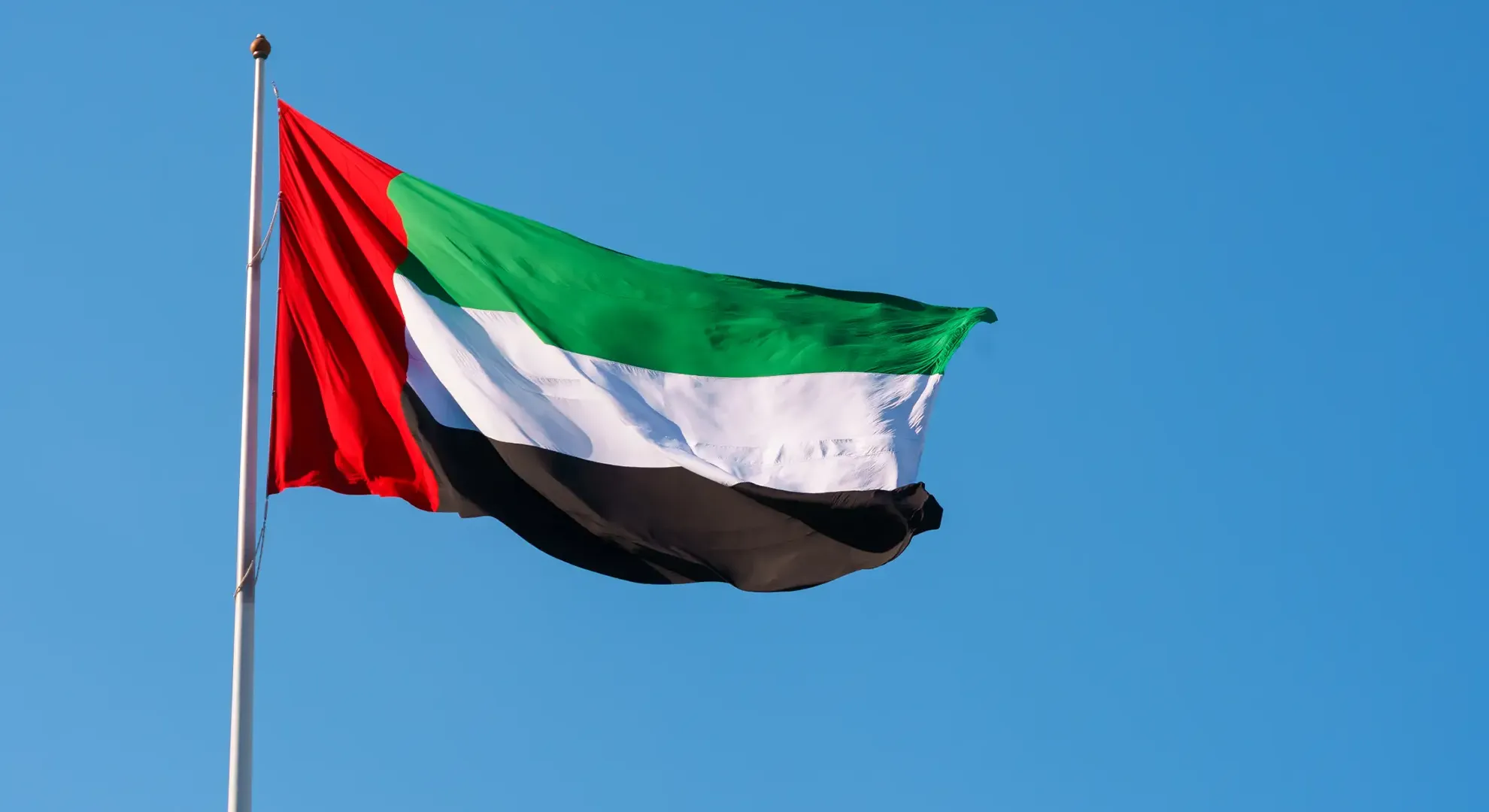
UAE Reaffirms Diplomatic Approach to Three-Island Dispute at UN
The United Arab Emirates has renewed its call for a peaceful resolution to its long-running territorial dispute with Iran over Greater Tunb, Lesser Tunb and Abu Musa, while using its address at the United Nations to underline a broader foreign-policy focus on diplomacy, dialogue and de-escalation.
Speaking during the high-level general debate of the 81st session of the UN General Assembly, UAE Minister of State Khalifa Shaheen Al Marar reiterated his country’s position that the three islands are Emirati territory and said the dispute should be resolved through peaceful means.
According to the UAE’s position, Iran took control of the islands on November 30, 1971, shortly before the formation of the UAE. The Emirati government subsequently brought the issue before the UN Security Council in December of the same year.
The disagreement has remained an issue in UAE-Iran relations for decades. The UAE has consistently maintained that it has sovereignty over Greater Tunb, Lesser Tunb and Abu Musa and has cited historical and legal documents in support of its position. UN records also document repeated UAE statements concerning the islands and calls for a peaceful settlement. United Nations+1
Al Marar said the UAE remained prepared to pursue a negotiated solution. He identified two possible avenues: direct talks between the parties or referral of the dispute to the International Court of Justice.
The minister placed the UAE’s position within what he described as a wider foreign-policy framework based on reducing tensions, maintaining dialogue and resolving disagreements through peaceful mechanisms.
Diplomacy at the centre of UAE foreign policy
In his address, Al Marar described the international environment as one marked by rapid change, growing instability and increasing divisions.
Despite those challenges, he said the UAE was seeking to focus on opportunities for peace, economic development and prosperity.
He outlined several principles that he said guide the country’s approach to international relations. These include respect for national sovereignty, good-neighbourly relations, international law and the principles contained in the UN Charter.
The UAE has also continued to present diplomacy and dialogue as important tools for addressing disputes and preventing regional tensions from escalating.
The approach extends beyond the dispute over the three islands and forms part of the UAE’s stated position on several conflicts across the Middle East and elsewhere.
UAE reiterates support for Palestinian statehood
The situation in Gaza and the broader Israeli-Palestinian conflict also featured prominently in the UAE’s remarks.
Al Marar reaffirmed Abu Dhabi’s support for a two-state solution, under which an independent and sovereign Palestinian state would exist alongside Israel in peace and security.
The UAE minister said achieving such an outcome would require a credible political process aimed at reaching what he described as a fair and lasting settlement.
He also referred to the international plan for ending the conflict in Gaza and its associated roadmap.
According to the position outlined by Al Marar, implementation should involve an Israeli withdrawal from Gaza, the disarmament of Hamas and the eventual unification of Gaza with the West Bank under a reformed Palestinian Authority.
He said governance and security responsibilities should ultimately rest with the Palestinian Authority, with weapons controlled exclusively by the legitimate authorities.
The UAE has continued to emphasise international cooperation around the two-state solution. During the 81st General Assembly session, Al Marar also reaffirmed the country’s support for efforts aimed at achieving a lasting peace in the Middle East and implementing the international framework concerning Gaza. WAM
Concerns over developments in the West Bank
The UAE also expressed concern about developments in the occupied West Bank.
Al Marar criticised Israeli settlement expansion, settler violence and restrictions affecting Palestinian communities.
He additionally raised concerns regarding what he described as pressure on Palestinian villages and developments involving East Jerusalem and religious sites.
The UAE’s position was presented as part of its broader call for a political process capable of addressing the underlying Israeli-Palestinian dispute rather than relying solely on security measures.
Abu Dhabi has repeatedly linked regional stability to progress towards a political settlement and the establishment of a Palestinian state.
UAE highlights mediation efforts
Beyond the Middle East, Al Marar said the UAE continued to support diplomatic initiatives in a number of conflict zones.
He referred to efforts involving Yemen, Libya, the Sahel, the Democratic Republic of the Congo, Myanmar and Haiti.
The UAE has sought to position itself as a mediator in a number of international disputes, using diplomatic contacts and humanitarian initiatives as part of its foreign-policy engagement.
On the war in Ukraine, Al Marar reiterated support for what he described as a comprehensive, fair and lasting peace consistent with international law and the UN Charter.
He specifically referred to principles including national sovereignty, independence and territorial integrity.
The minister also highlighted the UAE’s mediation efforts between Russia and Ukraine, saying the country had helped facilitate 26 mediation operations involving the exchange of nearly 8,000 prisoners.
The UAE has increasingly highlighted prisoner exchanges and other humanitarian mediation efforts as examples of its diplomatic engagement in international conflicts.
Position on Syria and Lebanon
Al Marar said the UAE was also prepared to support countries experiencing political and security changes as they seek greater stability.
He specifically referred to Syria and Lebanon, saying Abu Dhabi would support efforts aimed at improving security and creating conditions for greater stability.
The comments reflected the UAE’s broader emphasis on regional cooperation and diplomatic engagement rather than allowing conflicts to deepen existing divisions.
UAE calls for ceasefire in Sudan
Sudan was another major issue addressed by the UAE minister.
Al Marar called for a permanent and unconditional ceasefire to bring an end to the fighting and humanitarian suffering caused by the conflict.
He said a ceasefire should be followed by a broad political process led by Sudanese civilians.
The UAE’s stated position is that Sudan’s future should ultimately be determined by its own people through a civilian-led political process.
Al Marar also called on the international community to encourage the parties involved in the conflict, including the Port Sudan authorities and the Rapid Support Forces, to engage seriously with diplomatic initiatives aimed at ending the war.
He said any future civilian government should be independent of both sides of the conflict and extremist organisations.
Building resilience amid regional instability
While addressing conflicts around the region, Al Marar also focused on the UAE’s domestic development and economic resilience.
He said the country had continued to pursue development despite the instability surrounding it.
The minister pointed to investments in industrial capacity, infrastructure, logistics and advanced defence capabilities, alongside spending on human capital and the development of an economy based on knowledge and innovation.
He argued that these investments had strengthened the country’s ability to respond to external challenges while continuing its economic development.
The UAE has also sought to expand its international economic relationships as part of its strategy for diversification.
Al Marar highlighted the country’s Comprehensive Economic Partnership Agreements with 38 countries, describing them as part of efforts to broaden markets, strengthen supply chains and encourage greater trade and investment.
Expanding the UAE’s global economic role
The minister said the UAE intended to continue developing its position as a hub connecting international markets, businesses and investment capital.
He pointed to sectors including artificial intelligence, emerging technologies, healthcare and education as areas where the country intends to increase investment.
The strategy reflects the UAE’s wider effort to diversify its economy and reduce reliance on traditional sources of revenue.
Investment in technology and knowledge-based industries has become an increasingly prominent part of the country’s economic agenda.
Al Marar presented these efforts alongside the UAE’s diplomatic priorities, suggesting that economic development, regional stability and international cooperation were interconnected elements of the country’s approach.
Trade, energy and regional stability
The UAE has also stressed the importance of protecting international trade and energy flows amid growing regional tensions.
In remarks around the 81st General Assembly, Al Marar emphasised the need to maintain secure supply chains and protect the movement of trade and energy in accordance with international law. The UAE linked these issues to wider concerns about food security, economic stability and international peace. WAM
The issue is particularly significant for the Gulf because disruptions to maritime routes can affect international trade and energy supplies.
The UAE has therefore continued to emphasise freedom of navigation, safe shipping routes and respect for international maritime law.
Commitment to peaceful dispute resolution
The three-island dispute remains one of the longstanding territorial disagreements addressed by the UAE in international forums.
At the UN, Al Marar again called for a peaceful solution rather than confrontation.
The UAE’s stated preference is for the issue to be settled through direct negotiations with Iran or through the International Court of Justice.
The position is consistent with previous UAE statements at the United Nations. UN records have documented the UAE’s longstanding assertion of sovereignty over Greater Tunb, Lesser Tunb and Abu Musa and its calls for peaceful mechanisms to resolve the disagreement. Digital Library+1
The UAE has also repeatedly raised the issue through regional and international organisations.
A foreign policy centred on de-escalation
Al Marar’s comments connected the island dispute with the UAE’s broader emphasis on preventing escalation.
The minister said diplomacy, dialogue and respect for international law remained central to the country’s approach.
This includes maintaining relations with neighbouring states, supporting mediation efforts and encouraging negotiated settlements to conflicts.
The UAE has sought to present itself as a country capable of engaging with different sides of international disputes while maintaining its own stated national positions.
That approach was reflected in Al Marar’s remarks on conflicts ranging from Gaza and Sudan to Ukraine and the dispute with Iran.
The UAE’s message on regional conflicts
Across the issues addressed during the UN debate, a common theme in the UAE’s statement was the preference for political and diplomatic solutions.
On the three islands, the UAE called for negotiations or legal recourse.
On Gaza, it supported a political process leading to a two-state solution.
For Sudan, it called for a ceasefire followed by a civilian-led political transition.
On Ukraine, it expressed support for a negotiated peace based on international law and the UN Charter.
The UAE also referred to its diplomatic efforts in other conflict areas, including Yemen, Libya, the Sahel, the Democratic Republic of the Congo, Myanmar and Haiti.
Looking beyond immediate crises
Al Marar said the UAE did not intend to allow regional instability to halt its development plans.
He described the country as having built resilience through investment in infrastructure, technology, industrial capabilities and human capital.
He also pointed to logistics and defence capabilities as areas that had strengthened the country’s capacity to respond to changing circumstances.
At the same time, he said the UAE would continue investing in sectors expected to shape its future economy.
Artificial intelligence, emerging technologies, healthcare and education were among the areas he identified as priorities.
The country’s network of trade agreements was also highlighted as a means of increasing international economic integration.
Focus on moderation and tolerance
The minister concluded by reaffirming the UAE’s stated commitment to moderation and opposition to violence and extremism.
He said the country would continue investing in its people and in the wider region’s potential.
The message was framed around cooperation rather than confrontation, with the UAE presenting dialogue and partnership as important tools for dealing with regional and international challenges.
Al Marar said the UAE wanted to work with countries in the region and around the world to promote cooperation and reduce divisions.
A broad diplomatic agenda
The address demonstrated the wide range of issues currently shaping the UAE’s foreign-policy agenda.
The three-island dispute with Iran remains a longstanding national issue for Abu Dhabi, with the UAE continuing to seek a peaceful mechanism for resolving the disagreement.
At the same time, the country has maintained positions on the Israeli-Palestinian conflict, Sudan and Ukraine while highlighting its mediation efforts in several other regions.
The UAE’s stated approach places diplomacy, dialogue and international law at the centre of these efforts.
Its position on the three islands remains that Greater Tunb, Lesser Tunb and Abu Musa are part of UAE territory, while Iran maintains its own position on the islands. The UN record of the UAE’s 81st General Assembly intervention documents Abu Dhabi’s rejection of Iran’s continued control and its call for negotiations or referral to the ICJ. UN Transcripts
Continued emphasis on international cooperation
The UAE’s broader message at the United Nations was that international cooperation remains necessary to address conflicts, humanitarian emergencies and economic disruptions.
The country has highlighted mediation, humanitarian assistance, trade partnerships and diplomatic engagement as components of its international role.
At the same time, it has continued to assert its positions on sovereignty and territorial disputes.
The combination of these priorities was evident in Al Marar’s address, which moved from the dispute over the three islands to Gaza, Sudan, Ukraine and other conflicts before turning to the UAE’s economic and development plans.
The speech presented these issues within a wider vision of regional stability and international cooperation.
What comes next for the island dispute
For the UAE, the immediate position remains unchanged: it wants the dispute over Greater Tunb, Lesser Tunb and Abu Musa to be addressed through peaceful means.
The options publicly outlined by Al Marar are direct negotiations between the two countries or taking the dispute to the International Court of Justice.
The UAE has maintained this call over many years, while continuing to raise the issue through international and regional forums.
UN documents show that the dispute has repeatedly been raised in international discussions, with the UAE consistently advocating peaceful avenues for addressing it. United Nations+1
The latest statement therefore places the longstanding territorial issue within the UAE’s broader diplomatic message: disputes should be managed through dialogue, legal frameworks and peaceful engagement rather than escalation.
UAE’s wider diplomatic outlook
Al Marar’s address ultimately linked the UAE’s regional positions to a broader foreign-policy outlook focused on stability, economic development and international cooperation.
The country continues to support a two-state solution for the Israeli-Palestinian conflict, advocate diplomatic solutions to other international crises and highlight its mediation efforts.
At the same time, it continues to press its claim regarding the three disputed islands and calls for a peaceful settlement with Iran.
The UAE says its foreign-policy approach is grounded in respect for sovereignty, international law, good-neighbourly relations and the UN Charter.
Its economic strategy, meanwhile, is centred on strengthening trade connections, developing new industries and investing in technology, education and human capital.
Taken together, the positions outlined at the UN reflect the UAE’s effort to combine diplomatic engagement with continued economic development and a focus on regional stability.
For the three-island dispute, however, the central message remains that Abu Dhabi wants the issue resolved through peaceful negotiations or international legal channels rather than confrontation.