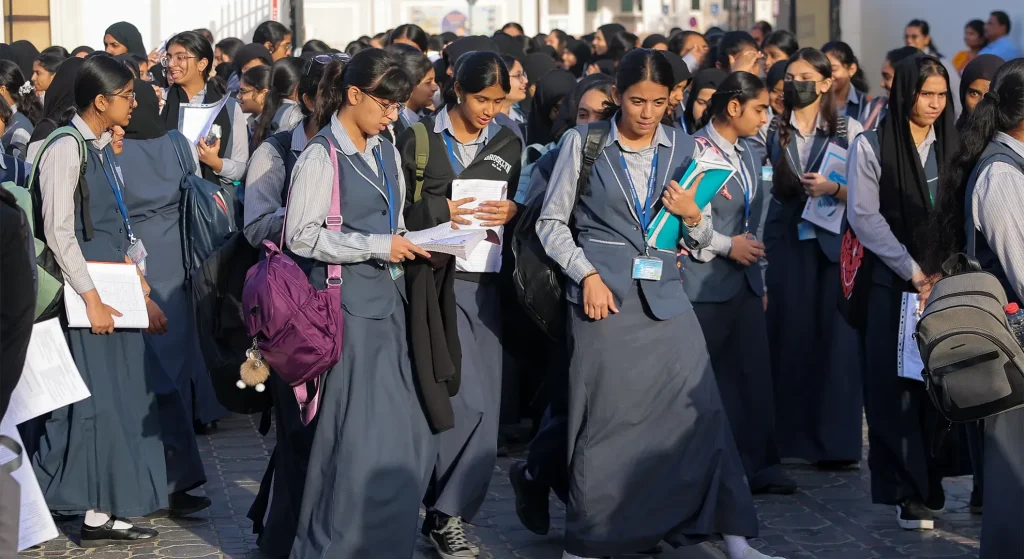
Schools across the UAE are finalising schedules for pre-board examinations, while students preparing for CBSE board exams are waiting for the tentative timetable, which will help them organise their revision plans and prepare more effectively for the upcoming examinations.
UAE Schools Prepare Pre-Board Exam Plans as CBSE Students Look Forward to Tentative Board Exam Dates.
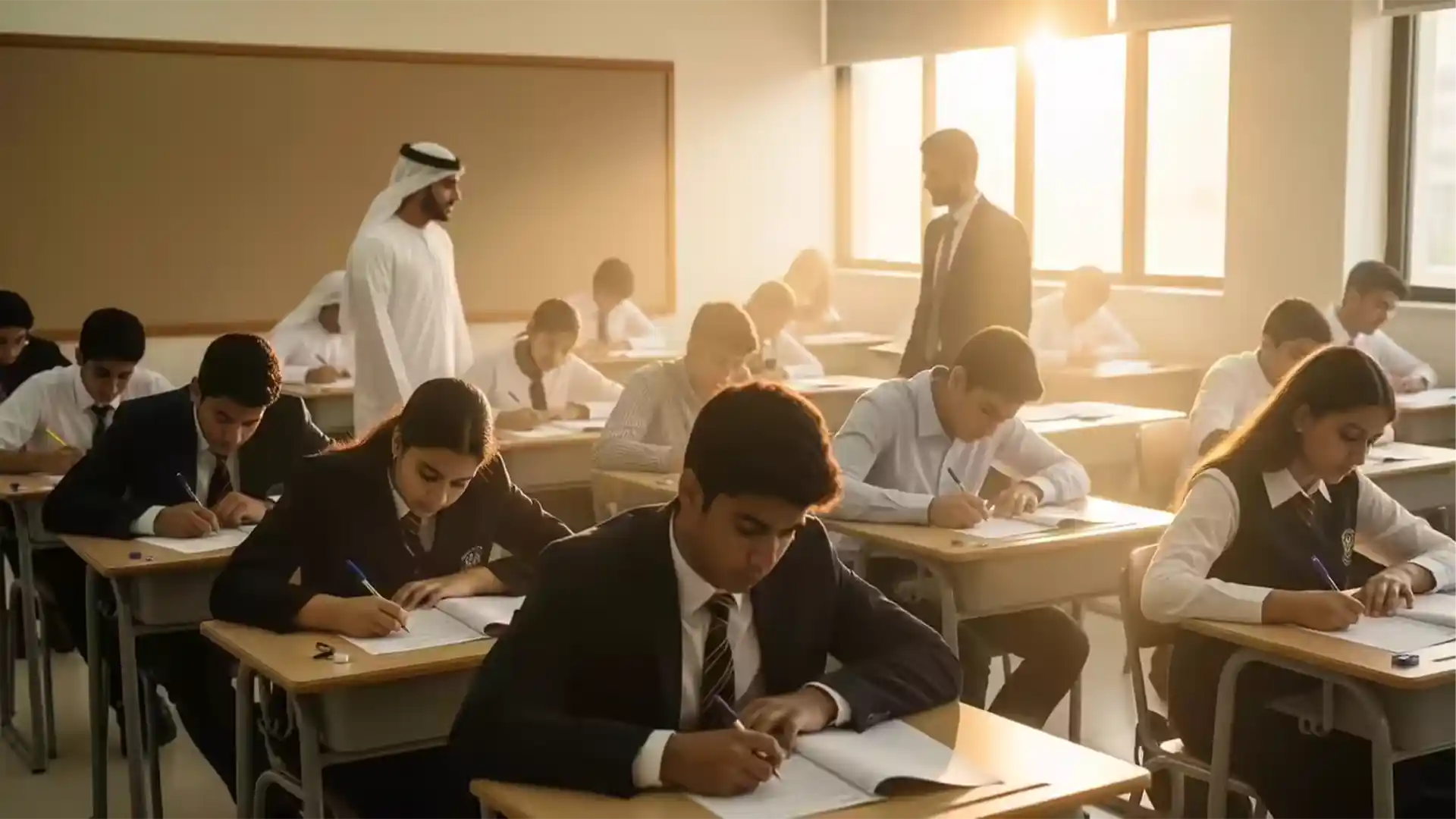
With students in Classes 10 and 12 across the UAE waiting for the Central Board of Secondary Education (CBSE) to release the tentative timetable for the 2027 board examinations, school leaders are advising students and parents to begin focused preparation rather than wait for the official dates.
Although the final examination schedule has not yet been announced, schools have already started planning their internal assessment calendars. Several UAE schools are preparing to conduct pre-board examinations in November and January, giving students an opportunity to assess their preparation well before the final CBSE examinations.
Based on the schedule followed last year, the tentative CBSE timetable for the 2027 board examinations could be released around late September or October 2026. The main board examinations are expected to take place during February and March 2027. However, students and parents have been advised to wait for confirmation from CBSE before relying on any specific examination dates.
Bhanu Sharma, Principal of Woodlem Park Al Jurf Ajman, said families should refer only to official CBSE communications and notifications issued by their respective schools once the timetable becomes available.
She said the tentative schedule could be announced around late September or October 2026, based on the timing followed in the previous academic cycle. However, she stressed that the date should be treated as unconfirmed until it is officially published by CBSE.
For students, the absence of a confirmed timetable does not mean that preparation should be delayed. Schools are already using their internal examination schedules to keep students on track.
At Woodlem Park, students in Classes 10 and 12 are expected to take part in two rounds of pre-board examinations. The first round is planned for November, followed by another examination cycle in January.
According to Sharma, students can use the eventual CBSE date sheet to organise their final revision more strategically. Once the timetable is released, students should examine the order of subjects, examination timings and the number of days available between individual papers.
These gaps can then be used to develop a subject-specific revision plan, particularly for subjects that require additional practice or preparation.
UAE schools move ahead with pre-board schedules
While the official CBSE timetable remains awaited, schools across the UAE are continuing with their own academic calendars and internal examinations.
Deepika Thapar Singh, CEO-Principal of Credence High School, said the institution has scheduled its first pre-board examinations for Classes 10 and 12 from November 10.
Practical examinations are expected to begin around the second week of January, following the framework and guidelines issued by CBSE.
Singh also referred to the previous year’s schedule, when CBSE issued a tentative date sheet on September 24 and subsequently released the final timetable in early December. For the current academic year, schools are still waiting for the corresponding tentative schedule.
However, she said students already have access to important resources that can guide their preparation. CBSE has released its latest sample question papers along with marking schemes, giving students an indication of the expected examination format and assessment approach.
Teachers at Credence High School are using these materials while preparing the school’s pre-board examinations. Singh encouraged parents to make sure their children work through the sample papers and carefully study the associated marking schemes.
The purpose, she explained, is not simply to complete more question papers but to understand how answers are assessed and how marks are awarded.
Familiarity with the sample papers can help students become comfortable with the structure of the examination and identify areas in which they may need additional practice.
Pre-boards planned at other UAE schools
Other schools are also using pre-board examinations as part of their preparation strategy.
At GEMS Our Own Indian School in Dubai, Grade 12 students are expected to begin their pre-board examinations by the end of November. Grade 10 students will take their pre-boards in January, according to Lalitha Suresh, Principal/CEO.
The school views these examinations as a way of identifying learning gaps before students sit for their final board examinations.
Instead of treating the pre-board score as an indication of the final result, students can use the examination as a diagnostic exercise. The papers can show which concepts have been understood, where mistakes are occurring and which topics require additional revision.
Suresh said schools may also organise a second mock examination for students who require further practice or additional assessment before the final boards.
This approach allows students to use the period between the pre-boards and final examinations productively. Rather than simply moving on after receiving their marks, students can analyse their performance and concentrate on the areas where they lost marks.
Why pre-board results matter
School principals emphasised that the importance of pre-board examinations extends beyond the marks students receive.
The examinations are intended to provide a realistic opportunity for students to experience the pressure, timing and structure of a board-style paper.
Suresh advised students to complete their first comprehensive revision before appearing for the pre-boards. This allows the examination to provide a more meaningful assessment of their overall preparation.
Once the papers have been evaluated, students should examine their results carefully and identify the topics or skills that require further work.
She described pre-boards as a diagnostic stage in the preparation process rather than the final objective. The purpose is to help students understand what they have mastered, identify recurring mistakes and determine where further attention is needed.
This process can be particularly useful because students sometimes know the material but lose marks due to poor time management, incomplete answers, misunderstanding questions or ineffective presentation.
Analysing the paper after the examination can help identify these problems.
Suresh recommended that students gradually shift their focus after the pre-boards. Once the syllabus has been covered, the priority should increasingly move towards improving examination technique.
This includes practising questions under timed conditions, working through sample papers and reviewing previous question papers.
Students can use these exercises to improve their speed and accuracy while becoming more familiar with the types of questions they may encounter.
Learn from mistakes after every paper
One of the key recommendations from school leaders is to examine mistakes rather than simply note the marks obtained.
After completing a sample paper or pre-board examination, students should review incorrect answers and determine the reason behind each error.
A mistake may have occurred because the student misunderstood the question, forgot a concept, made a calculation error, ran out of time or failed to present the answer in the expected format.
Identifying the underlying reason is important because simply correcting an answer does not necessarily prevent the same mistake from happening again.
Suresh encouraged students to ask themselves not only what they answered incorrectly but also why the error occurred and what steps they can take to avoid repeating it.
This method can turn each practice paper into a learning exercise.
For example, if a student consistently loses marks because of incomplete answers, the focus can shift towards reading questions carefully and checking responses before submitting the paper. If time management is the problem, additional timed practice can be introduced.
Similarly, if mistakes are linked to weak understanding of particular chapters, students can return to their textbooks and classroom notes before attempting related questions again.
Sample papers as preparation tools
CBSE sample papers and marking schemes are expected to remain important resources for students preparing for the 2027 board examinations.
Singh advised students to work through these materials rather than limiting their preparation to reading textbooks.
Sample papers can help students understand the format of the examination, while marking schemes provide information about how answers are evaluated.
Teachers can also use the material to demonstrate how students should structure their responses.
According to Singh, students should become familiar with model answers and answer sheets made available by CBSE. Reviewing high-quality responses can help students understand how information should be organised and presented in an examination.
This can be particularly helpful in subjects where marks depend not only on reaching the correct conclusion but also on showing the appropriate method, explanation or reasoning.
Students can therefore benefit from comparing their own answers with model responses after completing practice papers.
The exercise can highlight differences in structure, clarity, accuracy and presentation.
Teachers at schools such as Credence High School are also discussing these resources in class to help students understand how an examination response should be written.
Start preparation instead of waiting for dates
The uncertainty surrounding the exact 2027 CBSE timetable should not prevent students from maintaining a regular study routine.
School principals have advised families to focus on preparation rather than repeatedly checking for the date sheet.
Once the official schedule is released, students can adjust their revision plans according to the sequence of examinations. Until then, the existing school calendar and pre-board dates can provide a useful framework.
Students should aim to complete the syllabus, undertake a full revision and use sample papers to test their understanding.
The pre-board examinations can then serve as an early assessment of how well that preparation is progressing.
Waiting until the official date sheet is announced could leave students with less time to address weak areas. Starting early, by contrast, allows students to distribute their workload over a longer period.
Singh said families should avoid creating unnecessary pressure around the upcoming board examinations. Instead, students need a practical timetable that allocates sufficient time for study after school.
Leaving large portions of the syllabus until the final weeks can create avoidable pressure, particularly because board examinations require repeated revision and regular practice.
Managing screen time
Parents also have a role to play in helping students maintain an effective study routine.
Singh encouraged parents to communicate with their children about the importance of limiting distractions, particularly excessive mobile phone use during study periods.
She suggested that students should primarily rely on NCERT textbooks, classroom notes and their notebooks when preparing.
Online resources can also be useful, particularly when students need additional explanations or practice material. However, she recommended setting clear limits on the amount of time spent using digital devices for study.
The objective is to ensure that online learning remains purposeful rather than becoming a source of distraction.
Parents can support students by helping them establish realistic study schedules and creating an environment in which they can concentrate without unnecessary interruptions.
At the same time, students preparing for board examinations are expected to take increasing responsibility for managing their own time.
Writing practice is essential
Another point highlighted by school leaders is the difference between reading material and actively practising it.
Students may spend considerable time reading textbooks or reviewing notes, but board examinations require them to produce written answers within a fixed period.
For this reason, students should regularly write answers and complete full-length papers under examination conditions.
Writing practice can help improve speed, handwriting, organisation, presentation and accuracy. It can also reveal whether a student can recall and apply information without relying on the textbook.
Singh stressed that students should not restrict their preparation to reading. They should actively write, practise questions and review their responses.
Timed practice is particularly valuable because students need to complete their board papers within the prescribed duration.
Students can use sample papers to simulate actual examination conditions by setting a timer, completing the paper without interruptions and reviewing their answers only after finishing.
The exercise can help them determine how much time they should allocate to different sections and whether they are spending too long on particular questions.
Making the most of the period after pre-boards
The period following the pre-board examinations can be particularly valuable.
Once students receive their evaluated papers, they should avoid focusing only on the total score.
Instead, they can prepare a list of topics where marks were lost and classify the reasons behind those mistakes.
Some errors may involve gaps in knowledge, while others may be related to examination technique.
Students can then create a targeted revision plan based on these findings.
For instance, a student who performs well in most chapters but struggles with a particular unit can allocate additional revision time to that topic.
Another student may understand the syllabus but lose marks because of incomplete responses. In that case, the emphasis can shift towards answer writing and time management.
This approach allows pre-board examinations to serve their intended purpose as practice and feedback rather than simply another set of tests.
Schools may also use the results to provide additional support to students who need help in particular subjects.
The second round of pre-boards planned by some schools can then provide another opportunity to measure progress.
Use the official timetable when released
Once CBSE publishes the tentative or final timetable, students and parents should verify the information through official channels.
Sharma advised families to rely on the CBSE website and notifications issued by their schools rather than unofficial schedules circulating online.
After the confirmed timetable becomes available, students can map their remaining revision period against the sequence of examinations.
The number of days between individual subjects can help determine where additional preparation time should be allocated.
Subjects with closely spaced examinations may require earlier revision, while students can use longer gaps for intensive preparation in subjects scheduled later.
However, the basic preparation should already be underway by the time the timetable is announced.
Avoiding last-minute pressure
The principals’ advice comes down to a common message: students should not wait for the official date sheet to begin serious preparation.
The board timetable determines when examinations take place, but it does not determine when students should start studying.
With pre-board examinations scheduled from November onwards in several UAE schools, students have an immediate opportunity to measure their progress.
The first pre-board can reveal weaknesses while there is still time to address them. A second mock examination, where offered, can then provide another checkpoint before the final board examinations.
Students who approach the pre-boards as practice rather than as a final assessment can use the experience more effectively.
A lower-than-expected pre-board score, for example, can highlight topics that require more attention. Rather than becoming discouraged, students can use the feedback to modify their study plan.
Similarly, strong performance can show which areas have been adequately prepared while still identifying opportunities for improvement.
A structured approach for Classes 10 and 12
For both Class 10 and Class 12 students, preparation can be organised around several stages.
The first stage is completing the syllabus and ensuring that fundamental concepts are understood.
The next step is a comprehensive revision before the first pre-board examination.
Students can then use the pre-board results to identify weak areas.
Following that, they can practise CBSE sample papers, previous question papers and other relevant examination material.
The final stage should focus on refining answer-writing techniques, improving time management and revising topics identified through previous assessments.
This process allows students to make gradual improvements rather than attempting to complete everything immediately before the board examinations.
Schools continue preparing despite timetable uncertainty
While students continue to wait for the official 2027 CBSE date sheet, UAE schools are not delaying their own examination preparations.
Woodlem Park Al Jurf Ajman is planning two pre-board rounds in November and January.
Credence High School has scheduled its first pre-board examination for Classes 10 and 12 from November 10, with practical examinations expected to start around the second week of January.
At GEMS Our Own Indian School in Dubai, Grade 12 pre-boards are expected by the end of November, while Grade 10 students are scheduled to sit their pre-board examinations in January.
These internal schedules give students a clear preparation timeline even before CBSE announces the final examination calendar.
The tentative CBSE timetable is expected around late September or October 2026 based on last year’s schedule, while the board examinations are expected to take place during February and March 2027. The actual dates, however, should be confirmed through official CBSE communications.
Until then, students can focus on the elements of preparation that do not depend on the exact examination dates: completing the syllabus, revising thoroughly, practising sample papers, improving answer writing and analysing mistakes.
Advice for students and parents
The school leaders’ recommendations also place emphasis on maintaining a balanced approach.
Students should establish a consistent routine instead of relying on long study sessions immediately before examinations.
Parents can help by supporting that routine, reducing unnecessary distractions and encouraging children to make use of the resources already available to them.
At the same time, excessive pressure should be avoided. A structured study plan can provide students with a clearer sense of what needs to be completed and when.
Regular breaks, sufficient sleep and a manageable workload can help students maintain their routine over the longer preparation period.
The objective is to arrive at the board examinations having completed multiple rounds of revision and practice rather than attempting to learn large portions of the syllabus at the last minute.
For students, the upcoming pre-boards offer an important opportunity to test their readiness.
The results should be treated as feedback. Every lost mark can potentially reveal something about knowledge, technique, timing or presentation that can be improved before the final examination.
By combining school assessments with CBSE sample papers, model answers, marking schemes and regular written practice, students can build greater familiarity with the examination format.
The eventual release of the official CBSE timetable will allow them to make the final adjustments to their revision schedules.
Until then, UAE school principals are encouraging Class 10 and 12 students to continue working according to their existing academic calendars and make full use of the preparation time available.
Rather than allowing uncertainty over the examination dates to interrupt their studies, students can use the coming months to strengthen their subject knowledge, practise writing answers and address weaknesses identified through pre-board examinations.
With several UAE schools already scheduling their mock examinations for November and January, the preparation process is well underway. The focus now remains on consistent study, regular practice and using feedback effectively before the 2027 CBSE board examinations begin.