Commuters can now travel across the UAE without relying on private cars, as Etihad Rail provides convenient connections with Dubai Metro’s Red Line, making journeys between key destinations easier, more accessible, and better integrated with the city’s public transport network.
Travel Without Driving: Etihad Rail Connects Passengers With Dubai Metro’s Red Line.
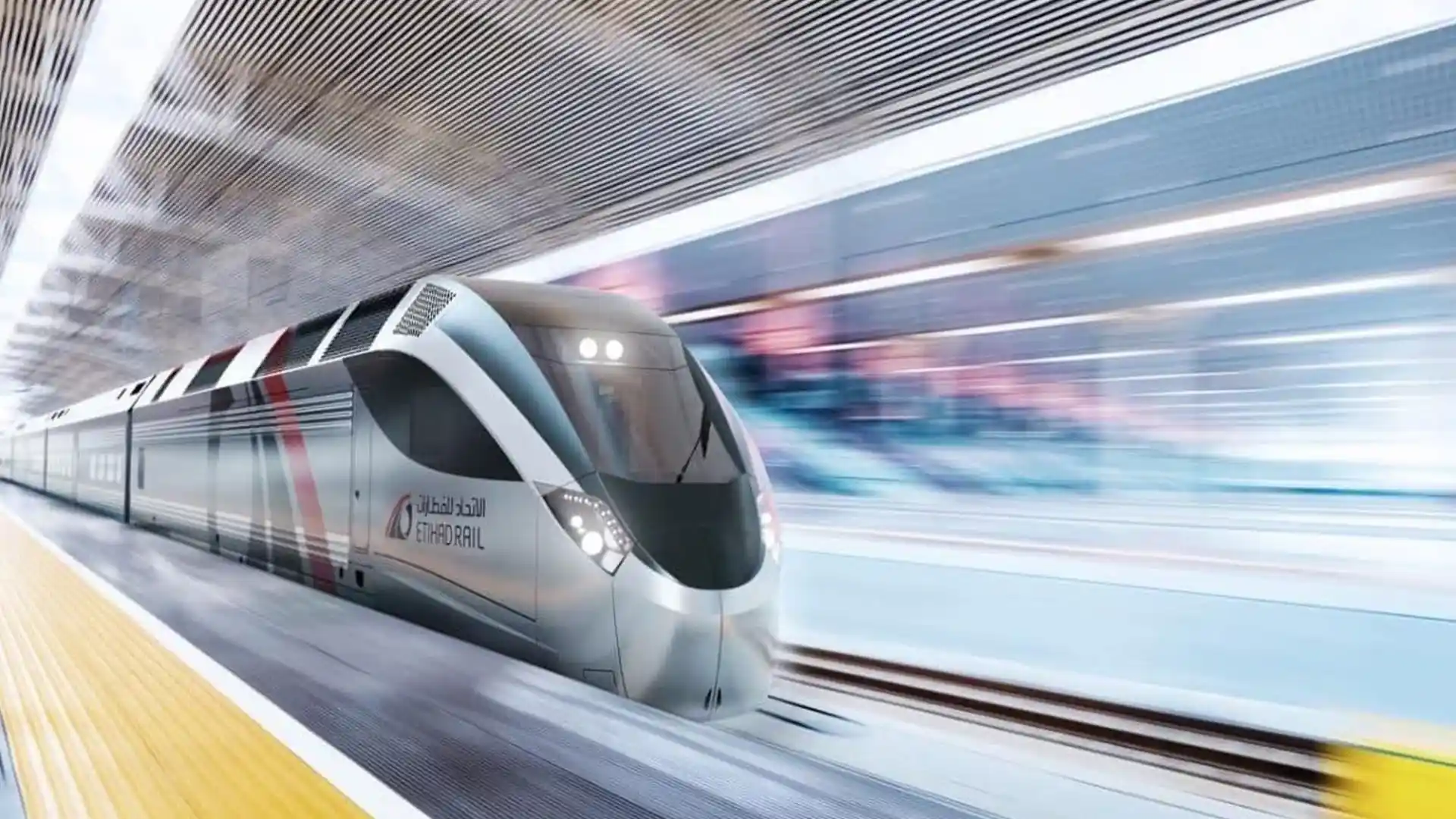
Passengers will be able to transfer easily between Dubai Al Yalayis Station and the Metro through a dedicated pedestrian bridge, creating a seamless link between inter-emirate train services and Dubai’s wider urban public transport network for daily commuters and travellers.
Etihad Rail and Dubai Metro Set to Offer Seamless City Connections
A new transport link between Etihad Rail and Dubai Metro is set to make travel between the emirates and different parts of Dubai more convenient for passengers. The connection will allow travellers using the national railway to transfer directly to Dubai’s Red Line network without having to rely on a private vehicle.
Etihad Rail is scheduled to begin services from Dubai on September 30. Passengers arriving at Dubai Al Yalayis Station will be able to access Jumeirah Golf Estates Metro Station, which is part of the Dubai Metro Red Line. The connection will give rail passengers an easier way to continue their journeys to various parts of the city.
The arrangement will also work in the opposite direction, allowing Dubai residents to use the Metro before transferring to Etihad Rail for journeys between emirates.
Dedicated pedestrian link under construction
A dedicated pedestrian bridge is being developed to provide a direct connection between Dubai Al Yalayis Station and Jumeirah Golf Estates Metro Station.
Mattar Al Tayer, Director-General and Chairman of the Board of Executive Directors of Dubai’s Roads and Transport Authority (RTA), recently confirmed the project. He said the RTA was coordinating with Etihad Rail to improve the transfer experience and create a smoother connection between the national railway and Dubai’s existing Metro system.
During an earlier visit to the area, INSIDER 18 observed a large steel pedestrian structure extending from the Etihad Rail station towards the Metro station. Construction activity was also underway around the pedestrian connection, station entrances and surrounding landscaping.
Once completed, the link is expected to make transfers between the two rail systems more straightforward, particularly for passengers who want to continue their journeys through Dubai without using a car.
Where can passengers travel on the Red Line?
Jumeirah Golf Estates Metro Station is located on Dubai Metro’s Red Line, giving Etihad Rail passengers access to a wide range of residential, commercial and tourist destinations across the city.
After transferring at Jumeirah Golf Estates, passengers can travel towards Dubai Marina and Dubai Internet City, as well as reach popular destinations such as Mall of the Emirates and the Burj Khalifa/Dubai Mall area.
The Red Line also provides access to Business Bay and Dubai World Trade Centre. Travellers heading to Dubai International Airport can continue towards Terminals 1 and 3, making the rail connection useful for both local journeys and airport travel.
Passengers travelling in the opposite direction can use the Red Line towards Dubai Investment Park and Expo 2020. This creates a broader network of travel options for people arriving in Dubai by Etihad Rail and those beginning their journeys within the city.
The integration of the two systems is intended to provide passengers with a more connected public transport experience, linking inter-emirate rail services with Dubai’s established Metro network and reducing the need for private car journeys between the two systems.
Connections beyond Dubai Metro’s Red Line
The transport options available to passengers do not stop at Dubai Metro’s Red Line. Travellers can switch to the Green Line at Union and BurJuman stations, opening access to several other parts of the city. The Green Line serves destinations such as Gold Souq, Al Ghubaiba, Dubai Healthcare City and Creek.
Passengers can also use Dubai’s tram network after travelling on the Red Line. The Dubai Tram serves key areas including Dubai Marina, Jumeirah Beach Residence, Media City and Al Sufouh, with a connection to Palm Jumeirah. According to the RTA’s rail network map, Metro-to-Tram transfers are available at Sobha Realty and DMCC stations.
For Etihad Rail passengers arriving in Dubai, Al Yalayis Station therefore represents only the beginning of their journey. Once they transfer to the Metro at Jumeirah Golf Estates, they can continue travelling to a wide range of destinations across Dubai using interconnected rail services, without necessarily requiring a private car.
Jumeirah Golf Estates designed for high passenger demand
Jumeirah Golf Estates Metro Station is built to accommodate substantial passenger numbers and is considerably larger than a typical neighbourhood station. When the RTA inaugurated the station in September 2021, it described the facility as the largest underground station within the Dubai Metro system.
The station covers approximately 28,700 square metres and has been designed to accommodate up to 11,555 passengers per hour during peak times. Its overall daily capacity is around 250,000 passengers.
A range of additional transport facilities is available around the station. These include four bus stops and 20 taxi stands, along with 400 public parking spaces. The station area also provides 20 dedicated parking spaces for People of Determination.
Plans to create a more connected transport system
The new physical connection between Etihad Rail and Dubai Metro forms part of a wider effort to make journeys across different modes of transport more convenient. Etihad Rail has been developing plans that would allow passengers to combine national rail services with Dubai Metro, buses, taxis, ride-hailing services and other options for reaching their final destinations.
The aim is to make the entire journey easier to organise, particularly for passengers who need to use several forms of transportation. Greater coordination between these services could eventually reduce the number of separate arrangements passengers need to make when travelling from one emirate to another and then continuing within Dubai.
Potential integration of ticketing and payments
Transport integration could also extend to ticketing and fare payments. In 2024, the Roads and Transport Authority and Etihad Rail signed an agreement focused on developing booking and payment solutions through the RTA’s nol system.
The agreement was presented as an initial step towards a joint venture between the two organisations. If implemented, greater ticketing integration could make it easier for passengers to manage different parts of a journey through a more connected payment system.
However, the announcement did not provide a specific date for when nol payments would become available for Etihad Rail services. For now, the physical connection between the railway and Metro represents an important part of efforts to link inter-emirate rail travel with Dubai’s wider public transport network.