Unveiling a sprawling 80-kilometer road network, Dubai has introduced a major transportation upgrade designed to slash daily commutes by sixty percent while implementing extensive infrastructure enhancements to streamline regional connectivity and ease traffic congestion.
Dubai’s New 80-Kilometer Highway Unveiled: Travel Times Slashed by 60% Alongside Major Road Enhancements.
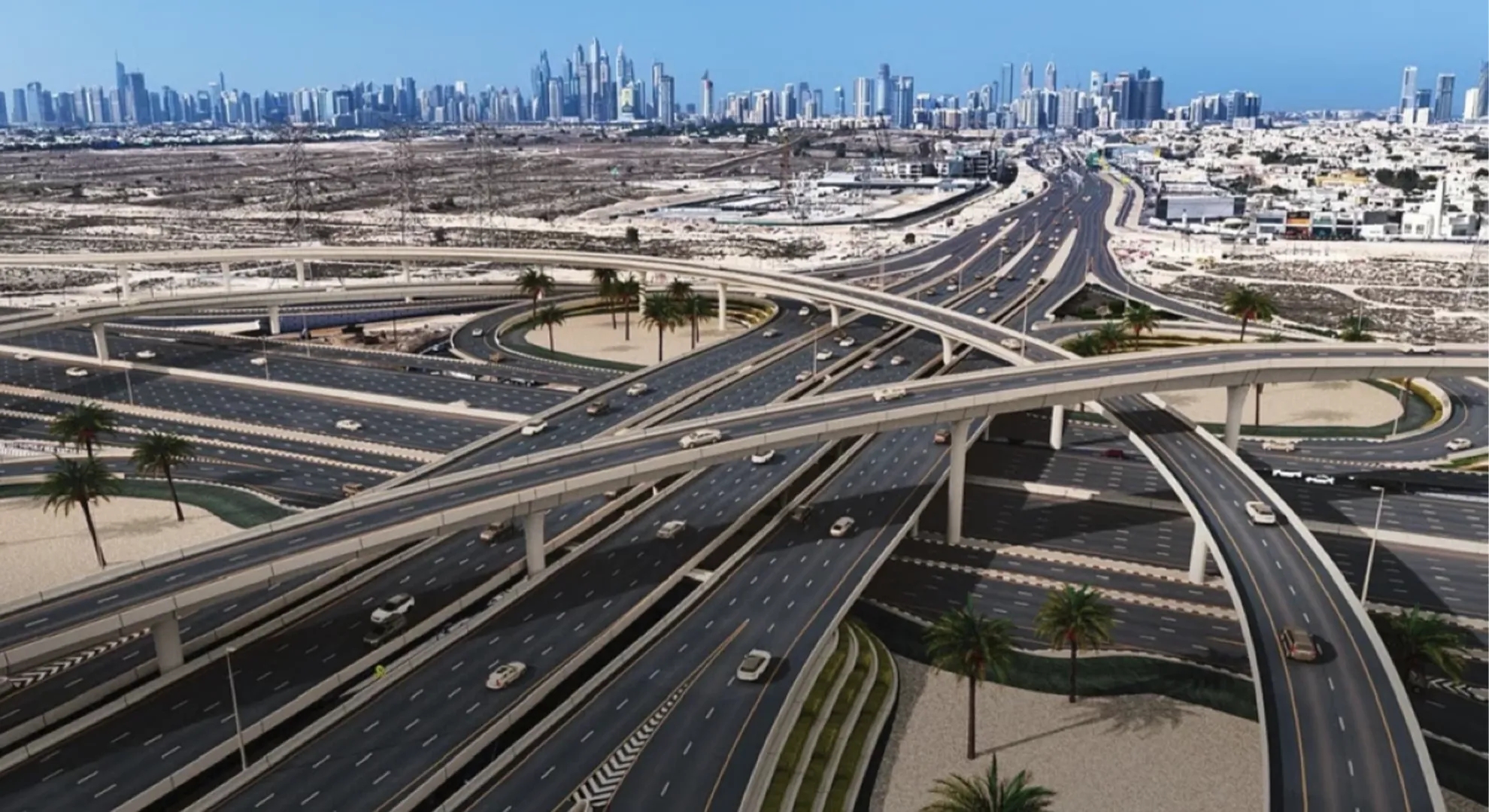
Connecting the emirates of Sharjah, Dubai, and Abu Dhabi, this modern transportation corridor drastically reduces driving durations, turning a thirty-five-minute commute into just fourteen minutes and shortening a fifty-minute trip down to twenty-four minutes.
Transforming UAE Infrastructure: An In-Depth Look at Dubai’s Strategic Fourth Corridor Highway Project
As the United Arab Emirates continues to expand its world-class infrastructure to accommodate rapid urban growth and economic dynamism, major transportation initiatives frequently capture public attention. Among the most transformative developments currently on the horizon is Dubai’s ambitious Fourth Corridor project—an 80-kilometer strategic highway network engineered to dramatically reshape regional connectivity, ease traffic congestion, and slash commute times across multiple emirates.
The Evolution of the Fourth Corridor: Project Scope and Phasing
Designed to serve as a vital arterial link connecting Sharjah, Dubai, and Abu Dhabi, the newly detailed corridor is officially designated as the “Fourth Corridor.” This title reflects its historic role as the fourth major strategic road axis spanning the UAE’s interconnected emirates, following in the footsteps of established lifelines such as Sheikh Zayed Road and Al Ittihad Road, Sheikh Mohammed bin Zayed Road, and Emirates Road.
To manage construction complexity and ensure seamless integration with existing roadways, civil engineering plans dictate that the expansive 80-kilometer route will be executed across two distinct, highly sophisticated phases:
- Phase One: Stretching approximately 30 kilometers from Al Shnouf Road in Sharjah down to the Dubai-Al Ain Road. This initial segment is projected to directly benefit an estimated 600,000 residents and commuters.
- Phase Two: Spanning an impressive 50 kilometers from the Dubai-Al Ain Road onward to Al Fayah Road in Abu Dhabi. Upon completion, this secondary segment is engineered to cater to approximately 3.1 million people.
Both construction phases are designed with immense scale and vehicular capacity in mind. Each section of the corridor will feature a total of 12 lanes distributed evenly across both directions, providing a massive throughput capable of accommodating up to 24,000 vehicles every single hour.
Dramatic Reductions in Commuting Durations
The primary driving force behind the Fourth Corridor initiative is the alleviation of traffic bottlenecks and the dramatic reduction of travel times for daily commuters and commercial transporters alike. Preliminary traffic modeling and project specifications indicate that motorists utilizing the route can anticipate time savings exceeding fifty percent across major segments:
- Sharjah to Dubai-Al Ain Road Segment: Motorists traveling along the initial 30-kilometer phase will experience a staggering 60 percent reduction in journey duration. A commute that traditionally required 35 minutes under standard traffic conditions will be compressed into a rapid 14-minute drive.
- Dubai-Al Ain Road to Abu Dhabi Segment: The subsequent 50-kilometer stretch linking deeper into Abu Dhabi’s road network will see travel times drop by 52 percent. A journey that previously averaged 50 minutes will be streamlined down to a mere 24 minutes.
These efficiency gains are achieved through high-speed design geometries, minimized intersections, and optimized traffic flow management, ensuring that inter-emirate transit becomes faster, safer, and more reliable.
Strategic Inter-Emirate Connectivity and Route Geography
Beyond connecting Sharjah, Dubai, and Abu Dhabi, the Fourth Corridor’s geographic trajectory has been strategically mapped to intersect and support several of the region’s most critical economic, logistical, and environmental landmarks.
As the highway traverses the landscape, it passes in close proximity to:
- Al Maktoum International Airport, supporting future aviation and cargo growth.
- Al Marmoom Nature Reserve and the Desert Wildlife Reserve, demonstrating careful infrastructure planning around ecological zones.
- The Etihad Rail Route, facilitating multi-modal freight and passenger integration.
Furthermore, the corridor provides direct access and enhanced transport links to numerous burgeoning residential communities and master-planned developments, including Madinat Latifa, Madinat Hind, Al Yalayis, Al Awir, and the expansive Dubailand district.
Supporting Future Urban Expansion and Economic Logistics
Transport authorities and urban planners have emphasized that the Fourth Corridor is much more than a simple commuter bypass; it is a foundational pillar for future national development.
By tying seamlessly into the broader federal road network, the highway is explicitly purposed to:
- Facilitate Future Urban Growth: Accommodating expanding suburban zones and population centers as the emirates continue to develop southward and eastward.
- Enhance Multi-Modal Integration: Bridging the gap between highway transport, rail logistics, and aviation hubs.
- Bolster Commercial and Logistics Sectors: Providing heavy freight carriers and commercial transport fleets with a high-capacity, uncongested route to move goods efficiently across the country.
As development progresses, the Fourth Corridor stands as a testament to the UAE’s proactive approach to infrastructure engineering, promising a future where inter-emirate travel is swift, sustainable, and capable of supporting millions of residents for decades to come.
Comprehensive Infrastructure Expansion: Dubai-Al Ain Road Widening, Urban Truck Decongestion, Massive Engineering Tonnages, and Multi-Billion-Dirham Investment
As the overarching framework of Dubai’s transformative Fourth Corridor project continues to unfold, transportation authorities have unveiled extensive secondary upgrades and civil engineering specifications designed to complement the primary highway. Beyond establishing new inter-emirate routes, the master plan incorporates critical capacity expansions, targeted freight rerouting strategies, and monumental structural milestones that underscore the emirate’s commitment to world-class mobility.
Expanding the Dubai-Al Ain Road: Lane Additions and Intersection Upgrades
A cornerstone of the initial development phase involves targeted enhancements to existing arterial networks. Specifically, the crucial stretch of the Dubai-Al Ain Road located between Emirates Road and Lehbab Road is undergoing a substantial capacity upgrade.
To prevent bottlenecks where the new corridor intersects legacy routes, the Dubai-Al Ain Road is being widened from three lanes to four lanes in each direction. This physical expansion is coupled with the comprehensive redesign and modernization of four major intersections within the zone. These enhancements ensure that traffic merging from the new corridor can transition smoothly into existing urban and suburban thoroughfares without creating sudden congestion points.
Diverting Heavy Freight Away from Dense Urban Corridors
One of the most strategic environmental and safety objectives of the Fourth Corridor project is the systematic redirection of heavy vehicle traffic away from populated residential sectors.
According to official statements from the Roads and Transport Authority (RTA), the implementation of the new highway network will allow authorities to successfully divert through-traffic—particularly heavy commercial trucks—around urban zones rather than through them. This logistical shift delivers a dual benefit:
- Enhanced Road Safety: Removing massive freight vehicles from inner-city arteries significantly reduces accident risks and lowers interaction points between passenger cars and heavy commercial transport.
- Infrastructure Preservation: Minimizing heavy truck volume on legacy municipal streets reduces wear and tear on local asphalt, lowering long-term maintenance costs and traffic friction.
Furthermore, this optimized routing directly supports the UAE’s broader economic vision by strengthening commercial transport efficiency, streamlining freight transit times, and reinforcing Dubai’s status as a leading global logistics hub.
Monumental Civil Engineering: Bridges, Tunnels, and Drainage Networks
The sheer scale of the Fourth Corridor initiative is reflected in its staggering engineering requirements. To navigate complex terrain, traverse existing transport arteries, and manage environmental factors across both construction phases, the project incorporates massive structural investments:
- Bridges: A total of 72 bridges will be constructed across the entire length of the corridor.
- Tunnels: 17 tunnels will be bored or excavated to maintain continuous traffic flow without surface-level interruptions.
- Stormwater Drainage: 45 stormwater drainage culverts are integrated into the master design to ensure robust flood mitigation and environmental protection.
Phased Structural Breakdown
The engineering workload is distributed across the two implementation phases with precise allocation:
- Phase One (Al Shnouf Road to Dubai-Al Ain Road):
- Approximately 55 lane-kilometres of new surface roads.
- Roughly 2.5 kilometres of specialized tunnels.
- An extensive network of 21 kilometres comprising bridges and elevated ramps.
- Phase Two (Dubai-Al Ain Road to Al Fayah Road):
- Approximately 190 lane-kilometres of advanced surface roadways.
- Roughly 3.5 kilometres of subterranean tunnels.
- A massive infrastructure network totaling 157 kilometres of bridges and ramps.
Financial Investment and Economic Commitment
Given the monumental scope, geographic span, and intricate engineering demands of the project, construction has been deliberately structured into phased rollouts to ensure fiscal and operational precision.
The financial investment required to bring this vision to life is substantial. The initial phase—stretching from Al Shnouf Road to the Dubai-Al Ain Road—carries an estimated capital expenditure of Dh3.5 billion. This heavy financial commitment illustrates the government’s proactive stance on infrastructure development, ensuring that national transportation networks remain decades ahead of population growth and commercial expansion.
As these engineering milestones are achieved, the Fourth Corridor will stand not only as a marvel of modern civil design but as a vital economic engine propelling the UAE toward an interconnected, highly efficient future.