Abu Dhabi Hunting Rules Explained: Discover the designated locations, permitted wildlife species, seasonal restrictions and official permits required before taking part in hunting activities across the emirate.
Abu Dhabi Hunting Guide: Where You Can Hunt, What You Can Hunt and the Licences You Need.
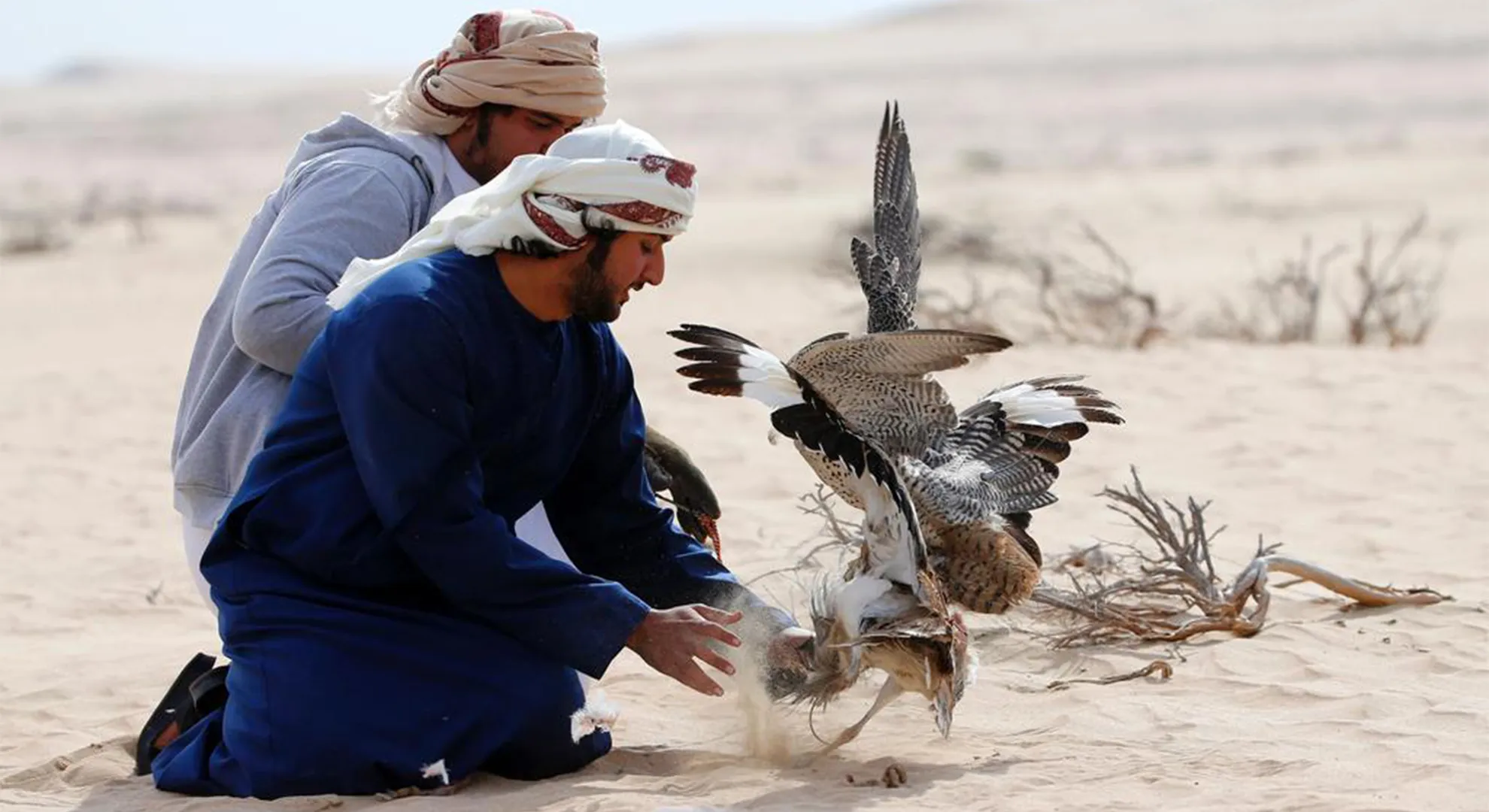
Owning a firearm with a valid licence does not automatically give anyone permission to hunt in Abu Dhabi’s desert. Hunting wildlife is subject to separate regulations, approved locations, permitted species and additional authorisations that must be obtained before any hunting activity.
Abu Dhabi hunting rules: What hunters need to know
Hunting in Abu Dhabi is governed by a set of rules that depend on several factors, including the type of hunting, the species involved, the location and the equipment being used. Simply having access to a legal hunting method does not mean wildlife can be pursued anywhere across the emirate.
The regulations distinguish between different forms of hunting and the places where those activities may take place. Traditional falconry, for example, is subject to its own licensing requirements and location restrictions, while organised or managed hunting activities operate under separate arrangements.
For those interested in traditional falconry, the upcoming 2026-27 season is particularly important. The Environment Agency – Abu Dhabi (EAD) has made its hunting licence service available through the TAMM platform ahead of the start of the season, giving eligible falconers an opportunity to complete the necessary procedures in advance.
The 2026-27 traditional hunting season is scheduled to begin on October 20, 2026, and continue until February 15, 2027.
The availability of the licensing service means eligible applicants can secure their permits before heading out to authorised hunting areas. The system is designed to ensure that traditional hunting is conducted within the environmental and legal framework established by Abu Dhabi authorities.
Traditional falconry is regulated
Falconry has a long-standing cultural and traditional importance in the UAE, but participating in the activity does not mean hunters are free to pursue any wild animal they encounter.
Traditional terrestrial hunting, including falconry, is regulated by EAD under Abu Dhabi’s applicable hunting laws and regulations. Under the current guidance provided by the authority, licensed falconers are permitted to hunt captive-bred houbara bustards.
This distinction is important because the presence of a hunting licence does not provide general permission to capture or pursue wildlife.
EAD’s guidance states that hunting wild animals, birds and reptiles, as well as disturbing them, is prohibited under the relevant regulations. Consequently, falconers operating under the traditional hunting licensing system must remain within the permitted scope of the activity.
The rules are intended to protect Abu Dhabi’s wildlife and natural habitats while allowing regulated traditional hunting to continue.
Anyone planning to participate in falconry during the forthcoming season should therefore understand the conditions attached to the licence before beginning a hunting trip.
When does the 2026-27 season begin?
The next traditional hunting season is set to run from October 20, 2026, through February 15, 2027.
This means hunting under the traditional falconry system is not an activity that can be undertaken throughout the year. Participants must operate within the officially designated seasonal period.
The EAD hunting licence service became available through TAMM on August 28, coinciding with the opening day of ADIHEX 2026. The early launch provides eligible falconers with time to apply for and obtain the required licence before the season gets under way.
For hunters, the timing is important because possessing a valid permit is a prerequisite for participating in regulated traditional hunting during the authorised season.
How much does the licence cost?
The traditional hunting licence is priced at Dh127 for the season.
The fee is based on Executive Council Chairman Decision No. 88 of 2025. The permit is issued for a specific hunting season rather than serving as an open-ended authorisation.
This seasonal structure means hunters need to ensure that their licence corresponds with the period in which they intend to participate.
Anyone planning to take part should also be aware that the licence comes with conditions. Obtaining the permit is only one part of complying with Abu Dhabi’s hunting regulations. Hunters must also follow the rules concerning eligible participants, falcon registration, hunting locations, timing and environmental protection.
Falconry licensing has been in place for years
The current licensing system is not a newly introduced arrangement.
EAD reports that more than 12,108 falconry permits were issued during the first five regulated hunting seasons, covering the period from 2021-22 through 2025-26.
The figures demonstrate the scale of participation in regulated falconry and the role that licensing has played in managing traditional hunting activities.
The permit system provides authorities with a mechanism to regulate participation while establishing clear conditions for hunters. It also helps ensure that traditional practices are carried out within the broader framework of wildlife conservation and environmental protection.
Who is eligible to apply?
Not everyone can apply for the traditional hunting licence.
According to EAD’s stated requirements, the licence is intended for UAE citizens who are at least 18 years old.
Applicants must meet the eligibility conditions before they can participate in the regulated traditional hunting system. Age and citizenship are therefore key requirements for anyone considering an application.
The rules also apply to the birds used during hunting. Falcons participating in hunting activities must be registered with the appropriate federal authority.
This registration requirement is separate from the hunter’s own licence and forms part of the regulatory framework surrounding falconry.
Hunters should make sure that their birds have the necessary registration before attempting to use them for an authorised hunting activity.
The permit belongs to the licensed hunter
A traditional hunting licence is issued to an individual and cannot simply be passed to another person.
The permit is non-transferable. In practical terms, a licensed falconer cannot hand the licence to a friend, relative or another participant and allow that person to hunt under the same authorisation.
This requirement helps ensure that hunting activities remain linked to the individual who has been approved by the authorities.
The licence must also remain in the possession of the hunter while participating in hunting activities. If requested, the permit must be presented to the competent authority or other relevant bodies.
Hunters should therefore carry the licence with them whenever they are engaged in authorised hunting.
Failure to comply with the documentation requirements can create problems even where a person believes they are otherwise participating legally.
A licence does not allow hunting everywhere
One of the most important points for falconers to understand is that a valid hunting licence does not provide unrestricted access to Abu Dhabi’s landscape.
The location where hunting takes place is an important part of the regulations.
EAD states that traditional falconry can be conducted in open wilderness areas, but hunters must observe specific distance requirements and avoid designated prohibited or restricted locations.
Falconers are required to remain at least 2km away from main and secondary roads. They must also stay away from locations where hunting is prohibited or restricted.
The distance rule is designed to separate hunting activity from roads and other sensitive areas and forms part of the conditions that hunters must observe when selecting a location.
Consequently, someone who has obtained the necessary permit still needs to check whether a particular area is authorised before beginning a hunting trip.
Areas where hunting is restricted
Several categories of land are excluded from traditional falconry under the applicable rules.
These include natural reserves and protected areas, where wildlife and ecosystems are subject to additional protection.
Forested areas are also among the locations where falconry is restricted. Residential neighbourhoods are another prohibited setting, reflecting the need to separate hunting activities from populated areas.
Petroleum facilities are similarly excluded. Given the nature of such sites, hunting activities around oil and gas infrastructure could create significant safety and operational concerns.
Military facilities are also subject to restrictions, as are other areas that have been formally classified as prohibited or restricted.
The restrictions mean that hunters need to consider more than simply whether an area appears to be open desert or wilderness. A location may look suitable for hunting but still fall within a category where the activity is not permitted.
The 2km rule matters
The requirement to stay at least 2km from main and secondary roads is another important consideration for anyone planning a traditional hunting trip.
Falconers cannot simply stop at the edge of a road and begin hunting because they have obtained a licence. They need to ensure that their chosen location satisfies the prescribed separation distance.
This condition applies alongside restrictions concerning protected areas, forests, residential zones, petroleum sites, military locations and other prohibited areas.
Understanding these geographical requirements before setting out can help hunters avoid accidentally entering an unauthorised location.
Hunting hours are limited
Traditional falconry is also subject to a time restriction.
Hunting is permitted only between sunrise and sunset.
This means that the authorised hunting period is limited to daylight hours. Falconers cannot continue hunting after sunset simply because they are operating within an otherwise permitted area.
The restriction provides a clear time boundary for the activity and forms another important condition attached to the traditional hunting system.
Hunters therefore need to plan their trips carefully around daylight hours and ensure that their activities remain within the permitted period.
Protecting vegetation is part of the rules
The regulations are not limited to the act of hunting itself.
Environmental protection is also an important component of the requirements.
Hunters are prohibited from driving over vegetation or causing damage to plant life. This condition reflects the broader objective of protecting Abu Dhabi’s natural landscapes and preventing hunting activities from causing unnecessary environmental harm.
The restriction is particularly relevant in desert and wilderness environments, where vegetation can play an important role in supporting local ecosystems.
Hunters should therefore take care when travelling through authorised areas and avoid damaging plants or natural habitats.
Cleanliness is also required
Maintaining the cleanliness of hunting locations is another obligation.
Littering at hunting sites is prohibited, meaning participants are expected to leave the areas they use in an environmentally responsible condition.
This requirement is consistent with the wider environmental purpose of the regulations. Hunting activities are expected to take place without creating additional damage or pollution in natural areas.
Falconers should therefore ensure that waste and other materials are not left behind after a hunting trip.
Why the rules are important
Abu Dhabi’s hunting regulations seek to balance traditional practices with wildlife conservation and environmental protection.
Falconry has deep cultural roots in the UAE, but modern wildlife-management requirements mean that the activity must be conducted within a controlled framework.
The licensing system provides authorities with a way to regulate who can participate, when hunting can take place and where it is permitted. Restrictions on species, locations, timing and environmental conduct further limit the potential impact on wildlife and natural habitats.
For hunters, this means that preparation is essential.
Before heading into the wilderness, participants need to establish that they are eligible for the licence, that their falcon meets the registration requirements and that they have obtained the correct seasonal permit.
They must then choose an authorised location, observe the 2km separation from main and secondary roads, remain outside prohibited areas and conduct hunting only between sunrise and sunset.
Environmental responsibilities also remain in force throughout the activity.
What hunters should check before setting out
Anyone planning to participate in traditional falconry during the 2026-27 season should consider several requirements before leaving for a hunting trip.
First, the individual must meet the eligibility criteria established by EAD. The current requirements specify UAE citizenship and a minimum age of 18.
Second, the hunter needs to obtain the relevant seasonal licence through the approved system.
Third, any falcon being used for hunting must have the required registration with the relevant federal authority.
Fourth, the hunting location must be checked carefully. A licence does not provide permission to hunt throughout Abu Dhabi. The activity must take place in an authorised open wilderness area and remain at least 2km from main and secondary roads.
Finally, hunters must observe the restrictions concerning protected areas, forests, residential locations, petroleum facilities, military sites and other prohibited or restricted zones.
They must also remain within the permitted daylight period and avoid damaging vegetation or leaving litter behind.
A regulated tradition rather than unrestricted hunting
The main takeaway for anyone interested in hunting in Abu Dhabi is that traditional falconry operates under a structured regulatory system.
Having a falcon, knowing how to practise the tradition or obtaining a hunting licence does not by itself provide unlimited permission to pursue wildlife.
The species that can be hunted, the places where hunting is allowed, the time of day during which it can take place and the environmental standards that must be followed are all defined by the applicable regulations.
For the 2026-27 season, eligible UAE citizens can apply for the traditional hunting licence ahead of the October 20 opening date. The permit costs Dh127 and remains valid for the specified season.
With the season scheduled to run until February 15, 2027, falconers have a defined period in which regulated traditional hunting can take place.
The existing licensing programme also shows that Abu Dhabi has been managing the activity through a formal permit system for several years. More than 12,108 permits were reportedly issued across the first five regulated seasons between 2021-22 and 2025-26.
For participants, compliance remains essential. A valid licence is only one part of the requirements. Hunters must also ensure that they use a properly registered falcon, target only the authorised quarry, select an approved location, maintain the required distance from roads, avoid restricted areas and operate only during permitted hours.
They are also responsible for protecting the surrounding environment by avoiding damage to vegetation and keeping hunting sites free from litter.
The regulations therefore place equal importance on lawful participation and responsible conduct.
As Abu Dhabi prepares for another traditional falconry season, understanding these requirements will be important for anyone planning to take part. The combination of licensing, seasonal limits, location restrictions and environmental safeguards is intended to ensure that the emirate’s traditional hunting practices continue in a controlled manner while supporting the protection of its wildlife and natural landscapes.
Understanding what happens to hunted houbara
The rules governing houbara hunting in Abu Dhabi are closely connected to the UAE’s long-running efforts to conserve the species. The fact that captive-bred houbara is the authorised quarry under the regulated traditional falconry system is part of a broader approach that seeks to protect wild populations while maintaining the country’s historic falconry tradition.
The UAE has invested heavily in houbara conservation over several decades. The International Fund for Houbara Conservation plays an important role in this effort, with its programmes focused on breeding birds, supporting their return to suitable natural environments and supplying birds for carefully managed hunting activities.
Ali Al Shamsi, project manager at the International Fund for Houbara Conservation, said the organisation operates captive-breeding programmes and releases houbara into their natural habitats. It also provides birds for controlled hunting programmes carried out in designated reserves.
According to Al Shamsi, the organisation produces between approximately 90,000 and 100,000 houbara each year through its network of breeding centres in the UAE and other countries.
The birds produced through these programmes are ultimately returned to their natural ranges as part of the wider conservation effort.
A conservation programme with decades of history
The UAE’s involvement in houbara conservation dates back several decades.
Al Shamsi said the country’s conservation programme began in 1977 under the late Sheikh Zayed. The initiative was subsequently expanded with the establishment of the National Avian Research Centre in Sweihan in 1989.
The centre was established to conduct research into houbara, develop breeding programmes and support efforts to release birds into appropriate natural habitats.
Over the years, the programme has developed into a large-scale conservation initiative involving research, captive breeding and releases.
The approach reflects an attempt to address two objectives at the same time: supporting the long-term survival of the houbara population and preserving falconry, a traditional activity in which the bird has historically been an important quarry.
This relationship between conservation and falconry is an important part of understanding why captive-bred houbara is used in regulated hunting programmes.
Rather than allowing unrestricted hunting of wild houbara, the controlled system provides birds through dedicated breeding and conservation programmes.
How the houbara breeding programme works
The breeding process used by the conservation programme relies on controlled breeding and artificial incubation.
According to Al Shamsi, the programme does not depend on cloning or genetic engineering. Instead, the objective is to reproduce birds through breeding techniques that take account of natural environmental and genetic characteristics.
Artificial incubation allows conservation teams to manage the early stages of development under controlled conditions. This forms part of a wider breeding strategy designed to produce healthy birds that can subsequently be released or used within authorised conservation and hunting programmes.
The scale of the programme is significant, with annual production estimated at roughly 90,000 to 100,000 houbara across the organisation’s breeding centres.
The birds are not simply produced for hunting. A major component of the programme involves releasing houbara into suitable natural habitats and supporting the species across its wider range.
This means the regulated hunting model exists alongside a much broader conservation operation.
Why captive-bred birds are used
The use of captive-bred houbara is central to the controlled hunting model.
Traditional falconry has a long association with the houbara, but unrestricted hunting of wild birds could place additional pressure on naturally occurring populations.
Using birds produced through breeding programmes provides a more controlled alternative.
The system allows authorised hunting experiences to continue while reducing the need to target wild houbara populations. It also creates a connection between the conservation programme and regulated hunting activities.
For hunters, this distinction is important. The rules do not provide a general licence to pursue wild houbara or other wildlife in the desert.
Instead, the authorised quarry under the traditional hunting system is captive-bred houbara, subject to the applicable licensing and location requirements.
Hunting in a designated reserve
Not everyone looking for a hunting experience necessarily wants to travel into the open desert under the traditional falconry licensing system.
Abu Dhabi also has designated hunting reserves where activities are organised and managed within a specific setting.
One example is Al Marzoom Hunting Reserve in Al Dhafra.
The reserve covers approximately 200 square kilometres and offers visitors the opportunity to experience traditional forms of UAE hunting in a controlled environment.
The activities include hunting with falcons and Salukis, reflecting two traditional elements of hunting culture in the region.
The reserve’s model differs significantly from unrestricted hunting because the activity is organised around managed and controlled quarry rather than the pursuit of wild animals throughout the desert.
What can be hunted at Al Marzoom?
The hunting programme at Al Marzoom includes houbara, rabbits and other authorised quarry.
The animals involved in these activities are supplied through breeding and conservation programmes, creating a managed source of quarry for the reserve.
This arrangement is designed to provide a traditional hunting experience while keeping the activity within a controlled framework.
The reserve therefore operates differently from open wilderness areas, where licensed traditional falconers are subject to EAD’s specific regulations governing where and how they can hunt.
Visitors to Al Marzoom can take part in a structured experience rather than independently deciding where to travel and what wildlife to pursue.
Firearms are not part of the traditional Al Marzoom experience
An important feature of the traditional hunting programme at Al Marzoom is that firearms are not used.
Instead, the experience centres on traditional hunting methods involving falcons and Salukis.
For visitors, this provides an opportunity to experience an aspect of the UAE’s hunting heritage in an organised setting without independently taking a firearm into the desert.
The distinction also demonstrates that hunting opportunities in Abu Dhabi are not governed by a single set of rules.
Different activities operate under different arrangements depending on the location, equipment, quarry and nature of the experience.
What if you want to hunt with a firearm?
Firearm hunting raises an entirely separate regulatory issue.
One of the most important points for anyone considering this type of activity is that a firearm licence and permission to hunt wildlife are not the same thing.
A person may legally possess a firearm under the applicable weapons regulations, but that does not automatically give them permission to use it to hunt animals in Abu Dhabi.
The two areas are regulated separately.
UAE firearms legislation addresses matters such as the possession, acquisition and carrying of firearms. Environmental rules, meanwhile, govern the protection and hunting of wildlife.
Therefore, obtaining the appropriate authorisation for a firearm does not automatically satisfy the requirements for hunting wildlife.
This distinction is particularly important for people who may assume that purchasing or licensing a hunting rifle gives them permission to use it in the desert.
It does not.
A controlled firearm-hunting option at Telal
For people interested in a managed firearm-hunting experience, Barari Hunting and Falconry at Telal Resort provides a different model.
The facility offers organised hunting activities under controlled conditions rather than allowing visitors to bring their own firearms and independently search for game.
Saif Al Salih, hunting manager at Barari Hunting and Falconry, said the experience is open to participants aged over 18. Younger participants may also take part when appropriately supervised.
One of the main features of the experience is that visitors do not need to supply their own hunting firearms.
According to Al Salih, Telal provides the firearms, vehicles and professional supervision required for the activity.
This creates a structured environment in which participants can take part in firearm hunting without independently transporting and using their own weapons in the desert.
The quarry is also controlled
The restrictions at Telal extend beyond the equipment used.
The animals available for hunting are captive-bred rather than wild animals taken from the surrounding desert, according to Al Salih.
This is another major difference between a managed hunting experience and unrestricted hunting.
The quarry is provided within a controlled system, while the hunting activity itself takes place under professional supervision.
The hunting of animals at the reserve is also conducted under the oversight of the Environment Agency – Abu Dhabi.
This combination of controlled quarry, managed facilities, professional supervision and environmental oversight creates a very different experience from simply taking a firearm into an open wilderness area.
Can a hunting rifle bought at ADIHEX be used immediately?
The answer is no.
The Abu Dhabi International Hunting and Equestrian Exhibition, or ADIHEX, has its own procedures governing the sale and purchase of hunting firearms.
However, purchasing a firearm through an authorised process does not automatically grant permission to hunt wildlife.
These are separate legal questions.
The weapons licensing framework deals with the firearm and the conditions surrounding its possession, acquisition and use. Wildlife regulations determine whether a person can hunt, what they can hunt, where they can hunt and which methods are permitted.
As a result, someone who purchases a hunting rifle at the exhibition cannot simply take that firearm into the Abu Dhabi desert and begin hunting.
The purchase of the equipment and the legal authorisation to hunt wildlife are distinct matters.
Anyone considering hunting activities must therefore ensure that they satisfy both the relevant weapons requirements and any environmental regulations applicable to the specific hunting activity.
Rules governing hunter behaviour
Abu Dhabi’s hunting regulations also cover the conduct of hunters.
Compliance does not end once a person has obtained a permit or entered an authorised area.
Hunters are required to carry their permits and follow the conditions attached to them.
They must also avoid disturbing wildlife and take care not to damage the surrounding environment.
These provisions reflect the broader purpose of the regulations: allowing traditional hunting to continue while limiting its impact on wildlife and habitats.
The rules therefore address not only what can be hunted but also how the activity is carried out.
Prohibited hunting practices
Certain practices and equipment are specifically identified as violations.
EAD has highlighted the use of devices designed to imitate bird calls as an example of prohibited activity.
Such equipment can potentially attract or concentrate birds in a particular location, giving hunters an artificial advantage.
Traps are also among the practices identified by the authority as violations.
The restrictions are intended to prevent hunting methods that could create excessive pressure on wildlife or undermine the controlled nature of the hunting system.
The overall approach is based on managing the activity rather than allowing hunters to use whatever methods they choose.
Why hunting is divided into different categories
For anyone unfamiliar with Abu Dhabi’s rules, the easiest way to understand the system is to separate hunting opportunities into different categories.
The first category is traditional falconry in authorised open wilderness areas.
This activity is available to eligible UAE falconers who have obtained the required licence. Under the current rules, the authorised quarry is captive-bred houbara, and hunters must comply with restrictions governing locations, timing and conduct.
The second category is organised traditional hunting at designated reserves such as Al Marzoom.
This model offers a more controlled environment, with activities involving falcons and Salukis and managed quarry such as houbara and rabbits. Firearms are not part of this traditional hunting experience.
The third category involves managed firearm hunting, such as the experience offered at Telal.
In this case, participants use firearms supplied by the facility rather than bringing their own. Vehicles and professional supervision are also provided, and the quarry is captive-bred rather than wild.
These different models mean that the rules applicable to one type of hunting should not automatically be assumed to apply to another.
Open wilderness does not mean unrestricted hunting
The phrase “open wilderness” should not be interpreted as meaning that hunters can freely pursue wildlife across any desert area.
Even licensed falconers must comply with geographical restrictions.
Traditional hunting in authorised wilderness areas is subject to the requirement that hunters remain at least 2km away from main and secondary roads and stay outside prohibited or restricted locations.
Protected areas, natural reserves, forests, residential locations, petroleum facilities and military sites are among the areas subject to restrictions.
Other locations may also be classified as prohibited or restricted.
Consequently, planning a hunting trip requires more than simply obtaining a licence.
Participants need to understand where the activity is legally permitted and ensure that their chosen location meets all applicable requirements.
Timing is another important consideration
Traditional falconry is also limited to daylight hours.
Hunting under this system can take place between sunrise and sunset.
This restriction means that participants need to organise their activities around the authorised period rather than treating the permit as permission to hunt at any time of day.
Together, the location and timing rules establish clear boundaries around traditional hunting.
Environmental responsibilities remain in place
The regulations also place responsibilities on hunters to protect the environment.
Driving across vegetation or damaging plant life is prohibited. Participants are expected to avoid causing unnecessary harm to the landscape while travelling through authorised hunting areas.
Keeping hunting sites clean is another requirement.
Littering is not permitted, meaning hunters are expected to remove their waste and leave the area in an appropriate condition.
These rules are important because the objective of regulated hunting is not simply to control the number of people participating. It is also intended to minimise the environmental impact of the activity.
A system built around controlled hunting
Taken together, Abu Dhabi’s hunting arrangements show a clear emphasis on controlled and regulated activity.
Traditional falconry continues to have a place within the emirate, but it operates through a licensing system with defined eligibility criteria, seasons, quarry and geographical restrictions.
At the same time, designated reserves provide structured experiences for people who want to participate in traditional hunting without independently organising an open-desert hunt.
Managed facilities also offer firearm-based experiences under controlled conditions, using facility-provided equipment and captive-bred quarry.
The distinction between these activities is important because there is no single licence that automatically permits every type of hunting.
A traditional falconry permit does not amount to a general wildlife-hunting authorisation. Similarly, a firearm licence does not provide permission to hunt wildlife.
Each activity must be considered according to its own rules.
What prospective eligible UAE citizens aged 18 or older need the appropriate seasonal licence, while the falcons used must hunters should remember
Anyone considering hunting in Abu Dhabi should establish exactly which type of activity they want to participate in before making arrangements.
For traditional falconry, eligible UAE citizens aged 18 or older need the appropriate seasonal licence, while the falcons used must be registered with the relevant federal authority.
For the 2026-27 season, the traditional hunting period runs from October 20, 2026, to February 15, 2027. The seasonal licence costs Dh127.
Those hunting in authorised open wilderness areas must observe the 2km distance requirement from main and secondary roads and remain outside prohibited and restricted locations.
They must also hunt only between sunrise and sunset and comply with environmental requirements.
For visitors seeking a more structured traditional experience, Al Marzoom provides organised hunting involving falcons and Salukis, with managed quarry and no firearms.
For those interested in firearm hunting, Telal’s managed experience follows a different model. Participants over 18 can take part, with younger participants permitted under supervision. The facility provides firearms, vehicles and professional oversight, while the available game is captive-bred and the activity is conducted under EAD supervision.
Most importantly, buying or legally possessing a firearm does not itself authorise wildlife hunting.
The bigger picture
Abu Dhabi’s hunting framework is ultimately designed to combine cultural tradition with wildlife management.
The houbara sits at the centre of that balance. The UAE has invested in large-scale breeding, research and release programmes for decades, while regulated hunting programmes use captive-bred birds rather than relying on unrestricted hunting of wild populations.
The conservation programme’s production of roughly 90,000 to 100,000 houbara each year across its breeding centres illustrates the scale of the effort.
From the early conservation initiative launched in 1977 under the late Sheikh Zayed to the establishment of the National Avian Research Centre in Sweihan in 1989, the programme has evolved into a major conservation operation.
Its objectives extend beyond supplying birds for controlled hunting. The programme also focuses on breeding, research and releasing houbara into their natural ranges.
For hunters, this means that participation takes place within a much larger conservation framework.
The current system is therefore not simply about deciding whether hunting is permitted or prohibited. Instead, Abu Dhabi differentiates between activities according to the species involved, the method used, the location and the level of supervision.
Understanding those distinctions is essential for anyone planning to participate.
Whether the interest is in traditional falconry, a managed experience at Al Marzoom or supervised firearm hunting at Telal, the applicable rules need to be followed.
A permit, where required, is only one element of compliance. Hunters must also respect restrictions on quarry, locations, timing, equipment and environmental conduct.
That regulated approach allows traditional hunting experiences to continue while placing clear limits on activities that could threaten wildlife, damage habitats or create safety concerns.
For anyone planning a hunting experience in Abu Dhabi, checking the specific requirements before participating is therefore essential. The safest assumption is not that a general hunting or firearm licence covers everything, but that each form of hunting has its own conditions and authorisations.
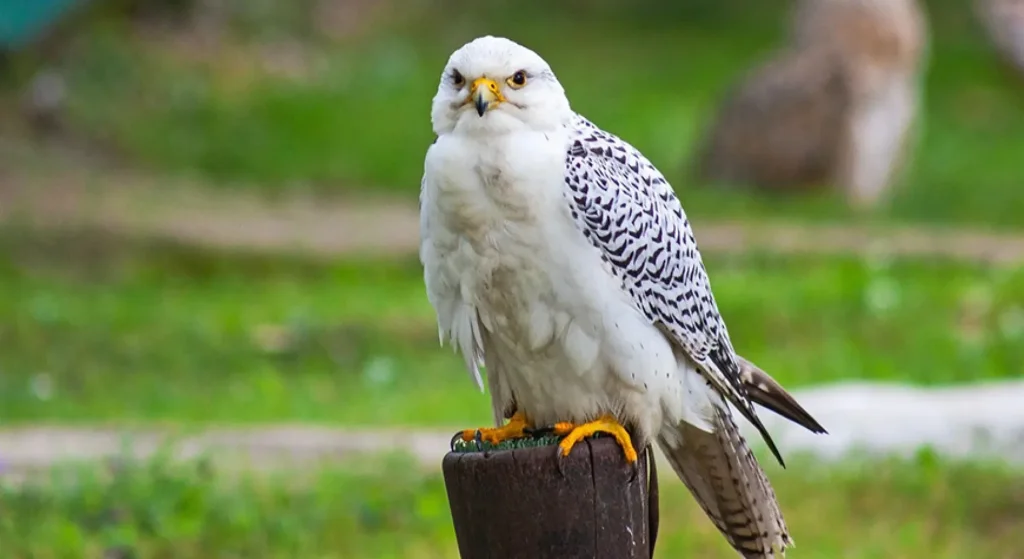
Telal Resort: A structured approach to hunting
For people looking for a more organised hunting experience in Abu Dhabi, Telal Resort offers an alternative to traditional hunting in open wilderness areas. Rather than requiring visitors to arrange their own equipment or bring personal firearms, the resort operates a managed system in which hunting takes place under controlled conditions.
The experience is designed to give members of the general public an opportunity to participate in different forms of traditional and modern hunting activities. These include firearm-based hunting as well as experiences involving falcons and Salukis, allowing participants to explore different elements of the UAE’s longstanding hunting culture within a supervised setting.
One of the most significant features of the firearm programme is that participants do not use their own licensed hunting guns. Instead, the firearms required for the activity are supplied by the reserve. Vehicles and professional supervision are also provided, creating a more structured environment for visitors who want to experience firearm hunting.
This arrangement is particularly important from a regulatory perspective. Having a personal firearm licence does not, by itself, mean that a person can take a weapon into the desert and hunt wildlife. The controlled model at Telal separates the ownership and licensing of firearms from the organised hunting experience.
Participants therefore take part within the framework established by the reserve rather than independently deciding where to hunt, which equipment to use or which animals to pursue.
Hunting under professional supervision
The presence of professional supervision is another defining characteristic of the Telal experience.
Instead of visitors being left to organise the activity themselves, the reserve provides the necessary support and oversight. This helps create a clearly managed environment in which participants can take part in hunting without having to independently navigate the various practical requirements associated with using firearms in the desert.
The use of reserve-owned equipment also provides an additional distinction from private firearm ownership.
A person who legally owns or possesses a firearm may still be subject to separate rules governing where and how that firearm can be used. Wildlife protection regulations and hunting requirements operate independently from firearms legislation.
Telal’s model provides a controlled alternative by ensuring that the firearms used during the experience are supplied as part of the organised programme.
Specific game rather than unrestricted wildlife hunting
The firearm-hunting programme is not intended to provide visitors with unrestricted access to wild animals.
The available game is limited to specific species supplied through controlled breeding programmes. These include animals such as oryx and reem gazelle.
This is an important feature of the operation because the animals are not simply taken from the surrounding desert as part of an open-ended hunt.
Instead, the programme relies on captive-bred game, allowing the reserve to manage the animals available for hunting.
The result is a hunting experience in which the quarry, equipment, location and method are all controlled.
For visitors, this provides a clearer understanding of what the activity involves before they participate. Rather than entering an open wilderness environment and deciding what wildlife to pursue, participants take part in a pre-arranged programme involving designated game.
How Telal differs from open-desert falconry
The Telal experience should not be confused with licensed traditional falconry conducted in authorised open wilderness areas.
Traditional falconry is governed by its own rules, including requirements concerning who can obtain a licence, which quarry is authorised, where hunting can occur and the times during which the activity is permitted.
Telal follows a different model.
The resort provides a managed setting for participants and supplies the equipment required for firearm hunting. The available animals are also controlled rather than being wild game encountered during an independent desert trip.
This distinction is useful for anyone trying to understand Abu Dhabi’s wider hunting framework.
There is no single system that applies equally to every hunting activity. The rules can differ according to the type of hunting, the location, the species involved and the equipment being used.
Traditional hunting remains part of the experience
Although firearms are used for some activities at Telal, the resort also offers experiences based on traditional hunting methods.
Falcons and Salukis form part of these activities, reflecting the cultural heritage associated with hunting in the UAE.
Falconry has a particularly strong historical connection with the region. Salukis have also traditionally been used in desert hunting, making both elements relevant to visitors interested in experiencing aspects of the country’s heritage.
By incorporating these methods into a managed setting, Telal provides visitors with an opportunity to experience hunting traditions without relying on unrestricted activity in the desert.
The controlled environment also allows participants to receive professional guidance and use facilities arranged specifically for the experience.
Why controlled hunting is different
The concept of controlled hunting is important because it provides a middle ground between traditional cultural activities and modern wildlife-management requirements.
Historically, hunting was closely connected to life in the desert and was carried out as part of the region’s traditional way of life. Today, wildlife populations, protected habitats and environmental concerns mean that hunting cannot simply operate without restrictions.
Modern regulations therefore place greater emphasis on controlling where hunting occurs, which species can be targeted and what methods can be used.
A managed facility such as Telal provides one way of accommodating hunting activities within that modern framework.
The reserve can determine the available quarry, provide the necessary equipment and oversee the activity. Participants can therefore take part in a hunting experience without assuming that general firearm ownership gives them unrestricted hunting rights.
Firearms and wildlife permissions are separate
One of the most important distinctions for prospective hunters is the difference between firearms licensing and wildlife-hunting authorisation.
A firearm licence concerns the legal possession, acquisition or carrying of a weapon. It does not automatically establish that the holder has permission to hunt animals.
Wildlife hunting is governed by environmental rules and other applicable regulations.
This means a person cannot reasonably conclude that purchasing a hunting firearm provides permission to use it for hunting anywhere in Abu Dhabi.
The same principle applies to firearms purchased through authorised channels or at specialised exhibitions.
The weapon itself may be legally acquired, but its use for hunting remains subject to separate rules.
Telal’s approach avoids this particular confusion by providing the firearms as part of the organised experience.
The importance of captive-bred game
The use of captive-bred animals is another significant aspect of controlled hunting.
Instead of relying on unrestricted hunting of naturally occurring wildlife populations, managed programmes can supply specific game for authorised activities.
At Telal, firearm hunting is focused on designated game such as oryx and reem gazelle.
This approach enables the hunting experience to take place within a predetermined framework. The reserve knows which animals are available, while participants are not given unlimited discretion over the wildlife they may pursue.
It also reflects the broader emphasis on managing the impact of hunting on wild populations.
A more accessible option for the public
Another feature of the Telal model is its availability to members of the general public.
Traditional licensed falconry in open wilderness areas is subject to specific eligibility requirements. The Telal experience, by contrast, is structured as an organised activity that allows members of the public to participate.
Participants generally need to be over 18 for the firearm experience, while younger individuals may participate under appropriate supervision.
This creates a distinction between taking part in an organised commercial hunting experience and obtaining a traditional hunting licence for independent activity.
Visitors who do not qualify for the traditional falconry licensing system may therefore have a different route to experiencing organised hunting activities through a designated facility.
Why visitors do not bring their own guns
Requiring participants to use reserve-provided firearms is a particularly important part of the controlled model.
Instead of visitors arriving with their personal weapons, Telal supplies the firearms used during the organised hunting experience.
The reserve also provides vehicles and professional supervision.
This arrangement allows the activity to remain within the operational framework of the facility. It reduces the need for participants to independently organise equipment and helps ensure that the hunting experience is conducted according to the reserve’s procedures.
It also reinforces the point that personal firearm ownership is not a substitute for permission to hunt wildlife.
A different type of hunting experience
For someone familiar with traditional hunting, the Telal model may look very different from travelling into the open desert.
There is no need for participants to independently identify suitable hunting locations or determine which animals may be pursued.
Instead, the activity is organised around a designated setting, approved equipment, specific game and professional supervision.
This makes the experience more predictable and structured.
It also provides an opportunity for people who are interested in hunting but may not have the experience or equipment required to organise an independent activity.
Conservation and controlled access
The broader purpose behind controlled hunting is to manage the interaction between hunting activities and wildlife.
Unregulated hunting can create pressure on animal populations and habitats. Establishing specific reserves and managed programmes allows authorities and operators to place limits on the number and type of animals involved.
Captive-bred game further separates the experience from unrestricted hunting of naturally occurring wildlife.
This does not mean that all hunting activities in Abu Dhabi operate under identical rules. Instead, it demonstrates how different models can exist within a wider regulatory framework.
Traditional falconry, reserve-based hunting and firearm experiences each have their own characteristics and requirements.
What prospective participants should understand
Anyone interested in hunting in Abu Dhabi should first identify which type of activity they are considering.
If the objective is traditional falconry in the open wilderness, the participant needs to consider the relevant EAD licensing requirements and restrictions.
If the preference is for a traditional hunting experience in a designated reserve, facilities such as Al Marzoom offer organised activities involving falcons and Salukis.
For people interested in firearm hunting, a managed operation such as Telal offers a different option, with the reserve supplying the firearms, vehicles and professional supervision.
The distinction is important because the legal conditions surrounding one activity should not be assumed to apply automatically to another.
The role of designated hunting reserves
Designated reserves also provide a way of concentrating hunting activities within specific areas rather than allowing them to spread across unrestricted landscapes.
By controlling the location and the available quarry, operators can create a defined environment for hunting experiences.
This model is particularly relevant in a country where wildlife conservation and habitat protection are increasingly important considerations.
The reserve-based approach also allows visitors to experience elements of traditional hunting culture while operating under modern management practices.
Balancing heritage and environmental protection
Ultimately, Abu Dhabi’s hunting framework reflects an attempt to balance two objectives.
The first is preserving the cultural heritage associated with hunting, falconry and Saluki traditions.
The second is protecting wildlife and natural habitats through stronger controls over hunting activities.
These objectives do not necessarily have to conflict.
With licensing, designated locations, controlled quarry and professional supervision, hunting can take place within a more structured environment.
The use of captive-bred animals is particularly significant because it reduces the reliance on wild populations for managed hunting experiences.
What the overall system means
The most important point is that hunting in Abu Dhabi is not governed by a simple yes-or-no rule.
Whether an activity is permitted depends on several factors, including the person participating, the licence they hold, the species involved, the location and the method of hunting.
A firearm licence addresses the legal status of the weapon. It does not automatically provide a wildlife-hunting permit.
Likewise, a traditional falconry licence comes with its own specific conditions and cannot be treated as a general authorisation to hunt any animal anywhere.
Managed facilities operate under a different model by controlling the equipment, quarry, location and supervision.
A regulated future for traditional hunting
Abu Dhabi’s approach demonstrates how traditional hunting can continue while being adapted to contemporary wildlife-management requirements.
For centuries, hunting has been closely connected with the region’s culture and heritage. Falconry and Saluki hunting remain important expressions of that history.
At the same time, the protection of wildlife requires clear boundaries.
The current system therefore places increasing emphasis on regulated participation rather than unrestricted hunting. Designated reserves, captive-bred game, licensing requirements and professional supervision all contribute to that approach.
For visitors, this means there are opportunities to experience hunting traditions without assuming that the open desert is available for unrestricted hunting.
Telal represents one of the more controlled options, particularly for people interested in firearm hunting. Participants use the reserve’s own firearms and vehicles and take part under professional supervision, with the activity focused on designated captive-bred game such as oryx and reem gazelle.
The model also offers traditional activities involving falcons and Salukis, providing visitors with a broader introduction to hunting traditions.
Ultimately, the key principle is that the method, location, quarry and authorisation all matter.
A legal firearm does not automatically make wildlife hunting legal. A hunting licence does not necessarily permit every form of hunting. And access to an open landscape does not mean every part of it can be used for hunting.
Instead, Abu Dhabi’s framework seeks to ensure that hunting takes place within clearly defined boundaries.
This approach allows traditional practices to remain part of the emirate’s cultural landscape while placing greater emphasis on wildlife protection, habitat conservation and responsible participation.
For anyone considering a hunting experience, understanding those distinctions before taking part is essential. Whether the choice is traditional falconry, a reserve-based activity or a supervised firearm programme, participants need to follow the rules applicable to that specific form of hunting.
The result is a system in which hunting remains possible, but under conditions designed to keep the activity controlled and compatible with the protection of Abu Dhabi’s wildlife and environment.