As students return to classrooms across the UAE, motorists are once again facing crowded roads and lengthy delays. The reopening of schools has brought a noticeable surge in traffic, with some short journeys taking around 40 minutes during busy morning hours.
UAE School Season Begins With Traffic Jams and 40-Minute Journeys.
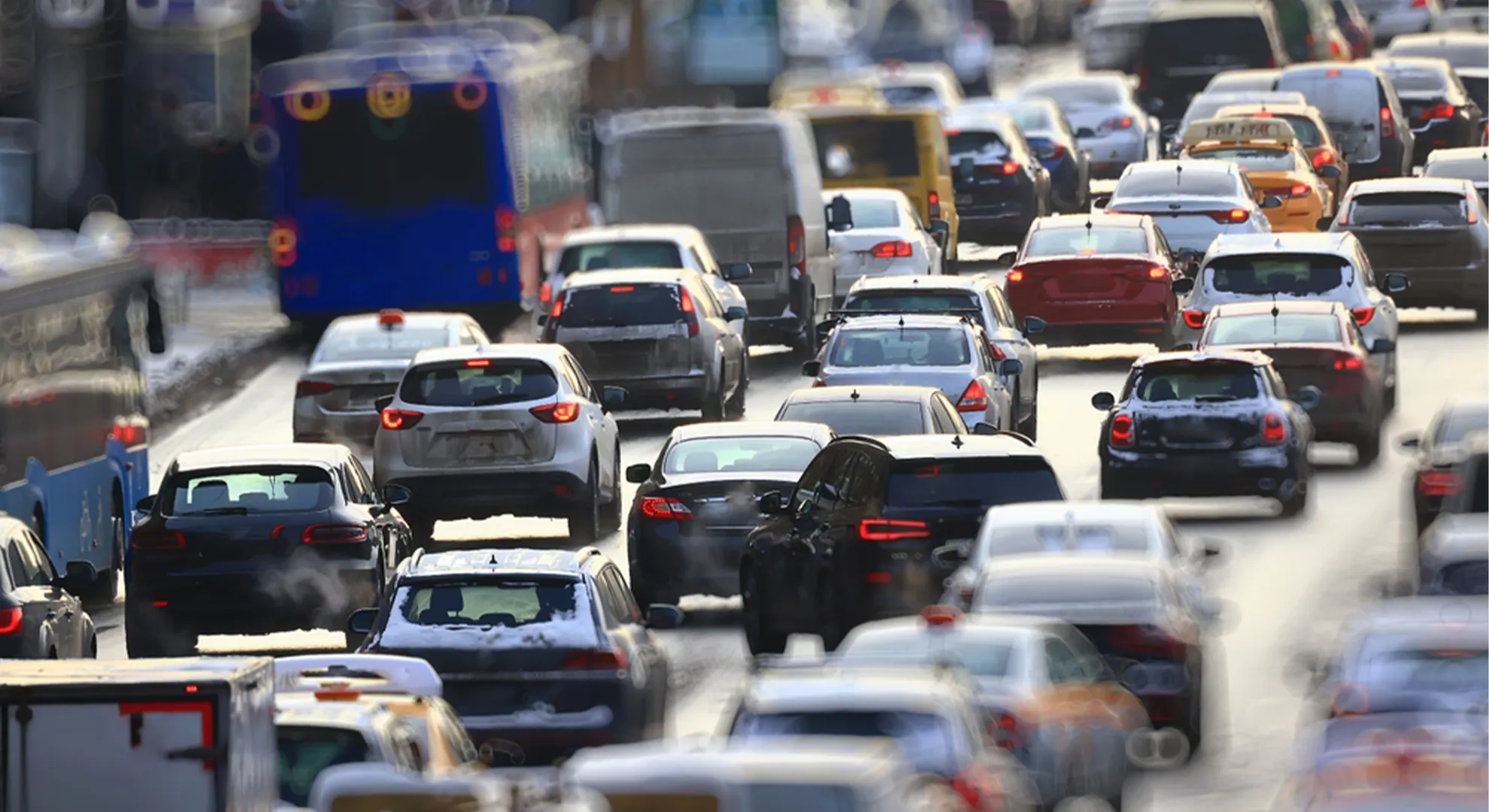
Heavy traffic has returned to Dubai, Ajman and Sharjah as parents settle into school routines for the new academic year. Morning rush-hour congestion is causing significant delays, making regular school commutes longer and adding extra travel time for families.
UAE School Reopening Brings Back Traffic Jams and Longer Commutes
The return of students to classrooms across the UAE has brought back another familiar feature of the new academic year: crowded roads and lengthy queues around schools.
As families settle into their new daily schedules, traffic volumes are once again increasing during the morning and afternoon rush. School drop-off and pick-up times are proving particularly challenging in several communities, as vehicles heading towards campuses coincide with the regular rush of employees travelling to and from work.
For parents, what may appear to be a short trip on the map can now take considerably longer. The reopening of schools has forced many families to leave home earlier and allow additional time for journeys, particularly during the busiest periods of the day.
School transport providers are also experiencing the effects of the seasonal increase in road traffic. Operators say the opening week has been noticeably busier as parents, students, teachers and school buses adapt to new timetables and routines.
Although traffic conditions are expected to become more manageable as motorists become accustomed to the new schedules, the first days of the academic year have once again highlighted the congestion that commonly develops around school zones.
Short journeys turning into lengthy commutes
For some families in Dubai, the additional travel time has been especially noticeable.
Dubai resident Arijit Nandi said his son travels home from school by bus each afternoon. While the school is only around 2km from their home, the journey can take approximately 40 minutes after classes finish.
His son’s school day ends at 3pm, but getting home is not simply a matter of covering the short distance between the school and the family’s residence.
“My son returns home by school bus. His school finishes at 3pm, but even though we live only about 2km away, it takes around 40 minutes for him to get home,” Nandi said.
The longer journey is partly explained by the school bus route, which involves dropping off several students at different locations before reaching Nandi’s home.
However, afternoon bus journeys are not the only concern. The morning school run is also being affected by increased traffic, particularly on roads immediately surrounding school campuses.
Nandi said his wife, who takes their son to school in the morning, has noticed significant queues developing near the campus. The situation is particularly evident around the U-turns leading towards the school in the Emirates Hills area.
The increase in traffic has become a noticeable part of the daily routine since schools reopened.
Nandi said motorists can clearly see the difference between the quieter roads during the school break and the much busier conditions once classes resume. Drop-off and pick-up periods, in particular, bring a familiar combination of queues, slow-moving vehicles and crowded roads.
Parents adjusting their daily schedules
For families with school-going children, dealing with traffic has become an important part of planning the day.
Parents often have to calculate additional travel time when deciding when to leave home, particularly if they need to reach work after dropping children at school.
The afternoon school run can create a similar challenge, as parents travelling to collect their children encounter vehicles arriving at schools at the same time.
In many residential communities, the increase in traffic is most obvious around school entrances, junctions, U-turns and nearby roads. Vehicles can build up quickly when large numbers of parents attempt to enter or leave the same area within a short period.
Parents living in Arabian Ranches have also noticed the return of heavier traffic following the reopening of schools.
Majd Hakim, whose daughter attends a nearby school, said the difference was immediately apparent once the new academic year began.
She described the increase in traffic around the community as a familiar development associated with the start of the school year.
“Now that schools are back, you can immediately feel the difference on the roads around Arabian Ranches, where we live,” Hakim said.
According to Hakim, the busiest periods are generally linked to the times when parents are dropping off or collecting their children. During these periods, vehicles can form long lines and move slowly through roads surrounding schools.
The situation means parents need to build extra time into their daily schedules.
“It’s a familiar part of the school routine every September, the roads get busier, and you have to factor in extra time for the school run,” Hakim said.
For families, this can mean adjusting morning wake-up times, leaving home earlier and allowing additional time for both the journey to school and the onward trip to work.
Traffic returns with school routines
The return of school traffic is closely linked to the broader daily movement of people across Dubai and other parts of the UAE.
During school holidays, roads around campuses can be noticeably quieter because large numbers of students, school buses and parents are no longer travelling at the same time each morning.
Once the academic year starts, however, thousands of families resume similar routines. Parents drive children to school, buses begin operating along fixed routes and staff members travel to campuses before the school day begins.
These movements overlap with the normal morning commute, creating additional pressure on roads during peak hours.
The afternoon can present another period of congestion as schools finish and families begin their journeys home, while office workers are also travelling during the later part of the day.
The result is that roads close to schools can experience substantial increases in traffic within relatively short periods.
School buses add to travel time
School transport is another factor affecting how long some journeys take.
Unlike a private car travelling directly between home and school, a school bus generally follows a route designed to serve multiple students.
That means a child living only a short distance from school may still spend considerably longer travelling home because the bus needs to make several stops.
For Nandi’s son, the approximately 2km journey from school to home can therefore take around 40 minutes.
The additional time is not necessarily caused entirely by congestion. The number of students using the same bus and the sequence of their drop-off points can also influence the duration of the trip.
Nevertheless, heavier road traffic during school hours can make these journeys even longer.
School transport operators have also reported increased activity during the opening week as buses return to their regular routes.
Ajman schools also experience heavier traffic
The increase in school-related traffic is not confined to Dubai.
Ajman has also seen heavier road activity around schools following the start of the academic year.
At Woodlem Park School in Al Jurf, transport in-charge Mujeeb said the first week brought more traffic than usual.
According to him, the additional congestion was particularly noticeable when school traffic coincided with the normal office-hour rush.
“The first week has seen heavier-than-usual traffic, with some rush during school and peak office hours,” he said.
However, the situation has already shown signs of improvement as families and staff become more familiar with their new schedules.
The initial days of a school year can often be among the most difficult from a traffic perspective. Families may still be getting used to new school timings, bus schedules, routes and drop-off arrangements.
Once these routines become established, traffic patterns can become more predictable.
Why the first week can be especially busy
The opening week of the academic year often brings a combination of factors that can make roads busier than normal.
Some parents may still be unfamiliar with the best routes to their children’s schools, while others may be trying different drop-off points or adjusting their departure times.
New students and families may also take longer to navigate school entrances and surrounding roads.
School buses can face similar challenges as operators become familiar with updated routes and student lists.
At the same time, parents may be travelling at slightly different times as they determine how much time is needed for the school run.
These small adjustments across thousands of households can have a noticeable impact on traffic.
The situation can be particularly pronounced in communities where several schools are located close to residential neighbourhoods.
When multiple campuses begin operating at similar times, surrounding roads can quickly become crowded with private cars, taxis and school buses.
Parents plan ahead
With school traffic now part of the daily routine again, parents are being forced to reconsider how they organise their mornings and afternoons.
For some, the solution is simply leaving home earlier.
Others may choose alternative routes to avoid the busiest roads around school entrances.
Families using school buses also need to account for longer journey times, particularly during the initial weeks of the academic year.
For parents who drive children to school and then continue to work, even a relatively small delay can have an impact on the rest of the morning.
A journey that normally takes 15 or 20 minutes can become considerably longer when traffic builds up around a school zone.
This is why parents such as Hakim say allowing extra time has become a necessary part of the school routine.
Congestion extends beyond school gates
While school entrances are obvious congestion points, the impact can extend to nearby roads and intersections.
Queues may begin several hundred metres away from a campus, particularly when vehicles are waiting to make turns or enter designated drop-off areas.
U-turns can also become bottlenecks when large numbers of motorists attempt to change direction within a short period.
In areas such as Emirates Hills and Arabian Ranches, residential roads can experience additional pressure during the busiest school periods.
The problem can be made worse when drivers stop temporarily to allow children to enter or exit vehicles.
Even a brief stop can affect the flow of traffic when many cars are attempting to use the same road simultaneously.
A familiar September challenge
For many UAE families, the return of school traffic is an expected part of the transition from the summer break to the academic year.
The quieter roads experienced during the holiday period can make the difference especially noticeable once schools reopen.
Parents who have become accustomed to shorter journeys during the summer may suddenly find themselves spending significantly longer on the road.
This creates a need for families to readjust their expectations and daily schedules.
The first few weeks can also be a period of trial and error as parents determine the most efficient times and routes for their school runs.
As routines settle, traffic may become easier to anticipate, although congestion around schools is likely to remain a regular feature during peak drop-off and pick-up periods.
The wider impact on daily life
School-related congestion does not affect only parents and students.
Motorists who do not have children at nearby schools can also encounter delays when their normal routes pass through school zones.
Office workers travelling during the morning peak may find themselves sharing roads with school buses and parents.
Residents living close to campuses can experience increased vehicle movement around their neighbourhoods during specific times of the day.
For businesses located near schools, the arrival and departure periods can also mean busier surrounding roads.
As a result, the return of school is not simply a change in the daily routine of students. It can influence traffic patterns across entire communities.
Families settle into the new academic year
Despite the initial congestion, school transport officials say conditions can improve as the academic year progresses and families become accustomed to their routines.
Parents gradually learn when to leave home, which roads to avoid and how long their children’s school journeys are likely to take.
Bus operators similarly become more familiar with routes and timings.
The result can be a more predictable traffic pattern compared with the first days of the school year.
However, the experiences of parents in Dubai and Ajman demonstrate that school reopening can have an immediate effect on travel times.
For families living close to schools, the return of students can turn previously quiet roads into busy corridors within a matter of days.
For others, the impact may be felt through longer school-bus journeys and additional time spent travelling home.
Back to school, back to traffic
The reopening of schools across the UAE has therefore brought back a familiar challenge for motorists: increased congestion during the busiest hours of the day.
In Dubai communities such as Emirates Hills and Arabian Ranches, parents are already reporting longer queues around school zones.
In Ajman, school transport operators have also noticed heavier traffic during the opening week, particularly when school movements coincide with office-hour traffic.
For families, the message is becoming familiar: the school year brings not only new classes, timetables and routines, but also a renewed need to plan journeys carefully.
As parents and schools settle into the academic year, traffic conditions are expected to become more familiar. Until then, motorists travelling through school areas may need to allow additional time and prepare for slower journeys, particularly during morning drop-offs and afternoon pick-ups.
For some families, a journey of just a few kilometres can once again take much longer than expected — making extra time on the clock an essential part of the daily school run.
School Traffic Eases as UAE Families Adjust to New Routines
Traffic conditions around schools in the UAE appear to be settling after the initial rush that accompanied the start of the new academic year.
The first few days of school often bring significant changes to road conditions, as thousands of students return to classrooms and parents resume their daily drop-off and pick-up routines. School buses also return to their regular routes, while teachers and other staff members begin travelling to campuses at the start and end of each school day.
In Ajman, school transport officials said the initial increase in congestion has been handled effectively, with traffic movement becoming progressively more orderly as parents and school employees become familiar with the new schedules.
The improvement is particularly noticeable as families establish consistent departure times and become more accustomed to the routes they need to take.
“However, the situation has been well managed, and traffic flow has gradually become smoother as families and staff settle into the new routine,” Mujeeb said.
Morning rush remains the biggest challenge
While traffic conditions have improved overall, the timing of school movements continues to have a significant influence on congestion.
Morning journeys are proving more demanding because school drop-offs take place at roughly the same time as the wider morning rush. Thousands of employees are also travelling to offices during this period, meaning school-related traffic is added to an already busy road network.
The situation tends to be different in the afternoon.
Although roads can become busier when parents arrive to collect children, the overlap with the broader commuter rush is less pronounced in some areas. As a result, afternoon pick-up periods have generally been easier to manage than morning drop-offs.
Mujeeb said this difference is clearly visible around the school.
“Morning drop-off has been more challenging as it coincides with peak office-hour traffic, while afternoon pick-up has been relatively smooth and manageable,” he said.
For parents, this means the morning school run may require more careful planning. Leaving home even a few minutes earlier can make a difference when roads around schools are already carrying heavy volumes of traffic.
The issue becomes more complicated when several schools are located close together. Vehicles heading to different campuses can converge on the same roads, creating queues at entrances, junctions, roundabouts and U-turns.
Private vehicles contribute significantly to school traffic
The volume of traffic generated by school journeys can be better understood by looking at how students travel to and from school.
Data from Dubai’s Roads and Transport Authority indicates that private vehicles continue to account for a substantial share of school journeys.
A survey conducted among more than 20,000 parents during the 2025–2026 academic year found that approximately 47 per cent of students travelled to school in private vehicles.
School buses represented another major mode of transport, accounting for around 44 per cent of student journeys.
The remaining students travelled through a combination of options, including walking, public transport and individual or shared mobility services.
The figures help explain why roads surrounding schools can become heavily congested during short periods of the day.
When nearly half of students arrive in private vehicles, a large number of cars can be concentrated around school entrances within a relatively limited time frame.
Parents may also spend additional time waiting for children to enter the school grounds, meaning vehicles are not always moving continuously through the area.
Drop-off and pick-up zones see heavy use
The RTA survey also highlighted how frequently parents use designated areas around schools.
According to the findings, 91 per cent of parents rely on designated student drop-off and pick-up zones.
These areas are intended to organise vehicle movements and provide safer locations for children to enter and leave cars.
However, their popularity can also mean that large numbers of vehicles arrive at the same location at almost the same time.
A school entrance that can operate smoothly under normal traffic conditions can quickly become crowded when dozens of vehicles arrive within a few minutes.
Even a minor delay can have a knock-on effect.
If one vehicle stops for longer than expected, the cars behind it may have to wait. When this happens repeatedly during the peak period, a short queue can quickly extend onto surrounding roads.
This is one reason authorities have focused on improving access, road layouts and traffic management around schools.
Dubai carries out improvements around school zones
Recognising the recurring pressure on roads near educational institutions, Dubai’s Roads and Transport Authority used the summer period to complete a series of traffic and infrastructure improvements.
The work covered six school-zone locations across the emirate and was designed to benefit more than 10 schools.
The areas included Wadi Al Safa 4, Al Barsha, Umm Al Sheif, Dubai Motor City, Dubai Studio City and Al Sufouh.
Carrying out the work during the school holiday period allowed authorities to complete improvements before students returned and regular school traffic resumed.
The projects focused on improving road access, reducing potential congestion points and making journeys safer for students, parents, school staff and other motorists.
The upgrades are part of wider efforts to ensure that roads surrounding schools can handle the additional traffic generated during the morning and afternoon peaks.
New connection improves access in Motor City
One of the projects involved constructing a new road connection between Al Qudra Road and Hessa Street through Dubai Motor City and Dubai Studio City.
The new link is expected to improve access to and from the surrounding communities and schools.
Among the institutions benefiting from the improved connectivity is GEMS Metropole School – Motor City.
Better connections between major roads can provide motorists with additional route options and help distribute traffic more effectively.
When a large number of vehicles are forced to rely on a limited number of access roads, congestion can develop quickly. Additional connections can help reduce pressure by giving drivers alternative ways to reach their destinations.
The project therefore forms part of efforts to prepare road infrastructure for the significant traffic generated around educational institutions.
More parking spaces added at Horizon International School
Parking availability is another important consideration during school drop-off and pick-up periods.
At Horizon International School in Umm Al Sheif, authorities increased parking capacity by adding additional spaces.
The project also included improvements to the entrances and exits of the service road located beside the Al Barsha South schools complex.
Better-designed access points can help reduce confusion and unnecessary vehicle movements during peak periods.
When parents know where they can safely stop, park or collect their children, traffic can move more efficiently.
Improving entrances and exits can also help prevent vehicles from blocking roads while waiting to enter or leave school areas.
Road changes introduced near other Dubai schools
Traffic improvements have also been carried out around several other schools in Dubai.
At The International School of Choueifat – Dubai in Al Sufouh, authorities introduced improvements to traffic arrangements at ground level.
Road and safety enhancements were also implemented in the vicinity of GEMS Winchester School – Dubai in Wadi Al Safa 4.
Such measures are intended to improve movement around school campuses while also making the surrounding environment safer for students and pedestrians.
School zones require particular attention because children may cross roads, walk between parked vehicles or move unpredictably around busy drop-off areas.
For motorists, this means that reduced speeds and greater awareness are particularly important when approaching school entrances.
Drivers reminded to take extra care
Authorities have also reminded motorists that traffic management around schools is not solely about keeping vehicles moving.
Safety remains a major priority.
Drivers entering school zones have been urged to slow down and remain alert, particularly around pedestrian crossings.
Motorists should be prepared to stop when children are crossing and should avoid assuming that a road is clear simply because there is no pedestrian immediately visible.
Children can sometimes emerge suddenly from between parked vehicles or other obstructions, giving drivers little time to react.
Reducing speed provides motorists with more time to respond if a child unexpectedly enters the road.
Parents dropping off children should also follow designated arrangements and avoid stopping in locations that could obstruct other vehicles or create unsafe conditions for pedestrians.
Sharjah continues road improvements
The return of students has also coincided with road improvement work in Sharjah.
Sharjah’s Roads and Transport Authority completed development and maintenance projects in the Al Jazzat and Al Hazana areas as schools across the UAE resumed classes.
The work included improvements to asphalt surfaces along roads in both directions.
Road markings were also repainted and renewed as part of the programme.
Clear lane markings and properly maintained road surfaces can contribute to smoother traffic movement and help motorists better understand how roads are organised.
The improvements form part of wider efforts to strengthen Sharjah’s transport infrastructure while improving traffic circulation and road safety.
For communities with schools and residential areas, maintaining roads in good condition is particularly important because these locations experience significant increases in vehicle and pedestrian activity during school hours.
Infrastructure plays a role in managing school congestion
The traffic challenges experienced during the start of the academic year demonstrate the importance of both infrastructure and driver behaviour.
Even roads designed to handle substantial traffic volumes can become congested when large numbers of vehicles arrive simultaneously.
School traffic is particularly concentrated because students generally begin and finish classes at similar times.
This creates predictable peaks that can place temporary pressure on roads.
Infrastructure upgrades can help address some of these problems by providing additional lanes, better access routes, more parking and improved junction arrangements.
However, effective traffic flow also depends on motorists following designated routes and behaving responsibly around schools.
Parents and staff expected to play a role
In Ajman, school officials believe cooperation between parents and staff will remain important as traffic patterns settle.
The first days of the academic year often involve some uncertainty. Parents may still be adjusting to school start times, while staff and transport operators are becoming familiar with updated schedules.
As these routines become established, journeys are expected to become more predictable.
Mujeeb said cooperation among everyone involved in the school commute would help improve the situation further.
“With the cooperation of parents and staff, we expect the commute to become even more streamlined in the coming weeks,” he said.
Parents can contribute by arriving at schools according to their assigned timings, using designated areas and avoiding unnecessary stops.
School staff can also help by directing vehicles and students during busy periods.
Together, these measures can reduce confusion and help prevent bottlenecks at school entrances.
School buses remain an important alternative
The RTA survey also demonstrates the important role played by school buses.
With approximately 44 per cent of students travelling by school bus, organised school transport represents a significant alternative to individual car journeys.
A higher proportion of students travelling together can potentially reduce the number of private vehicles approaching school campuses.
However, school buses themselves need suitable routes and access arrangements.
A bus may also require more space and time to enter or leave a school than a private car.
For this reason, traffic planning around schools needs to consider both private vehicles and organised school transport.
Efficient bus routes, designated stopping areas and appropriate road access can help ensure that school transport does not create additional bottlenecks.
The importance of planning ahead
For families returning to school routines, planning remains one of the simplest ways to reduce the stress associated with traffic.
Parents can check journey times before leaving home, identify alternative routes and allow additional time during the busiest periods.
Those who have flexibility may also consider adjusting their departure time to avoid the most congested part of the morning.
For parents who use school buses, understanding the expected arrival and departure times can help them plan the rest of their morning more effectively.
The same applies to afternoon collections.
Arriving too early can mean waiting in a queue for longer, while arriving late can result in children and vehicles remaining in the area for extended periods.
Following school instructions regarding designated collection areas and timings can help keep traffic moving.
Congestion expected to become more predictable
The early days of the academic year can be among the most difficult from a traffic perspective because families are still establishing new routines.
Once parents become familiar with school timings and routes, traffic patterns generally become easier to anticipate.
School bus operators can also refine their routes and schedules as they gain experience with the number of students travelling each day.
In Ajman, officials have already observed signs that traffic conditions are becoming smoother following the initial increase.
This suggests that some of the disruption experienced during the first week may be temporary.
Nevertheless, congestion around schools will remain a regular feature of peak periods because of the high concentration of vehicles and pedestrians.
A shared responsibility
Managing school traffic is ultimately a shared responsibility involving authorities, schools, parents, transport operators and motorists.
Authorities can improve road infrastructure, parking arrangements and traffic layouts.
Schools can organise efficient drop-off and pick-up procedures.
Transport operators can maintain effective routes and schedules.
Parents can follow school instructions, avoid unnecessary delays and allow sufficient travel time.
Other motorists can help by reducing speed and remaining alert when travelling through school zones.
Each of these measures can contribute to a safer and more efficient school commute.
Preparing for the weeks ahead
With the new academic year now underway, UAE families are gradually returning to established school-day routines.
The initial surge in traffic has been particularly noticeable during morning drop-offs, when school journeys overlap with the wider office commute.
Afternoon pick-ups, meanwhile, have been comparatively easier to manage in some areas.
In Dubai, recent infrastructure projects around schools are designed to address some of the pressure created by increasing traffic volumes.
In Sharjah, road maintenance and development work in Al Jazzat and Al Hazana is part of broader efforts to improve the network and road safety.
In Ajman, school officials expect traffic conditions to continue improving as families and staff become more comfortable with the new academic-year schedule.
The return of school will inevitably bring more vehicles to the roads, but careful planning, improved infrastructure and cooperation between road users can help limit the disruption.
For parents, allowing extra time during the morning rush may remain necessary, particularly during the early weeks.
For motorists travelling through school zones, patience and caution are equally important.
As routines settle, the queues should become more predictable, but the daily school commute will continue to be one of the key factors shaping traffic conditions across the UAE during peak hours.